Dumbbell Biceps Curl With Arm Blaster
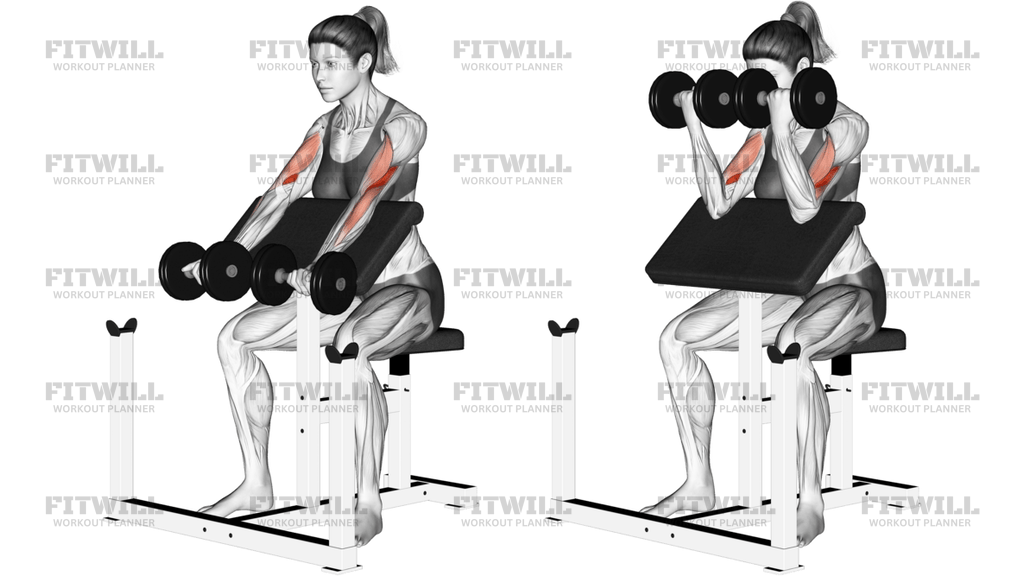
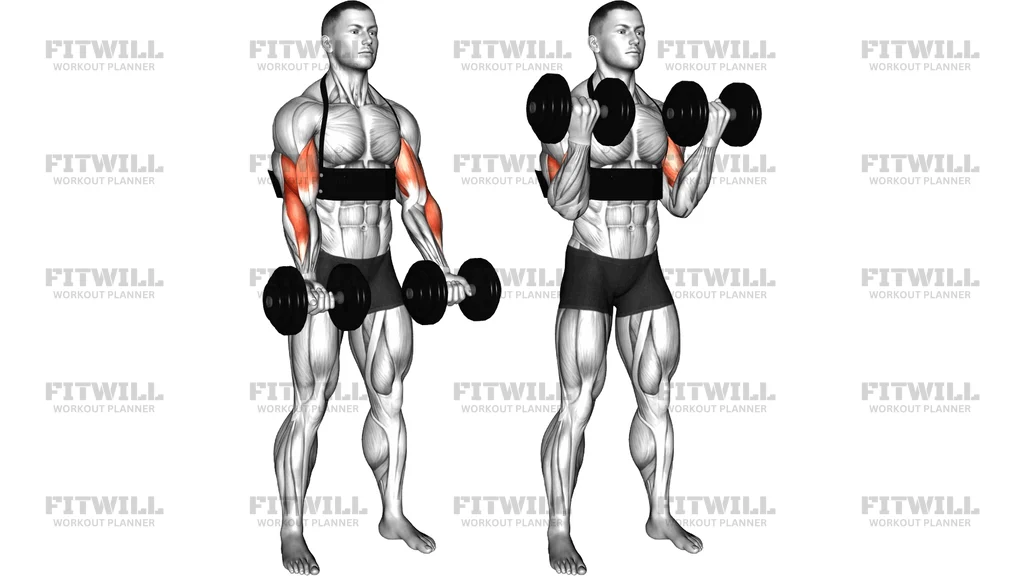
Dumbbell Biceps Curl With Arm Blaster is a strict standing curl that keeps the upper arms pinned so the elbow flexors do the work instead of the torso. The arm blaster hangs from the neck and rests against the front of the body, which shortens the temptation to swing the shoulders and makes every rep more honest. It is a strong choice when you want direct arm work with very little cheating.
This movement trains the biceps brachii first, with the brachialis, brachioradialis, and forearm flexors helping finish the lift and stabilize the wrists. Because the elbows stay fixed against the arm blaster, the exercise shifts some stress away from body English and toward elbow flexion strength, peak contraction, and controlled lowering. That makes Dumbbell Biceps Curl With Arm Blaster especially useful for bodybuilding-style accessory work, arm finishers, and strict technique practice.
The setup matters more here than on a free standing curl because the pad should sit flat against the torso and the neck strap should not pull the head forward. Stand tall, brace lightly, and let the dumbbells hang with the palms facing forward and the wrists stacked over the handles. Once the upper arms are pressed into the blaster, the curl should begin from still shoulders and still elbows, not from a shrug or a backward lean.
At the top of Dumbbell Biceps Curl With Arm Blaster, the handles travel toward the front of the shoulders while the upper arms stay glued to the pad. Squeeze the biceps briefly, then lower the dumbbells under control until the elbows are almost straight without letting them drift away from the blaster. A smooth lowering phase is important because the fixed setup makes any bounce, twist, or wrist break easy to see and usually easy to feel.
Use this exercise when you want strict direct arm work after your main lifts, or when your goal is to make the biceps do the job without help from the lower back and shoulders. It works well for moderate to higher reps, but the load should stay conservative because the arm blaster exposes sloppy form quickly. If the neck strap irritates your throat, the pad does not sit flat, or the elbows cannot stay pinned, the setup is wrong for that day and the load or position should be adjusted before the set continues.
[ Workout Log & Planner ]
Put your next workout in Fitwill
Keep your plan and training log ready when you are.


Instructions
- Place the arm blaster around your neck so the curved pad rests flat against your sternum and upper abdomen, then stand tall with your feet about hip-width apart.
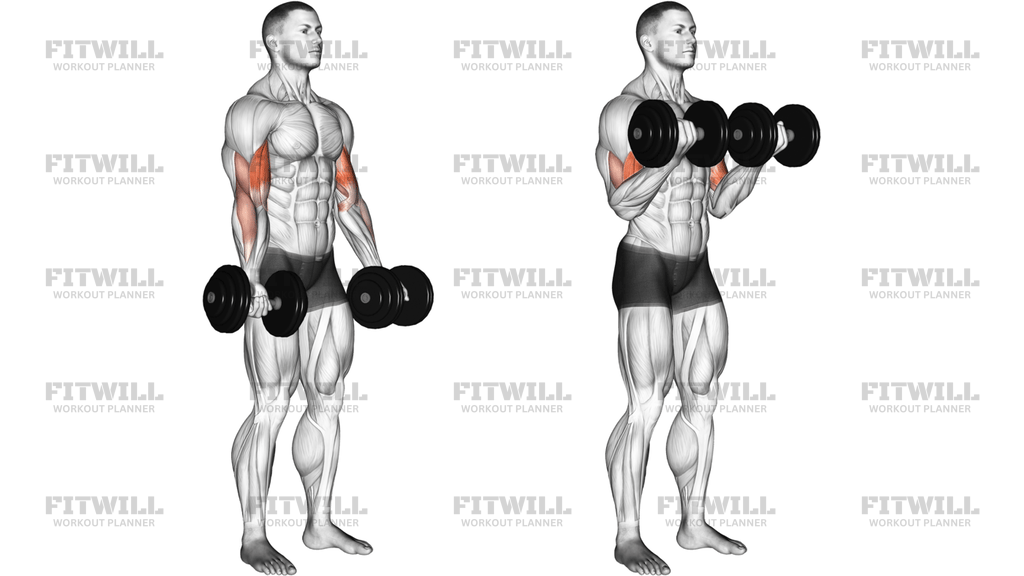
- Hold a dumbbell in each hand at your sides with palms facing forward, wrists straight, and the back of each upper arm pressed into the blaster pad.
- Set your shoulders down and back without leaning away from the pad, and let the dumbbells hang still before the first rep.
- Curl both dumbbells toward your shoulders by bending only at the elbows while keeping your upper arms fixed against the blaster.
- Turn the hands so the little-finger side finishes slightly higher at the top, then squeeze the biceps for a brief pause.
- Lower the dumbbells slowly until your elbows are nearly straight, keeping the pad contact and wrist alignment unchanged.
- Avoid shrugging, swinging, or shifting your torso as the weights descend and rise.
- Reset the dumbbells under control before starting the next rep or set them down safely at the end.
Tips & Tricks
- If the blaster digs into your neck, raise it slightly so the pad rests on the chest and upper abs instead of the throat.
- Keep the upper arms pressed into the pad the whole set; if the elbows peel away, the weight is too heavy.
- Let the dumbbells start completely still instead of rocking them from the thighs into the first rep.
- Keep the wrists stacked over the handles so the forearms do not fold back as the curl gets harder near the top.
- Use a slower lowering phase than lifting phase to keep the biceps working after the peak contraction.
- Do not chase a full lockout if the elbows lose contact with the blaster at the bottom.
- Choose a lighter load than your free standing curl because the arm blaster removes most of the body swing.
- Stop the set when you have to lean back or flare the elbows to finish the rep.
Frequently Asked Questions
What Muscles Does Dumbbell Biceps Curl With Arm Blaster Work?
The biceps brachii is the main target, with the brachialis, brachioradialis, and forearm flexors helping through the curl and lowering phase.
What Does The Arm Blaster Change In Dumbbell Biceps Curl With Arm Blaster?
It locks the upper arms close to the torso so the shoulders cannot swing the weight up as easily. That makes the curl stricter and shifts more tension to elbow flexion.
Is Dumbbell Biceps Curl With Arm Blaster Good For Beginners?
Yes, if the load is light and the neck strap feels comfortable. The pad gives beginners a clear position to hold, which can make strict curl form easier to learn.
How Heavy Should The Dumbbells Be For This Curl?
Use a lighter weight than your regular standing curl because the arm blaster removes most cheating. If you have to lean back or lose pad contact, the load is too high.
Where Should The Dumbbells Travel On Each Rep?
Drive the handles up toward the front of your shoulders while the elbows stay pinned to the blaster. On the way down, let them return under control until the arms are nearly straight.
Why Do My Elbows Drift Away From The Pad?
Usually the weight is too heavy or the blaster sits too low on the torso. Lighten the dumbbells, reset the strap, and keep the upper arms pressed into the pad before you start the next rep.
Can I Do This With One Dumbbell At A Time?
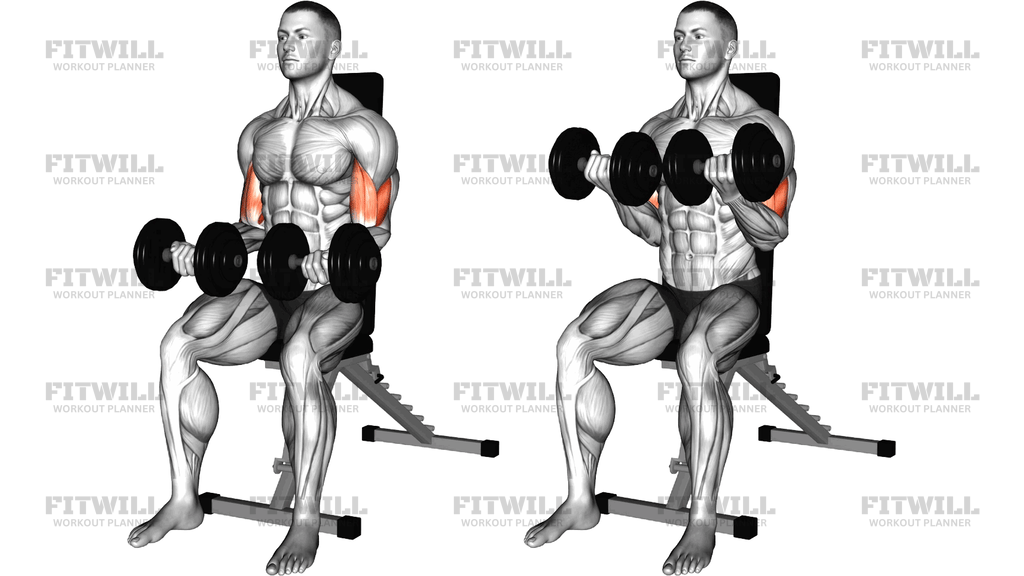
You can, but the image shows both arms working together. Alternating reps can help if your torso twists, while simultaneous reps are better when you can keep both elbows fixed and level.
What Should I Do If The Neck Strap Feels Uncomfortable?
Move the pad so it sits flatter on the chest and upper abdomen, not high on the throat. If the strap still bothers your neck, use a different curl variation for that session.