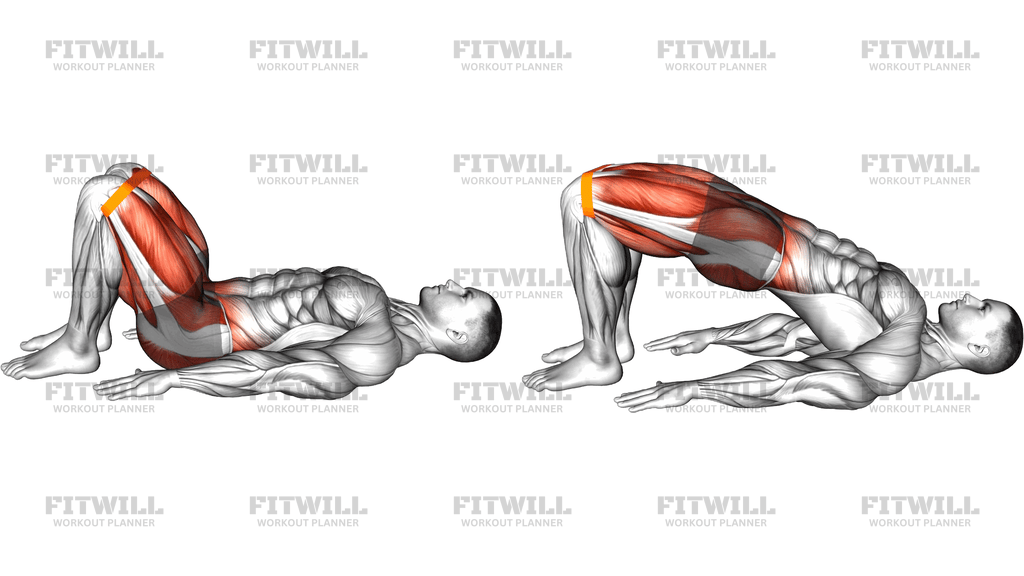
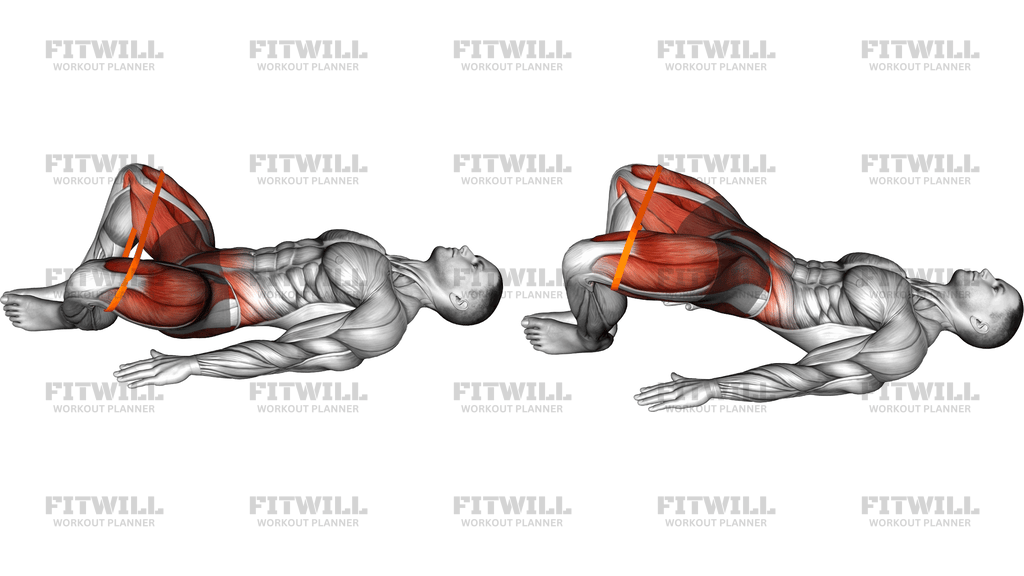
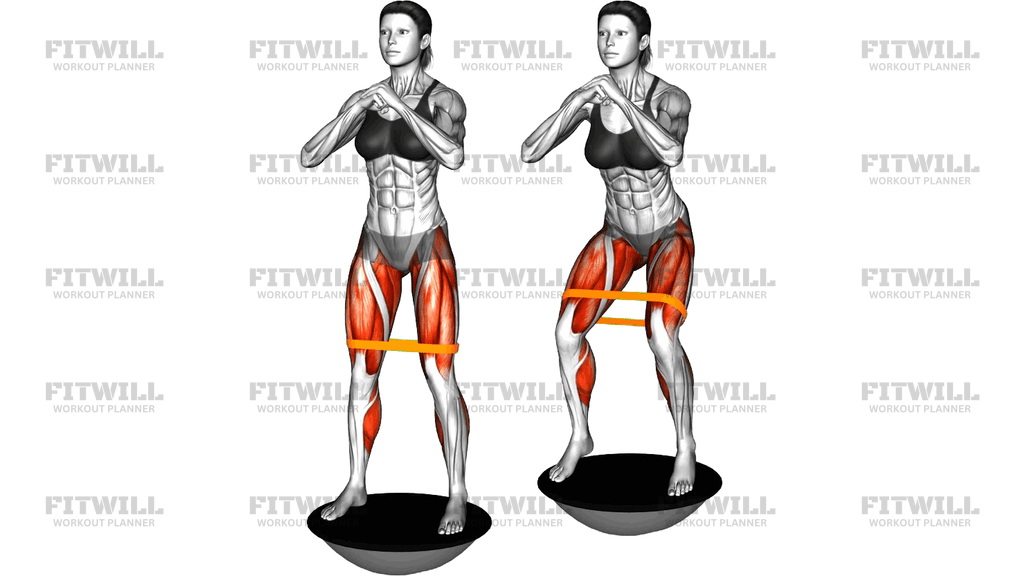
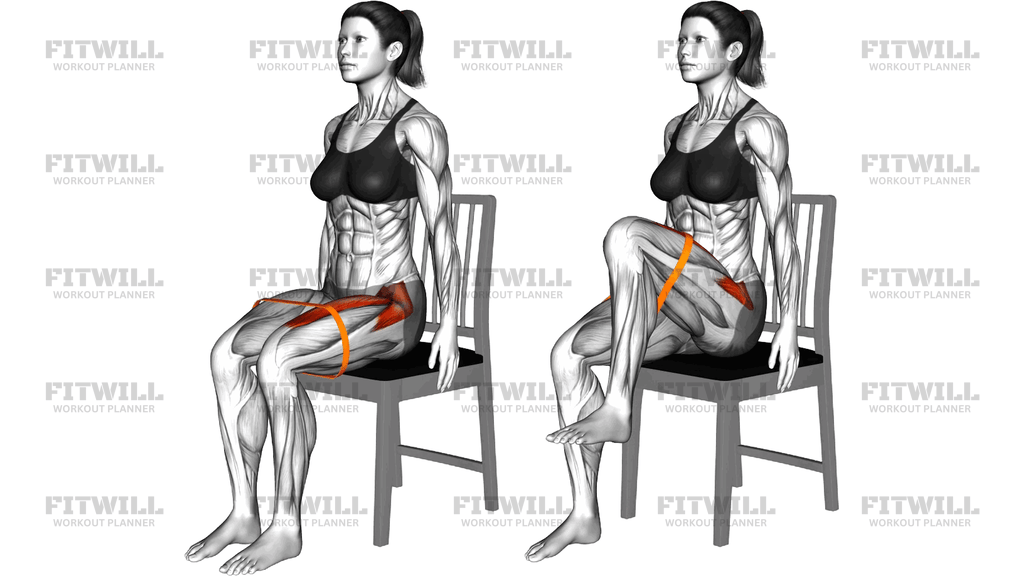
Resistance Band Leg Lift
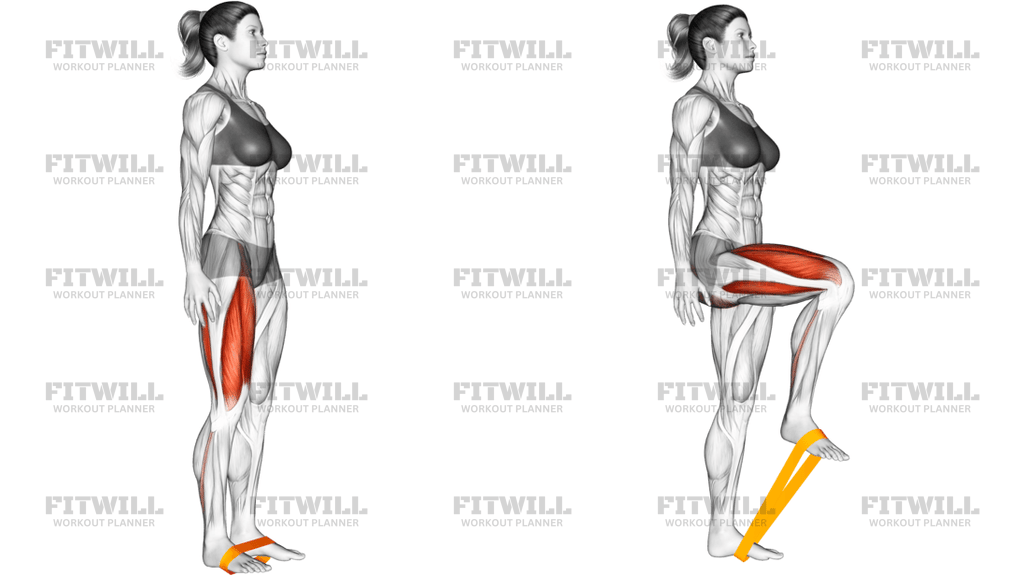
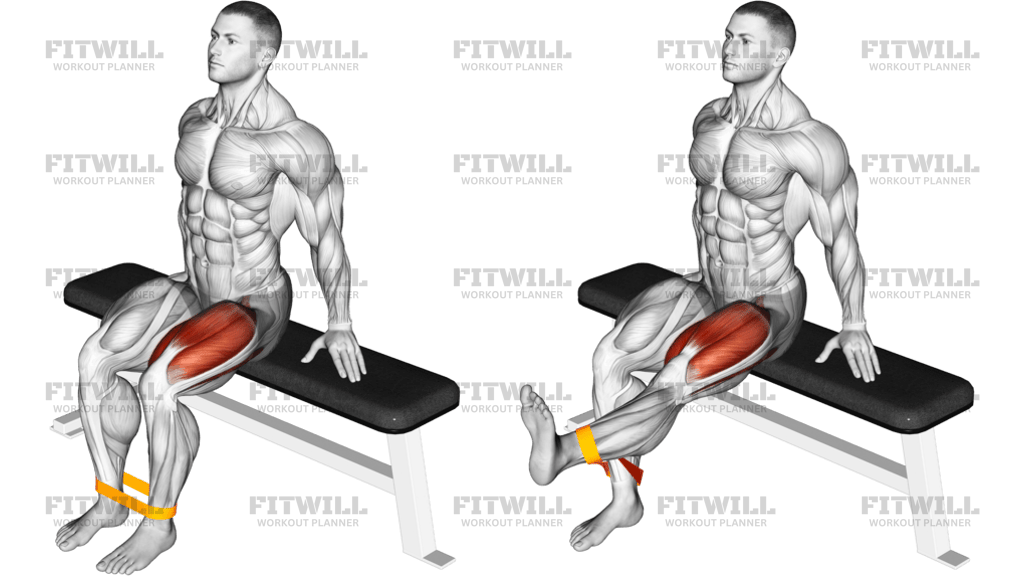
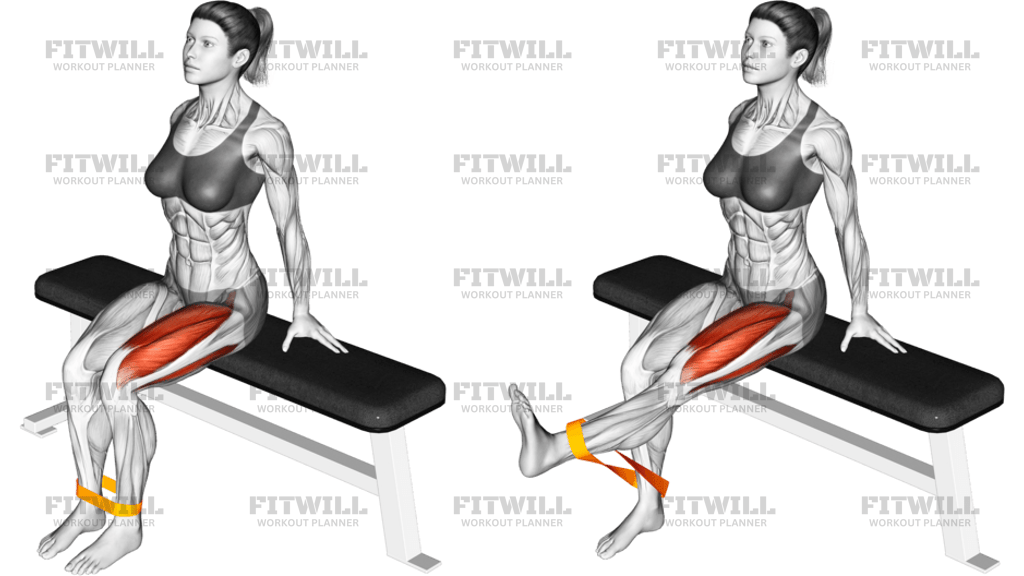
Resistance Band Leg Lift is a standing lower-body drill that uses a resistance band to load hip flexion and thigh control through a simple front leg raise. In the image, the band is looped under the standing foot and around the lifting foot, which creates constant tension from the start of the rep and makes the exercise much stricter than a free bodyweight leg lift. That setup is useful when you want the leg to work against resistance instead of just swinging forward.
The movement primarily challenges the quads and hip flexors while the standing leg, trunk, and pelvis work hard to keep the body tall and square. Even though the leg is the focus, the exercise only works well when the torso stays still and the standing foot stays planted. If the hips drift back, the knee caves, or the trunk leans, the band tension starts to disappear and the repetition turns into a balance exercise instead of a controlled leg lift.
A clean rep begins with the band secured under the support foot and the other end positioned around the lifting foot, usually over the forefoot or shoe. From there, stand tall, set the ribs down, and keep the pelvis level before you start the raise. The lifting leg should travel forward under control until the thigh reaches the desired height without jerking the torso. The goal is a smooth path, not a big kick. The return should be just as deliberate so the band keeps tension on the leg the entire time.
This exercise is useful as a warm-up for leg day, an accessory movement for thigh and hip control, or a lower-intensity option when you want single-leg work without heavy loading. It also helps expose side-to-side differences, because poor balance, weak hip control, or limited knee lift becomes obvious very quickly. For that reason, it is often best performed with moderate or light resistance and a strict tempo rather than by chasing fatigue.
Keep the range pain-free and stop the set if the band starts pulling the body out of position. When the setup is correct, the exercise should feel like a controlled front leg lift with continuous resistance through the quads and hip flexors, plus enough trunk engagement to keep the torso steady from the first rep to the last.
Fitwill
Log Workouts, Track Progress & Build Strength.
Achieve more with Fitwill: explore over 9600 exercises with images and videos, access built-in and custom workouts, perfect for both gym and home sessions, and see real results.
Start your journey. Download today!




Instructions
- Stand tall with the band anchored under the working-side foot and looped around the lifting foot, usually across the forefoot.
- Plant the support foot firmly, keep the standing knee soft but stable, and square your hips and chest forward.
- Hold a tall posture with your ribs stacked over your pelvis and your hands free for balance if needed.
- Brace lightly, then start the lift by driving the working thigh forward and up instead of swinging the lower leg.
- Raise the leg until you reach a strong, controlled top position without leaning back or hiking the hip.
- Pause briefly at the top while keeping tension in the band and both hips level.
- Lower the leg slowly to the start, resisting the pull of the band the whole way down.
- Reset your posture before the next rep and repeat for the planned number of repetitions.
Tips & Tricks
- Place the band on the forefoot or shoe, not just the toes, so it does not slip when the leg lifts.
- Keep the support heel rooted so the standing leg can resist the band instead of drifting with it.
- Do not lean the torso backward to fake a bigger lift; the rep should come from the thigh, not the spine.
- Use a smaller range if the pelvis tips or the standing hip starts to wobble.
- Exhale as the leg comes up so the trunk stays stacked and the ribs do not flare.
- Move slowly enough that you can feel the band tension on both the lift and the lowering phase.
- If the band is too heavy, shorten the range before you change the whole setup.
- Keep the lifted foot and knee tracking straight ahead instead of letting the leg drift outward.
Frequently Asked Questions
What muscle does Resistance Band Leg Lift target most?
The main focus is the quads, with the hip flexors and trunk stabilizers helping to control the lift.
Where should the band sit on the foot?
Loop it under the standing foot and around the lifting foot, usually across the forefoot or top of the shoe, so the band stays under tension.
How high should I lift the leg?
Lift only as high as you can without leaning back, twisting the hips, or losing the band tension.
Is this more of a balance exercise or a leg exercise?
It is both, but the goal is still leg-driven hip flexion. Balance should support the rep, not take over the work.
Can beginners perform this exercise?
Yes, beginners can use a lighter band and a shorter range while keeping the torso tall and the support foot planted.
Why does the standing leg matter so much?
The standing leg anchors the band and keeps the pelvis level, which lets the moving leg work against a clean line of resistance.
What is the most common mistake with this movement?
Most people lean back or swing the leg up, which removes tension from the quads and makes the rep less controlled.
How can I make the exercise harder without changing the exercise?
Use a stronger band, slow the lowering phase, or add a brief pause at the top while keeping the hips square.