Resistance Band Squat Jump
Resistance Band Squat Jump is a lower-body plyometric exercise that combines a bodyweight squat jump with a loop band around the thighs. The band adds outward pressure at the knees, so each rep asks you to stay organized through the hips while still producing an explosive jump. It is a simple movement on paper, but the band changes the feel of the squat and landing enough that clean setup matters from the first rep.
The main training effect comes from the combination of thigh drive, hip stability, and repeated power production. Your quadriceps, glutes, calves, and hip abductors work together while the trunk keeps the torso stacked over the pelvis. The band is not just extra resistance; it gives you feedback on knee position and can make valgus drift obvious if the knees collapse inward on the way down or up. That makes the exercise useful for athletes and general trainees who want power work with a strong control component.
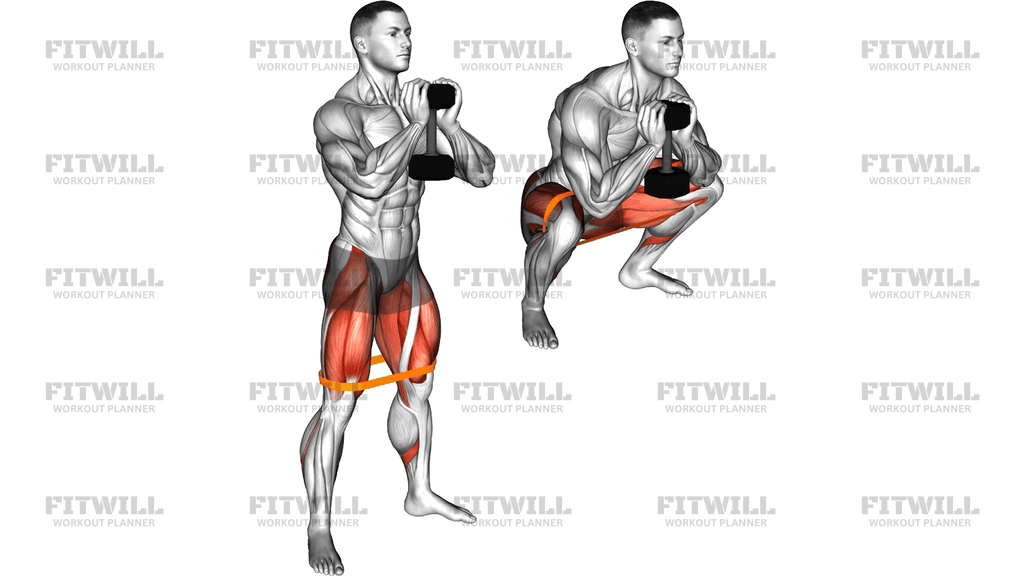
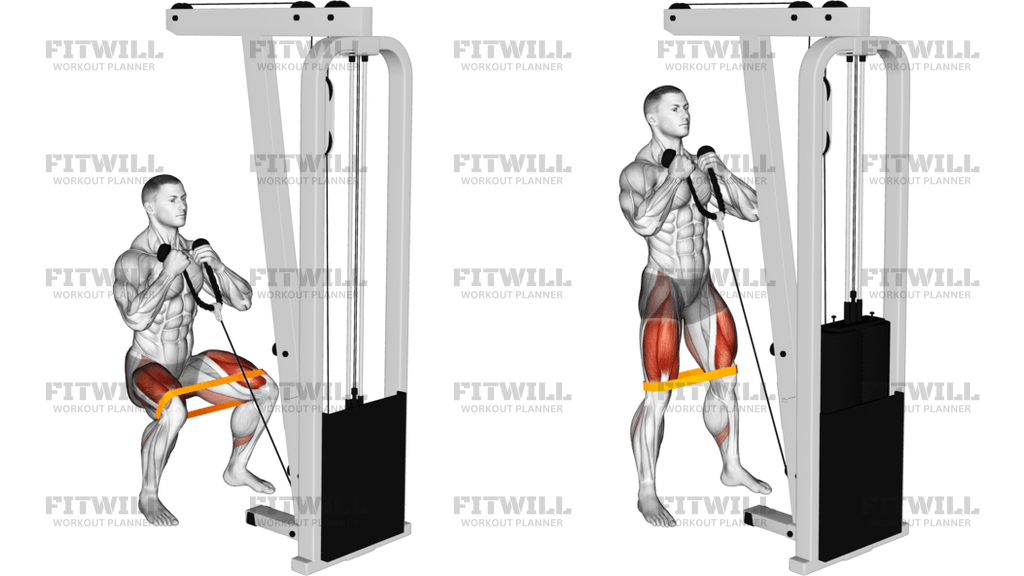
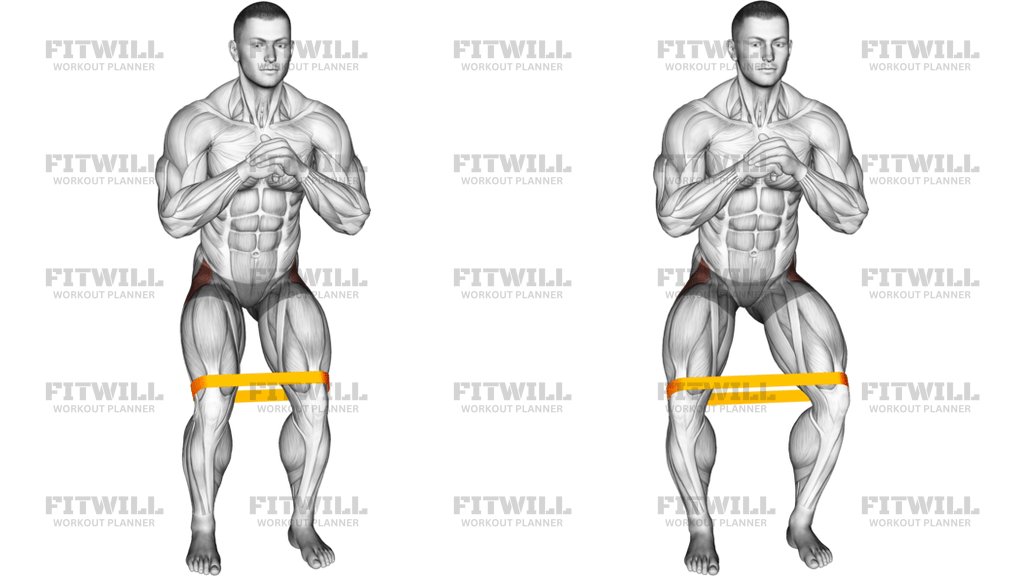
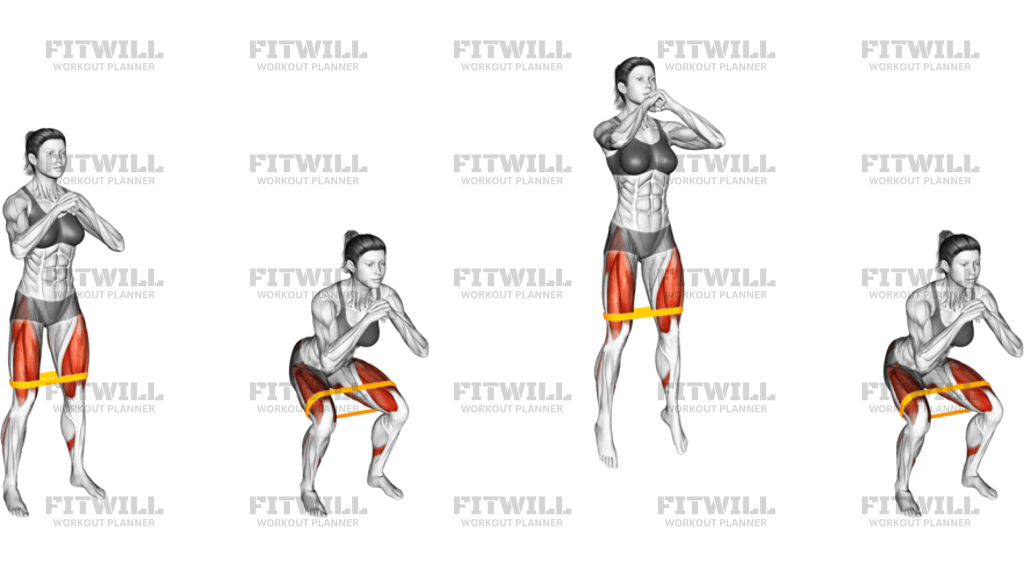
Start with the band looped above the knees or across the mid-thighs, feet about shoulder-width apart, and the chest-height hand position shown in the image. Sit into a squat with the knees tracking over the toes, keep the heels rooted until the jump, and use a short, controlled countermovement instead of dropping too deep. The jump should come from the hips, knees, and ankles together, not from throwing the torso forward or bouncing off the bottom.
At the top of each rep, land softly with bent knees and immediately re-establish the squat position before the next jump. That reset matters because the exercise is meant to train repeatable power, not just one high leap. Keep the torso tall, ribs down, and the band under tension so the knees do not cave inward as fatigue builds. If the landings get noisy, shallow, or unstable, the set is usually past the point where the movement quality is worth keeping.
This exercise fits well in power-focused lower-body sessions, athletic warmups, or conditioning blocks where you want leg drive without equipment complexity. It is less appropriate when the goal is maximal strength or when knee, ankle, or Achilles issues make jumping uncomfortable. Use a band that gives clear but manageable tension, and stop the set as soon as jump height, landing control, or knee alignment starts to slip.
[ Workout Log & Planner ]
Put your next workout in Fitwill
Keep your plan and training log ready when you are.


Instructions
- Loop the resistance band above your knees or across the mid-thighs and stand with your feet about shoulder-width apart.
- Bring your hands together at chest height, keep your chest up, and soften your knees into a quarter squat.
- Press your knees slightly out against the band so your hips stay active before you jump.
- Lower under control until your thighs are roughly parallel or just above parallel if your mobility is limited.
- Drive through your feet and jump straight up, keeping your torso tall as you leave the floor.
- Land softly on the balls of your feet and heels, then absorb the landing by bending your hips and knees.
- Reset into the squat with the band still under tension before the next rep.
- Breathe in on the way down, then exhale as you jump and stabilize the landing.
Tips & Tricks
- Place the band high enough that it stays above the kneecaps and does not slide during the landing.
- Keep the knees tracking in line with the second and third toes instead of letting them cave inward.
- Use a squat depth you can control quickly; going too deep usually slows the jump and wastes power.
- Keep the torso stacked over the hips so the jump does not turn into a forward fold.
- Land quietly. If the landing is loud or stiff, reduce jump height and absorb more through the hips.
- Choose a band that creates noticeable thigh tension without forcing the knees outward so hard that the squat becomes awkward.
- Stop the set when your knee position starts to drift or when the rebounds become slow and sloppy.
- This is a power drill, so low-to-moderate reps usually work better than chasing fatigue.
Frequently Asked Questions
What does the band change in a Resistance Band Squat Jump?
The band adds outward resistance at the thighs, which makes you work harder to keep the knees aligned as you squat, jump, and land.
Where should the band sit on my legs?
Place it above the knees or on the mid-thighs so it stays secure during the jump and gives you clear feedback on knee position.
How low should I squat before jumping?
Use a shallow to moderate squat, usually around a quarter to half squat, so you can jump explosively without losing posture.
What muscles work hardest in this exercise?
The quads, glutes, calves, and hip abductors do most of the work, with the core helping keep the torso stable.
Should my knees push out against the band the whole time?
Yes, but only enough to keep them aligned. The goal is stable tracking, not forcing the knees outward aggressively.
Is this a strength exercise or a power exercise?
It is mainly a power and athleticism drill. You should move explosively, land under control, and stop before fatigue ruins the jump.
What is the most common mistake with the band?
Letting the knees collapse inward or letting the band slide down toward the knees so the tension becomes inconsistent.
Can beginners do this movement?
Yes, if they start with a light band, small jumps, and controlled landings. If landing mechanics are poor, step down to squat-to-toe-raise work first.