Resistance Band Walk
Resistance Band Walk is a lower-body accessory exercise that uses a loop band to keep constant outward tension on the thighs while you take short, controlled steps. It is especially useful when you want stronger hips, steadier knees, and better control during squats, lunges, runs, and change-of-direction work. The movement looks simple, but the value comes from staying organized through every step instead of letting the band pull the knees inward.
The main work comes from the glutes and outer thighs, with the core helping keep the pelvis level and the torso quiet. Because the band never fully relaxes, each step asks you to resist rotation and knee collapse at the same time. That makes Resistance Band Walk useful as a warm-up, accessory drill, or low-load strength circuit when you want targeted hip stability without heavy loading.
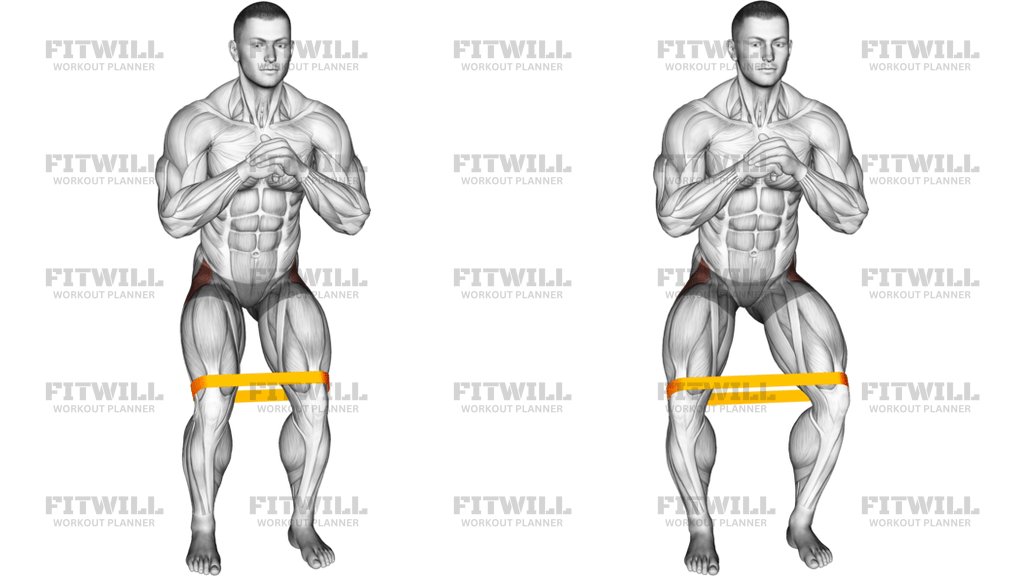
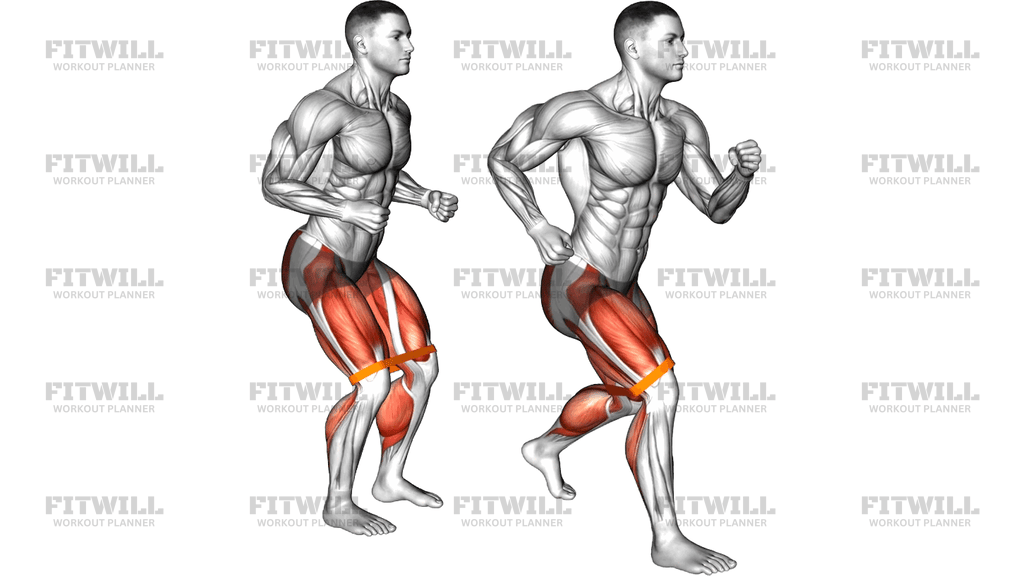
Set the band around your thighs just above the knees, or slightly lower if that is how your equipment is set up, then stand with feet hip-width apart. Bend the knees softly, sit into a small athletic stance, and stack your ribs over your pelvis so you can move without tipping forward. Before the first step, press the knees gently outward into the band and feel tension from the start rather than waiting until you are already moving.
Step to the side with a controlled reach, then bring the trailing foot in just enough to maintain tension in the band. Keep the feet parallel, the chest tall, and the hips level so the motion comes from the hips rather than from swaying the trunk. Shorter steps usually work better than big ones, because oversized steps often make the band slack or pull the knees out of position.
Resistance Band Walk fits well before heavy lower-body training, between compound lifts, or as a focused finisher when you want a clean glute burn without joint stress. It also works well for beginners because the range is small and easy to control, but the setup still needs to be precise if you want the right muscles to do the work. If you feel it mostly in the lower back, feet, or quads, reduce the band tension, shorten the stance, and keep the knees slightly bent throughout the set.
[ Workout Log & Planner ]
Put your next workout in Fitwill
Keep your plan and training log ready when you are.


Instructions
- Loop a resistance band around your thighs just above your knees and stand tall with feet hip-width apart.
- Bend your knees slightly, hinge a little at the hips, and settle into a small athletic stance with your toes pointing forward.
- Press your knees gently out against the band before you start so the loop is already under tension.
- Step to the side with the lead foot, keeping the foot flat and the pelvis level.
- Bring the trailing foot in only far enough to keep the band taut; do not let your knees touch or the band go slack.
- Keep your chest tall, ribs down, and eyes forward while you take 8 to 12 short steps in one direction.
- Reverse direction and repeat the same number of controlled steps back.
- Stand up, remove tension from the band, and reset before the next set.
Tips & Tricks
- Use a lighter band if your knees cave inward or your torso starts rocking.
- Short steps usually load the outer hips better than wide, swinging steps.
- Keep your feet parallel; turning the toes out changes the drill and reduces band tension.
- If the band slides up your legs, place it slightly higher above the knees and keep constant pressure outward.
- Stay in a shallow squat; dropping too low usually shifts work into the quads.
- Think about pushing the floor apart rather than marching from the feet.
- Stop the set when you can no longer keep the pelvis level and the steps quiet.
- If you want more burn without cheating, slow the return step rather than taking bigger strides.
Frequently Asked Questions
What muscles does Resistance Band Walk train most?
It mainly targets the glutes and outer thighs, with the core helping keep the pelvis steady.
Should the band go above the knees or around the ankles?
Above the knees is usually easier and better for learning the pattern. Around the ankles makes the lever longer and the exercise harder.
How low should I squat during Resistance Band Walk?
Only as low as you can while keeping your torso tall and your knees tracking out against the band. A small athletic stance is enough.
Why do my knees hurt during this exercise?
The band may be too heavy, your steps may be too wide, or your knees may be collapsing inward. Shorten the step and keep constant outward pressure.
Can beginners do Resistance Band Walk?
Yes. Start with a light band and short sets of controlled side steps until you can keep tension and posture consistent.
Is this more of a warm-up or a strength exercise?
It can be both. Light resistance and crisp reps make it a warm-up; slower steps and a stronger band make it a challenging accessory drill.
What is the most common mistake with Resistance Band Walk?
Letting the trailing foot drag in too far and losing band tension. Keep the loop stretched the whole time.
Can I replace squats with Resistance Band Walk?
No. It is a support exercise for hip stability, not a full replacement for heavy squatting patterns.