Dumbbell Lying On Floor Rear Delt Raise
Dumbbell Lying On Floor Rear Delt Raise is a side-lying floor exercise for the rear delts, with help from the upper back and triceps to keep the arm path controlled. The floor gives you a clear stop point at the bottom, so the rep starts from a dead, repeatable position instead of a loose swing. That makes it a useful choice when you want to train shoulder extension and horizontal abduction without turning the set into a full-body heave.
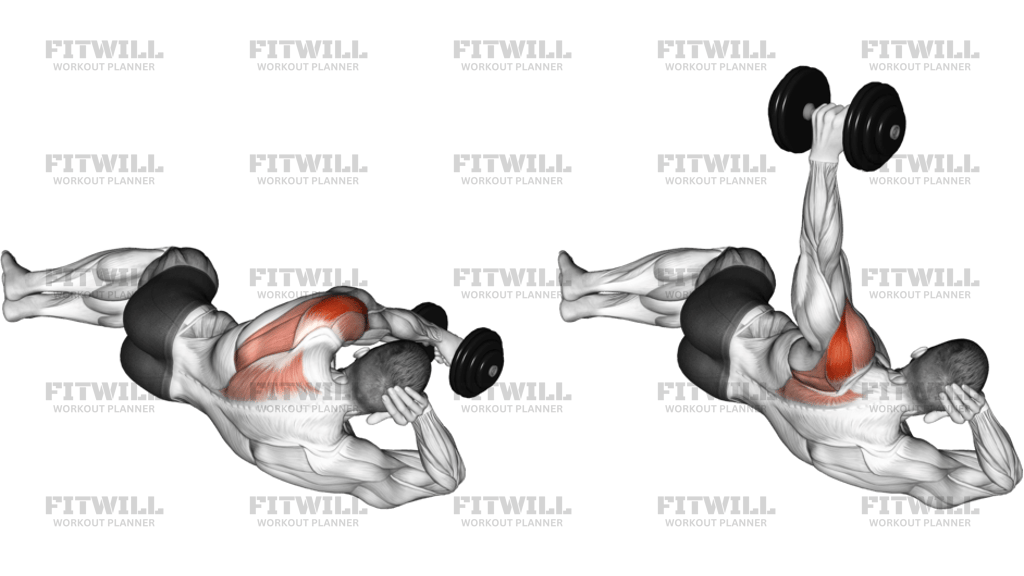
The image shows the lifter lying on one side with the lower arm folded under the head for support and the working arm reaching across the body with a dumbbell. From there, the dumbbell travels in a smooth arc away from the floor until the arm is close to vertical over the shoulder. The torso stays stacked and quiet, which keeps the rear delt doing the lifting instead of the rib cage or lower back twisting to help.
This movement is especially useful as accessory work for shoulder balance, posture-focused training, and hypertrophy blocks where rear delts often need direct attention. Because the range is short and the body is supported, it can also be a good option for beginners who need a simpler way to feel the rear shoulder working. The catch is that the exercise only works well when the setup is consistent; if the shoulder rolls forward or the chest opens and closes during the rep, the tension shifts away from the target.
Use a light load and think about lifting the elbow and upper arm rather than yanking the dumbbell with the hand. The top of the rep should look clean and controlled, with a brief squeeze before lowering the weight back toward the floor under tension. If the shoulder feels pinched, reduce the range and keep the arm slightly in front of the torso instead of forcing a wider flare.
[ Workout Log & Planner ]
Put your next workout in Fitwill
Keep your plan and training log ready when you are.


Instructions
- Lie on one side on the floor with the lower arm bent and the head resting on that forearm for support.
- Place the top leg in a relaxed position and keep the torso stacked so the chest does not roll backward during the lift.
- Hold a dumbbell in the upper hand with the elbow slightly bent and the arm reaching down across the front of the body.
- Set the shoulder down and back before each rep so the rear delt starts from a stable position.
- Lift the dumbbell in a smooth arc away from the floor until the hand is nearly over the shoulder.
- Keep the elbow softly bent and lead the motion with the upper arm rather than swinging the hand upward.
- Pause briefly at the top, squeeze the rear delt, and avoid shrugging the shoulder toward the ear.
- Lower the dumbbell slowly back to the start until it nearly touches down, keeping tension instead of dropping it.
- Exhale as you lift, inhale on the way down, and reset the shoulder before the next rep.
Tips & Tricks
- Keep the bottom arm and head position fixed so the working shoulder can move without the neck helping.
- If the dumbbell drifts toward your face, the shoulder is rotating too much; think about lifting out and slightly back in a single arc.
- A lighter dumbbell usually works better here because rear delts fatigue fast and momentum shows up immediately.
- Stop the rep just before the shoulder starts to roll open or the rib cage twists away from the floor.
- Use a soft elbow bend and keep it nearly the same angle from start to finish so the triceps do not dominate the movement.
- The top position should feel like a rear shoulder squeeze, not a trap shrug; keep the neck long and relaxed.
- Lower slowly enough that you can feel the rear delt resist the weight on the way back down.
- If you cannot control the first few inches off the floor, shorten the range slightly and clean up the setup before adding load.
Frequently Asked Questions
What muscle does Dumbbell Lying On Floor Rear Delt Raise target most?
It primarily targets the rear delts, with the upper back helping stabilize the arm path.
Can beginners perform this exercise?
Yes. The floor support makes it beginner-friendly as long as the dumbbell stays light and the torso stays stacked.
How should my arm travel during the rep?
The dumbbell should move in a smooth arc from the floor side of your body to a finish near vertical over the shoulder.
What is the most common mistake with this floor raise?
Letting the chest roll open or using a shrug to get the dumbbell up instead of keeping the rear delt in control.
Should the elbow stay straight?
No. Keep a soft bend in the elbow and hold that angle steady so the shoulder does the work.
Where should the bottom arm go?
The lower arm usually bends under the head to support the neck and keep the torso relaxed on the floor.
How heavy should I train this movement?
Use a light to moderate dumbbell that lets you pause at the top and lower slowly without losing position.
What should I do if I feel it in my neck or upper traps?
Reduce the load, keep the shoulder away from the ear, and shorten the range until the rear delt takes over again.