Dumbbell Standing French Press
Dumbbell Standing French Press is a standing overhead triceps exercise that asks the elbows to do the work while the rest of the body stays quiet. With the arms lifted beside the head, the long head of the triceps is placed under a strong stretch, which makes this a useful choice for building the back of the upper arm and improving overhead pressing control.
The setup matters because small shifts in stance or shoulder position change how stable the lift feels. Stand tall with the ribs stacked over the pelvis, keep the feet planted, and hold the dumbbells in a position that lets the forearms stay close to vertical as you lower and press. If the lower back arches or the elbows drift wide, the load moves away from the triceps and toward the shoulders and torso.
During each rep, let the elbows bend enough for the dumbbells to travel behind or just above the head, then extend the elbows until the arms are straight again without snapping the weights together. The upper arms should stay mostly fixed beside the ears while the forearms swing through the range. A controlled lowering phase is especially important here because it keeps tension on the triceps and prevents the set from turning into a body-English heave.
Dumbbell Standing French Press is useful as accessory work after heavier presses, on arm-focused days, or when you want a triceps exercise that does not require a bench or cable station. It is also a practical option when you want to train overhead elbow extension with a simple setup and a clear range of motion. Beginners can use it too, but only with a light load that they can lower behind the head without leaning back or flaring the elbows.
The most common problems are overextending the lower back, letting the elbows wander forward, and choosing a weight that forces the shoulders to take over. Keep the neck relaxed, keep the wrists stacked over the elbows, and stop the set if the dumbbells start swinging. Clean reps matter more than chasing a big range or a heavy load in this movement.
Fitwill
Log Workouts, Track Progress & Build Strength.
Achieve more with Fitwill: explore over 9600 exercises with images and videos, access built-in and custom workouts, perfect for both gym and home sessions, and see real results.
Start your journey. Download today!




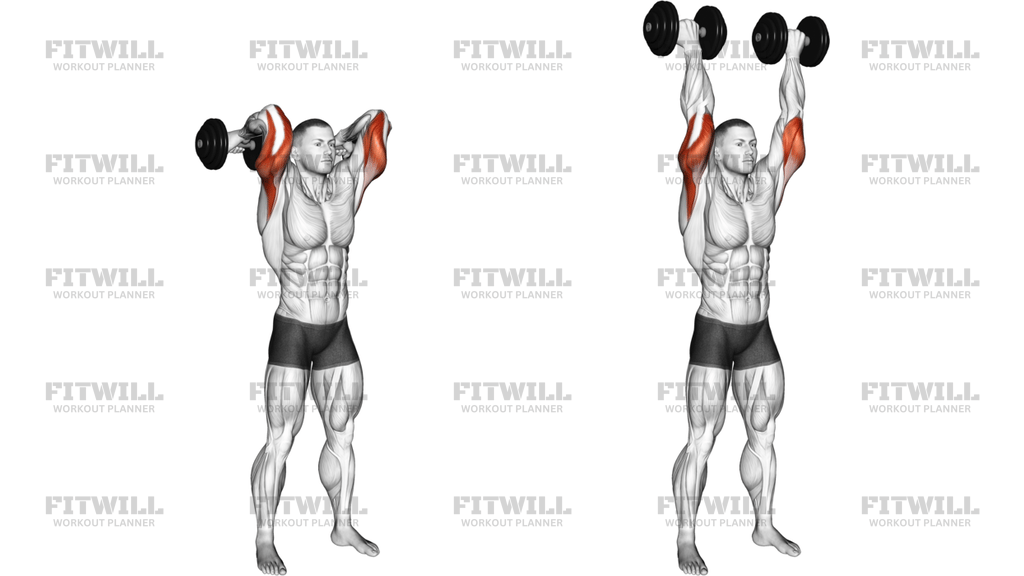
Instructions
- Stand with your feet about hip-width apart and hold a dumbbell in each hand, bringing both weights overhead with your arms straight.
- Turn your palms inward and keep your elbows close to your ears so the dumbbells sit just above or slightly behind the crown of your head.
- Stack your ribs over your pelvis, soften your knees, and brace your midsection so you do not lean back when the set begins.
- Bend only at the elbows to lower the dumbbells behind your head while keeping your upper arms mostly still.
- Lower until you feel a clear triceps stretch without losing control of your shoulders or lower back.
- Press the dumbbells back up by straightening the elbows and finishing with the arms long overhead.
- Exhale as you press up, then inhale as you lower the weights back behind your head.
- Finish the last rep by bringing the dumbbells down to shoulder height or back to your sides with control.
Tips & Tricks
- Keep your upper arms nearly fixed beside your head; if they swing forward, the press turns into a shoulder movement.
- Choose a load you can lower slowly behind your head without flaring the ribs or leaning backward.
- Let the dumbbells travel just far enough to stretch the triceps, but stop before the shoulders roll forward or pinch.
- Keep your wrists neutral over the forearms instead of letting the dumbbells fold the hands backward.
- Use a slightly staggered stance if you tend to wobble, but keep both feet planted so you do not chase balance with your torso.
- A slower lowering phase usually works better here than a fast drop, because it keeps tension on the triceps through the long overhead position.
- If the elbows drift wide, think about pointing them forward and slightly in rather than opening them to the sides.
- Stop the set when you have to arch the lower back or shrug the shoulders to finish the press.
Frequently Asked Questions
What muscles does Dumbbell Standing French Press train?
It mainly trains the triceps, especially the long head because your arms stay overhead. The shoulders and core mainly help stabilize the dumbbells and keep your torso from leaning back.
Should I use one dumbbell or two for Dumbbell Standing French Press?
This version is usually done with a dumbbell in each hand, as shown here. Keep both arms moving together so the elbows extend at the same speed.
How far should I lower the dumbbells?
Lower them until you get a strong triceps stretch and the elbows are comfortably bent, usually with the dumbbells behind or just above the head. Do not keep going if your lower back starts to arch or your shoulders roll forward.
Why do my elbows keep drifting forward during Dumbbell Standing French Press?
That usually means the weight is too heavy or your upper arms are not staying anchored beside your head. Lighten the load and think about keeping the elbows pointed forward as the forearms move.
Is Dumbbell Standing French Press beginner-friendly?
Yes, if you start light and keep the torso still. Beginners should learn the overhead elbow path before adding load, because the standing position makes cheating easier.
What is the biggest form mistake in this exercise?
The most common mistake is turning it into a standing incline press by arching the lower back and pushing the dumbbells with the shoulders. The movement should come from elbow extension, not torso swing.
Where should I place Dumbbell Standing French Press in a workout?
It fits well after compound presses or as a triceps accessory on arm day. Because it is an isolation movement, it works best when you are already warmed up and can keep the reps strict.
What can I do if the overhead position bothers my shoulders?
Shorten the range slightly and keep the dumbbells a little higher behind the head, but do not force painful reps. If the position still feels pinchy, use a cable pushdown or a lying triceps extension instead.