Cable Front Raise
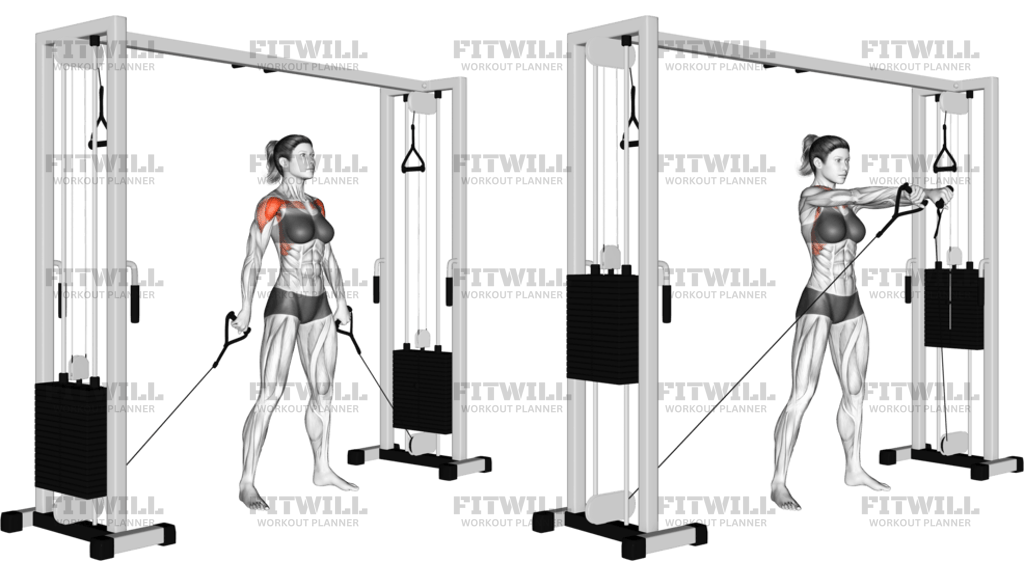
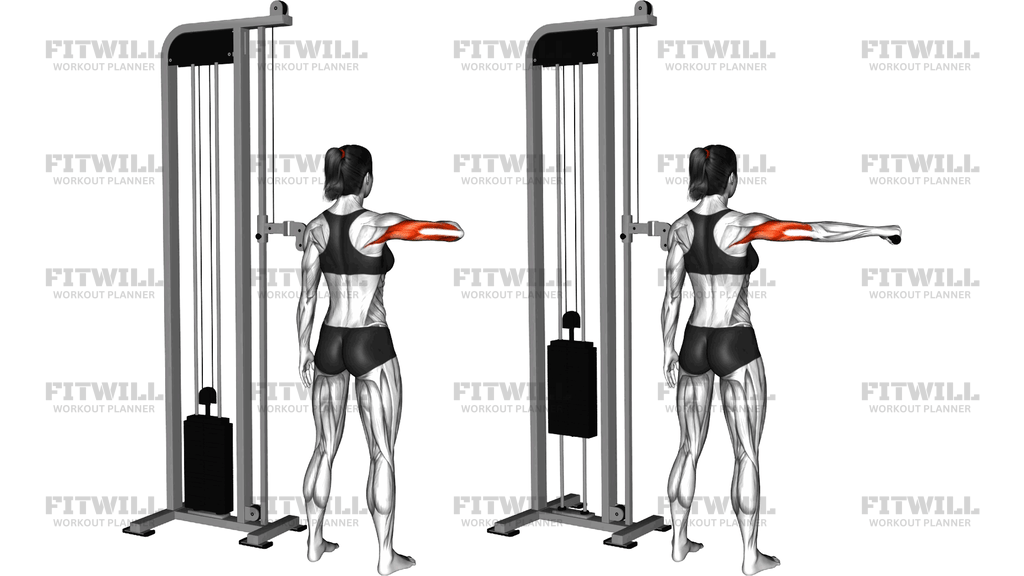
Cable Front Raise is a standing shoulder isolation movement that uses low cable tension to train the front of the shoulders with a very even pull. With a handle in each hand, the cables keep constant resistance on the raise instead of letting the load go slack at the bottom, which makes the exercise useful for controlled strength work and hypertrophy work when you want clean reps more than heavy loading.
The setup matters because the line of pull is what makes this variation feel different from dumbbell front raises. Standing tall between low pulleys lets the cables pull slightly backward as you lift, so your shoulders have to stay organized while the arms travel forward. That steady tension also makes it easier to feel when momentum, leaning, or shrugging starts to take over.
A good rep starts with the handles in front of the thighs, a soft bend in the elbows, and the ribs stacked over the pelvis. Raise both arms together in a smooth arc until the hands reach roughly shoulder height, then lower under control until the cables are almost slack again. Keep the neck long and the shoulders down so the front delts do the work instead of turning the movement into a trap-dominant swing.
Cable Front Raise fits well in upper-body sessions as accessory work, shoulder-focused work, or a lighter strength block after your main pressing lifts. It can also be a useful option when you want a front-delt emphasis without the joint stress that sometimes comes from pressing volume. The exercise is most effective when the load is moderate, the torso stays still, and each repetition looks the same from start to finish.
Because the shoulders are working through a long lever, small mistakes show up quickly. If the weight pulls you forward, if the elbows bend and turn it into a curl, or if you have to lean back to finish the rep, the load is too heavy or the setup is off. Stay in a pain-free range, control the lowering phase, and stop the set before the shoulders start rising toward the ears.
Fitwill
Log Workouts, Track Progress & Build Strength.
Achieve more with Fitwill: explore over 9600 exercises with images and videos, access built-in and custom workouts, perfect for both gym and home sessions, and see real results.
Start your journey. Download today!




Instructions
- Stand between two low cable pulleys and grab a handle in each hand with the cables running slightly behind you.
- Place your feet about hip-width apart, soften your knees, and stack your ribs over your pelvis before you start.
- Hold the handles in front of your thighs with your palms facing down or slightly inward and a small bend in the elbows.
- Brace your midsection and keep your shoulders set down and away from your ears.
- Raise both handles together in a smooth arc to shoulder height without swinging your torso.
- Pause briefly at the top with your arms parallel to the floor and your wrists stacked over your elbows.
- Lower the handles slowly until your hands return to the fronts of your thighs and the cables stay under control.
- Exhale as you lift, inhale as you lower, and reset your stance before the next repetition.
Tips & Tricks
- Keep the handles slightly in front of your thighs at the start so the cables stay under tension before the first rep.
- If your shoulders shrug up, lower the load and think about reaching the hands forward rather than up.
- A soft elbow bend is enough; turning the raise into a straight-arm swing usually pulls the traps and lower back into the set.
- Stop the top position around shoulder height unless your shoulder mobility is excellent and the load stays strict.
- Do not lean back to finish the rep; if you have to recline, the stack is too heavy.
- Use a slow lowering phase so the front delts stay loaded when the handles pass back toward your thighs.
- A neutral or slightly pronated grip is usually easier on the wrists than forcing the palms fully down.
- Set the cables with enough space to the side that they do not rub against your legs during the raise.
Frequently Asked Questions
What muscles does Cable Front Raise work?
It mainly trains the front delts, with the upper chest and serratus working as helpers while the upper back keeps the shoulders organized.
Why use cables instead of dumbbells for front raises?
The low pulleys keep tension on the shoulders through more of the range, especially near the bottom where dumbbells get easier.
Should I raise the handles above shoulder height?
Usually no. Stopping around shoulder height keeps the front delts doing the work and reduces the chance of shrugging or leaning back.
Can beginners do Cable Front Raise safely?
Yes, as long as the load is light and the torso stays still. Beginners should focus on a smooth arc and a controlled lowering phase first.
What is the biggest form mistake on this exercise?
Using momentum from the torso is the most common issue. If you have to rock back or jerk the handles up, the weight is too heavy.
Do I keep my elbows straight during Cable Front Raise?
Keep a slight bend in the elbows and freeze that angle through the rep. That keeps the movement on the shoulders instead of turning it into a hybrid curl.
Where should the handles start and finish?
Start with the handles in front of the thighs and finish with the hands about level with the shoulders, then lower back to the same starting point under control.
What can I use instead if I do not have a cable machine?
A dumbbell front raise is the closest substitute, but it will feel easier at the bottom because the resistance is not constant like it is with cables.