Lever Seated Hip Adduction Version 2
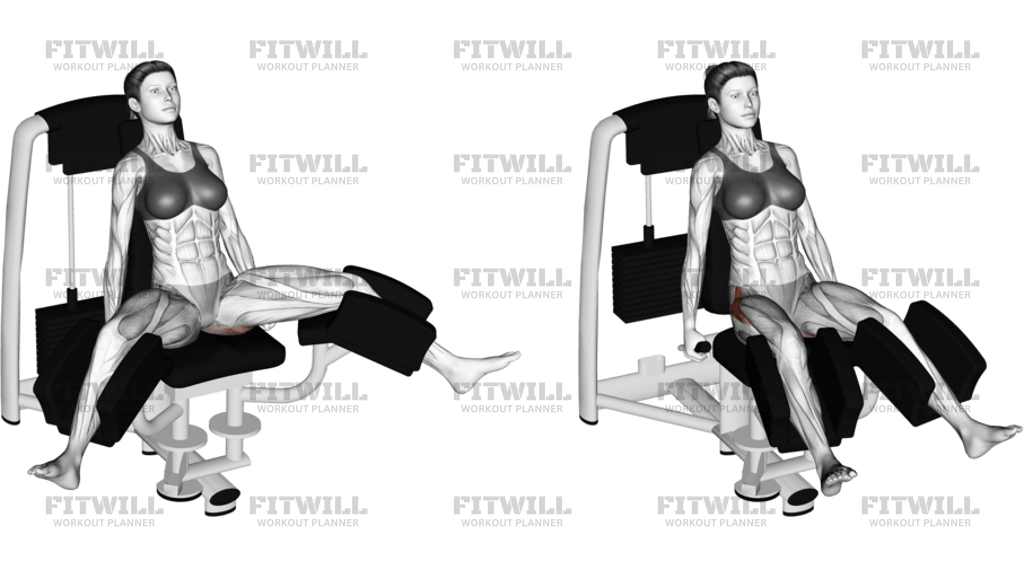
Lever Seated Hip Adduction (VERSION 2) is a seated machine exercise for the inner thighs, especially the hip adductors. The version shown on the machine uses a guided lever path, so the legs travel on a fixed arc instead of requiring you to balance a free weight. That makes the movement useful for focused lower-body work when you want to train the adductors without turning the set into a full-body stability challenge.
The setup matters because the machine has to match your hip and knee position before the first rep. When the seat height is right, your thighs can press smoothly against the pads, your back can stay against the support, and the movement starts from a strong, repeatable position. If the seat is too high or too low, the pads will feel awkward and the hips may twist or shift to find the range.
Each rep should feel like a clean squeeze of the thighs toward the midline. Start from the open position, brace lightly, and bring the pads together with control instead of snapping them shut. A brief pause at the closed position helps you own the contraction, but the return matters just as much: let the legs open slowly so the adductors stay under tension and the stack does not slam.
This exercise fits well as accessory work on leg day, warm-up activation before squats or lunges, or targeted hypertrophy work when the inner thighs need direct attention. It can also help build comfort and strength around the hips for activities that demand leg control and side-to-side stability. Keep the range pain-free, avoid rocking the torso, and choose a load that lets every rep look the same from start to finish.
If the machine feels cramped, shorten the range slightly and keep the pelvis still. The goal is not to force the thighs as far apart as possible; the goal is to create steady tension through the adductors and finish each set with the same posture you started with. That is what makes the movement productive and repeatable.
[ Workout Log & Planner ]
Put your next workout in Fitwill
Keep your plan and training log ready when you are.


Instructions
- Adjust the seat so your knees line up with the machine pivot and your thighs rest evenly against the inner pads.
- Sit tall with your back against the pad, feet supported, and hands on the handles or side grips.
- Start with your legs open only as far as you can keep your pelvis and lower back still.
- Brace your midsection lightly before you move and keep your chest stacked over your hips.
- Exhale as you squeeze your thighs together and drive the pads toward the center line.
- Bring the pads together under control and avoid snapping them shut at the end of the rep.
- Pause briefly at the closed position to feel the inner thighs working.
- Inhale as you slowly let the legs return to the start, keeping tension on the adductors.
- Reset your posture between reps if your hips shift, then repeat for the planned number of repetitions.
Tips & Tricks
- Set the seat first; if the knee pivot is off, the inner-thigh line of pull feels awkward and the reps get harder to control.
- Keep your hips pinned to the backrest so the movement comes from the thighs instead of from the torso rocking forward.
- Do not force the start position wider than your adductors can control; an exaggerated stretch usually turns into pelvic tilt.
- Use a tempo that lets you feel the pads move, especially on the return where many lifters rush and lose tension.
- A short squeeze at the closed position works better than a long hold if the machine stack tends to pull you off balance.
- If your knees or groin feel pinchy, reduce the range and stop before the pads reach the most compressed point.
- Choose a load that lets you control the last third of the opening phase; that is where form usually breaks first.
- Keep your shoulders relaxed and your grip light so you do not brace so hard that your hips start lifting from the seat.
Frequently Asked Questions
What does Lever Seated Hip Adduction (VERSION 2) train most?
It primarily trains the inner thigh adductors, with the hips and pelvis working to stay steady against the machine.
Can beginners perform this exercise?
Yes. It is beginner-friendly if you start light, keep your back against the pad, and control both the squeeze and the return.
How should I set up the seat and pads?
Set the seat so your knees track cleanly with the pivot and your thighs press evenly into the pads without twisting your hips.
What is the most common mistake on this machine?
Most people rush the return or let the pads slam together, which removes tension and makes the set less effective.
Where should I feel the exercise?
You should feel the work mainly along the inner thighs, with the groin area and hips stabilizing the motion.
Can I use a full range of motion?
Use the range you can control without your pelvis rolling or your lower back lifting off the pad.
Is this a good accessory for squats or lunges?
Yes. It can be a useful accessory because stronger adductors help support leg control and hip stability in lower-body training.
How do I make the set harder without loading it too much?
Slow the return, pause briefly at the closed position, and keep every rep smooth instead of chasing more weight.