Resistance Band One Leg Glute Bridge
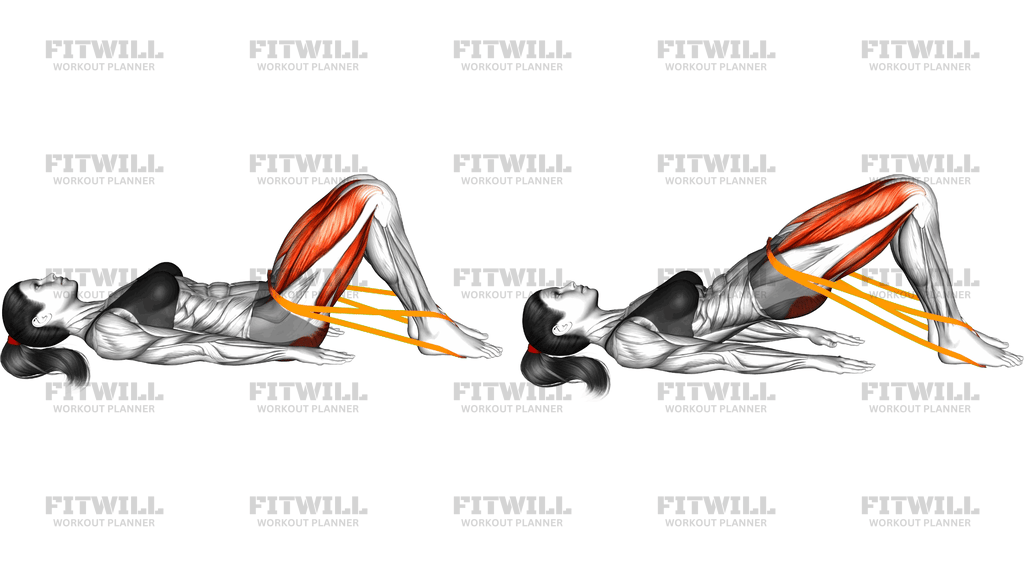
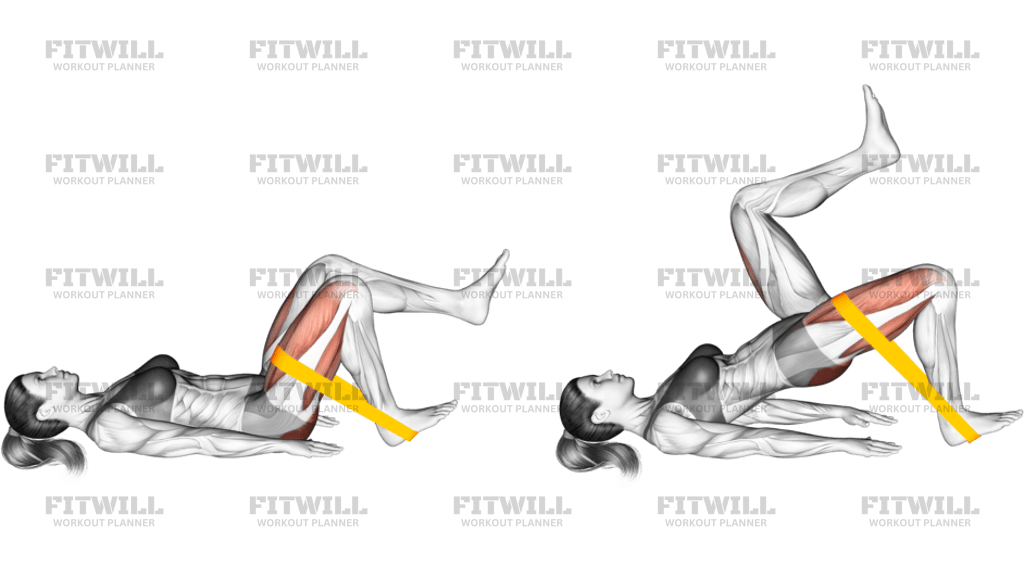
Resistance Band One Leg Glute Bridge is a unilateral floor exercise that trains hip extension, glute strength, and pelvic control while the band adds constant outward pressure on the thighs. The working side has to lift the hips against bodyweight, while the band asks the knees to stay aligned and resist collapsing inward. That combination makes the movement useful for building glute drive, single-leg stability, and cleaner hip mechanics.
The setup matters because the bridge starts from a position where the low back can easily take over if the ribs flare or the pelvis tips. Lie on your back, place the band just above the knees, plant one foot firmly, and keep the other leg off the floor so the hips have to work on one side at a time. Keep the planted heel close enough that the shin stays fairly vertical at the top, and keep the working knee gently pressing out into the band.
On each repetition, drive through the planted heel and squeeze the glute to lift the hips until the torso and thigh form a strong line. The goal is not to over-arch into the lower back or twist toward the lifted leg. Hold the top position long enough to feel tension in the glute and outer hip, then lower with control until the hips are just above the floor or until your pelvis starts to lose position. Breathing should stay steady, with an exhale during the lift and an inhale on the way down.
This is a good accessory exercise for glute-focused training, warmups before squats or deadlifts, or unilateral work when one side feels less stable than the other. It also helps reinforce knee tracking because the band gives immediate feedback if the knee caves inward. If you lose height, feel hamstrings cramp, or feel the low back more than the glute, shorten the range and clean up the setup before adding more resistance.
Use it as a controlled strength or activation drill rather than a speed movement. The best reps are smooth, square, and repeatable, with the hips staying level and the band under tension the whole time. When done well, it teaches the body to produce hip extension from the glute while keeping the pelvis and knee in a safer, more organized position.
Fitwill
Log Workouts, Track Progress & Build Strength.
Achieve more with Fitwill: explore over 9600 exercises with images and videos, access built-in and custom workouts, perfect for both gym and home sessions, and see real results.
Start your journey. Download today!




Instructions
- Lie on your back with the band just above your knees, plant one foot flat, and keep the other leg lifted off the floor.
- Slide the planted heel close enough that your shin stays close to vertical at the top of the bridge.
- Let your arms rest by your sides and set your ribs down so your low back stays long against the floor.
- Press the working knee gently out into the band before you start the rep.
- Exhale and drive through the planted heel to lift your hips off the floor.
- Raise until your shoulder, hip, and planted knee form a straight line without arching your lower back.
- Squeeze the glute at the top and keep the free leg quiet so your pelvis stays square.
- Lower your hips with control until you are just above the floor, then reset and repeat for the next rep.
Tips & Tricks
- Keep the band high on the thighs so it nudges the knees outward without sliding into the joint line.
- Think about pushing the floor away with the planted heel, not the toes, so the glute does the lifting.
- Stop the ascent when your ribs start to flare; extra height usually comes from the low back, not the glute.
- If the free leg pulls your pelvis open, shorten the rep and keep both hip points facing the ceiling.
- A brief pause at the top makes the band tension and glute squeeze much more obvious.
- If your hamstring cramps, move the planted foot a little farther from your hips and reduce the range.
- Keep pressure through the whole foot, but let the heel carry most of the load on the way up.
- Use light band tension first; if the knees buckle inward, the band is too light or the set is too fatigued.
- Lower slowly enough that the pelvis does not drop or twist at the bottom.
- Treat this as a quality drill: once the hips stop staying level, end the set.
Frequently Asked Questions
What does the band do in a one-leg glute bridge?
It creates outward tension on the thighs, which makes you keep the working knee from collapsing inward while the glute lifts the hips.
Which side should I feel most during the bridge?
You should feel the working-side glute doing most of the work, with the outer hip and some hamstring support.
Where should the band sit on my legs?
Place it just above the knees so it stays on the thighs and gives clear feedback without pinching the joint.
How high should I lift my hips?
Lift until your shoulder, hip, and planted knee line up, then stop before your lower back takes over.
Can beginners do this exercise?
Yes. Start with a light band or no band, use a small range, and learn to keep the pelvis level first.
Why does my hamstring cramp during the bridge?
Your foot may be too far from your hips or you may be driving with the leg instead of the glute. Bring the heel slightly closer and shorten the range.
What is a common mistake with the free leg?
Letting the free leg swing or pull the pelvis open. Keep it quiet so the hips stay square to the ceiling.
How do I make this movement harder without losing form?
Use a stronger band, add a pause at the top, or slow the lowering phase before you add more reps.