Dumbbell Alternate Biceps Curl
Dumbbell Alternate Biceps Curl is a standing arm exercise built around one strict curl at a time. You hold a dumbbell in each hand, keep your torso upright, and alternate which arm moves so the working biceps can do the job without help from body swing. The exercise is simple, but the alternating pattern makes setup and posture matter more than people expect: if you lean back, shrug, or drift the elbow forward, the load moves out of the biceps and into momentum.
This movement primarily trains the biceps brachii, with the brachialis, brachioradialis, and forearm flexors helping to stabilize the wrist and elbow. Because one arm stays down while the other curls, each side gets a clear, unilateral challenge and a slightly longer time under tension than a fast two-arm curl. That makes it useful for building arm size, improving left-right balance, and practicing cleaner elbow mechanics.
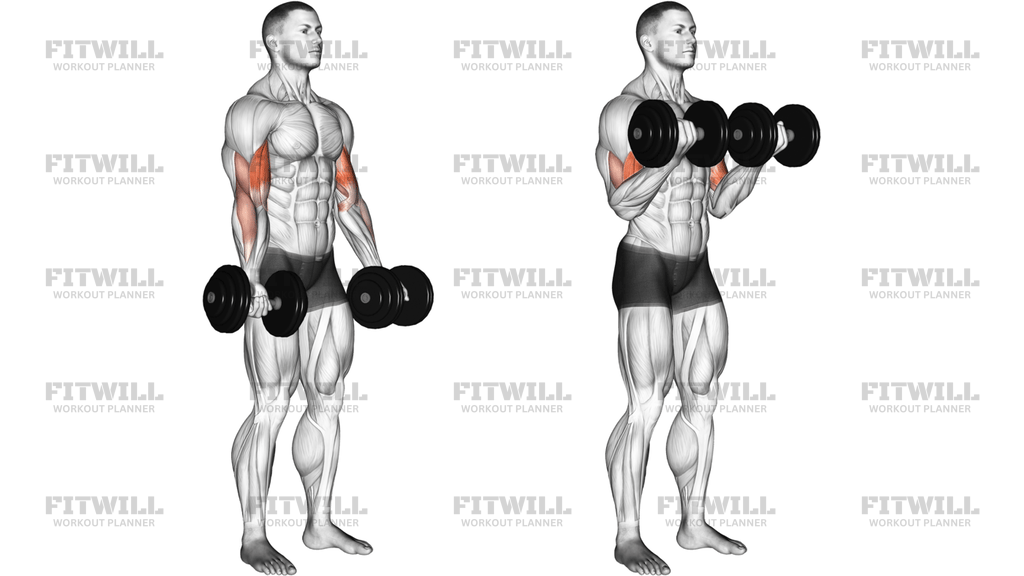
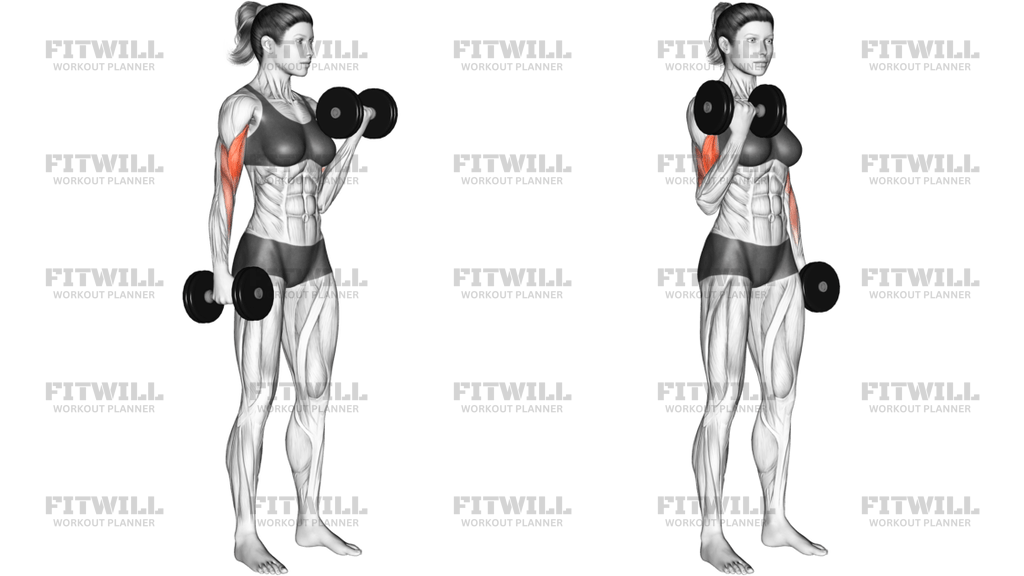
The image shows the classic standing variation: feet planted, arms at the sides, one dumbbell traveling from full extension to a curled finish near the shoulder while the other arm stays still. That setup rewards a quiet torso, elbows tucked close to the ribs, and a smooth turn of the palm as the weight rises. The goal is not to heave the dumbbell upward; it is to keep the upper arm mostly fixed while the forearm closes the elbow.
Use a load that lets you alternate sides without losing the same path on rep one and rep ten. If the shoulders roll forward, the wrists bend back, or the torso starts to rock, the set is too heavy or the tempo is too fast. A controlled lowering phase matters here because the biceps work hard to resist the descent, and that eccentric control is a big part of the training effect.
Dumbbell Alternate Biceps Curl fits well in upper-body training, arm accessories, or any session where you want straightforward biceps work without special equipment. It is beginner-friendly when the dumbbells are light enough to keep the elbows quiet and the finish position clean. Used well, it builds strength you can feel immediately and carries over to other pulling lifts because it reinforces stable elbows, disciplined wrist position, and consistent arm control.
[ Workout Log & Planner ]
Put your next workout in Fitwill
Keep your plan and training log ready when you are.


Instructions
- Stand tall with your feet about hip-width apart and hold a dumbbell in each hand at your sides, arms straight and palms facing your thighs.
- Set your chest up, keep your shoulders down, and stack your ribs over your pelvis so you do not lean back to start the rep.
- Brace your abdomen and keep both elbows close to your ribs before you begin curling.
- Curl one dumbbell toward the same-side shoulder while the other arm stays still at your side.
- As the weight rises, rotate the palm upward and keep the upper arm nearly fixed instead of letting the elbow drift forward.
- Stop when the forearm is close to vertical and the biceps is fully shortened without shrugging the shoulder.
- Squeeze briefly at the top, then lower the dumbbell slowly until the arm is fully straight again.
- Alternate to the other side and repeat with the same control, exhaling on the curl and inhaling on the way down.
Tips & Tricks
- Choose dumbbells that let you keep the non-working arm quiet while the other arm curls; if both shoulders start moving, the load is too heavy.
- Keep your elbow pinned near your torso so the rep happens at the elbow joint instead of becoming a front-shoulder lift.
- Let the wrist stay stacked over the forearm instead of bending backward at the top of the curl.
- Avoid swinging the free arm forward to counterbalance the working side; the alternating pattern should still look controlled.
- Lower the dumbbell slower than you lift it to keep tension on the biceps and reduce cheating on the next rep.
- Stop the curl just short of the shoulder if the upper arm has to travel forward to finish the rep.
- Keep your neck long and your ribs down so the set does not turn into a back-leaning body English curl.
- If grip starts to fail before the biceps do, reduce the load so the forearms are not the limiting factor.
Frequently Asked Questions
What muscles does Dumbbell Alternate Biceps Curl work most?
The biceps are the main target, with the brachialis, brachioradialis, and forearm flexors helping during the curl and the lowering phase.
Should my elbow move forward when I curl the dumbbell?
A little drift happens naturally, but the upper arm should stay close to your side. If the elbow shoots forward, the weight is usually too heavy.
Do I have to turn my palm up during the curl?
Yes, the standard alternate curl finishes with the palm facing up near the shoulder. That supinated finish helps emphasize the biceps instead of turning it into a hammer curl.
Is Dumbbell Alternate Biceps Curl good for beginners?
Yes. It is one of the easiest biceps exercises to learn as long as the dumbbells are light enough to keep the torso still and the elbows tucked.
What is the biggest mistake people make with alternating curls?
Swinging the torso or shrugging the shoulder to get the dumbbell up. The rep should look strict and one arm should stay quiet while the other moves.
Can I do this seated instead of standing?
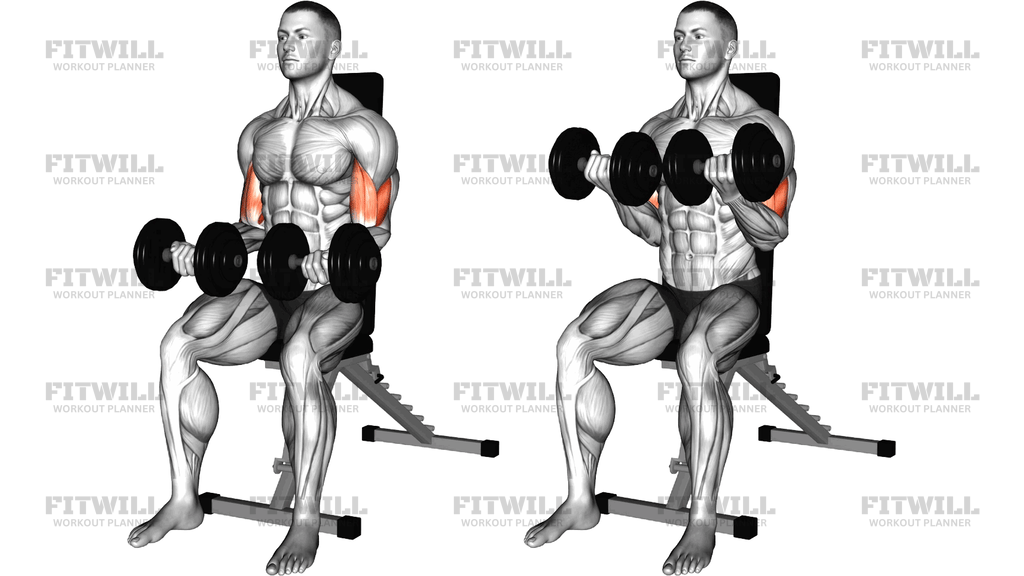
Yes. Seated alternating curls reduce the chance of body sway, which can be helpful if you tend to lean back or cheat the standing version.
How heavy should the dumbbells be?
Heavy enough that the biceps work hard, but light enough that each rep stays smooth and the non-working arm remains still.
Why alternate arms instead of curling both together?
Alternating gives each side more focus, makes it easier to stay strict, and usually reduces the urge to use momentum from both shoulders at once.