Lever Seated Squat Calf Raise On Leg Press
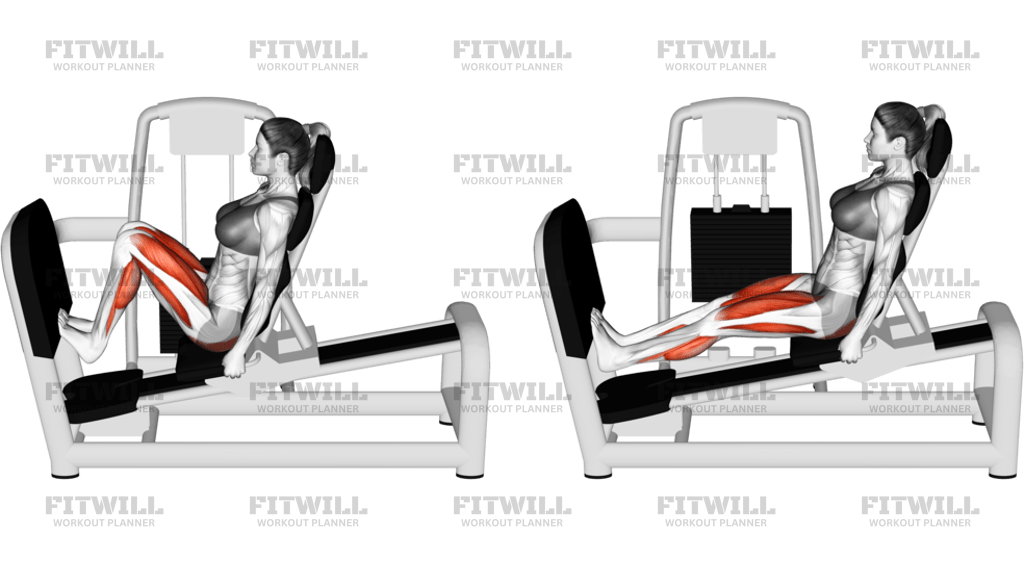
Lever Seated Squat Calf Raise On Leg Press is a machine-based calf raise performed from a seated, back-supported position. The seat and back pad remove balance demands so you can keep the set focused on the ankles: the heels lower into a controlled stretch and then rise by driving through the balls of the feet. That makes the exercise useful for building calf strength, size, and stamina without needing to stabilize a free-weight load.
Because the knees stay bent, the calves work through a position that strongly involves the soleus while still loading the gastrocnemius. The machine lever or leg press platform simply provides resistance; the goal is not to turn it into a knee-dominant press. Set the feet so the forefoot stays planted on the lower edge of the platform, let the heels travel freely, and keep the hips and torso quiet so the ankles do the work.
The setup matters more here than in many standing calf variations. If your feet are too high, the heels may not move enough to create a useful stretch. If the feet are too low or unstable, the pressure can shift into the toes and knees instead of the calf. A stable seat position, a neutral spine against the pad, and even pressure through both feet help you keep the range consistent from rep to rep.
Use a controlled lowering phase and a clean pause at the bottom so the tendon and calf tissues are loaded smoothly rather than bounced. On the way up, lift the heels as high as you can without rolling the feet outward or letting the knees collapse. This is a good accessory exercise for lower-body days, calf specialization work, or higher-rep finishers when you want steady tension and a simple line of motion.
If the machine feels more like a seated leg press than a dedicated calf station, keep the same rule: only the ankles should be moving. The more the hips, knees, and torso stay still, the more directly the exercise hits the calves and the easier it is to judge load, range, and progress.
[ Workout Log & Planner ]
Put your next workout in Fitwill
Keep your plan and training log ready when you are.


Instructions
- Sit against the back pad with your hips down and your chest tall, then place the balls of both feet on the lower edge of the foot platform so your heels can move freely.
- Set your foot width about hip-width apart and keep both ankles lined up so the knees track in the same direction as the toes.
- Unrack or settle the lever into a position where the calves already feel loaded, but the knees are still only softly bent.
- Keep your hands on the handles or seat, brace your torso lightly, and lower your heels under control until you feel a strong calf stretch.
- Drive through the balls of your feet and lift the heels as high as possible without letting the hips shift or the knees lock hard.
- Squeeze at the top for a brief pause while keeping pressure through the big toe and second toe.
- Lower slowly back into the stretch instead of bouncing off the bottom of the rep.
- Repeat for the planned reps, then re-rack the machine and step off only after the lever is secure.
Tips & Tricks
- Keep the forefoot planted on the platform and let the heel travel; if the foot slides forward, the calf loses tension.
- Use a slower lowering phase than lifting phase so the stretch stays smooth instead of snapping at the bottom.
- Press through the big toe and second toe to keep the ankle from rolling outward under load.
- Do not turn this into a knee press; if the hips or knees are moving a lot, reduce the load and tighten the setup.
- A brief pause at the bottom helps you control the stretch and prevents the sled from rebounding.
- A bent knee biases the soleus more, so keep the seat position consistent when you compare sessions.
- If your Achilles tendon feels irritated, shorten the bottom range a little and keep the descent very smooth.
- Higher reps with clean pauses usually work better here than chasing a heavy stack that makes the machine slam.
Frequently Asked Questions
What muscle does Lever Seated Squat Calf Raise On Leg Press target most?
The calves are the main target, especially the soleus with help from the gastrocnemius.
Can beginners perform this exercise?
Yes. Start with a light load and a short range so you can learn the ankle path before adding resistance.
Where should my feet sit on the leg press platform?
Place the balls of your feet on the lower edge of the platform so the heels can drop and rise without sliding.
How low should my heels go?
Only as low as you can control without bouncing or feeling a sharp pull in the Achilles area.
Should my knees stay bent or straight?
Keep a soft bend and let that angle stay mostly fixed; the movement should come from the ankles, not the knees.
Why do I feel this in my feet more than my calves?
That usually means the pressure has shifted too far into the toes. Keep the forefoot planted and drive evenly through the big toe side of the foot.
Is this different from a standing calf raise?
Yes. The seated position and bent knee reduce help from the gastrocnemius and make the soleus work harder.
What is a common mistake to avoid?
Do not bounce the sled or turn the rep into a mini leg press; keep the torso still and let the ankles do the work.