Dumbbell Over Bench Neutral Wrist Curl
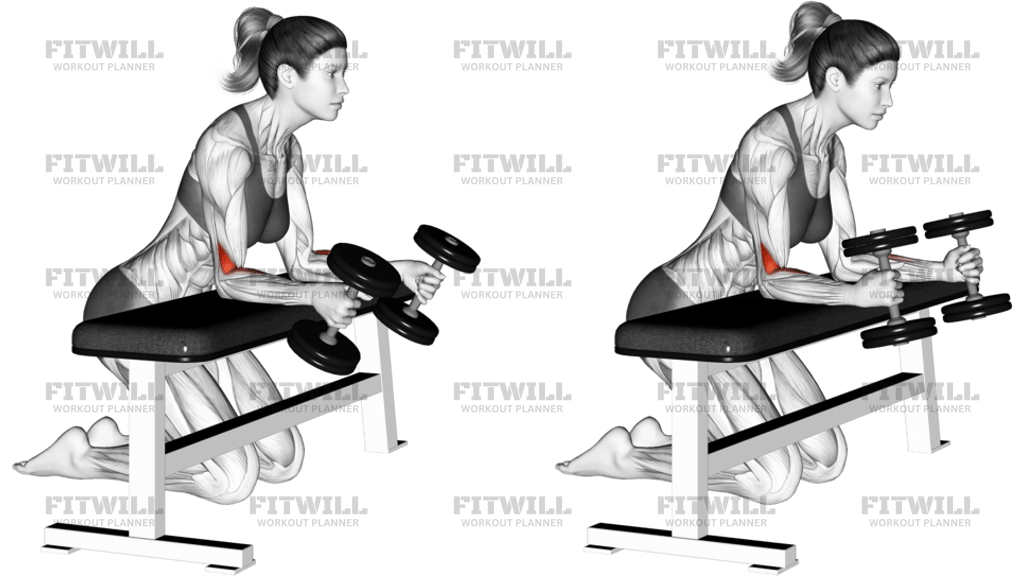
Dumbbell Over Bench Neutral Wrist Curl is a chest-supported forearm isolation exercise that uses a flat bench and a neutral dumbbell grip to load the wrists without asking the torso to do much work. The setup in the image shows the lifter kneeling beside the bench with the chest and forearms supported, which lets the wrists move freely while the upper body stays quiet. That support is the main reason this movement works well as a focused accessory exercise.
This exercise is usually chosen when the goal is to build forearm strength, grip endurance, and better wrist control for pressing, pulling, carries, climbing, or racket and combat sports. Because the hands stay in a neutral, thumbs-up position, the dumbbells line up more naturally with the forearms than in a pronated wrist curl. That makes the movement feel more controlled and can reduce the urge to cheat with shoulder motion or body sway.
The key to Dumbbell Over Bench Neutral Wrist Curl is keeping the forearms fixed on the bench while only the wrists move. Let the dumbbells hang just past the edge, then curl the knuckles toward the forearms through a short, deliberate range. The motion should feel like a precise wrist action, not a big arm lift, and the dumbbells should stay stacked over the wrists instead of rolling into the fingers.
A clean repetition starts from a stable kneeling position with the chest leaning into the pad, elbows and forearms anchored, and the wrists free to move. From there, the wrists curl up, pause briefly near the top, and lower under control until the forearm muscles feel a clear stretch. Breathing should stay calm and even so the trunk does not tense up and steal work from the forearms.
Dumbbell Over Bench Neutral Wrist Curl is most useful as accessory work after compound upper-body training or on an arm and forearm day when you want high-quality tension rather than heavy loading. Start light, because the forearm muscles fatigue quickly and wrist position can break down before the rest of the body feels tired. If the wrists or elbows feel sharp pain, shorten the range and reduce the load before continuing.
[ Workout Log & Planner ]
Put your next workout in Fitwill
Keep your plan and training log ready when you are.


Instructions
- Kneel beside a flat bench and lean your chest onto the pad, with your forearms resting across the edge and your wrists hanging free.
- Hold a dumbbell in each hand with a neutral thumbs-up grip, and let the handles sit in the base of the palms rather than the fingertips.
- Set your elbows and forearms still on the bench so the wrists are the only joints that move.
- Let the dumbbells drop just below neutral until you feel a controlled stretch through the forearms.
- Curl the knuckles toward the forearms without letting the upper arms or shoulders lift.
- Pause briefly at the top when the wrists are fully curled and the dumbbells stay aligned with the forearms.
- Lower the dumbbells slowly back to the start, keeping the grip even and the wrists in line.
- Set the dumbbells down carefully when the set is complete and reset your chest and forearms on the bench before the next set.
Tips & Tricks
- Keep the bench edge just behind your wrists so the dumbbells can travel freely without bumping the pad.
- Use a neutral grip that keeps the thumbs up and the dumbbells from twisting as the wrists curl.
- Think about lifting the backs of the hands toward the forearms, not pulling with the elbows.
- A small range is fine if the dumbbells start drifting into the fingertips or the wrists bend backward at the bottom.
- Choose light dumbbells first; this movement usually fails from wrist position before it fails from whole-body strength.
- Slow the lowering phase so the forearm muscles stay loaded instead of letting the weights drop between reps.
- Keep the shoulders quiet and down on the bench so the upper traps do not take over the set.
- Higher reps often work better here because the forearms respond well to steady time under tension.
Frequently Asked Questions
What muscles does Dumbbell Over Bench Neutral Wrist Curl work?
It mainly trains the forearm muscles that flex and stabilize the wrist, with the grip and wrist flexors doing most of the work. The chest, shoulders, and core mostly hold the setup steady.
Should my chest stay on the bench during Dumbbell Over Bench Neutral Wrist Curl?
Yes. Keeping the chest on the bench and the forearms anchored is what isolates the wrist action and prevents you from turning it into a body-driven lift.
Why is the grip neutral instead of palm-up in Dumbbell Over Bench Neutral Wrist Curl?
The neutral grip keeps the dumbbells aligned with the forearms and makes it easier to control the wrist path. It also reduces the chance of twisting the hands out of position as you curl.
How far should the dumbbells move in Dumbbell Over Bench Neutral Wrist Curl?
Only move through a short, controlled wrist range. Stop before the weight rolls into the fingers or the wrists collapse backward at the bottom.
Is Dumbbell Over Bench Neutral Wrist Curl good for beginners?
Yes, if the load is very light. Beginners usually need a few practice sets to learn how to keep the forearms still on the bench while only the wrists move.
What should I do if my wrists hurt during the curl?
Shorten the range, lighten the dumbbells, and keep the wrists lined up with the forearms instead of letting them fold sharply. Sharp pain is a sign to stop and adjust the setup.
Can I replace Dumbbell Over Bench Neutral Wrist Curl with a barbell version?
Yes, but dumbbells usually feel easier to control because each wrist can move independently. A barbell version is useful only if you can keep both wrists aligned evenly.
Where should I place the dumbbells in my hands for Dumbbell Over Bench Neutral Wrist Curl?
Let the handles sit low in the palms, but not so far into the fingers that the wrists have to grip and curl at the same time. The goal is to keep the dumbbells stable while the wrists do the work.