Dumbbell Seated Zottman Curl
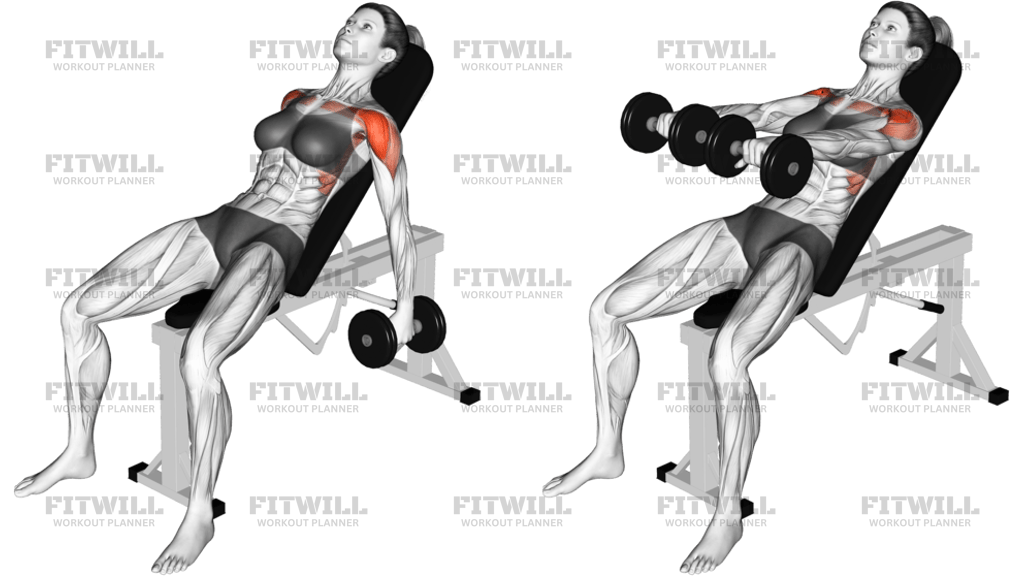
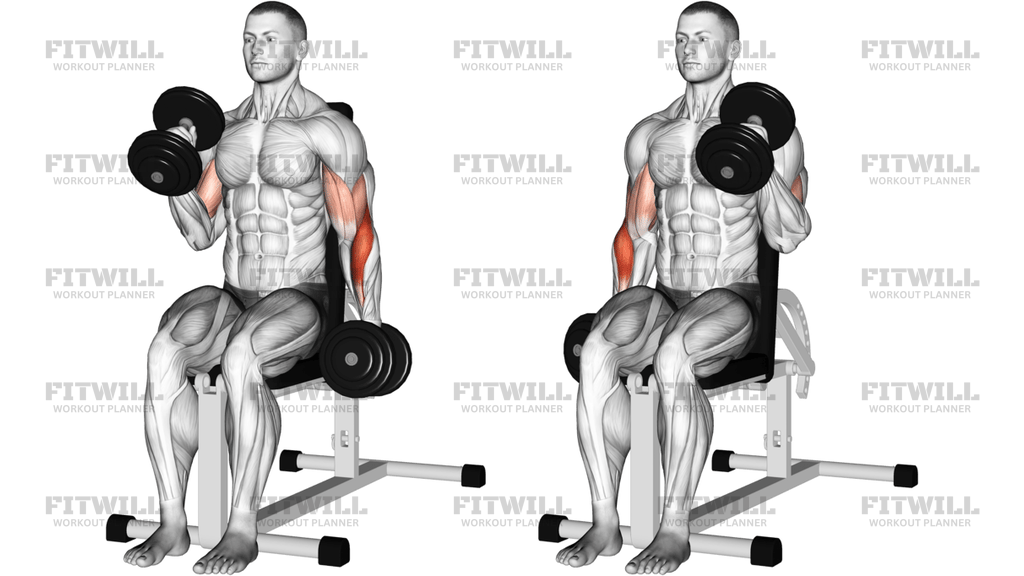
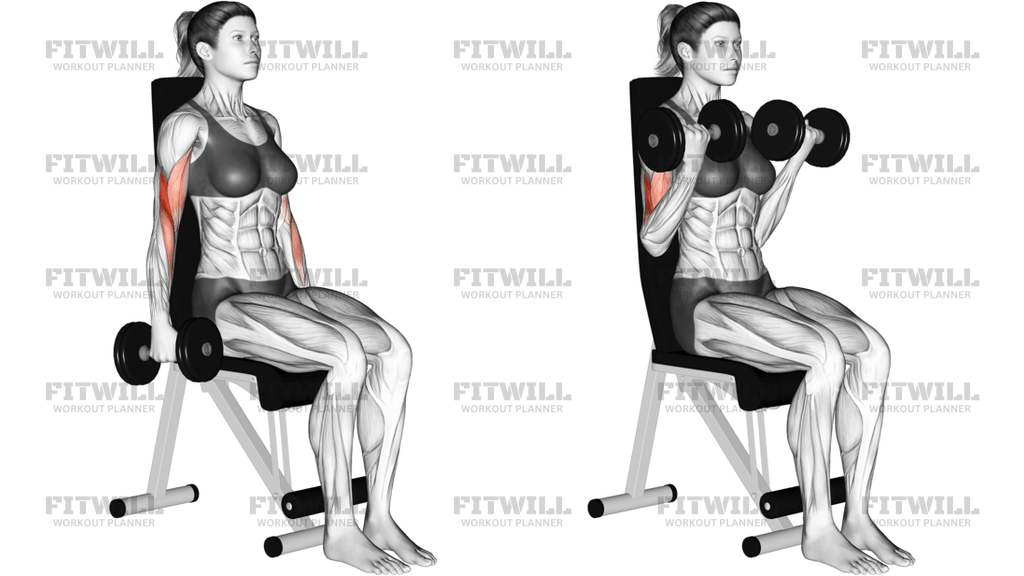
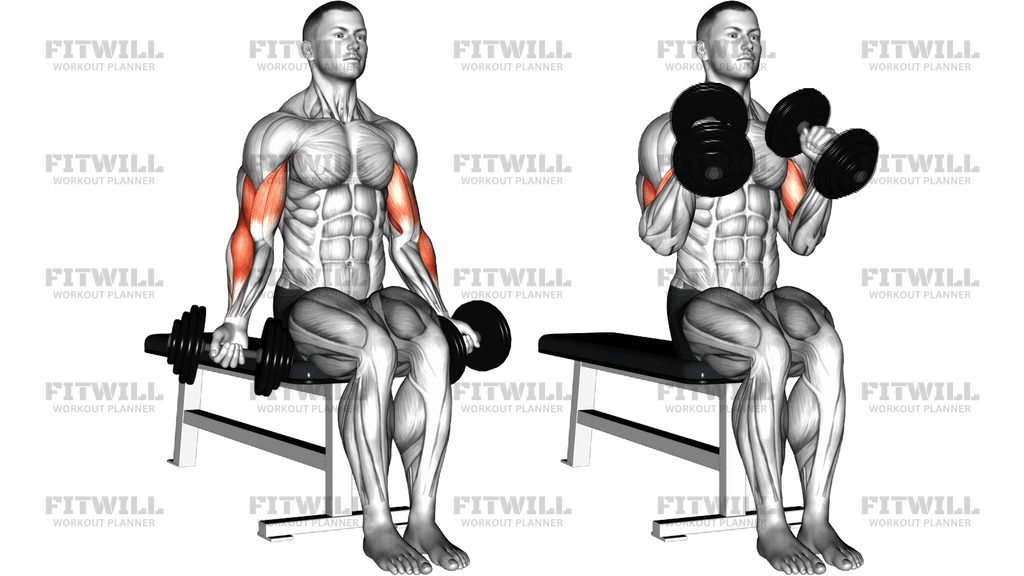
Dumbbell Seated Zottman Curl is a seated dumbbell arm exercise that combines a regular curl on the way up with a pronated lowering phase. The image shows the lifter sitting tall on a bench with the dumbbells hanging beside the thighs, curling both weights up with the palms facing forward, then rotating the wrists so the palms face down before lowering. That two-part grip change is what makes the movement different from a standard curl and why it is especially useful for building biceps strength together with forearm control.
The exercise trains the upper arms first, but it also asks the forearms and wrist stabilizers to stay organized through a very deliberate range. The curling phase emphasizes elbow flexion and biceps tension, while the controlled descent in the overhand position loads the brachioradialis and the forearm extensors more than a normal supinated curl would. Because the movement changes grip at the top, the setup matters: sit with both feet planted, keep the ribcage stacked over the pelvis, and let the elbows stay close to your sides so the dumbbells travel in a clean vertical arc.
The seated position removes most of the leg drive and body sway that often turns curls into a swing. That makes the Zottman curl a good choice when you want stricter arm work, better wrist awareness, and a little more forearm emphasis without changing exercises. Use a weight that lets you rotate the dumbbells smoothly without opening the elbows or leaning back to help the lift. If the dumbbells get too heavy, the grip change usually gets sloppy first, then the lowering phase becomes fast and uncontrolled.
Perform each rep by curling up with a supinated grip, pausing briefly near the top, turning the palms down with control, and lowering slowly until the arms are almost straight. Keep the wrists aligned with the forearms instead of letting them bend backward under the load. The best reps look smooth from start to finish, with the shoulders quiet, the torso still, and the dumbbells moving in the same path every time.
This exercise fits well in arm-focused sessions, upper-body accessory work, or as a technique-based finisher after heavier pulling and pressing. It is friendly for beginners if the load stays light and the wrist rotation feels comfortable, but it still rewards experienced lifters who want cleaner forearm work and better eccentric control. Treat it as a precision movement rather than a momentum drill, and the seated position will do most of the work of keeping the set honest.
Fitwill
Log Workouts, Track Progress & Build Strength.
Achieve more with Fitwill: explore over 9600 exercises with images and videos, access built-in and custom workouts, perfect for both gym and home sessions, and see real results.
Start your journey. Download today!




Instructions
- Sit on a flat bench with a dumbbell in each hand, feet flat, chest tall, and the dumbbells hanging by your outer thighs with your palms facing forward.
- Set your shoulders down and back, keep your upper arms close to your sides, and brace your torso so your trunk stays still.
- Curl both dumbbells upward by bending at the elbows only, keeping the wrists straight as the weights travel toward shoulder height.
- Squeeze briefly near the top without letting the elbows drift forward or the shoulders roll up.
- Rotate both wrists so the palms turn down at the top of the curl while the dumbbells stay close to the body.
- Lower the dumbbells slowly with the palms facing down, keeping the descent controlled all the way to straight elbows.
- Reset the wrists before the next rep so each side starts cleanly in the underhand position.
- Breathe out as you curl and lower under control, then repeat for the planned reps without swinging.
Tips & Tricks
- Use lighter dumbbells than you would for a standard seated curl, because the wrist rotation usually becomes the limiting factor first.
- Keep the elbows pinned near the ribs; if they drift forward, the front delts start taking over the lift.
- Turn the palms over only at the top of the rep, not halfway up, so the curl stays smooth and the forearms do not twist under load too early.
- Lower slowly with the palms down; that eccentric overhand phase is the main reason this exercise is worth doing.
- Keep the wrists stacked over the forearms instead of letting them bend back when the dumbbells get near shoulder height.
- Do not bounce the weights off the thighs or lean back to start the rep, especially on the first repetition.
- If your forearms cramp before your biceps fatigue, shorten the set and keep the rotation crisp instead of forcing extra reps.
- A flat bench is enough; a backrest is optional, but any support should keep your torso from rocking.
Frequently Asked Questions
What makes a seated Zottman curl different from a regular dumbbell curl?
You curl up with the palms facing forward, then rotate to palms-down before lowering. That changes the stress on the forearms and makes the eccentric phase more demanding.
Which muscles work hardest in this exercise?
The biceps do most of the curling, while the brachioradialis and other forearm muscles work harder during the palms-down lowering phase.
Why is the exercise performed seated?
Sitting on the bench makes it easier to keep the torso still and removes leg drive, so the arms have to do the work without momentum.
When should I rotate the dumbbells?
Rotate at the top of the curl, once the elbows are bent and the dumbbells are near shoulder height. That keeps the lifting phase clean and controlled.
What is the most common mistake with the bench and torso position?
People lean back or swing the dumbbells off the thighs. Stay tall on the bench and let the elbows flex, not the lower back.
Can beginners do seated Zottman curls?
Yes, but start with very light dumbbells and smooth wrist rotation. If the overhand lowering feels awkward, reduce the load before adding reps.
Should my palms stay forward the whole time?
No. Palms face forward on the way up, then turn down at the top before the lowering phase begins.
Is this exercise hard on the wrists?
It can be if the dumbbells are too heavy or the wrists bend back. Keep the wrists neutral and choose a load you can rotate smoothly.
Where should the dumbbells travel?
They should move in a close vertical arc near the thighs and ribs, not swing out in front of the body.