Dumbbell Alternate Seated Hammer Curl
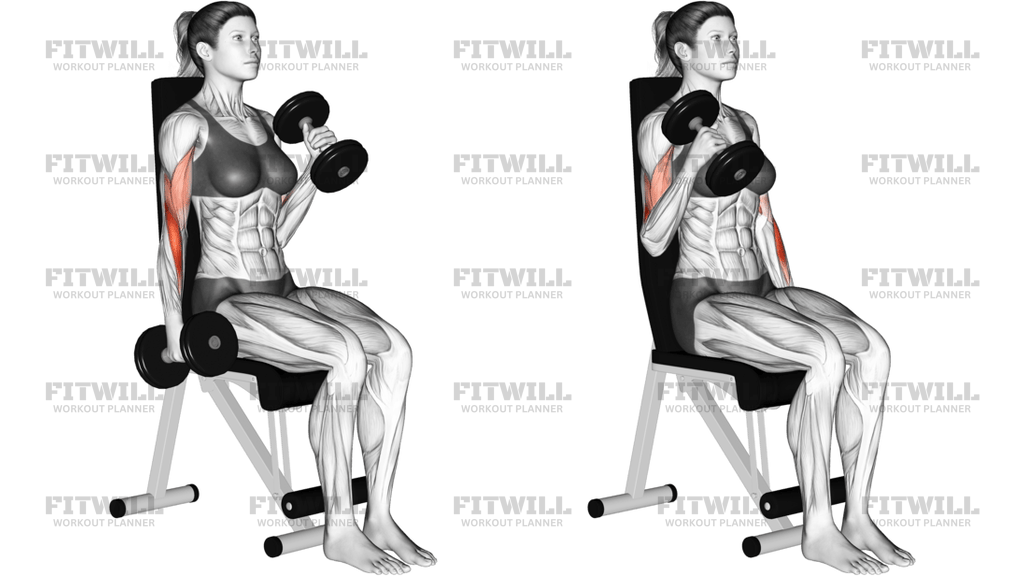
Dumbbell Alternate Seated Hammer Curl is a seated single-arm curl done with a neutral, thumb-up grip and back support, so the biceps can work without much help from body swing. It is a straightforward accessory exercise for building arm size and elbow flexion strength while also challenging the brachialis and brachioradialis. The seated position makes the torso quieter than a standing curl, which is useful when you want the arms to do the work and the reps to stay strict.
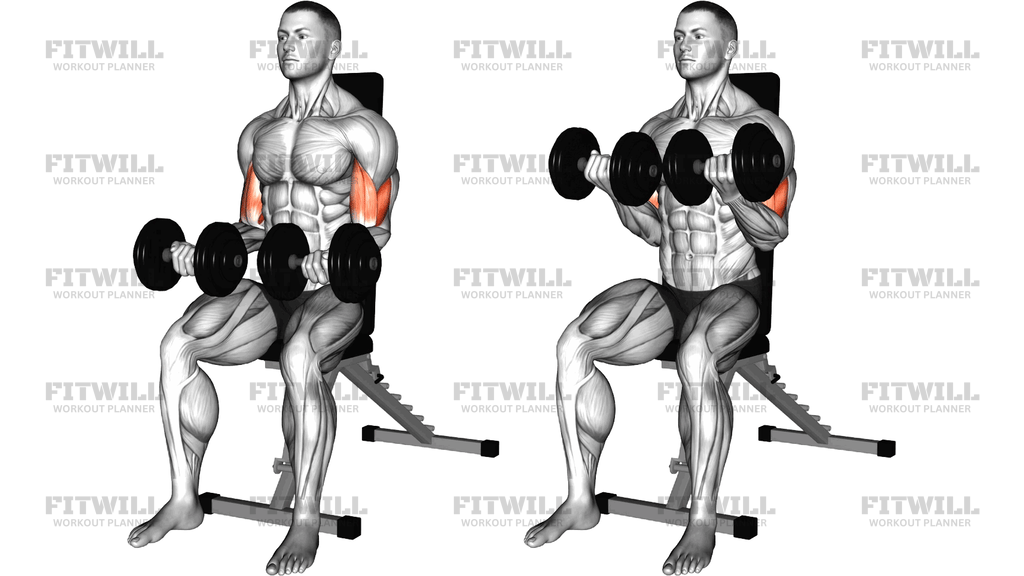
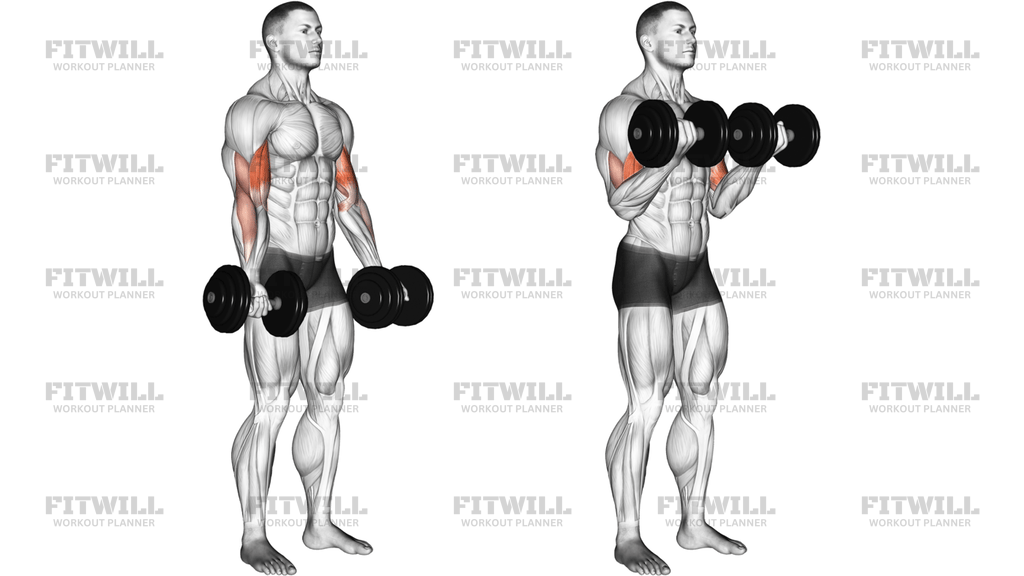
The image shows a lifter seated upright on a bench with the shoulders stacked over the hips, one dumbbell hanging at the side while the other arm curls toward the shoulder. That alternating pattern matters: one arm is working while the other stays still, which lets you focus on elbow position, wrist alignment, and a clean path up and down. Keeping the palm facing inward reduces forearm rotation and shifts the emphasis slightly away from a pure supinated curl.
Set the bench so your back is supported and your feet are flat, then start each rep with both dumbbells hanging by your sides and your elbows close to your torso. The working hand should travel in a smooth arc toward the front of the shoulder without drifting across the body, and the wrist should stay neutral instead of bending backward. The nonworking arm should remain quiet at the side so the alternating rhythm stays controlled rather than rushed.
This exercise is useful when you want arm training that is easier to standardize than a standing curl, especially in upper-body sessions, hypertrophy work, or arm-finisher blocks. The seated setup helps reduce cheating, but it also makes shoulder position more obvious, so shrugging, leaning back, or rocking the torso usually means the load is too heavy. A controlled lower is just as important as the lift because the descent keeps tension on the elbow flexors and forearm muscles.
Treat each rep as a deliberate curl from a dead hang at the side to a firm peak near shoulder height, then lower until the arm is fully extended without snapping the elbow straight. The goal is steady tension and repeatable form, not maximal momentum. If the bench, grip, and alternating rhythm stay consistent, this movement becomes a reliable way to build stronger, fuller-looking upper arms with less noise from the rest of the body.
[ Workout Log & Planner ]
Put your next workout in Fitwill
Keep your plan and training log ready when you are.


Instructions
- Sit on a bench with a backrest, plant both feet flat, and hold a dumbbell in each hand with your palms facing in.
- Let both arms hang straight down beside your thighs and keep your upper arms close to your ribs.
- Brace lightly against the bench back without leaning, arching, or rocking to start the rep.
- Curl one dumbbell by bending only at the elbow and keep the wrist stacked over the forearm.
- Bring the handle toward the front of the shoulder, stopping when the forearm is near vertical and the biceps are fully shortened.
- Lower that dumbbell under control until the arm is almost straight and the shoulder stays quiet.
- Keep the opposite dumbbell still at your side while you curl the other arm, then alternate sides for the full set.
- Exhale as you curl up and inhale as you lower, then reset both shoulders before the next rep.
Tips & Tricks
- Keep the elbows pinned near the torso; if they drift forward, the front delts start stealing the rep.
- Use a neutral wrist from start to finish so the dumbbell sits in line with the forearm instead of folding back.
- Do not let the shoulder roll forward at the top; the curl should finish near the shoulder, not by reaching for it.
- Lower the dumbbell slowly enough that you can feel the brachioradialis and brachialis controlling the descent.
- If your torso starts rocking against the bench, reduce the load and shorten the set before momentum takes over.
- Let the free arm stay completely quiet while the other side works so the alternating pattern stays clean.
- Choose a bench height that lets your feet stay planted and your knees clear the dumbbells on the way down.
- Stop just short of slamming into full lockout if your elbows or forearms feel irritated at the bottom.
Frequently Asked Questions
What muscle does Dumbbell Alternate Seated Hammer Curl target most?
The biceps are the main target, with the brachialis and brachioradialis doing a lot of the work because of the neutral grip.
Why sit with back support instead of standing?
The bench makes it harder to swing the dumbbells, so the curl stays cleaner and the arms do more of the work.
Should my palms turn up at the top?
No. Keep the palms facing in the whole time so the movement stays a hammer curl rather than turning into a supinated curl.
How high should I curl the dumbbell?
Bring it toward the front of the shoulder until the forearm is close to vertical, then stop before the elbow drifts forward.
What should I feel working besides the biceps?
You should feel the brachialis and forearm muscles helping stabilize and lift the dumbbell, especially near the top and during the lowering phase.
Can I curl both dumbbells at the same time?
You can, but the alternating version makes it easier to keep each rep strict and avoid using torso momentum.
What is the biggest form mistake with the seated version?
Leaning back and swinging the weight up is the most common issue; the bench should support you, not become part of the lift.
Is this a good finisher for arm day?
Yes. It works well near the end of an arm session when you want controlled tension without heavy spinal loading.