Dumbbell Hammer Curl On Exercise Ball
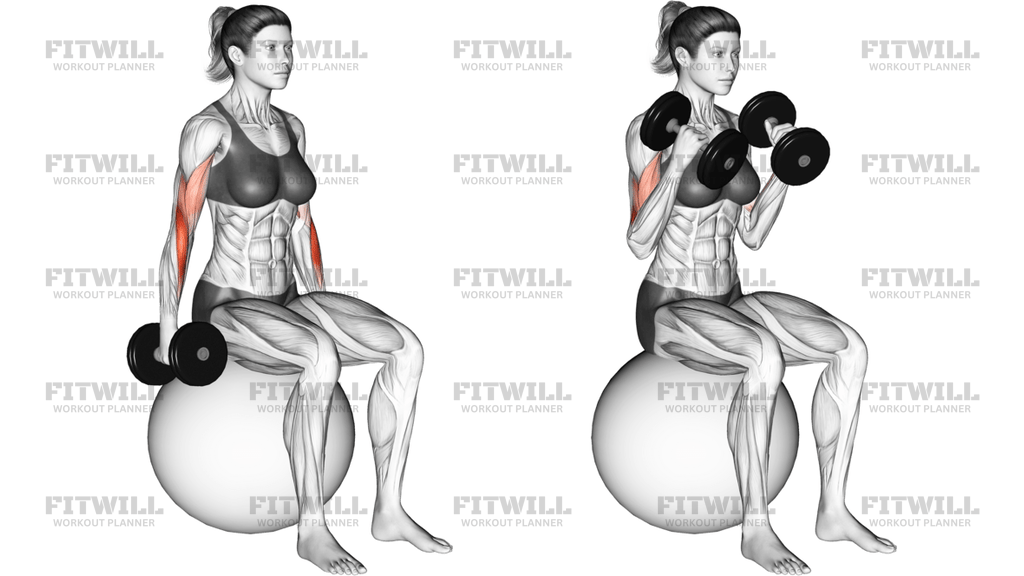
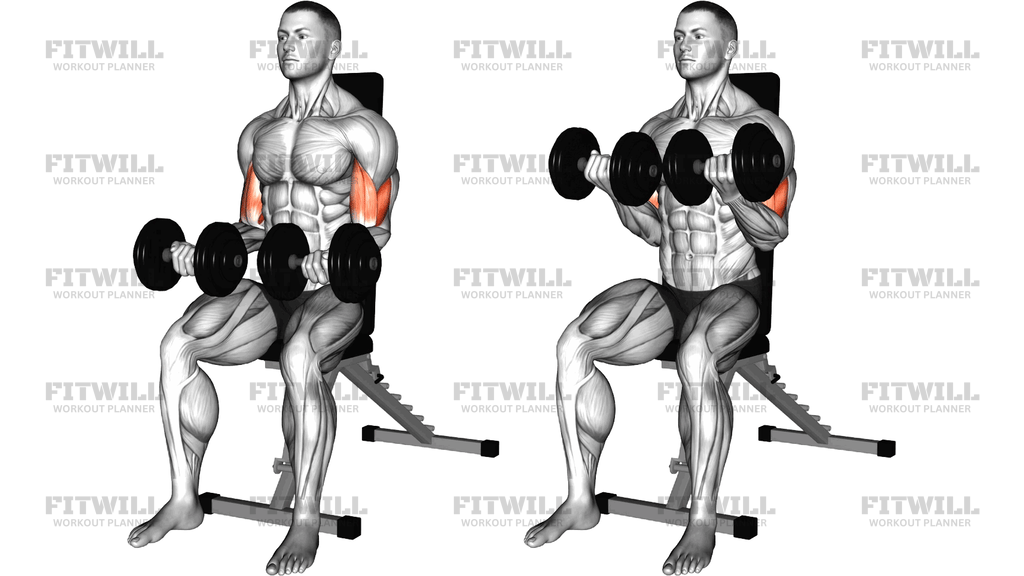
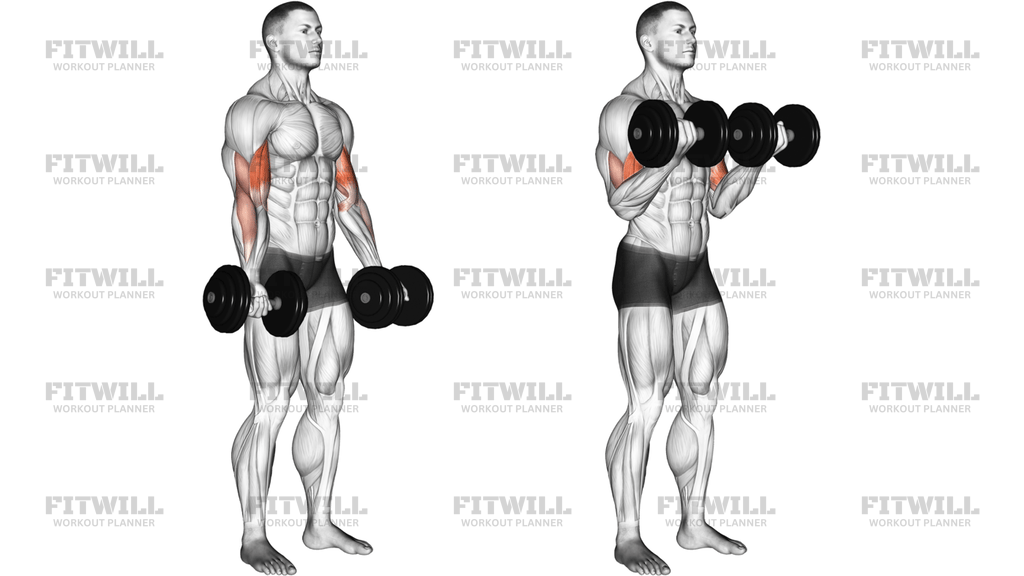
Dumbbell Hammer Curl On Exercise Ball is a seated dumbbell curl variation that keeps the torso supported by an exercise ball while the hands move in a neutral, hammer-style grip. The unstable seat makes the setup matter more than usual: when your feet are planted and your ribs stay stacked over your pelvis, the curl becomes an honest arm exercise instead of a body-swinging lift.
The main demand is elbow flexion with the palms facing inward, so the biceps work alongside the brachialis and brachioradialis. The position also asks the forearms, shoulders, and trunk to stabilize the body while the dumbbells travel. In anatomy terms, the primary work centers on the biceps brachii, with strong help from brachialis, brachioradialis, and forearm flexors.
This movement is useful when you want direct upper-arm work without a bench and with a little extra balance challenge. Sitting tall on the ball encourages clean posture, but only if the ball is large enough for you to sit securely and your feet can press into the floor. If the ball is too soft, too small, or positioned too high, the curl turns sloppy and the shoulders start doing the job the arms should do.
Each rep should start from a long arm position beside the thighs, then curl the dumbbells upward without rolling the shoulders forward or rocking the torso back. Keep the elbows close to your sides, rotate nothing, and finish with the dumbbells near shoulder height or the highest point you can reach without losing the neutral wrist line. Lower the weights under control so the forearms and biceps keep tension through the whole range.
Use this exercise as accessory arm work, a lighter strength-builder, or a controlled hypertrophy movement in an upper-body session. It is a good choice for lifters who want to train the arms while also practicing balance and posture on the ball. The load should be light enough that you can stay centered on the ball, breathe steadily, and finish every rep without bouncing or jerking.
[ Workout Log & Planner ]
Put your next workout in Fitwill
Keep your plan and training log ready when you are.


Instructions
- Sit on the exercise ball with both feet flat on the floor and the dumbbells hanging at your sides in a neutral grip.
- Scoot far enough forward that your hips are centered on the ball, then stack your ribs over your pelvis and keep your chest tall.
- Let your shoulders settle down and back slightly, with your elbows close to your torso and your wrists straight.
- Brace your abdomen and curl both dumbbells upward by bending the elbows, keeping the palms facing in toward each other.
- Stop when the dumbbells reach shoulder level or just below it, without letting the elbows drift forward or the torso lean back.
- Squeeze the upper arm briefly at the top, then lower the weights slowly until the arms are fully lengthened again.
- Keep your feet pressing into the floor and your neck relaxed so the ball stays steady while you move.
- Repeat for the planned number of reps, then place the dumbbells down before standing up from the ball.
Tips & Tricks
- Choose dumbbells you can lift without tipping backward on the ball; stability comes before load here.
- Keep the wrists in line with the forearms so the neutral hammer grip stays strong instead of collapsing inward.
- If your elbows drift in front of your ribs, lower the weight and tighten the upper-arm position.
- A small pause at the top makes the biceps work harder than a fast swing from the hips.
- Lower the dumbbells slowly enough to feel the brachioradialis and brachialis controlling the descent.
- Do not bounce on the ball or bounce the weights off the bottom of the rep; both reduce tension and balance.
- Keep the shoulders quiet; if you feel the front delts taking over, reset your posture and shorten the range slightly.
- Exhale as you curl up and inhale as you lower so your torso stays braced without holding your breath the whole set.
Frequently Asked Questions
What muscle does Dumbbell Hammer Curl On Exercise Ball target most?
The biceps are the primary target, with a strong assist from the brachialis and brachioradialis because of the neutral grip.
Why use an exercise ball instead of a bench?
The ball forces you to stay centered and upright while you curl, so you get arm work plus a small balance challenge.
Should my palms turn up during the curl?
No. Keep the palms facing each other the whole time so it stays a hammer curl, not a regular supinated curl.
How should I sit on the ball for this movement?
Sit high enough that your knees are close to 90 degrees, feet flat, and your torso can stay tall without sliding around.
Can I swing my torso a little to finish the rep?
That usually means the dumbbells are too heavy. Reduce the load and keep the rib cage stacked over the pelvis.
What are the most common mistakes with the dumbbells?
Using too much weight, letting the wrists bend back, and moving the elbows forward are the biggest form leaks.
Is this a good beginner curl variation?
Yes, if you start light and can stay balanced on the ball without leaning back or losing elbow position.
How do I make the exercise harder without using heavier dumbbells?
Use a slower lowering phase, keep the top squeeze longer, or do alternating reps while keeping the ball position perfectly still.