Dumbbell One-Arm French Press On Exercise Ball
Dumbbell One Arm French Press On Exercise Ball is a single-arm lying triceps extension performed with the upper back supported on an exercise ball. The setup turns a straightforward triceps isolation movement into a more demanding stability drill, because you have to keep the ribs, hips, and shoulders organized while one arm moves the dumbbell through the press. The result is a useful combination of arm strength, trunk control, and shoulder position awareness.
The exercise primarily targets the triceps, especially the long head, while the forearms, front shoulder, and midsection help keep the body steady on the ball. In anatomy terms, the triceps brachii do the main elbow extension work, with the forearm flexors, anterior deltoid, and rectus abdominis helping control the dumbbell and keep the bridge from collapsing. That stability demand is the main reason the setup matters: if the feet, hips, and shoulder blades are not placed well, the rep becomes a balance recovery instead of a clean arm extension.
Set the ball under the upper back so the shoulders are supported and the chest stays open, then plant the feet and lift the hips into a solid bridge. The working arm should start with the upper arm angled slightly back and the elbow bent so the dumbbell is near the side of the head. From there, the elbow straightens to drive the weight back up until the arm is vertical again. The upper arm should stay mostly fixed; the forearm is the part that travels.
This movement is best used as accessory work when you want focused triceps loading without needing a bench or cable station. Because the ball adds instability, lighter loads usually produce better results than heavy cheating reps. Keep the neck relaxed, avoid flaring the elbow wide, and do not let the lower back take over when the dumbbell gets harder to control. If the shoulder feels pinched or the ball shifts too much, shorten the range or choose a more stable variation before adding load.
Fitwill
Log Workouts, Track Progress & Build Strength.
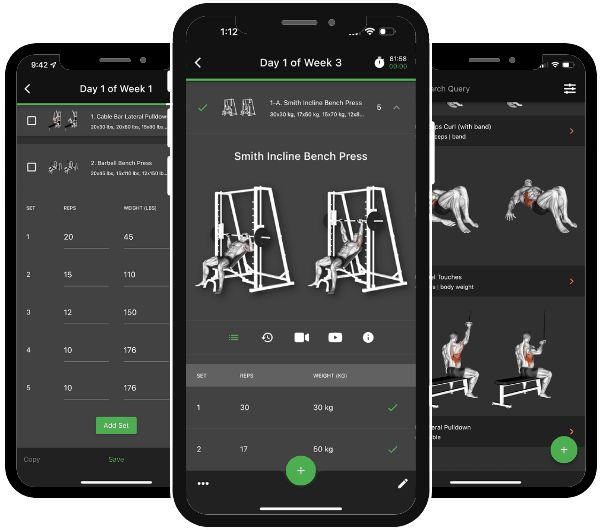
Achieve more with Fitwill: explore over 5000 exercises with images and videos, access built-in and custom workouts, perfect for both gym and home sessions, and see real results.
Start your journey. Download today!


Instructions
- Lie back across the exercise ball with your upper back and shoulders supported, feet flat on the floor, knees bent, and hips lifted so your body forms a strong bridge.
- Hold one dumbbell in the working hand and raise that arm above the shoulder, with the elbow pointing up and the wrist stacked over the elbow.
- Brace your abs and glutes so the ribs do not flare and the ball stays steady under your shoulder blades.
- Slowly bend the elbow and lower the dumbbell in an arc toward the side of your forehead or just behind the head.
- Keep the upper arm mostly still as the forearm moves; do not turn the rep into a shoulder press.
- Lower only as far as you can keep the shoulder comfortable and the bridge from sagging.
- Press the dumbbell back up by straightening the elbow until the arm is vertical again and the triceps finish tight.
- Exhale as you press up and inhale as you lower back under control.
- Reset the hips and shoulder position after each rep if the ball shifts, then repeat for the planned reps before switching sides.
Tips & Tricks
- Choose a lighter dumbbell than you would use on a bench, because the exercise ball makes the rep less stable.
- Keep your feet wider if the ball rolls, and move them in only after the bridge feels steady.
- Let the upper arm stay slightly behind the head so the triceps stay loaded instead of the shoulder taking over.
- Lower slowly and feel the stretch in the triceps; a rushed descent usually makes the dumbbell wobble.
- Keep the wrist neutral so the weight sits over the forearm instead of bending the hand back.
- If your ribs pop up, reduce the load and tighten the glutes harder before the next rep.
- Do not chase a huge range if the elbow starts drifting wide or the ball starts sliding.
- Stop the set when the bridge drops or the elbow path changes, even if the triceps still feel fresh.
- Match the same range and tempo on both sides so the unilateral work stays balanced.
Frequently Asked Questions
What does Dumbbell One-Arm French Press On Exercise Ball train most?
It mainly trains the triceps, especially the long head, with the shoulders, forearms, and core helping you stay stable on the ball.
Why use an exercise ball for this triceps exercise?
The ball forces your upper back, hips, and feet to work together, so the triceps have to extend the elbow without the body drifting or arching.
Where should my upper arm be during the rep?
Keep the upper arm angled slightly back and mostly fixed, with the elbow pointing up so the forearm does the moving.
How far should I lower the dumbbell?
Lower until the triceps are stretched and the shoulder still feels comfortable, usually beside or just behind the head rather than deep into a forced range.
Is this exercise suitable for beginners?
Yes, but only with a light dumbbell and a stable bridge. If the ball feels shaky, start with a bench or floor version first.
What should I do if my elbow flares out?
Reduce the load and slow the descent. A flaring elbow usually means the shoulder is taking over and the triceps tension is leaking away.
Should both feet stay planted on the floor?
Yes. Keeping both feet down makes the bridge more stable and helps prevent the ball from rolling as the dumbbell changes position.
How do I make this exercise easier or harder?
Make it easier by using a lighter dumbbell or switching to a more stable surface. Make it harder by improving control, pausing at the bottom, or adding load only after the bridge stays solid.