Smith Single Leg Split Squat
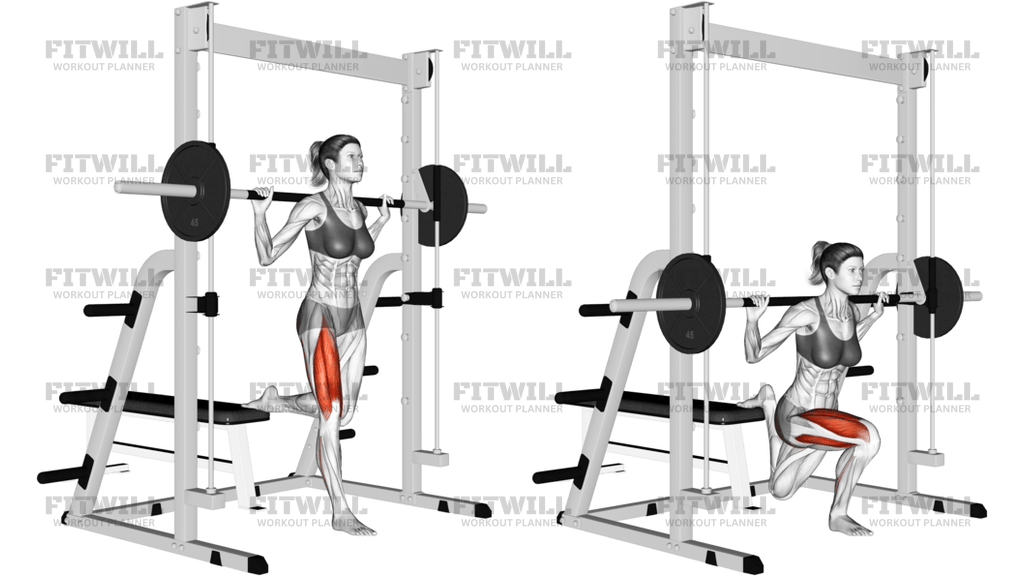
The Smith Single Leg Split Squat is a rear-foot-elevated split squat performed under a Smith machine bar. In the image, the bar sits across the upper back while the front foot stays on the floor and the back foot rests on a bench, creating a long split stance that lets the front leg do most of the work. The fixed bar path makes the exercise feel more guided than a free-weight split squat, but the lift still depends on precise foot placement, steady balance, and clean control.
This variation is a strong quad builder because the front knee can travel forward while the torso stays organized and the rear leg stays mostly passive. That combination increases demand on the front thigh, glute, and adductors without requiring a lot of upper-body stabilization. It also makes the exercise useful for lifters who want a single-leg pattern with a more predictable load path than dumbbells or a barbell.
Setup matters a lot here. If the front foot is too close, the knee gets jammed and the heel may lift; if it is too far away, the front leg loses leverage and the set turns into a hip-dominant lunge. The best starting position usually leaves the front shin angled naturally, the heel planted, the rear foot relaxed on the bench, and the bar centered over the working leg. Once that position is set, each rep should feel like a smooth descent and a direct drive back to standing rather than a bounce or a push from the back leg.
During the rep, lower under control until the rear knee approaches the floor and the front thigh reaches a deep, pain-free position. Keep the front knee tracking over the toes instead of collapsing inward, and keep the torso slightly inclined without rounding. On the way up, press through the front midfoot and heel, keep the bar steady, and finish by standing tall without shifting your weight to the back foot. Breathing should stay deliberate: inhale and brace before the descent, then exhale as you drive up.
Use this exercise when you want single-leg strength, quad size, and better left-right balance in a controlled machine setup. It fits well in lower-body strength blocks, hypertrophy work, or accessory sessions after main squats and deadlifts. The Smith machine reduces balance noise, but it does not remove the need for good mechanics, so the safest and most productive sets are the ones where the front leg controls the full range and the bar path stays smooth from start to finish.
[ Workout Log & Planner ]
Put your next workout in Fitwill
Keep your plan and training log ready when you are.


Instructions
- Set the Smith bar across your upper back and stand under it with your front foot flat on the floor and your back foot resting on a bench behind you.
- Step far enough forward that your front heel stays down when you lower, and line the front foot up under the bar path.
- Unrack the bar, keep your ribs stacked over your pelvis, and brace before the first descent.
- Lower by bending the front knee and hip together while the back knee travels down toward the floor.
- Keep most of your weight on the front leg and let the rear foot stay relaxed on the bench.
- Descend until the front thigh is near parallel or as deep as you can go without losing heel contact or knee tracking.
- Drive up through the front midfoot and heel to return to standing, keeping the bar steady over the working leg.
- Pause briefly at the top, then reset your stance and repeat for the planned reps before racking the bar.
Tips & Tricks
- Place the front foot so the knee can travel forward without the heel peeling up; that distance usually gives the cleanest quad tension.
- Keep the rear foot light on the bench instead of pushing off it; the back leg should support balance, not drive the rep.
- A slight forward torso lean is normal, but if your chest drops hard toward the floor, the load is shifting away from the front leg.
- Let the front knee track over the second or third toe instead of forcing it straight back behind the toes.
- If the Smith bar feels like it wants to pull you onto your toes, move the front foot a little farther forward and re-center the bar over midfoot.
- Stop the descent before the pelvis tucks under or the lower back rounds to get extra depth.
- Use a slower lowering phase than the lifting phase so the front quad stays loaded instead of bouncing out of the bottom.
- Choose a load that lets each side look nearly identical; this movement is easy to cheat by twisting, leaning, or shoving off the bench.
Frequently Asked Questions
What muscles does the Smith Single Leg Split Squat train most?
It primarily targets the front-leg quads, with strong help from the glutes and adductors. The rear leg and trunk work mainly to stabilize the position.
Why is the rear foot placed on the bench?
The bench elevates the back foot so the front leg can move through a deeper split-squat range. It also keeps the rear leg out of the way and makes the set more focused on the working leg.
Should the front knee travel forward past the toes?
Yes, it can as long as the heel stays planted and the knee tracks over the toes. For this movement, that forward travel is often what creates the best quad stimulus.
How far should I stand from the Smith bar?
Far enough that the front heel stays down and the bar stays centered over the front foot during the descent. If you feel jammed or pulled onto your toes, adjust the stance before adding weight.
Can beginners use this exercise safely?
Yes, if they start light and keep the range controlled. The Smith machine helps with balance, but the front-leg setup still needs to be dialed in.
What is the most common form mistake?
Pushing off the rear foot is the biggest cheat. Another common error is letting the front heel lift and turning the rep into a forward lunge on the toes.
How deep should I go on the way down?
Go as deep as you can while keeping the front heel planted, the torso controlled, and the pelvis from tucking. For most lifters, that is around the point where the front thigh is near parallel or slightly below.
What can I use instead if the Smith path feels awkward?
A dumbbell split squat or Bulgarian split squat is the closest substitute. Those versions let you adjust the bar path to your own stance more freely.