Dumbbell Decline Triceps Extension
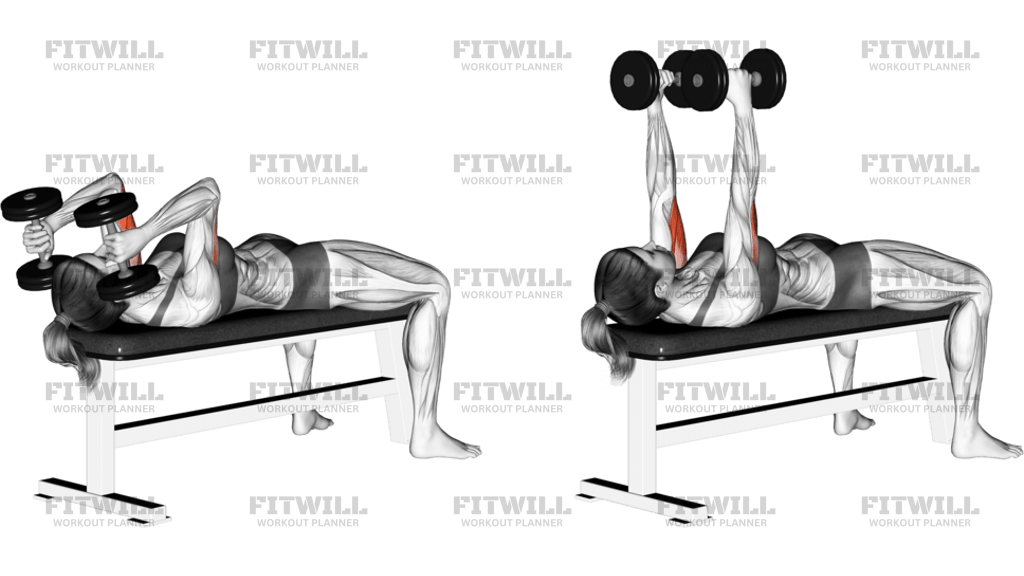
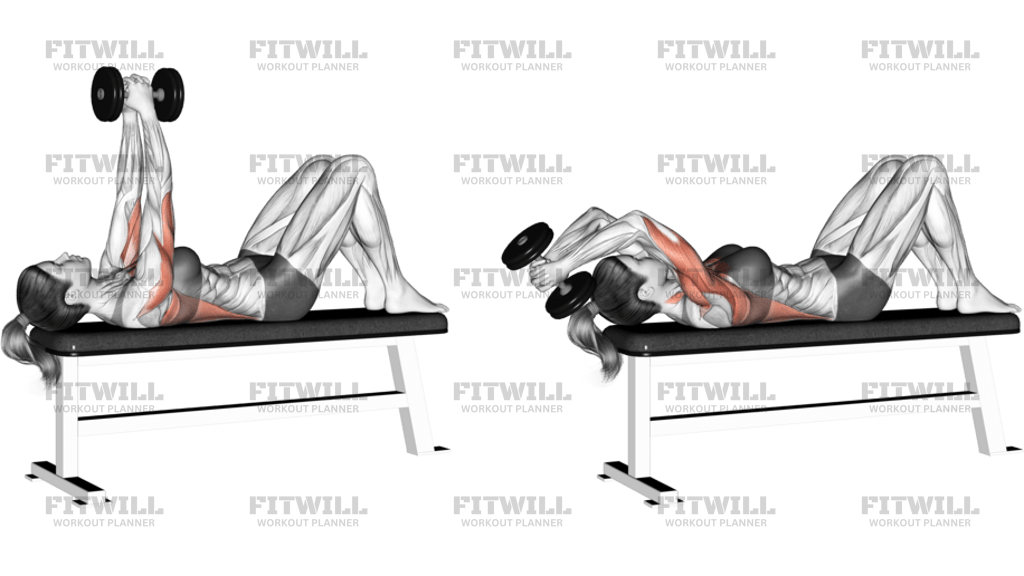
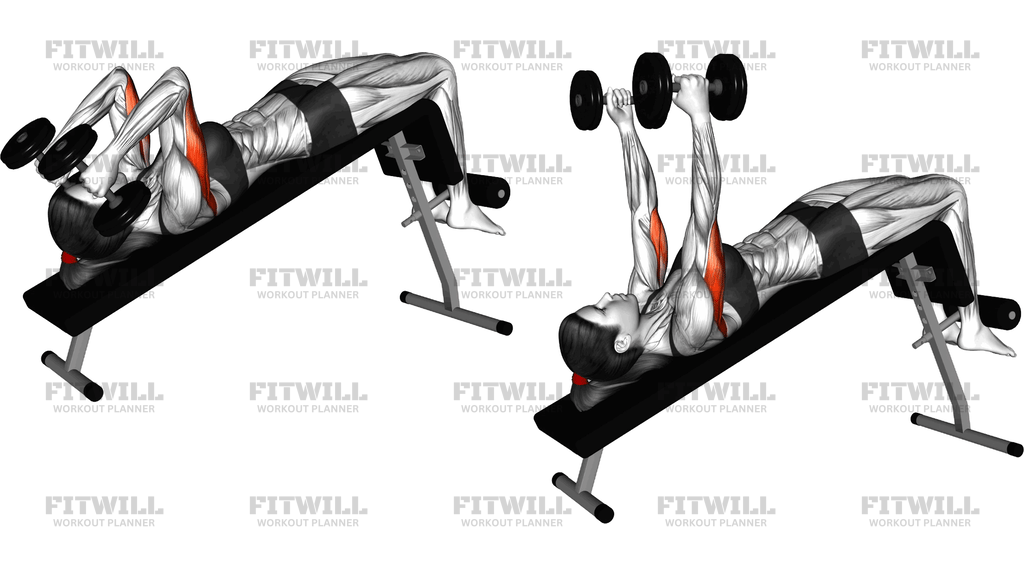
Dumbbell Decline Triceps Extension is a decline-bench isolation exercise that puts the triceps under tension through elbow flexion and extension while your upper arms stay mostly fixed. The decline angle changes the line of pull compared with a flat-bench skull crusher, and that makes the setup important: your shoulders, head, and feet need to stay anchored so the elbows can do the work instead of the torso drifting.
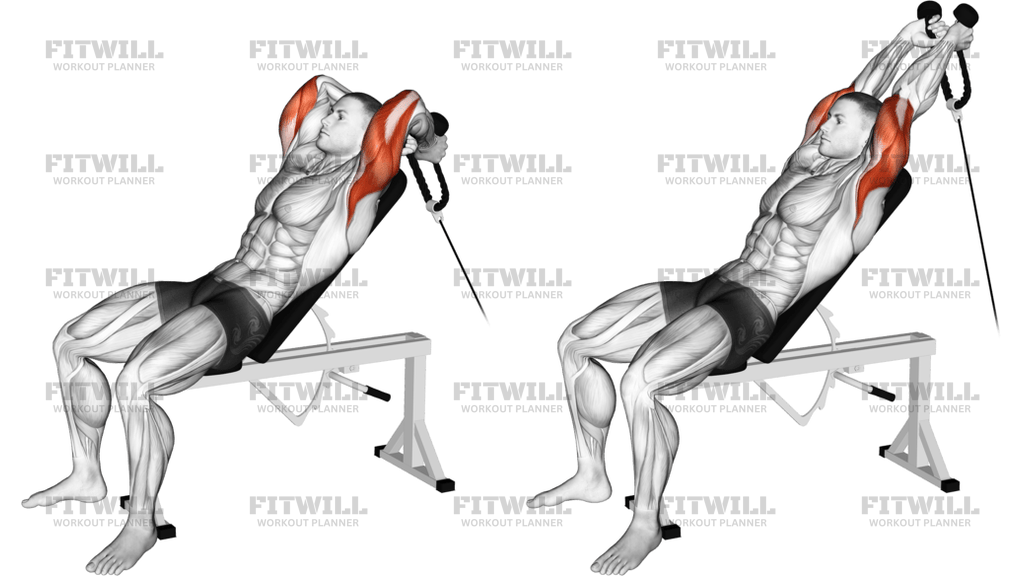
This movement is primarily for the triceps brachii, with the forearms helping to keep the dumbbells steady, the shoulders helping to stabilize the upper arm position, and the core helping you stay set on the bench. In practice, the exercise is useful when you want direct elbow-extension work without heavy shoulder movement or full-body momentum. It is a good accessory choice for triceps size, lockout strength, and strict pressing support.
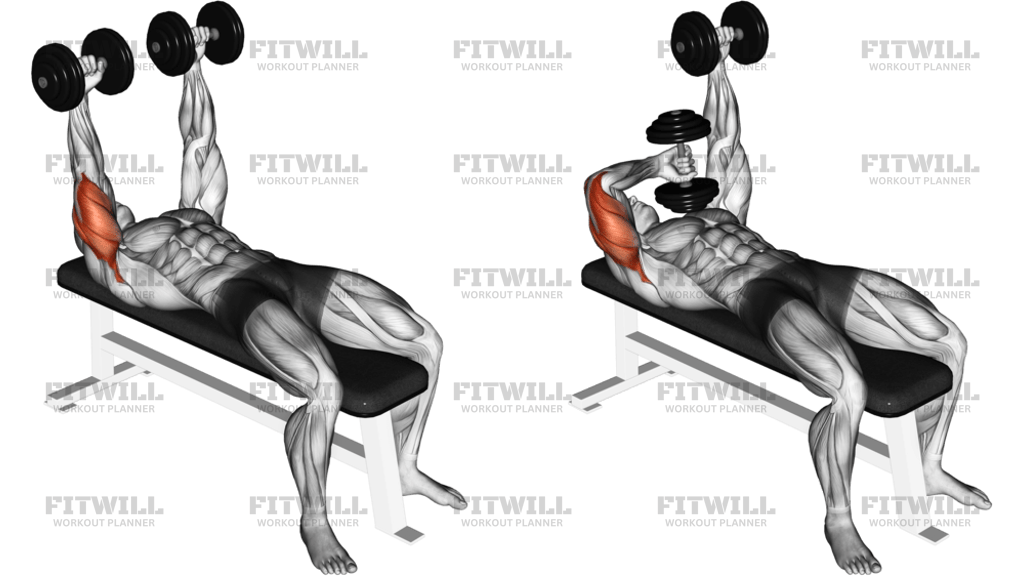
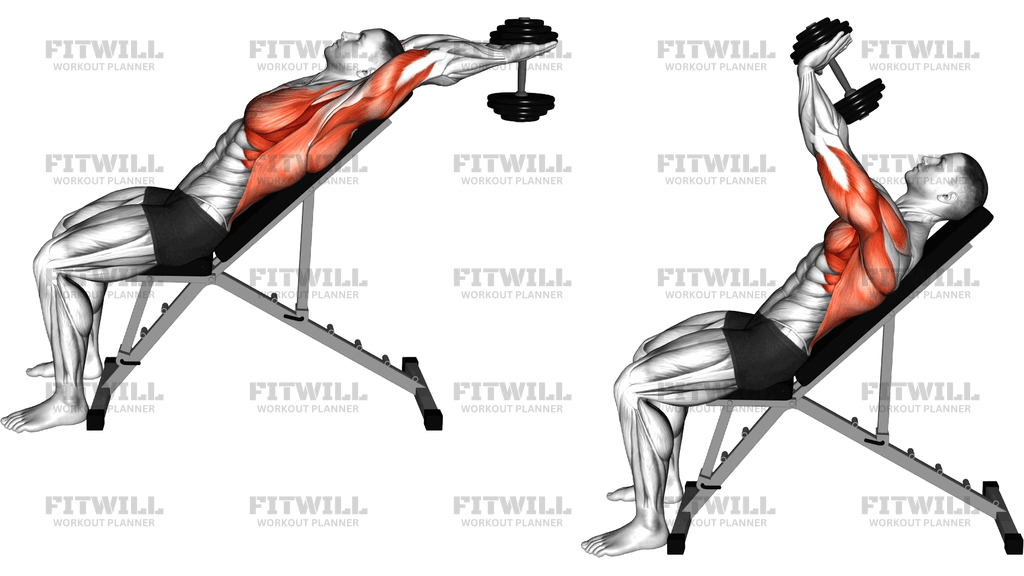
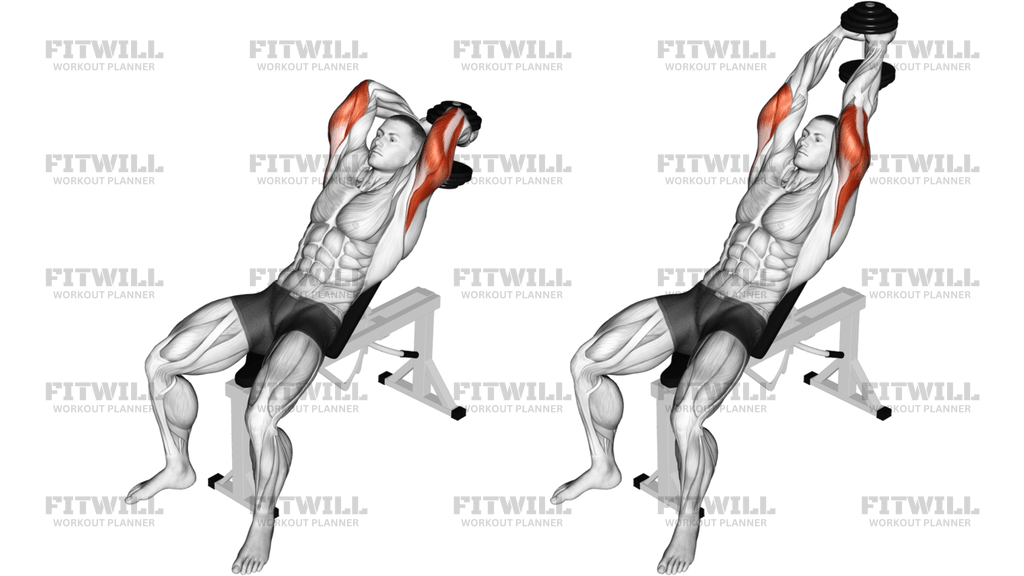
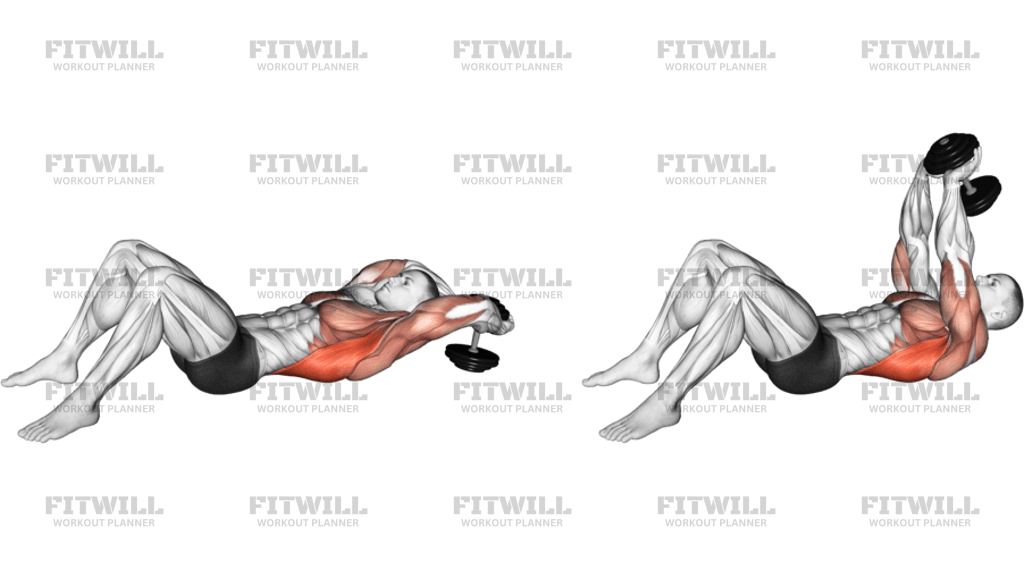
The bottom position should feel like a deep but controlled triceps stretch: the dumbbells lower toward the sides of the forehead or just behind it, the elbows bend while staying pointed up, and the upper arms should not flare wide. From there, extend the elbows smoothly until the dumbbells stack over the shoulders again. The movement should look deliberate and compact, not like a pullover or a chest press. If the shoulders take over, the load is too heavy or the setup has drifted.
Because the bench is declined, body control matters more than it does on the floor or a flat bench. Secure your feet, keep your ribs down, and avoid turning the rep into a shrug or a swing. A clean set uses a controlled lowering phase, a brief change of direction without bouncing, and a strong elbow lockout while the wrists stay neutral. That makes the exercise more triceps-dominant and easier to repeat rep after rep.
Use this exercise when you want focused arm work, usually after your main pressing lifts or as part of an arm-focused session. It works well for moderate to higher repetitions with strict tempo, but only if the elbows feel comfortable and the bench setup is stable. If the movement causes elbow irritation or your shoulders cannot stay fixed on the decline bench, reduce the range of motion, lower the load, or choose a more joint-friendly triceps variation.
Fitwill
Log Workouts, Track Progress & Build Strength.
Achieve more with Fitwill: explore over 9600 exercises with images and videos, access built-in and custom workouts, perfect for both gym and home sessions, and see real results.
Start your journey. Download today!




Instructions
- Set a decline bench to a secure angle and lie back with your head supported and your feet locked in place.
- Hold a dumbbell in each hand with a neutral grip and press the weights straight above your shoulders.
- Keep your upper arms mostly vertical and slightly angled back so the elbows stay in the same place throughout the set.
- Brace your ribs down and lower the dumbbells by bending only at the elbows.
- Bring the weights toward the sides of your forehead or just behind it without letting the elbows flare wide.
- Pause briefly in the stretched position while keeping the wrists stacked over the elbows.
- Extend the elbows to return the dumbbells to the start position over the shoulders.
- Exhale as you press up, inhale as you lower, and stop the set if the shoulders, elbows, or torso start to move together.
Tips & Tricks
- Keep the upper arms quiet. If they drift forward and back, the movement turns into a press instead of a triceps extension.
- Lower the dumbbells toward the sides of the forehead, not toward the chest. That keeps tension on the triceps through the whole rep.
- Use a neutral wrist and let the dumbbells sit over the heel of the hand so the elbows do not have to fight a bent wrist.
- Choose a load that lets you own the bottom position. If you have to swing the weights back into place, the set is too heavy.
- Keep your elbows pointed mostly up. Wide elbows shorten the triceps line of pull and usually shift stress to the shoulders.
- Do not bounce out of the stretched position. A brief pause makes the rep cleaner and protects the elbows.
- Keep your ribs down against the bench so the lower back does not arch to create fake range of motion.
- If the decline angle feels awkward, reduce the load before you change the path. The movement should stay smooth and repeatable.
Frequently Asked Questions
What does the Dumbbell Decline Triceps Extension work most?
It mainly targets the triceps brachii through elbow extension, with the forearms, shoulders, and core helping to stabilize the position.
Why use a decline bench for this triceps extension?
The decline position locks the torso into a stable angle and changes the resistance line, which can make the triceps work feel more direct than on a flat bench.
Where should the dumbbells travel?
Lower them toward the sides of the forehead or slightly behind it, then press them back over the shoulders without drifting toward the chest.
How should my elbows move during the rep?
The elbows should stay fairly fixed and point mostly up. They bend and straighten, but they should not flare wide or slide all over the bench.
Is this the same as a skull crusher?
It is the same family of movement. The decline bench and dumbbells change the feel, but it is still a lying triceps extension pattern.
What usually goes wrong with this exercise?
Common mistakes are letting the shoulders take over, dropping the dumbbells too low, or using so much weight that the elbows open and close with momentum.
Can beginners do Dumbbell Decline Triceps Extension?
Yes, if they start light and keep the elbows, wrists, and bench position controlled. A smaller range of motion is fine at first.
What is a good substitute if my elbows do not like it?
Try a cable triceps extension, rope pressdown, or a lighter flat-bench triceps extension to reduce joint stress and make the path easier to control.