Dumbbell One-Arm Seated Neutral Wrist Curl
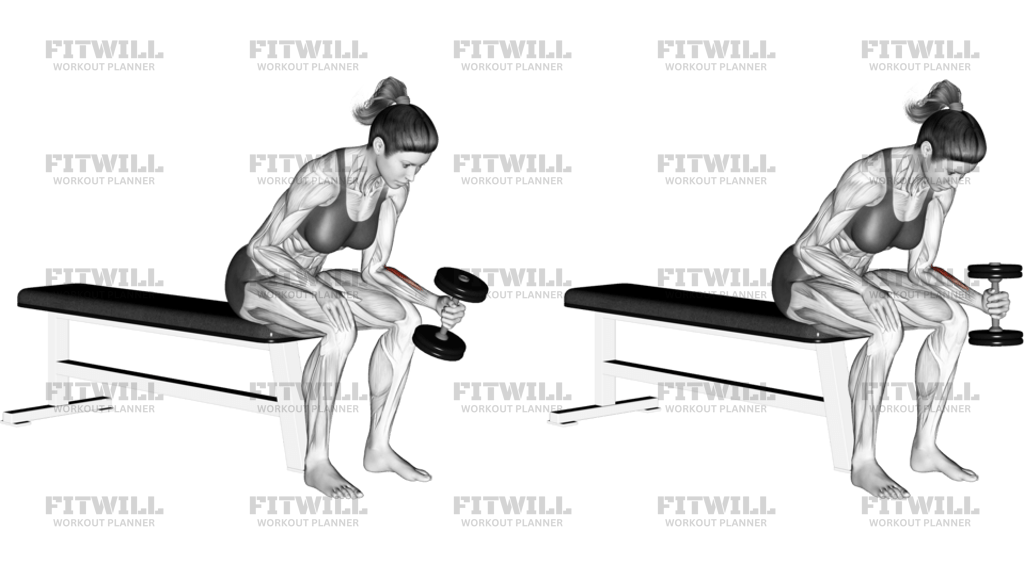
Dumbbell One-Arm Seated Neutral Wrist Curl is a focused forearm exercise that trains wrist flexion one side at a time while the upper arm stays out of the way. It is a small, precise movement, but that is exactly why it is useful: you can build tolerance, control, and local forearm endurance without turning the set into a full-arm lift. Lifters who want stronger grip support, climbers who need more wrist and hand stamina, and anyone trying to shore up forearm balance will get value from this exercise.
The seated setup matters because it locks the shoulder and elbow into a cleaner position and leaves the wrist to do the work. Sit on the edge of a flat bench, brace the forearm against the same-side thigh, and let the dumbbell hang just past the knee so the wrist can move freely. That support removes a lot of body English, which makes it easier to feel the forearm flexors instead of cheating with the biceps, shoulder, or torso. It also gives you a clear bottom position, which helps you compare side to side and spot restrictions in one wrist before they turn into bigger issues.
On each repetition, the wrist should curl the dumbbell upward in a short, controlled arc while the forearm stays planted on the thigh. Keep the grip neutral and the thumb pointing up so the forearm does not rotate into a different curl variation. Exhale as you lift, squeeze briefly near the top, then lower slowly until the wrist opens under control. The rep should feel like a clean hinge at the wrist, not a swinging movement through the whole arm. When the path stays strict, even a light dumbbell creates a strong forearm burn and teaches the hand to hold position without excess tension elsewhere.
Dumbbell One-Arm Seated Neutral Wrist Curl is useful as accessory work after bigger pulls, as a warm-up for forearm tissues, or as a high-rep finisher when grip and wrist endurance matter. Because the range is short, the main challenge is precision, not load, so lighter dumbbells are usually more productive than heavy ones. Keep the reps smooth, switch sides evenly, and stop the set if the elbow starts drifting off the thigh or the wrist loses its clean line. If the bottom position feels irritating, shorten the range a little and keep the same slow tempo rather than forcing a deeper drop.
Fitwill
Log Workouts, Track Progress & Build Strength.
Achieve more with Fitwill: explore over 9600 exercises with images and videos, access built-in and custom workouts, perfect for both gym and home sessions, and see real results.
Start your journey. Download today!




Instructions
- Sit on the edge of a flat bench with your feet flat and your working side closest to the edge.
- Brace the forearm of the working arm across the same-side thigh, just above the knee, and let the wrist and dumbbell hang off the front of the leg.
- Hold the dumbbell in a neutral grip with your thumb pointing up and your wrist relaxed but not twisted.
- Keep your upper arm still and your shoulder quiet before you start the first rep.
- Curl the dumbbell upward by flexing the wrist only, keeping the forearm pressed into the thigh.
- Lift until the knuckles rise and the forearm feels fully contracted without bending the elbow or rotating the hand.
- Pause briefly at the top, then inhale and lower the dumbbell slowly back to the hanging position.
- Repeat for the planned reps, then place the dumbbell down and switch sides.
Tips & Tricks
- Keep the forearm anchored on the thigh; if the elbow slides forward, the set turns into a loose arm curl.
- Use a light dumbbell first, because this movement has a short range and heavy weight usually just bends the wrist harder.
- Let the dumbbell hang deep enough to stretch the forearm, but stop before the fingers get yanked open or the wrist feels sharp.
- Keep the thumb pointing up the whole time so the forearm does not roll into a different curl angle.
- Think about moving the knuckles toward the ceiling rather than lifting the whole hand.
- Lower the dumbbell slowly for a count of two or three to make the forearm work through the full eccentric phase.
- Relax the shoulder and neck so the upper body does not help finish the rep.
- Match both sides rep for rep if one wrist feels weaker or less coordinated than the other.
Frequently Asked Questions
What muscles does Dumbbell One-Arm Seated Neutral Wrist Curl work?
It mainly trains the forearm flexors that bend the wrist, with the hand and grip muscles helping to keep the dumbbell steady.
Why is the forearm supported on the thigh?
The thigh support keeps the elbow and upper arm from taking over, so the wrist can do the work without body swing.
Should my palm turn up during Dumbbell One-Arm Seated Neutral Wrist Curl?
No. Keep the grip neutral with the thumb pointing up and curl only at the wrist.
How far should I lower the dumbbell?
Lower it until the wrist opens comfortably and you feel a forearm stretch, but stop before the dumbbell pulls your hand out of line.
Is Dumbbell One-Arm Seated Neutral Wrist Curl good for beginners?
Yes, as long as the load is very light and the forearm stays braced on the thigh so the motion stays controlled.
What is the most common mistake with this exercise?
People usually bend the elbow or shrug the shoulder to help the curl, which turns a wrist exercise into a loose arm movement.
How many reps should I use?
This exercise usually works best for moderate to higher reps, because the wrist motion is small and the forearm responds well to controlled volume.
What can I use instead if my wrist feels irritated?
Use a smaller dumbbell, shorten the range slightly, or switch to a two-hand wrist curl that lets you control the load more easily.