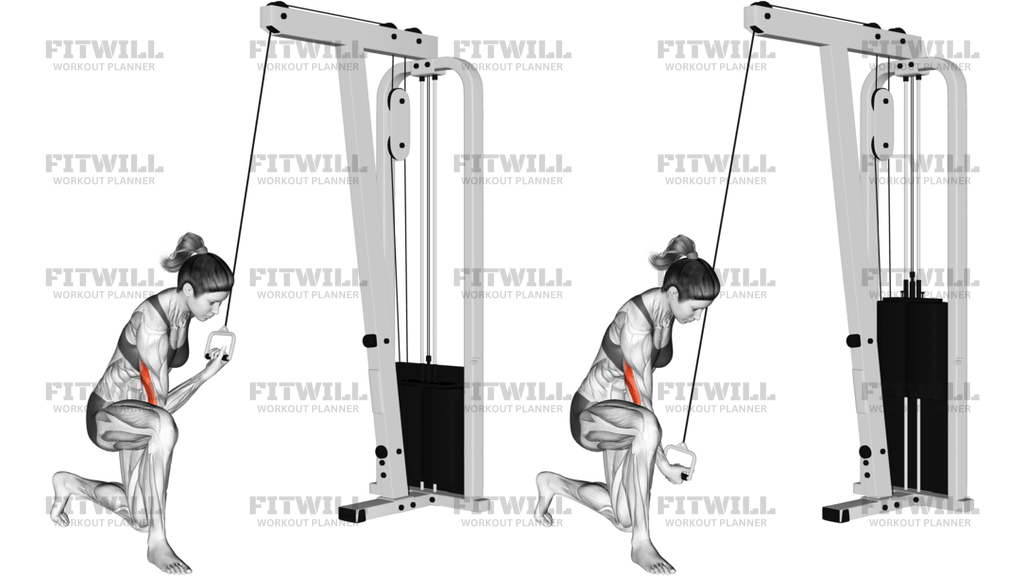
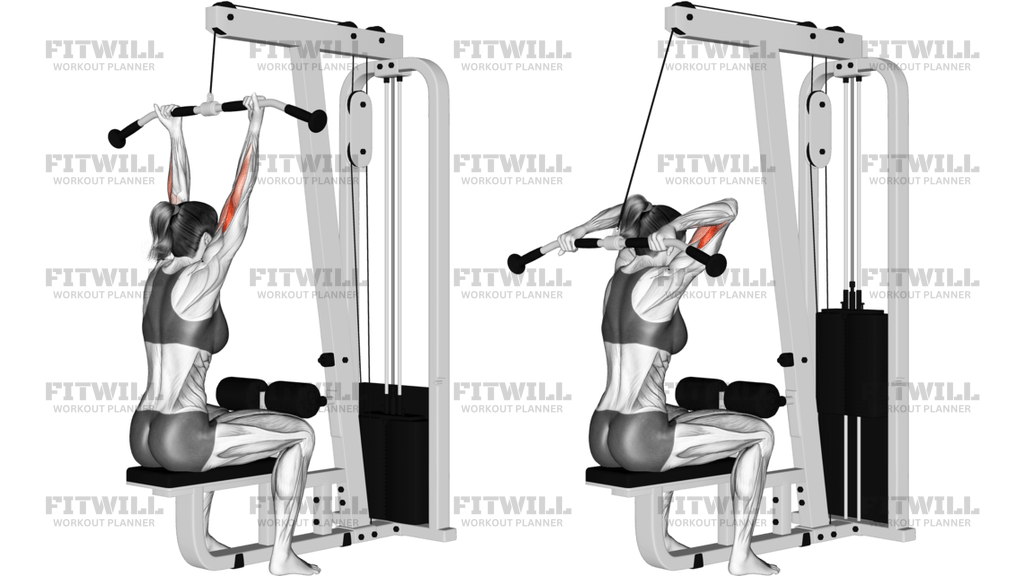
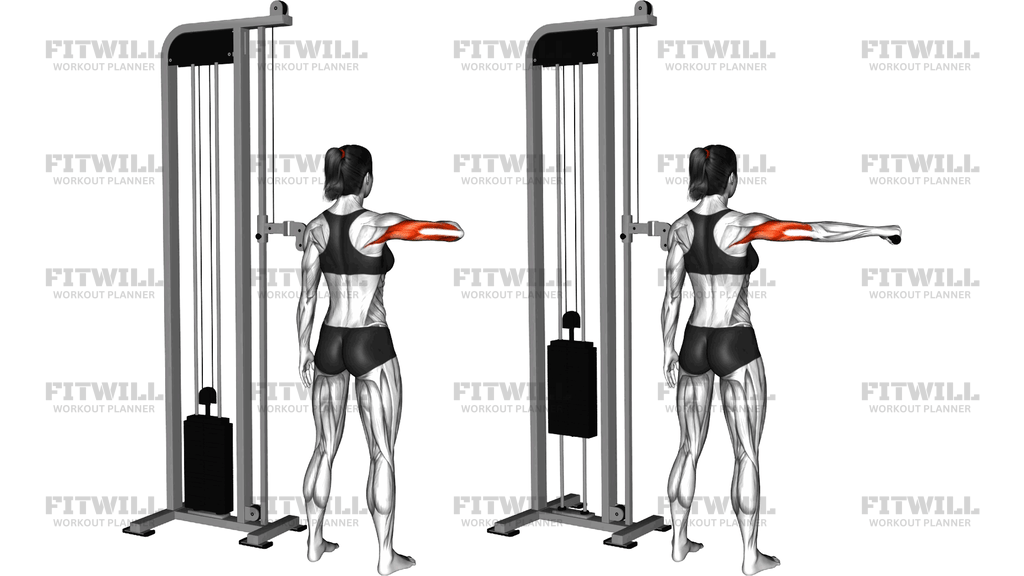
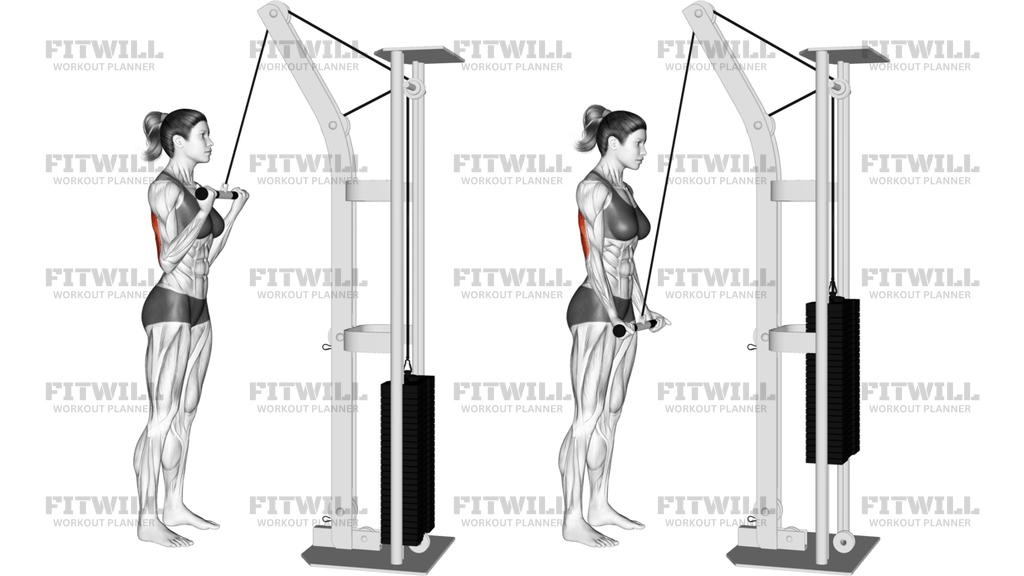
Cable Reverse One-Arm Curl
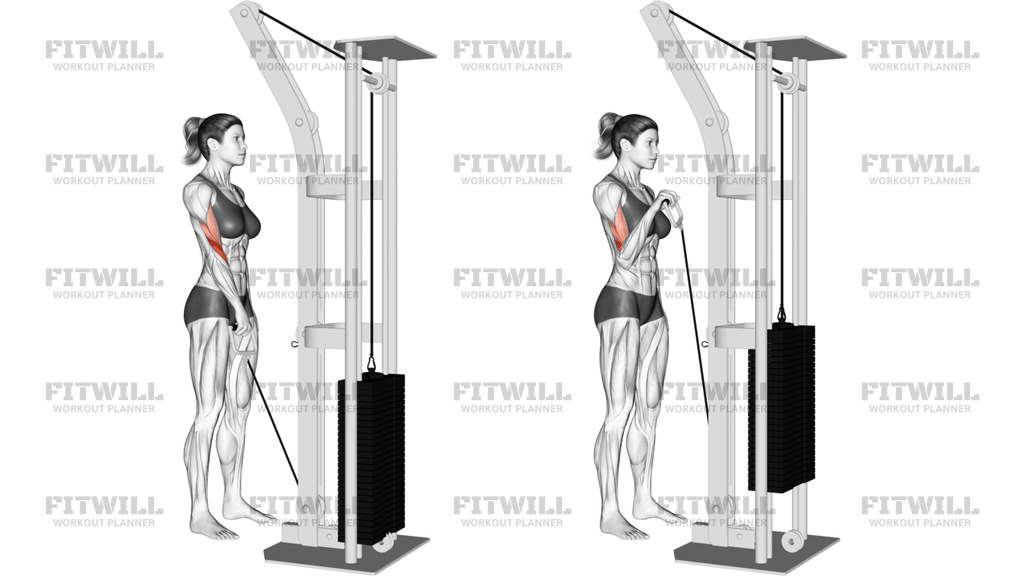
Cable Reverse One-Arm Curl is a single-arm cable curl performed with an overhand grip, usually from a low pulley and a straight or short handle. The cable keeps tension on the forearm through the whole rep, so the exercise feels steady rather than swingy. It is a useful isolation movement when you want to build forearm size, elbow-flexor endurance, and better control in the wrist and hand.
The exercise places the greatest demand on the brachioradialis and the other forearm muscles that help control the forearm as the elbow bends. The biceps still assist, but the pronated grip shifts more of the work away from a standard curl pattern. Because the cable pulls continuously, the set also rewards good shoulder position and a quiet torso. If you let the shoulder drift forward or the torso rock, the target muscles lose tension and the rep becomes more of a body-swing than a curl.
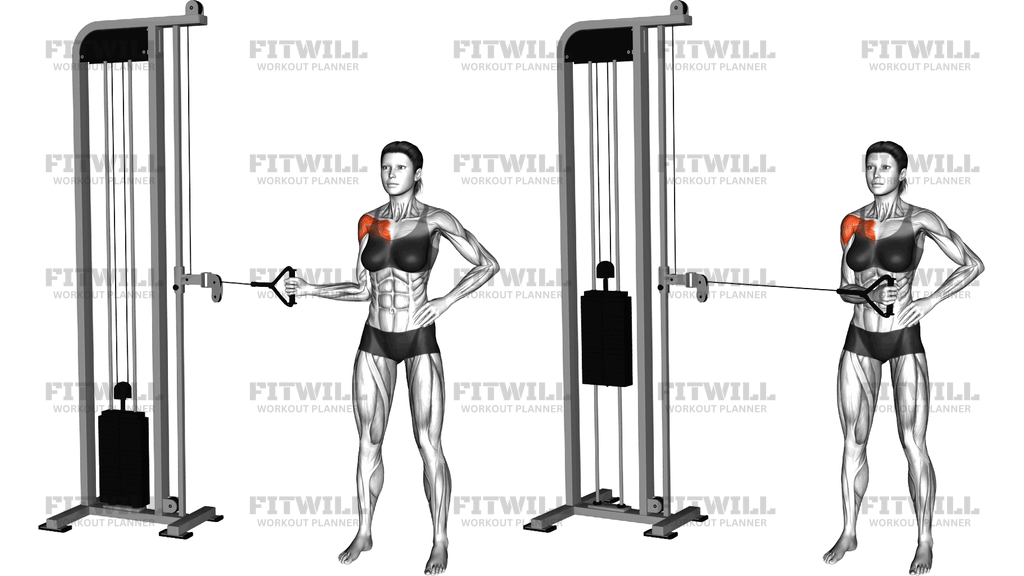
Set the pulley low, stand tall, and hold the handle in one hand with the palm facing down. Keep the working elbow close to your side and the wrist straight rather than bent back. Curl the handle upward by bending the elbow, bringing the hand toward the lower chest or upper ribs without shrugging the shoulder. At the top, squeeze briefly while keeping the forearm aligned with the cable, then lower the handle slowly until the elbow is almost straight again.
This movement works well as accessory work after bigger pulling sessions, arm training, or grip-focused programming. It can also be a good option for lifters who want forearm development without loading the wrists as aggressively as a barbell reverse curl. Choose a load that lets you keep the same elbow path and wrist position on every rep, and stop the set when you need to swing, twist the torso, or open the shoulder to finish the curl.
Fitwill
Log Workouts, Track Progress & Build Strength.
Achieve more with Fitwill: explore over 9600 exercises with images and videos, access built-in and custom workouts, perfect for both gym and home sessions, and see real results.
Start your journey. Download today!




Instructions
- Attach a single handle to a low cable pulley and stand facing the machine with your working side slightly back from the stack.
- Take the handle in one hand with a pronated grip, palm facing down, and let the arm hang beside your thigh.
- Set your feet hip-width apart, soften your knees, and stack your ribs over your pelvis so your torso stays still.
- Keep the working elbow pinned near your side and the wrist straight before you begin the curl.
- Exhale as you bend the elbow and curl the handle upward toward your lower chest or upper ribs.
- Keep the upper arm quiet and avoid turning the shoulder or leaning away from the cable to help the rep.
- Squeeze briefly near the top while the forearm stays aligned with the cable path.
- Lower the handle slowly until the elbow is almost straight and the forearm feels fully loaded again.
- Reset your posture between reps and repeat for the planned number of repetitions before switching sides.
Tips & Tricks
- Use a handle height that lets the cable pull almost straight in line with your forearm at the start of the rep.
- Keep the palm turned down the whole time; if the wrist starts to supinate, the movement turns into a different curl.
- Let the elbow travel only a little if needed, but do not let it drift far in front of the ribs.
- A lighter load with a slow lowering phase usually trains the forearm better than a heavy, jerky reverse curl.
- If the wrist bends back hard at the top, reduce the weight and finish with a straighter hand position.
- Keep the shoulder blade set down instead of shrugging, or the upper arm will start doing the work for the forearm.
- Use the same range on every repetition; cutting the bottom short often hides fatigue rather than fixing it.
- Stop the set once you need to swing the torso or twist the trunk to move the handle.
Frequently Asked Questions
What does the Cable Reverse One-Arm Curl train most?
It primarily targets the forearm muscles on the thumb side of the arm, especially the brachioradialis, while the biceps assist.
Why use a cable instead of a dumbbell for reverse curls?
The cable keeps tension on the forearm through the entire rep, which makes it easier to keep the movement smooth and controlled.
Should my palm face down or up on this exercise?
Your palm should stay facing down. If you rotate into a supinated grip, you turn it into a standard curl.
How high should I curl the handle?
Curl until the hand reaches the lower chest or upper rib area, as long as the shoulder stays quiet and the wrist stays aligned.
What is the most common form mistake?
The biggest mistake is using torso sway or shoulder motion to move the handle instead of bending only at the elbow.
Can I do this one arm at a time for balanced development?
Yes. Unilateral work is one of the best reasons to use this variation because it lets each forearm work independently.
Is this a good exercise for beginners?
Yes, as long as the load is light enough to keep the wrist straight and the elbow pinned near the side.
What can I pair this with in an arm workout?
It pairs well with hammer curls, wrist work, pull-ups, or other forearm and grip accessories after your main lifts.