Dumbbell Alternating Seated Bicep Curl On Exercise Ball
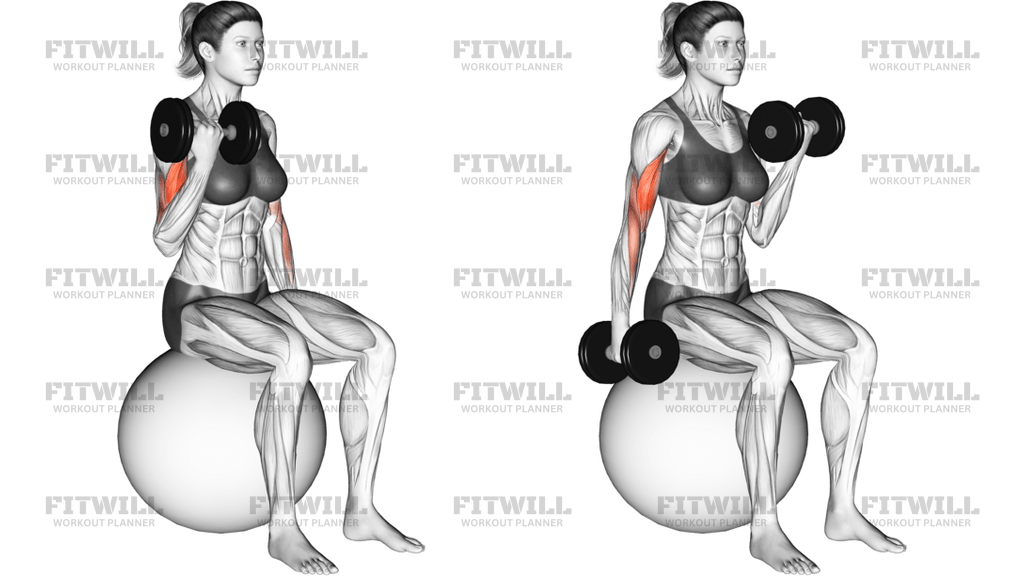
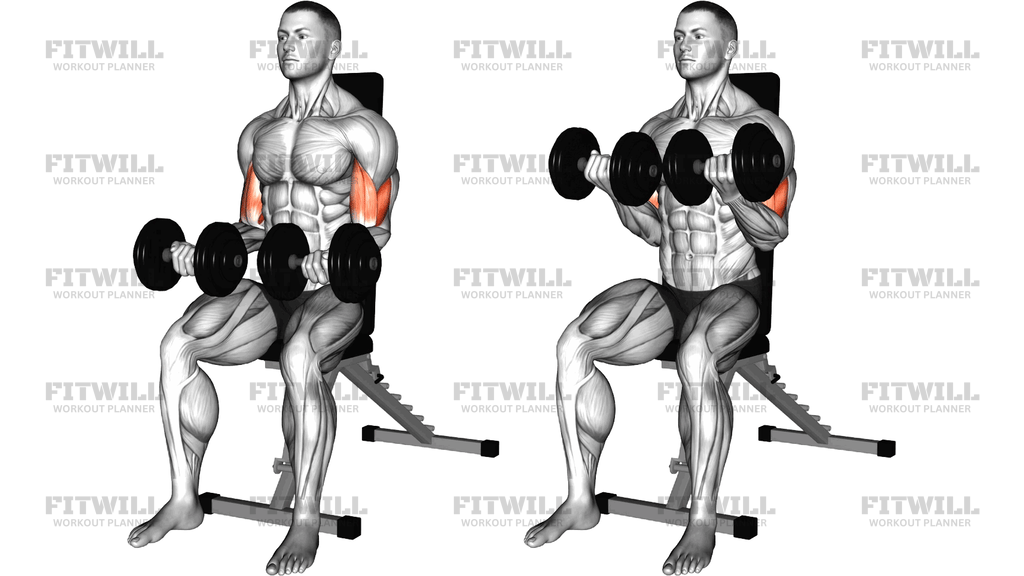
Dumbbell Alternating Seated Bicep Curl On Exercise Ball is a single-arm curling exercise done while seated on a stability ball, so the movement trains the biceps while also asking the torso and hips to stay steady. The exercise is useful when you want direct arm work with a little extra balance demand, and it suits lifters who want to build size, strength, or cleaner control through the elbow flexion pattern.
The main muscle is the biceps, with brachialis and brachioradialis helping the elbow flex. Because you are seated on an exercise ball rather than a bench or machine, the shoulders, upper back, and deep trunk muscles have to keep your torso from drifting as each dumbbell moves. That added stability demand is part of the exercise, but it should never turn into swinging or bouncing.
The setup matters a lot. Sit tall on the center of the ball with your feet planted wide enough to stay balanced, and let the dumbbells hang beside your thighs with neutral wrists. Keep your chest lifted, ribs stacked over your pelvis, and shoulders set down instead of shrugged forward. If the ball is too low, too soft, or too far behind your feet, the curl will turn into a balancing act instead of a strict arm exercise.
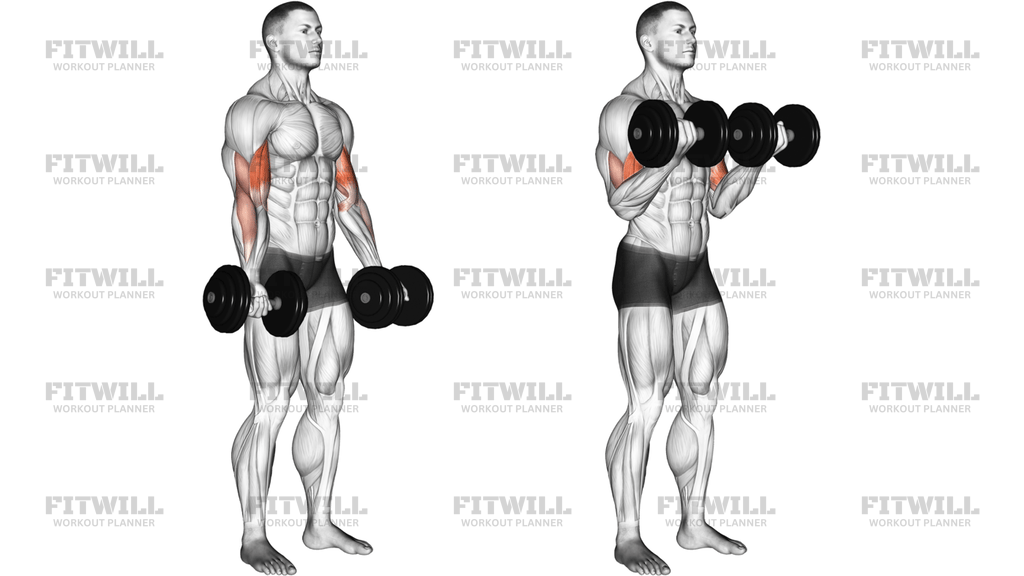
Each rep should look deliberate: curl one dumbbell without letting the elbow drift forward, squeeze the biceps near the top, then lower it under control before switching sides. The free arm should stay quiet so the working side gets the full benefit. The alternating pattern helps you focus on one arm at a time, which is useful if one side is weaker, less coordinated, or more likely to cheat with torso motion.
Dumbbell Alternating Seated Bicep Curl On Exercise Ball works well as accessory work after your main pressing or pulling lifts, or as a targeted arm block when you want tension without a lot of joint stress. It is beginner-friendly if the ball is stable and the weights are light enough to keep the torso still. Stop the set if you lose balance, start curling with your shoulder, or need to lean back to finish the rep.
[ Workout Log & Planner ]
Put your next workout in Fitwill
Keep your plan and training log ready when you are.


Instructions
- Sit on the center of an exercise ball with your feet flat and slightly wider than hip-width for balance.
- Hold a dumbbell in each hand at your sides with your palms facing forward and your wrists straight.
- Stack your ribs over your pelvis, lift your chest, and keep your shoulders down instead of rolling forward.
- Curl one dumbbell toward the front of that shoulder while keeping the upper arm close to your side.
- Turn the palm slightly up as the weight rises and stop when the dumbbell is near shoulder height.
- Squeeze the biceps briefly at the top without leaning back or shifting on the ball.
- Lower the dumbbell slowly to full elbow extension, then repeat with the opposite arm.
- Keep alternating sides for the planned reps, then place both dumbbells down and stand up from the ball with control.
Tips & Tricks
- Choose a ball that lets your knees and hips stay around 90 degrees; if you sink too low, the curl will get sloppy.
- Keep your feet planted wide enough that the ball does not roll as you switch arms.
- Let the elbow stay close to your ribs so the front delt does not take over the rep.
- If your torso rocks backward at the top, the dumbbell is too heavy for strict alternating curls.
- Lower each dumbbell slowly until the elbow fully opens; short partial reps reduce tension on the biceps.
- Keep the non-working hand quiet instead of squeezing the opposite dumbbell hard enough to twist your shoulders.
- Use a supinated palm at the top if your wrists tolerate it, but do not let them bend back.
- Stop the set if the ball starts sliding, because balance failure usually shows the load is too aggressive.
Frequently Asked Questions
What does Dumbbell Alternating Seated Bicep Curl On Exercise Ball train most?
It mainly trains the biceps, with help from the brachialis and brachioradialis. The exercise ball adds a smaller stability demand through the trunk and hips.
Is Dumbbell Alternating Seated Bicep Curl On Exercise Ball beginner-friendly?
Yes, if you keep the dumbbells light and sit on a stable ball height. Beginners should learn to keep the torso still before increasing load.
How do I keep the exercise ball from moving during the curl?
Plant your feet a little wider and keep your weight centered over the middle of the ball. If the ball keeps drifting, your stance is too narrow or the dumbbells are too heavy.
Should my elbow move forward during the alternating curl?
Only a little is natural, but the upper arm should stay close to your side. If the elbow drifts far forward, the front shoulder starts stealing work from the biceps.
Why use a stability ball instead of a bench for this exercise?
The ball forces you to stabilize your torso and pelvis while curling, which makes the movement less passive. It is a useful option when you want arm work plus a balance challenge.
Why does my lower back arch when I curl the dumbbell?
That usually means the load is too heavy or your ribs are flaring as you finish the rep. Keep your chest tall but stacked over your pelvis so the curl stays strict.
Can I do Dumbbell Alternating Seated Bicep Curl On Exercise Ball with a neutral grip?
You can start neutral and rotate toward a palm-up position as you curl, which is the classic pattern. A fixed neutral grip shifts emphasis slightly away from the biceps and changes the feel of the rep.
What should I do if the dumbbell hits my thigh on the way up?
Start each rep with the elbow just in front of the thigh and curl a little more in an arc, not straight up the front of the body. A slightly lighter weight can also help you clear the thigh cleanly.