Kettlebell Resistance Band Full Squat From Deficit
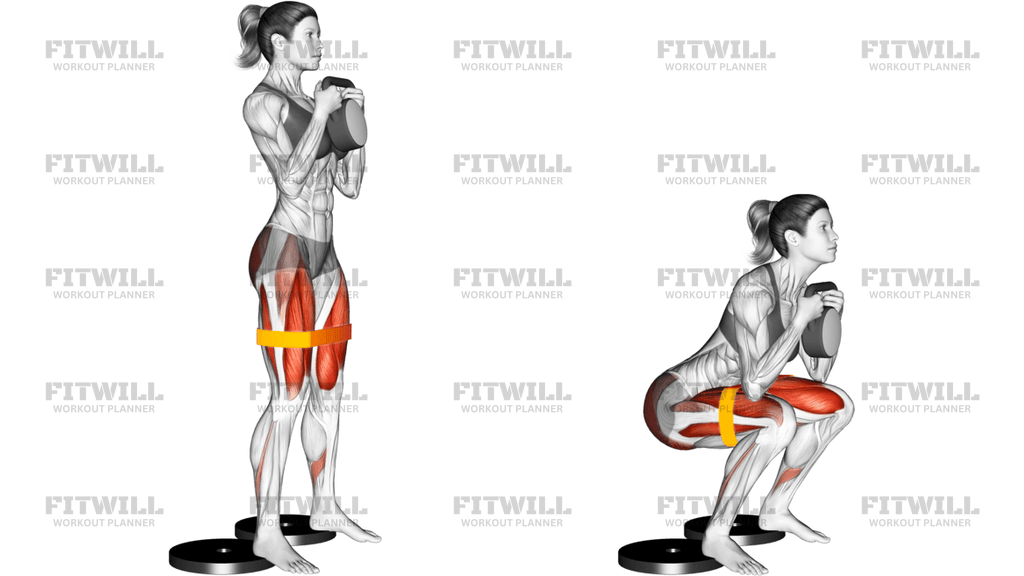
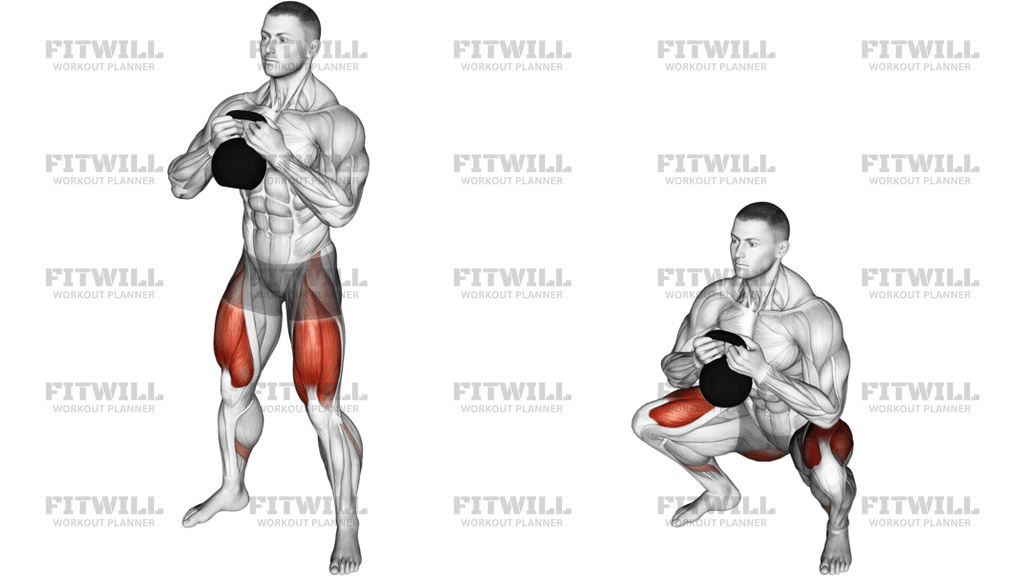
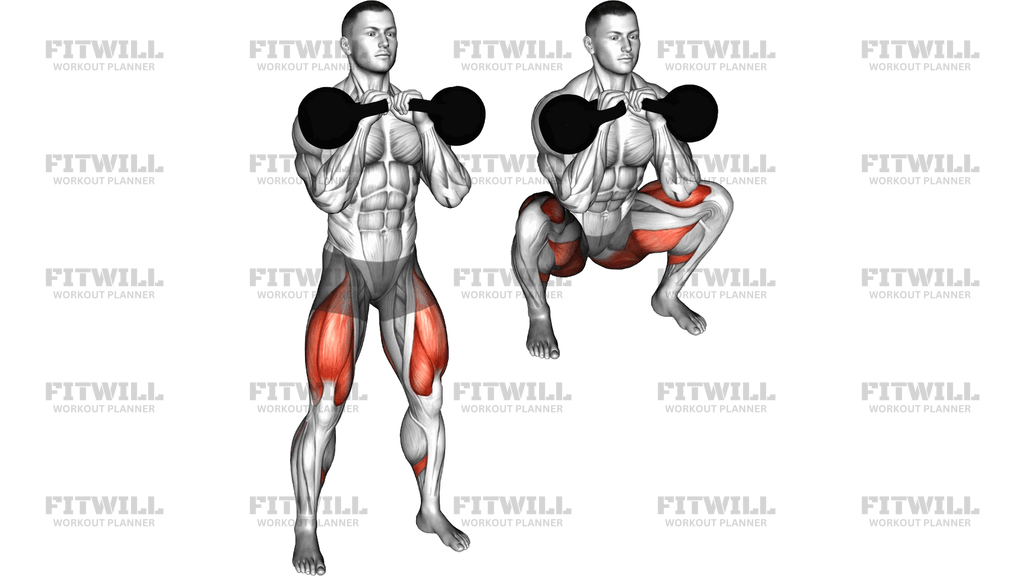
Kettlebell Resistance Band Full Squat from Deficit is a goblet squat variation performed from a raised stance with a resistance band around the knees. The kettlebell stays close to the chest while the feet sit on stable deficit plates, which increases the usable range of motion and makes the bottom position more demanding on the quads, glutes, adductors, and trunk. The band adds outward knee pressure, so the exercise trains not only leg strength but also the ability to keep the knees tracking cleanly while the torso stays upright.
The setup matters more here than in a basic squat because the elevated stance changes how quickly the knees and hips must organize. Stand with a shoulder-width base, toes turned slightly out, and the band placed above the knees where it can cue hip engagement without sliding. Hold the kettlebell in a tight goblet position against the sternum so the load does not pull you forward. The goal is a stable start that lets you descend smoothly instead of dropping into the bottom and trying to recover balance there.
On each rep, sit between the heels while keeping the chest tall and the ribs stacked over the pelvis. Let the knees travel forward and outward in line with the toes, but do not let them cave inward against the band. Continue down until you reach a deep squat you can control, ideally at or below parallel, then pause briefly without losing pressure through the whole foot. Drive back up by pushing the floor away through the midfoot and heels, keeping the kettlebell close and the band tension active until you are fully upright.
This version is useful when you want a squat that emphasizes quad development, deep knee flexion, and position control rather than just load moved. It works well as an accessory lift, a squat-pattern drill, or a hypertrophy movement when you want more challenge from range of motion and stability instead of heavier loading alone. If the heels lift, the knees collapse, or the chest folds forward, reduce the plate height, lighten the kettlebell, or use a looser band so the depth stays honest and repeatable.
Fitwill
Log Workouts, Track Progress & Build Strength.
Achieve more with Fitwill: explore over 9600 exercises with images and videos, access built-in and custom workouts, perfect for both gym and home sessions, and see real results.
Start your journey. Download today!




Instructions
- Place a resistance band above your knees, stand on two sturdy deficit plates, and hold the kettlebell in a goblet position at chest height.
- Set your feet about shoulder-width apart with toes slightly turned out and your weight spread across the whole foot.
- Brace your trunk, keep your ribs stacked over your pelvis, and pull the kettlebell close to your sternum.
- Before you descend, gently press your knees out so the band has tension at the start of the rep.
- Lower your hips between your heels by bending at the knees and hips together while keeping your chest tall.
- Keep your knees tracking over your toes and avoid letting them collapse inward as you reach the bottom position.
- Descend until your thighs are at or below parallel, or to the deepest position you can control without losing balance.
- Pause briefly at the bottom, then drive up by pushing through your midfoot and heels until you are standing tall again.
- Exhale on the way up, reset your brace at the top, and repeat for the planned number of repetitions.
Tips & Tricks
- Keep the kettlebell pinned to your chest; if it drifts away, the torso will tip forward sooner in the deep position.
- Use a band tension that cues your knees outward without forcing your stance wider than your hips can control.
- Choose deficit plates that let you hit depth with a flat foot; too much height will turn the rep into a balance drill.
- Think about sitting between the heels rather than folding at the waist, especially on the way into the bottom.
- If your knees cave in on the ascent, slow the rep down and reduce load before adding more depth.
- Keep pressure under the big toe, little toe, and heel so the foot stays planted through the full squat.
- A brief pause at the bottom can clean up position and stop you from bouncing out of the hole.
- Stop the set when your torso starts collapsing or the band tension is making your knees twist instead of track cleanly.
Frequently Asked Questions
What does the band add to this squat variation?
The band gives you constant outward knee pressure, which makes hip control and knee tracking a bigger part of the exercise.
Why do I stand on plates instead of the floor?
The deficit increases the squat range of motion and makes the bottom position more demanding on the quads and trunk.
Where should the kettlebell sit during the rep?
It should stay tucked high against the chest in a goblet position so the load stays centered and the torso stays more upright.
How deep should I go on the descent?
Go as deep as you can while keeping the heels down, the knees tracking over the toes, and the spine controlled.
What muscles work hardest in this exercise?
The quads are the main driver, with strong help from the glutes, adductors, and core stabilizers.
Can beginners use this version of the squat?
Yes, but it is best started with a light kettlebell, a mild band, and a low deficit until the bottom position feels stable.
What is the most common form mistake?
Letting the knees cave inward or letting the chest fold forward as the depth increases are the most common breakdowns.
How can I make this exercise easier or harder?
Reduce or increase the plate height, change the band tension, or adjust the kettlebell load before trying to force more reps.