Kettlebell Side Squat Step
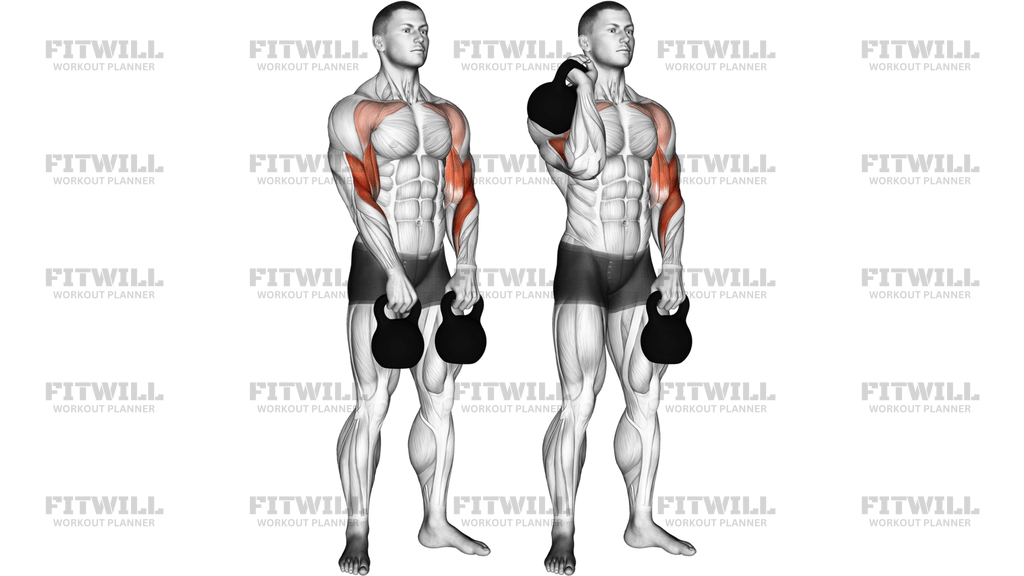
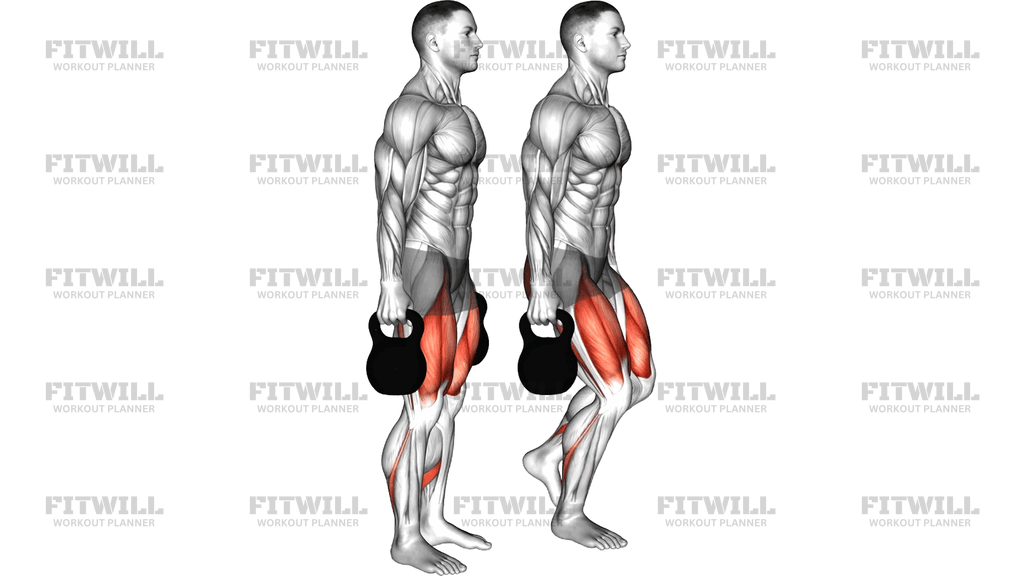
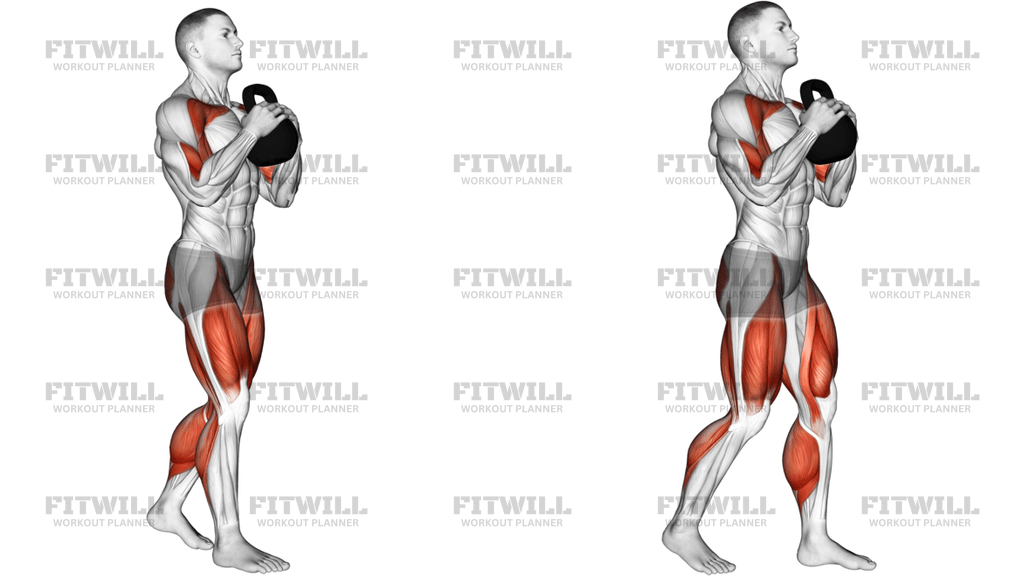
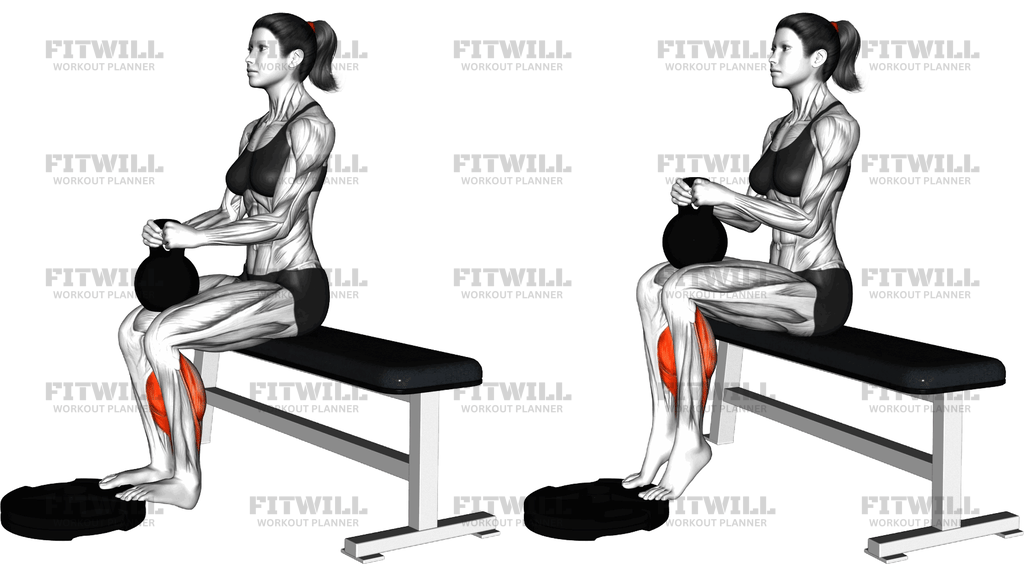
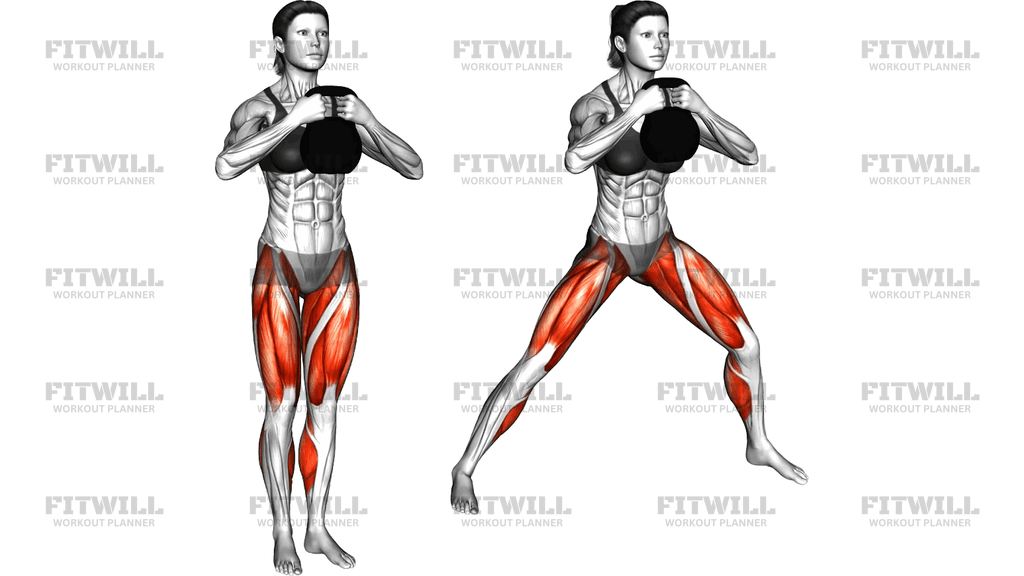
Kettlebell Side Squat Step is a loaded lateral squat pattern performed with the kettlebell held close to the chest in a goblet position. It trains the thighs, hips, and groin to accept bodyweight as you step out to one side, sink into that leg, and then drive back to center. The image shows a clear side-to-side shift rather than a vertical squat, so the setup and foot placement matter as much as the depth of the squat itself.
This movement is useful when you want more than a straight-ahead squat. The working leg has to load through the heel and midfoot while the opposite leg stays longer and more passive, which makes the exercise valuable for adductors, glutes, quads, and trunk stability. Holding the kettlebell at the chest also keeps the torso organized and challenges the upper back and core without turning the movement into an arm exercise.
The kettlebell should stay centered under the chin or at the sternum so the load does not pull you forward. Step far enough to create a stable base, then sit the hips back and down toward the loaded side while keeping the planted foot flat. The return should come from the same leg that loaded the descent, not from bouncing off the floor or twisting the torso to cheat the rep.
Kettlebell Side Squat Step is a practical accessory lift for athletes, field-sport training, and general lower-body strength work because it develops frontal-plane control that a standard squat does not fully cover. It can also be a good regression before harder single-leg work, since both feet stay on the floor even though one leg works much harder than the other. That makes it approachable for beginners, but the range should stay smooth and pain-free.
Keep the motion deliberate and symmetrical from side to side. If the knee caves inward, the step is too narrow, or the torso collapses, reduce the load and shorten the range until you can keep the knee tracking over the toes. The exercise should feel like a controlled side squat with tension through the working thigh and hip, not like a rushed side step with the kettlebell hanging in front of you.
[ Workout Log & Planner ]
Put your next workout in Fitwill
Keep your plan and training log ready when you are.


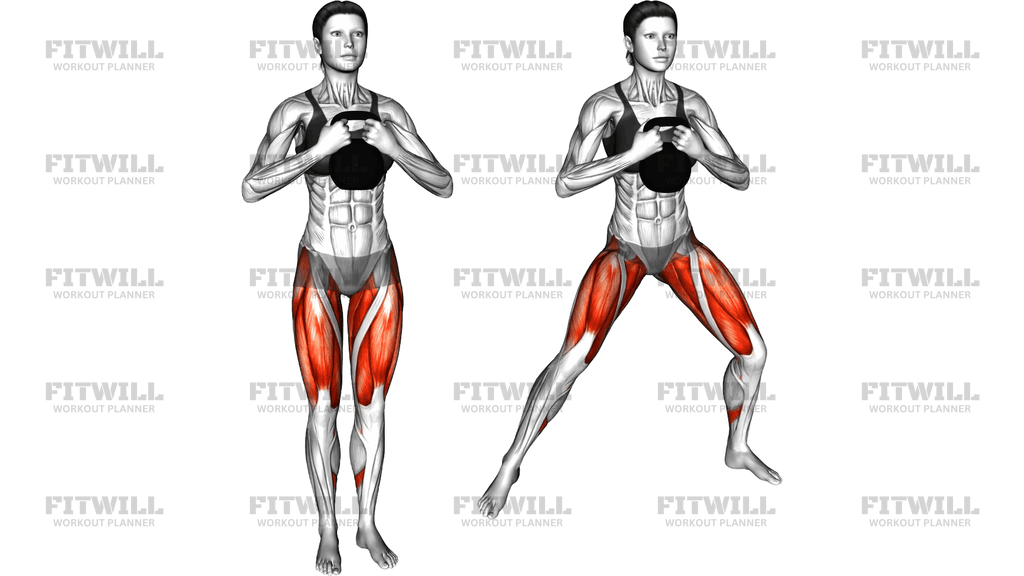
Instructions
- Stand tall with your feet about hip-width apart and hold a kettlebell at chest height in a goblet grip, elbows tucked close.
- Set your feet parallel and keep your weight centered over the midfoot before you take the first step.
- Step out to one side with a controlled stride until you have enough width to drop into a side squat.
- Keep the stepping foot flat and turn the toes slightly forward so the knee can track over the second or third toe.
- Sit the hips back and down toward the stepping leg while keeping the opposite leg long and the chest lifted.
- Lower until the working thigh is challenged but the heel stays grounded and the torso does not collapse forward.
- Drive through the loaded heel and midfoot to return to the starting stance without twisting the kettlebell away from the centerline.
- Reset your stance, then repeat to the opposite side for the planned number of repetitions.
Tips & Tricks
- Keep the kettlebell pinned to your chest so the weight does not pull you into a forward hinge.
- Take a wide enough step that the loaded knee can bend without the heel lifting.
- Think about sitting into the stepping hip instead of drifting your shoulders toward the floor.
- Let the inside leg stay long; do not turn it into a second squat by bending both knees equally.
- If the knee caves inward, shorten the step and focus on pushing the knee in line with the toes.
- Use a lighter kettlebell if the goblet hold makes your upper back round or your elbows flare.
- Exhale as you push back to center to keep the trunk from rotating during the return.
- Stop the rep before you lose foot pressure, especially when the side step gets too wide.
Frequently Asked Questions
What muscles does Kettlebell Side Squat Step work?
It emphasizes the thighs and hips on the loaded side, especially the quads, glutes, and inner-thigh muscles, with the core helping keep the kettlebell centered.
Should the kettlebell stay at the chest the whole time?
Yes. Keep it in a goblet hold at the sternum so the torso stays stacked and the load does not drag you forward during the side step.
How wide should I step on the Kettlebell Side Squat Step?
Step wide enough to sit into one leg without lifting the heel, but not so wide that the knee caves or the pelvis twists.
Is this more of a squat or a lunge?
It sits between the two, but the image shows a loaded lateral squat pattern. The key is a side-to-side weight shift with both feet staying grounded.
Can beginners do Kettlebell Side Squat Step safely?
Yes, if they use a light kettlebell and a short range of motion. It is usually easier than a true single-leg squat because both feet stay in contact with the floor.
Why does one leg stay straighter during the rep?
That is what makes the movement lateral instead of a normal squat. The long leg helps you load the stepping side and stretch the inner thigh while the bent leg does the work.
What should I do if my knee caves inward?
Reduce the step length or the kettlebell load and press the knee in line with the toes as you sit into the working side.
What is a good way to progress this exercise?
Add load only after you can keep the goblet position steady, the feet flat, and the return to center smooth on both sides.