Spine Lumbar Rotation Articulations
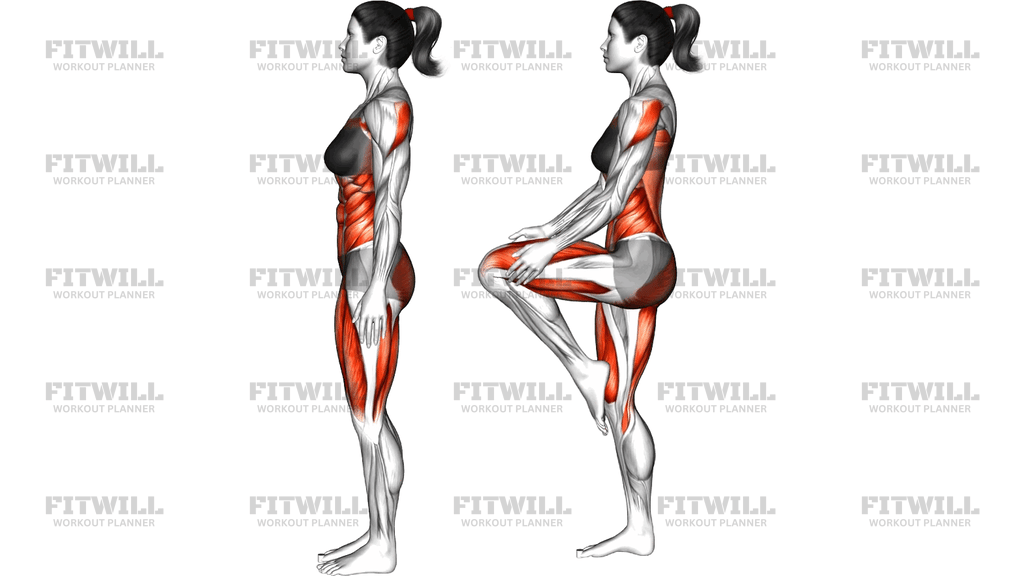
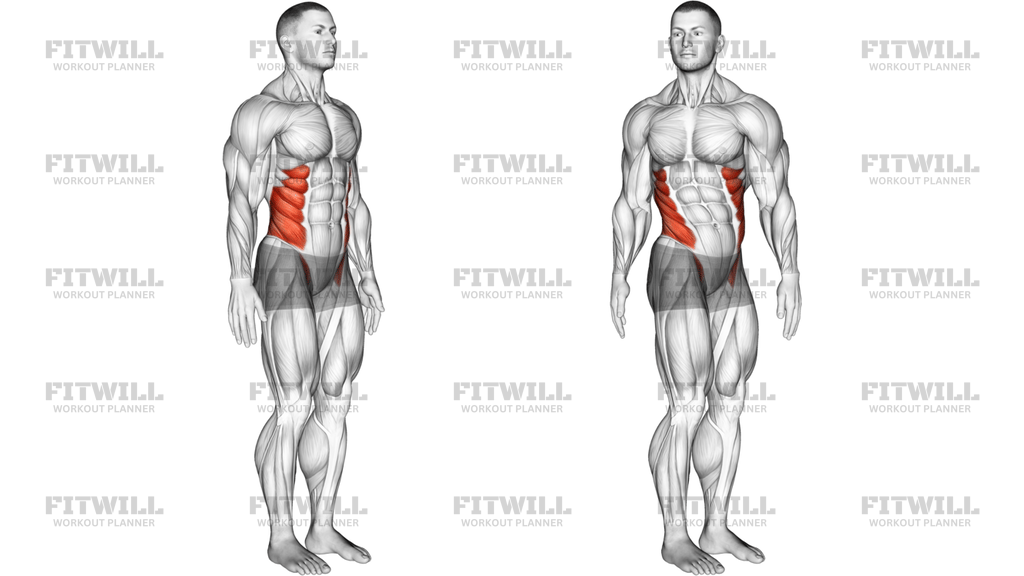
Spine Lumbar Rotation Articulations is a standing body-weight mobility drill that teaches controlled turning through the trunk without turning it into a sloppy sway. It is useful when the lower back feels stiff, the waist feels locked up after sitting, or you want to wake up the obliques and deep core before training. The goal is not to force a big twist. The goal is to make each side feel smooth, organized, and repeatable.
The setup matters because the drill only works well when the pelvis stays calm and the ribs move with control. Stand tall with your feet about hip-width apart, knees soft, and your arms relaxed by your sides. Stack your ribs over your pelvis, keep your chin level, and let your weight stay even across both feet. That stable starting position makes it easier to feel the difference between a clean rotation and a compensation through the hips or low back.
From there, turn the ribcage and pelvis a few degrees to one side, then return through center and rotate to the other side. Keep the motion slow enough that you can breathe at the end of each turn and still feel in control. If the movement is being done well, the waist turns smoothly while the shoulders stay level and the feet stay planted. If you start to lean, bounce, or crank for range, the drill stops being an articulation and becomes a momentum-based twist.
Spine Lumbar Rotation Articulations is best used as a warm-up, mobility reset, or low-intensity accessory drill when you want to restore motion without loading the spine. It can also help you notice side-to-side stiffness before squats, hinges, carries, or any session that depends on a stable trunk. Beginners can use it easily because there is no external load, but the control requirement is still real: if you cannot keep the pelvis steady, shorten the range and slow the pace.
Treat the drill like a quality check for your trunk, not a test of how far you can turn. A clean rep feels smooth from start to finish, with the abdomen staying lightly engaged and the neck staying relaxed. If one side is tighter, respect that difference and work inside a pain-free range instead of forcing symmetry. The best result comes from calm breathing, small precise turns, and a spine that moves without losing organization.
[ Workout Log & Planner ]
Put your next workout in Fitwill
Keep your plan and training log ready when you are.


Instructions
- Stand tall with your feet about hip-width apart, knees softly unlocked, and your arms hanging relaxed by your sides.
- Stack your ribs over your pelvis, keep your chin level, and place your weight evenly across both feet before you start.
- Brace lightly through your abdomen so your lower back stays long and your torso does not drift forward or backward.
- Turn your ribcage and pelvis a few degrees to the left while keeping both feet flat on the floor.
- Pause for a breath at the end of the turn without forcing the range or letting your shoulders tilt.
- Return through center under control, then rotate a few degrees to the right with the same smooth tempo.
- Keep the motion small and even so the waist rotates cleanly instead of swinging through the hips.
- Exhale as you move into each end range, then inhale as you come back to center.
- Repeat for the planned number of reps, then finish by standing tall again with your pelvis square and your breathing calm.
Tips & Tricks
- Keep the turns small enough that both feet can stay planted; if a heel lifts, the drill has become a pivot instead of a controlled rotation.
- Think about turning the sternum and belt line together so the ribs do not race far ahead of the pelvis.
- If your low back feels pinchy, shorten the range and slow the return rather than trying to twist farther.
- Let the shoulders stay level; side bending turns this into a different drill and changes the stress on the waist.
- Use a smooth exhale into each end position to keep the ribs from flaring and the trunk from bracing too hard.
- Match both sides to the cleaner range, not the tighter side's forced range, so the movement stays symmetrical and controlled.
- Do a few deliberate reps as part of your warm-up before squats, hinges, or carries if your torso feels stiff from sitting.
- Stop the set when the motion starts to bounce, because momentum usually means the deep core has stopped controlling the turn.
Frequently Asked Questions
What muscles do Spine Lumbar Rotation Articulations work most?
They mainly challenge the obliques, deep core, and the smaller stabilizers that control trunk rotation while your hips stay organized.
Is Spine Lumbar Rotation Articulations beginner-friendly?
Yes. It is body weight only, so beginners can focus on a small range, steady breathing, and a slow return to center.
Should my feet move during Spine Lumbar Rotation Articulations?
No. Keep both feet planted and let the torso rotate over a stable base so the movement stays controlled.
How far should I rotate on each rep?
Only as far as you can turn without leaning, bouncing, or losing the stacked ribs-over-pelvis position.
Where should I feel Spine Lumbar Rotation Articulations?
You should feel work through the sides of the waist and trunk stabilizers, not a sharp pinch in the low back.
Can I use Spine Lumbar Rotation Articulations before lifting?
Yes, it works well as a warm-up before squats, hinges, carries, or any session where trunk control matters.
What should I do if one side feels tighter?
Use the smoother side as your reference and keep the tighter side inside a pain-free range instead of forcing symmetry.
How do I make Spine Lumbar Rotation Articulations harder without adding weight?
Slow the tempo, pause longer at each end range, and keep the pelvis quieter so the core has to control every inch.