Dumbbell Sumo Pull Through
Dumbbell Sumo Pull Through is a wide-stance hip hinge built around the glutes, hamstrings, adductors, and trunk. In this version the dumbbell stays low and centered between the legs, so the exercise rewards position, balance, and hip drive more than brute load. It is a useful option when you want a lower-body pattern that trains the posterior chain without the bar path or setup demands of a full barbell lift.
The movement looks close to a sumo deadlift in the bottom position, but the intent is different: keep the hips back, the chest open, and the dumbbell traveling close to the midline as you stand. That makes Dumbbell Sumo Pull Through a good fit for accessory work, glute-focused sessions, warmups, or lighter strength blocks where clean repetition quality matters. It also gives the adductors and core a real job because the wide stance asks them to stabilize the pelvis as the hips open and close.
Setup matters a lot in Dumbbell Sumo Pull Through. Plant your feet wider than shoulder width, turn the toes slightly out, and set the dumbbell between the feet so you can sit down between the knees without losing your balance. If the stance is too narrow, the dumbbell will drift forward and the lift turns into a regular squat; if the stance is too wide, the knees and hips may lose comfortable alignment. The best reps start with a steady foot tripod, a neutral spine, and the hips loaded before the weight leaves the floor.
On each repetition, drive the floor away and extend the hips until you are tall, not leaned back. The finish should come from squeezing the glutes, not from arching the lower back or shrugging the shoulders. Lower the dumbbell by pushing the hips back first, then bending the knees only as much as needed to keep the weight between the thighs and the chest proud. Controlled breathing helps the trunk stay organized, especially when the dumbbell gets heavier or the range gets deeper.
Dumbbell Sumo Pull Through works best when the goal is repeatable tension through the hips rather than speed. It can be used as a beginner-friendly hinge with light load, but the knees, hips, and ankles should all be comfortable in the wide stance before the set gets challenging. If the lower back takes over, the dumbbell drifts away from the body, or the knees collapse inward, the load or stance is usually too aggressive. Treat Dumbbell Sumo Pull Through as a precision hinge: smooth setup, strong lockout, and an easy return to the floor before the next rep.
[ Workout Log & Planner ]
Put your next workout in Fitwill
Keep your plan and training log ready when you are.


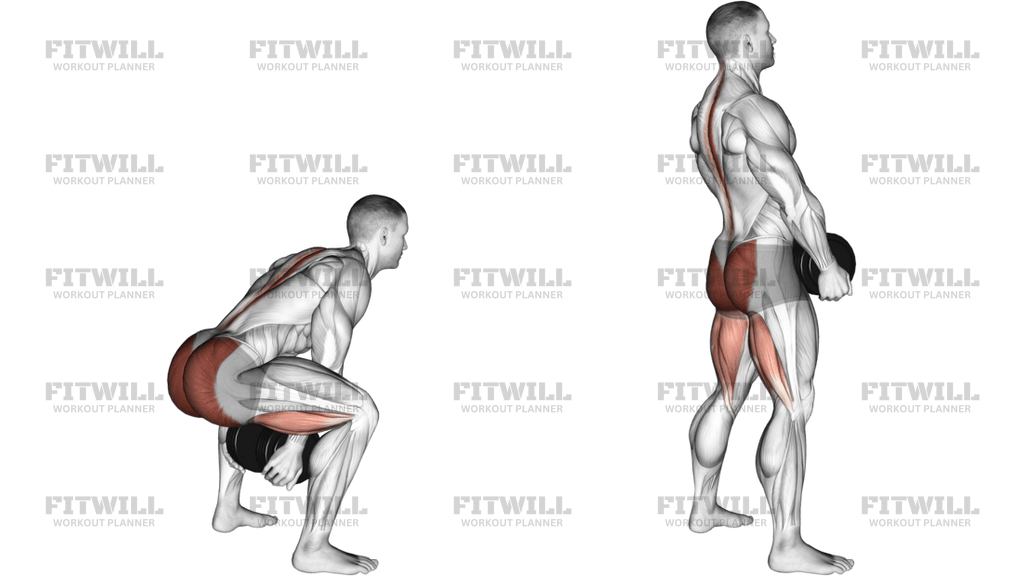
Instructions
- Stand with your feet wider than shoulder width, toes turned slightly out, and place the dumbbell vertically between your feet.
- Hinge at the hips, bend the knees, and lower your torso until you can grip the dumbbell while keeping your chest lifted and back flat.
- Set your shoulders down, keep your arms long, and make sure the dumbbell stays centered under your body.
- Brace your trunk, press through the whole foot, and start the lift by driving your hips forward and your knees out.
- Stand tall at the top with the glutes tight and the dumbbell hanging straight below you, without leaning back.
- Lower the dumbbell by sending the hips back first, then bending the knees to return to the bottom position between the legs.
- Keep the dumbbell close to your midline and stop the descent before your lower back rounds or your knees cave inward.
- Reset your breath at the bottom and repeat for the planned number of reps before placing the dumbbell back on the floor.
Tips & Tricks
- Keep the dumbbell directly under your shoulders; if it swings forward, the set turns into a back-dominant pull.
- Turn the toes out just enough to let the knees track over them without pinching the hips.
- Think about pushing the floor apart as you stand up so the adductors and glutes share the load.
- Do not finish by leaning back; the lockout should feel like a hard glute squeeze with ribs stacked over the pelvis.
- If your lower back lights up first, shorten the range and reduce the load before chasing a deeper bottom position.
- Use a slower lowering phase so the dumbbell stays centered and you do not drop into the hinge.
- Keep the dumbbell between the thighs rather than reaching for the floor in front of your toes.
- A slightly elevated start can help if ankle or hip mobility makes the bottom sumo position hard to control.
Frequently Asked Questions
What muscles does Dumbbell Sumo Pull Through work?
It primarily targets the glutes and hamstrings, with the adductors, spinal erectors, and core helping stabilize the wide stance.
Is Dumbbell Sumo Pull Through the same as a sumo deadlift?
It uses a similar wide hinge, but the dumbbell stays centered and the emphasis is usually on controlled hip extension rather than heavy pulling.
How wide should my stance be for Dumbbell Sumo Pull Through?
Wide enough that the dumbbell can travel between your thighs without crowding your hips, but not so wide that your knees collapse inward or your feet roll off the floor.
Should the dumbbell touch the floor on every rep?
It can, but only if you can keep your spine neutral and the weight directly under you. If the floor reach forces rounding, stop slightly above it.
Why do I feel Dumbbell Sumo Pull Through in my lower back?
That usually means the hips are not sitting back enough or the dumbbell is drifting forward. Shorten the range, keep the chest lifted, and drive up from the hips.
Can beginners do Dumbbell Sumo Pull Through?
Yes. Start with a light dumbbell and practice the wide stance and hip hinge before adding load or depth.
What is the best rep range for Dumbbell Sumo Pull Through?
Most people do well with moderate reps, around 8-15, so they can keep the hinge crisp and the tempo controlled.
Can I use a kettlebell instead of a dumbbell?
Yes, as long as you can keep the weight centered between the legs and maintain the same wide-stance hinge.