Dumbbell Single-Arm Bent-Over Row
Dumbbell Single-Arm Bent-Over Row is a unilateral pulling exercise that builds strength in the upper back, lats, rear shoulders, and arm while also challenging your trunk to stay quiet under load. The single-arm format makes it especially useful when you want to clean up side-to-side strength differences or give one side of the back more attention without losing control of the torso.
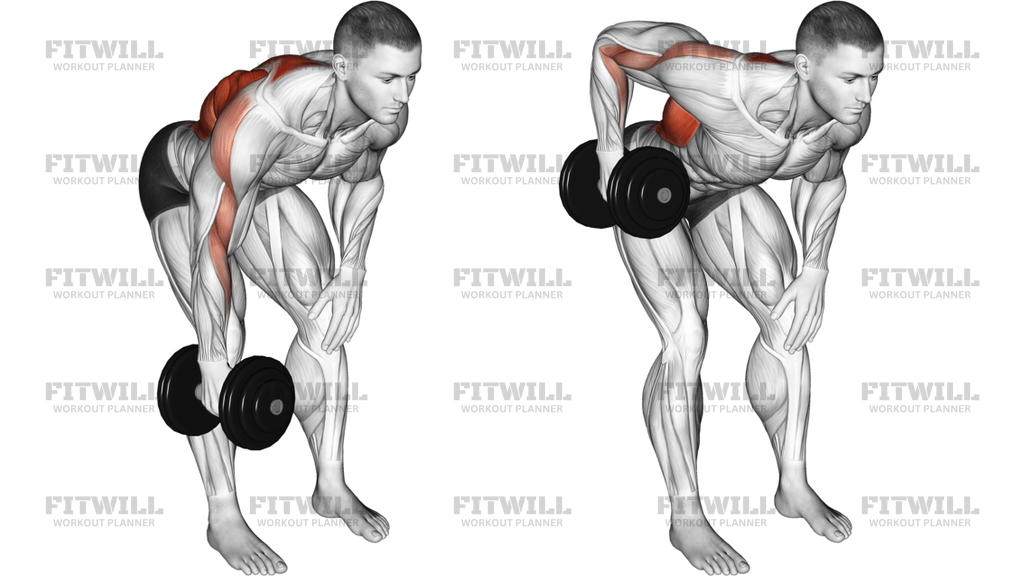
The setup matters because the row starts from a hinged position, not from standing tall and pulling with momentum. Hinge at the hips until your torso is nearly parallel to the floor, keep a soft bend in the knees, and let the dumbbell hang under the shoulder with the free hand braced on the same-side thigh or knee. That support point helps you keep your back long, your neck relaxed, and your ribs from flaring as the arm begins to work.
From there, the rep should feel like a smooth pull toward the hip rather than a yanking motion toward the chest. Drive the elbow back, keep the wrist straight, and let the shoulder blade travel back and down as the dumbbell rises. The best reps finish with the handle close to the lower ribs or outer hip, a brief squeeze at the top, and a slow lower until the arm is fully extended without twisting the torso open.
Dumbbell Single-Arm Bent-Over Row fits well in back training, full-body sessions, and accessory work after heavier lower-body or pulling lifts. It is useful for lifters who want more control through the hinge, a stronger lock-in through the mid-back, or a more balanced pull on each side. The exercise works best when the load lets you stay square through the shoulders and keep the dumbbell path clean instead of turning the set into a shrug or a body swing.
Treat each rep as a test of position and not just strength. If the low back starts doing the job of the working arm, reduce the load or shorten the set before form falls apart. A controlled row with a stable hinge will train the back more directly than a heavier weight that pulls your torso out of position. That is what makes Dumbbell Single-Arm Bent-Over Row a dependable builder for both muscle and movement quality.
[ Workout Log & Planner ]
Put your next workout in Fitwill
Keep your plan and training log ready when you are.


Instructions
- Stand with your feet about hip-width apart, hinge at the hips, and brace your free hand on the same-side thigh or just above the knee.
- Let the dumbbell hang straight below the working shoulder with your palm facing in and your spine long.
- Keep a soft bend in both knees, shift your hips back, and set your ribs down before you start the first rep.
- Pull the dumbbell toward your lower ribs or outer hip by driving the elbow back, not by twisting your torso.
- Keep your shoulder away from your ear and let the shoulder blade slide back and down as the weight rises.
- Pause for a moment at the top when the dumbbell is close to your side and your upper back is tight.
- Lower the dumbbell slowly until the arm is straight again and the shoulder stays packed over the hanging weight.
- Keep breathing steady, then switch sides or set the dumbbell down with control when the set is finished.
Tips & Tricks
- Aim the dumbbell toward your hip, not your chest, if you want more lat involvement.
- Keep your support hand light on the thigh; if you lean into it too hard, the working side loses tension.
- If your torso rotates open at the top, use a lighter dumbbell and stop the pull earlier.
- Do not shrug the working shoulder toward your ear; the row should feel like the elbow is driving back and down.
- A slow lower gives you more back work than dropping the weight back to the start.
- If your lower back gets pumped before your upper back does, shorten the set or raise your chest slightly.
- Keep the wrist stacked under the dumbbell so the forearm does not fold back during the pull.
- Use a range that lets the dumbbell pass close to the leg without scraping it or swinging outward.
Frequently Asked Questions
What does Dumbbell Single-Arm Bent-Over Row train most?
It emphasizes the lats, mid-back, rear shoulders, and arm on the working side while the torso stays braced to resist rotation.
Should my free hand rest on my knee or thigh in Dumbbell Single-Arm Bent-Over Row?
Either is fine as long as it gives you a stable brace. Most people get the best position by placing the hand on the same-side thigh just above the knee.
How far should I hinge forward for Dumbbell Single-Arm Bent-Over Row?
Hinge until your torso is close to parallel with the floor or as low as you can hold without rounding your back. The dumbbell should hang directly under the shoulder.
Why do I row the dumbbell toward my hip instead of my chest?
Pulling toward the hip usually keeps the elbow path more lat-friendly and reduces the urge to twist the torso open. Pulling higher can shift more stress to the upper back and rear shoulders.
Can beginners do Dumbbell Single-Arm Bent-Over Row?
Yes, as long as they start light and keep the hinge stable. A controlled set with a modest range is better than chasing a heavy row that changes the body angle.
What if I feel Dumbbell Single-Arm Bent-Over Row mostly in my lower back?
Reduce the load, brace harder through the ribs, and keep the chest from dropping as you row. If needed, raise the torso a little and focus on moving only the arm.
Is a neutral grip best for Dumbbell Single-Arm Bent-Over Row?
A neutral grip is the standard choice because it keeps the shoulder and elbow path simple and comfortable. If your wrist or shoulder feels off, keep the palm facing in and avoid over-rotating.
Can Dumbbell Single-Arm Bent-Over Row replace a cable row?
It can cover the same general pulling pattern, but the free-hanging dumbbell makes trunk stability and anti-rotation work much more demanding. Use it when you want more unilateral control and less machine support.