Dumbbell Side Bridge
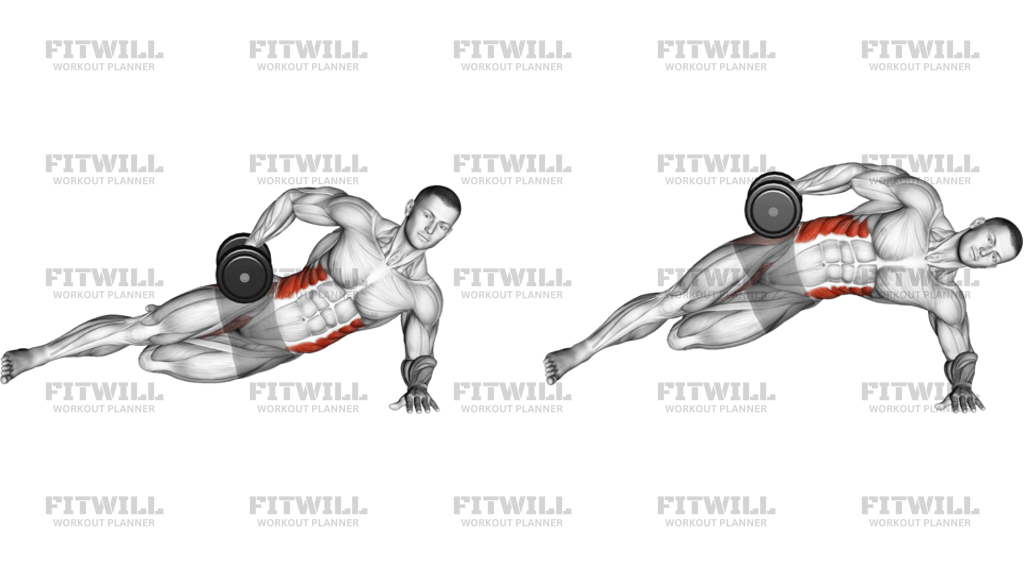
Dumbbell Side Bridge is a loaded side-plank bridge that trains the obliques, lateral core, and hip stabilizers together. The exercise asks one side of the body to hold a rigid line while the torso resists side-bending and rotation, so the waist has to stay organized under tension instead of folding at the ribs or hips. The dumbbell adds a small but useful extra load to the top hip, which makes the side of the trunk work harder to keep the pelvis level.
This movement is useful when you want more than a basic side plank. The External Obliques, Rectus Abdominis, Erector Spinae, and Transversus Abdominis all help keep the ribs stacked over the pelvis while the shoulder on the floor stays packed and stable. That combination makes Dumbbell Side Bridge a practical core-strength drill for athletes, general strength training, and accessory work that needs anti-lateral-flexion control.
The setup matters because the bridge only feels solid when the body line and the load are centered. Lie on your side with the lower forearm under the shoulder, place the dumbbell on the upper hip or waist, and keep the top hand near the handle so the weight does not roll. From there, lift the hips until the body makes a straight line from head to knees or ankles, depending on the version you can control, and keep the chest from opening toward the ceiling.
Each repetition should feel like a deliberate lift, not a swing. Hold the top position long enough to feel the side of the waist, then lower the hips slowly before starting the next rep or finishing the hold. If you need a shorter lever, bend the lower knee and keep the same shoulder, rib, and pelvis stack. If you can keep the line clean, a straight-leg version increases the challenge without changing the basic pattern.
Dumbbell Side Bridge works well in warmups, core blocks, athletic prep, and finishing circuits where controlled trunk stiffness matters more than speed. It is also easy to regress or progress by changing the lever length, the hold time, or the dumbbell load. Keep the movement strict, because once the hip starts drifting, the exercise stops training the obliques and starts turning into a balance correction.
[ Workout Log & Planner ]
Put your next workout in Fitwill
Keep your plan and training log ready when you are.


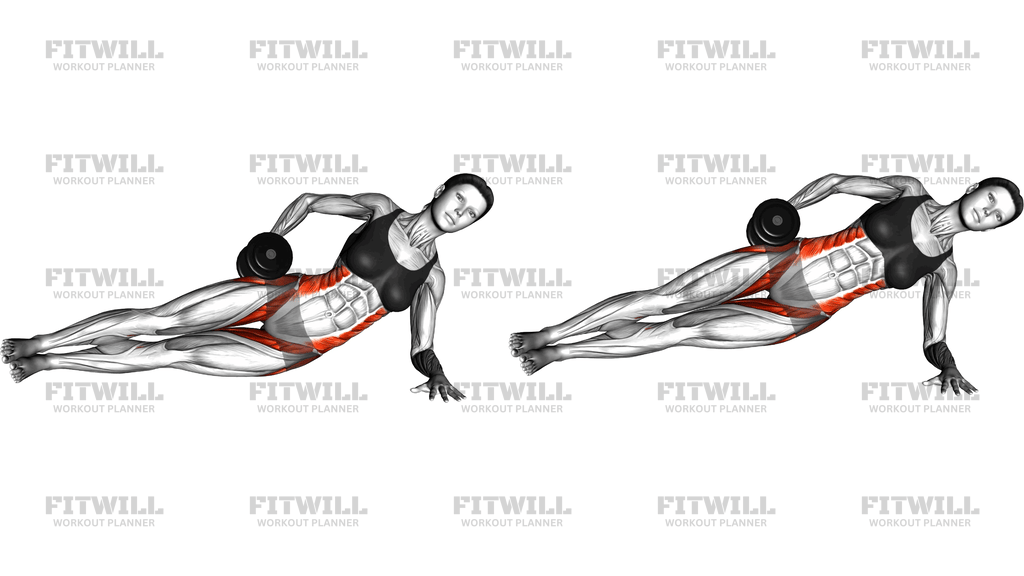
Instructions
- Lie on your side with your lower forearm on the floor directly under your shoulder and the dumbbell resting on your upper hip.
- Stack your feet if you can keep the line, or bend the lower knee for a shorter lever and a more stable setup.
- Place your top hand on the dumbbell handle so the load stays centered on the hip and does not roll forward or back.
- Brace your ribs down and press the forearm and outer edge of the lower foot or knee into the floor before you lift.
- Drive the hips up until your body forms a straight line from head to knees or ankles, and keep the dumbbell balanced on the hip.
- Keep the chest stacked and the pelvis level while you hold the top position for the target count.
- Exhale as you lift or settle into the hold, then breathe quietly without letting the torso soften.
- Lower the hips slowly until they hover just above the floor, keeping tension on the side of the waist.
- Reset your shoulder and hips before the next rep, or set the dumbbell down carefully when the set is done.
Tips & Tricks
- Use a light dumbbell first; if it slides on the hip, the load or surface is too aggressive.
- Keep the elbow directly under the shoulder so the floor arm supports the bridge instead of the front of the shoulder.
- If the waist caves or the low back takes over, bend the lower knee and shorten the lever.
- Press the floor away through the forearm instead of shrugging the shoulder up toward your ear.
- Keep the top hand light on the dumbbell handle; if you have to grip hard, the bridge is too unstable.
- Lower under control for a slower eccentric, because the descent is where many side bridges lose tension.
- Do not let the rib cage rotate open when the hips come up; keep the chest stacked over the pelvis.
- If the dumbbell digs into the hip bone, move it slightly higher onto the soft tissue or use a small pad.
- Match both sides and stop the set the moment the hips start drifting backward or the torso starts twisting.
Frequently Asked Questions
What muscles does Dumbbell Side Bridge work most?
Dumbbell Side Bridge mainly trains the obliques, with help from the deep abs, spinal stabilizers, and the shoulder on the floor.
Where should the dumbbell sit in Dumbbell Side Bridge?
The dumbbell should rest on the upper hip or waist, not the ribs or outer thigh, so the load stays centered over the working side.
Should I do Dumbbell Side Bridge with straight legs or a bent knee?
Straight legs make the bridge harder. Bending the lower knee shortens the lever and is the better regression if your hips sag or rotate.
Is Dumbbell Side Bridge a hold or a rep exercise?
It can be either. Many people hold the top position for time, but you can also do controlled hip lifts if your program calls for repetitions.
What is the most common mistake in Dumbbell Side Bridge?
The biggest mistake is letting the dumbbell shift while the torso twists open, which turns the exercise into a balance drill instead of a side-core exercise.
Can beginners do Dumbbell Side Bridge?
Yes. Start with bodyweight or a very light dumbbell and use the bent-knee version until you can keep the pelvis level.
Why does my shoulder get tired before my waist?
The support arm is probably not stacked under the shoulder, or you are shrugging instead of pressing the floor away through the forearm.
How do I make Dumbbell Side Bridge harder?
Increase hold time, straighten the legs, or add a little load while keeping the hip line and dumbbell position clean.