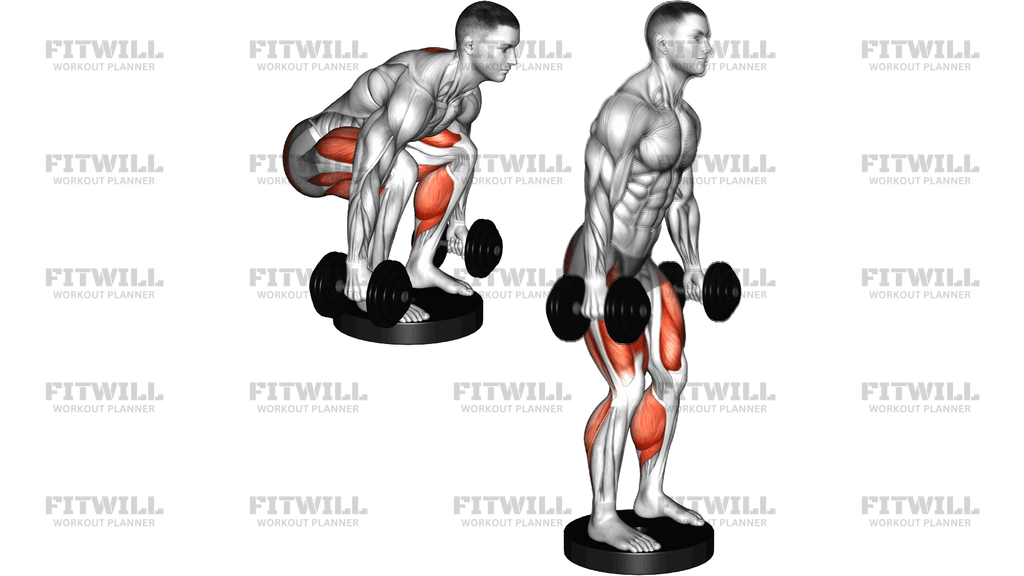
Dumbbell Good Morning Squat
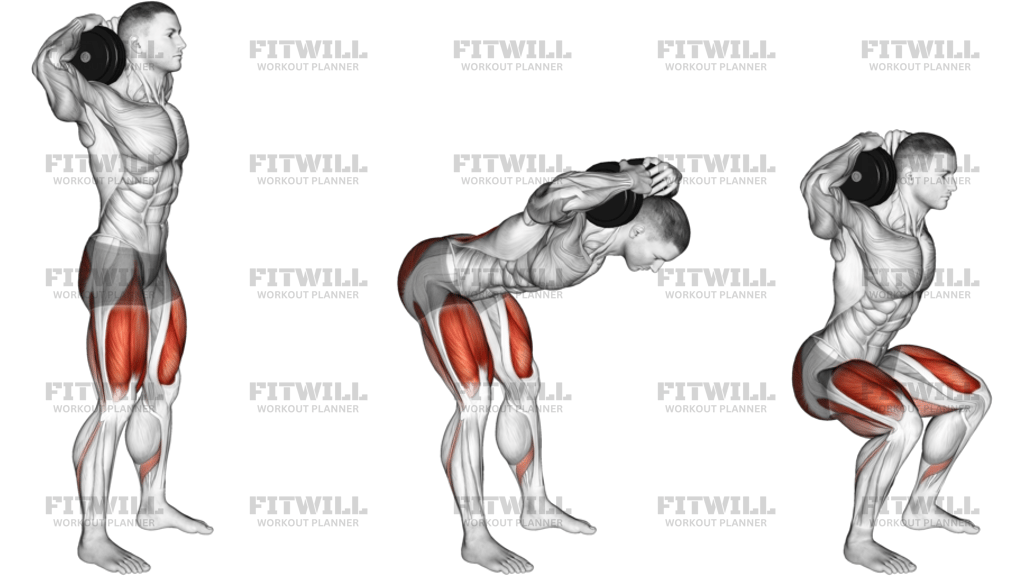
Dumbbell Good Morning Squat blends a hip hinge with a squat, using a dumbbell held behind the head and across the upper back to challenge the hips, glutes, hamstrings, quads, and trunk together. The position shifts the load away from the front of the body, so every rep asks you to stay organized through the ribs, pelvis, and spine while you descend and stand.
That setup makes this exercise useful for building posterior-chain strength and teaching a cleaner transition from hinge to squat. It can help lifters who want more control out of the bottom of a squat pattern, or athletes who need a movement that reinforces bracing, torso control, and hip drive without needing a very heavy load.
The setup matters more here than on a basic bodyweight squat because the dumbbell sits high and slightly behind your center of mass. Stand with your feet about shoulder-width apart, toes slightly turned out, and hold the dumbbell securely with both hands so it stays fixed against the upper traps and does not roll into the neck. Keep the chest open, ribs stacked over the pelvis, and the neck long before you start the descent.
On the way down, send the hips back first and let the knees bend as the torso inclines forward under control. Continue lowering until you reach a depth you can hold without rounding the lower back or shifting onto the toes, then drive the floor away to stand by extending the hips and knees together. The dumbbell should stay quiet the whole time; the body moves around it, not the other way around.
Use Dumbbell Good Morning Squat as a lighter strength builder, a warm-up for squat sessions, or an accessory lift when you want more hinge awareness and glute loading. Start conservatively, because the behind-the-head position can make the movement feel more demanding than the weight suggests. If your shoulders, neck, or lower back cannot stay comfortable, reduce the load, shorten the range, or switch to a front-loaded squat variation that keeps the same training goal with less awkward leverage.
[ Workout Log & Planner ]
Put your next workout in Fitwill
Keep your plan and training log ready when you are.


Instructions
- Stand with your feet about shoulder-width apart and turn your toes slightly out so you have room to sit between your hips.
- Hold one dumbbell with both hands behind your head, letting it rest across the upper traps/upper back while your elbows stay bent and the weight stays secure.
- Stack your ribs over your pelvis, brace your midsection, and keep your neck long before the first rep.
- Unlock your knees and push your hips back first, starting the descent with a controlled hip hinge.
- Let your torso tip forward as your knees bend, but keep the dumbbell fixed in place and your chest from collapsing.
- Lower into the squat until your thighs reach a comfortable depth that still lets you keep a flat back and planted feet.
- Drive up by pressing through your midfoot and heels, bringing your hips and knees back to full extension together.
- Finish tall with your glutes active, then reset your breath and posture before the next repetition.
- If the set gets sloppy, stop, lower the load, or cut the range instead of forcing another rep.
Tips & Tricks
- Use a light dumbbell at first; the behind-the-head position makes the lever arm feel heavier than a normal squat.
- Keep the dumbbell high on the upper traps, not on the cervical spine, so it does not dig into your neck.
- If your heels lift, shorten the depth and think about sitting back before you drop straight down.
- Let the knees track in line with the toes instead of caving inward as you stand back up.
- Keep the dumbbell still while the torso moves; if it starts bouncing, the load is too heavy or your brace is fading.
- A slower descent helps you feel the hip hinge before the squat portion takes over.
- If your lower back takes over, reduce the depth and keep more tension in the glutes and hamstrings on the way down.
- Breathe in and brace before each rep, then exhale as you drive out of the bottom.
- Use a box or bench as a depth target if you need help learning the hinge-to-squat transition.
- Stop the set when your elbows drop, the chest caves, or the dumbbell starts sliding around behind your head.
Frequently Asked Questions
What muscles does Dumbbell Good Morning Squat train?
It mainly works the glutes, hamstrings, and quads, with the core and spinal erectors helping you keep the dumbbell steady behind the head.
Where should the dumbbell sit during Dumbbell Good Morning Squat?
It should rest high across the upper traps/upper back while both hands keep it pinned in place. It should not ride on the neck or wobble as you descend.
Is Dumbbell Good Morning Squat good for beginners?
Yes, if you keep the load light and the range controlled. Beginners usually need to learn the hinge-first descent before they add depth or weight.
How is Dumbbell Good Morning Squat different from a regular squat?
The dumbbell behind the head shifts the challenge toward hip control and trunk stability. It also asks you to hinge first, then sit into the squat instead of dropping straight down.
How deep should I go in Dumbbell Good Morning Squat?
Go only as low as you can while keeping your back long, your heels down, and the dumbbell stable. Depth that forces rounding is too deep for this variation.
What if my lower back feels this more than my legs?
Shorten the range, lighten the dumbbell, and start the descent by sending your hips back sooner. If you still cannot keep a neutral torso, switch to a goblet squat or bodyweight squat drill first.
Can I use two dumbbells for this movement?
The image-based version uses one dumbbell held behind the head with both hands. Using two dumbbells changes the leverage and usually turns it into a different squat or hinge variation.
Is Dumbbell Good Morning Squat more of a squat or a hinge?
It is both. The descent starts like a good morning with the hips moving back, then it finishes like a squat as the knees bend and the hips drop between the feet.