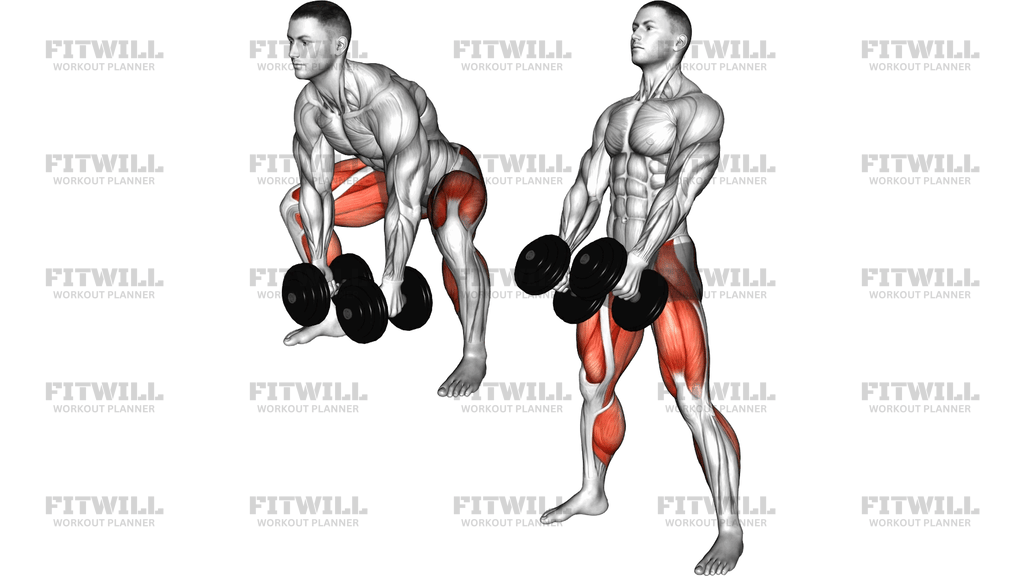
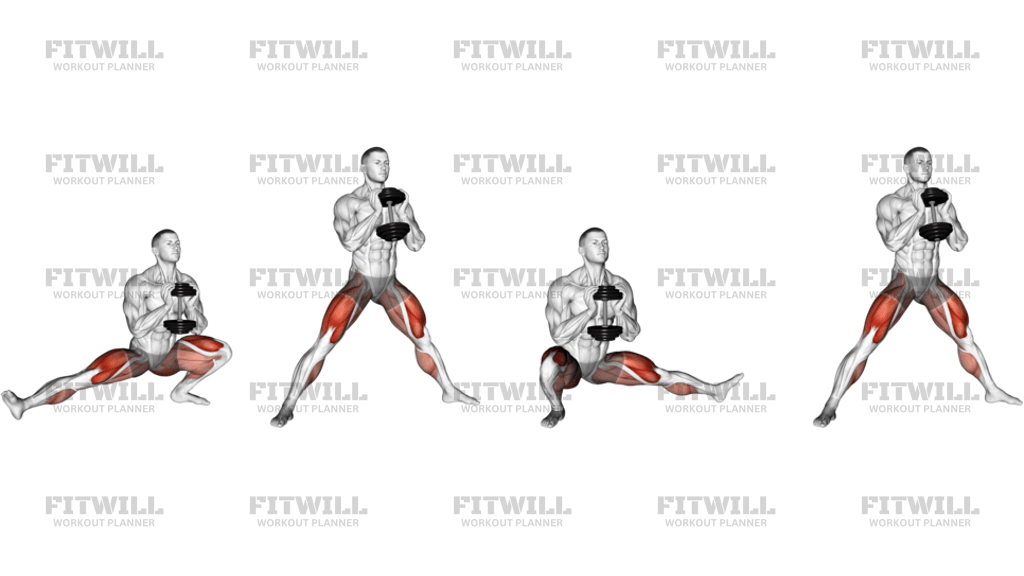
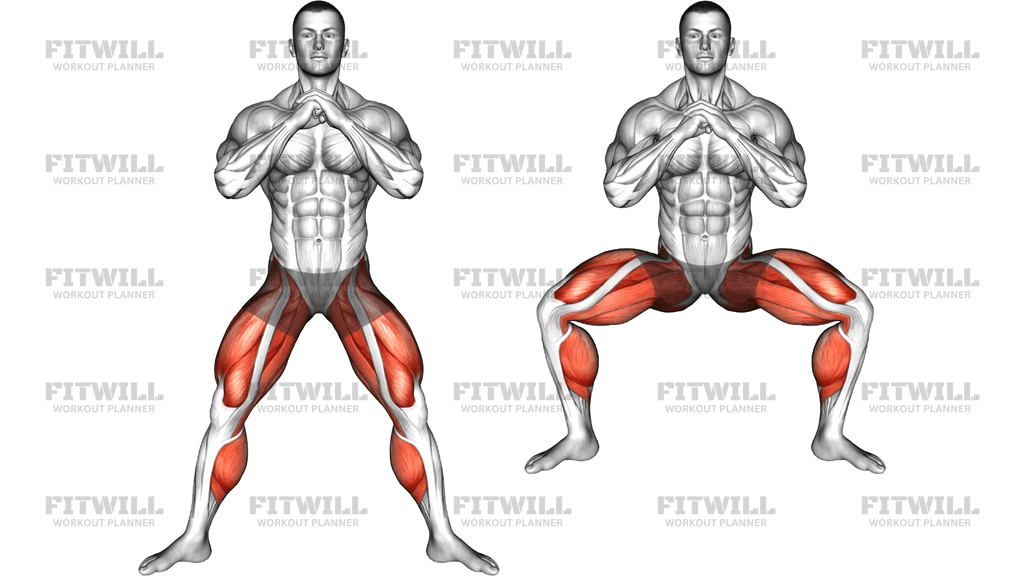
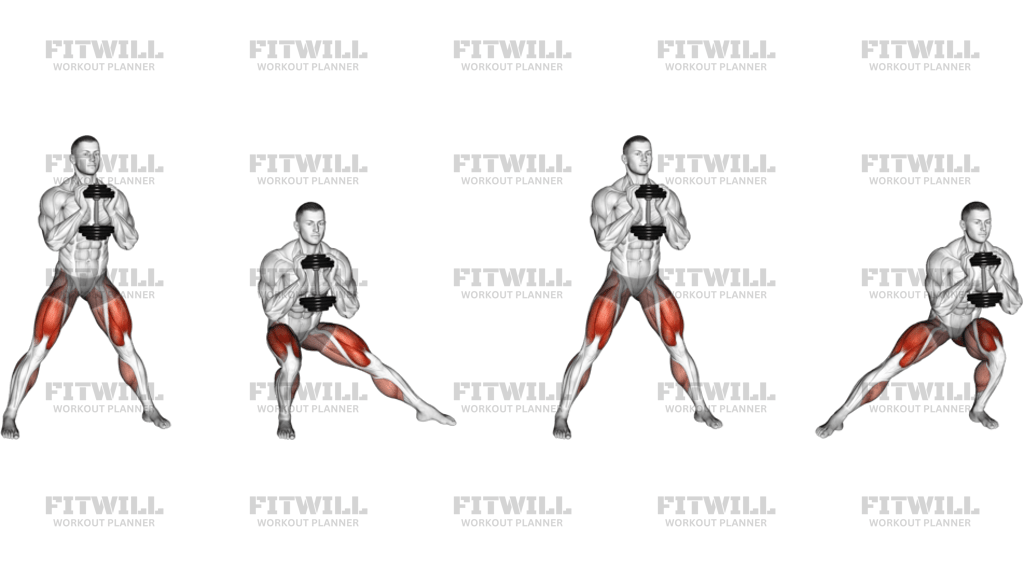
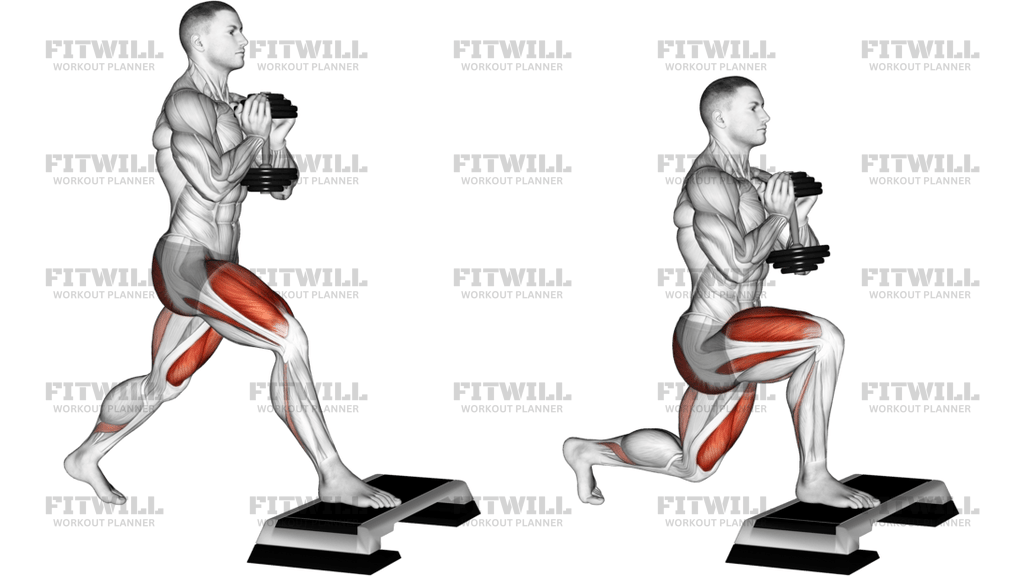
Dumbbell Step-Up Split Squat
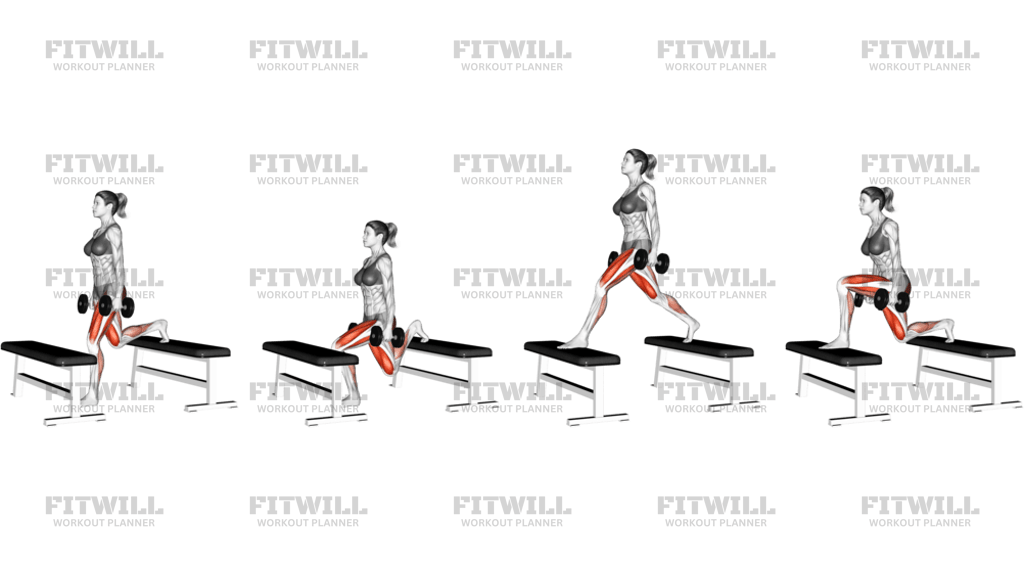
Dumbbell Step-Up Split Squat is a unilateral lower-body exercise that blends a split squat with a step-up pattern. You hold a dumbbell in each hand and work one leg at a time while the other leg stays back on the support. The setup is what makes the movement useful: a stable front foot, a quiet rear leg, and a tall torso let the lead thigh do the work instead of momentum.
The exercise is especially effective when you want quad-dominant leg training with a balance challenge built in. The front leg has to control both the lowering phase and the drive upward, while the hips, trunk, and ankle stabilizers keep the body from wobbling. That makes it a strong choice for building single-leg strength, improving side-to-side control, and exposing weak links that regular bilateral squats can hide.
The best reps start with a controlled descent. Lower until the front knee bends deeply and the back knee tracks down in a clean line, then drive through the front heel and midfoot to stand up without bouncing off the rear leg. Keep the dumbbells still at your sides, let the ribs stay stacked over the pelvis, and breathe out as you rise. If you rush the drop or twist the torso to finish the rep, the load usually shifts away from the quads and into momentum.
This movement fits well in accessory blocks, lower-body hypertrophy work, or warmups that prepare the knees and hips for harder unilateral work. It can also be a practical regression from heavier single-leg loading because the step gives you a clear target and a repeatable path. Start light, keep the step height manageable, and only increase load once the front foot stays planted, the knee tracks cleanly, and each side looks the same from rep to rep.
Fitwill
Log Workouts, Track Progress & Build Strength.
Achieve more with Fitwill: explore over 9600 exercises with images and videos, access built-in and custom workouts, perfect for both gym and home sessions, and see real results.
Start your journey. Download today!




Instructions
- Hold a dumbbell in each hand and set your front foot on the working step or bench with your rear foot placed back on the support behind you.
- Stand tall with your hips square, chest lifted, and both dumbbells hanging straight beside your thighs.
- Set most of your weight through the front foot so the back leg is there for balance, not for push-off.
- Lower under control by bending the front knee and dropping the back knee straight down between the two supports.
- Keep the front heel planted and let the front knee track in line with the second or third toe.
- Descend until the front thigh is close to parallel or until your hips can stay level without twisting.
- Drive through the front heel and midfoot to stand up on the working leg while keeping the dumbbells quiet at your sides.
- Finish each rep with the hips and ribs stacked, then lower again with the same controlled path.
- Complete all reps on one side before switching sides, or alternate sides if that is how your program is written.
Tips & Tricks
- Choose a step height that lets the front foot stay flat; if your heel pops up, the platform is too high.
- Keep the rear leg light. If you can feel yourself pushing off it, lower the load and slow the rep down.
- Think about driving the floor away with the front foot instead of lunging forward with the torso.
- Let the front knee travel forward naturally, but keep it stacked over the toes instead of collapsing inward.
- Hold the dumbbells still. Swinging the weights usually means the step is too fast or the load is too heavy.
- Use a short pause in the bottom position if you tend to bounce between the two supports.
- Keep your ribs over your pelvis so the movement comes from the legs instead of an exaggerated back arch.
- Exhale as you stand up and inhale as you lower so your torso stays organized through the hardest part of the rep.
- Stop the set when the front hip starts shifting sideways or the back leg starts launching the body upward.
Frequently Asked Questions
What does the Dumbbell Step-Up Split Squat work most?
It mainly targets the quads on the front leg, with the glutes, hip stabilizers, and core helping you stay balanced.
How is this different from a regular split squat?
The step-up element makes the upward drive more vertical and increases the balance demand, so the front leg has to stabilize and push at the same time.
Should my back leg push me up?
No. The back leg should stay supportive and light; the front leg should do the real work.
How high should the bench or step be?
Use a height that lets you keep the front foot flat and the pelvis level. A lower step is usually better than forcing extra depth.
What setup mistake causes the most problems?
A setup that is too long or too high usually causes the torso to tip forward, the rear leg to take over, or the front knee to collapse inward.
Can beginners do this exercise?
Yes. Start with bodyweight or very light dumbbells and use a low step until you can control the descent and stand up without wobbling.
What should I feel if the form is right?
You should feel a strong front quad and steady hip control, not a hard push from the back leg or a jolt in the lower back.
How do I make the exercise harder?
Add load first, then increase the step height or add a brief pause at the bottom while keeping the same clean knee and foot position.