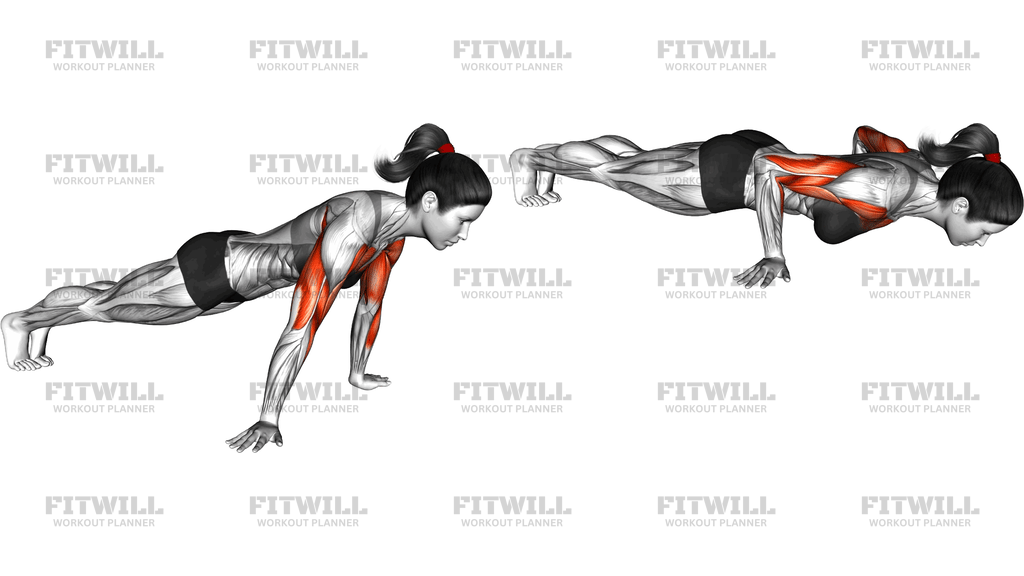
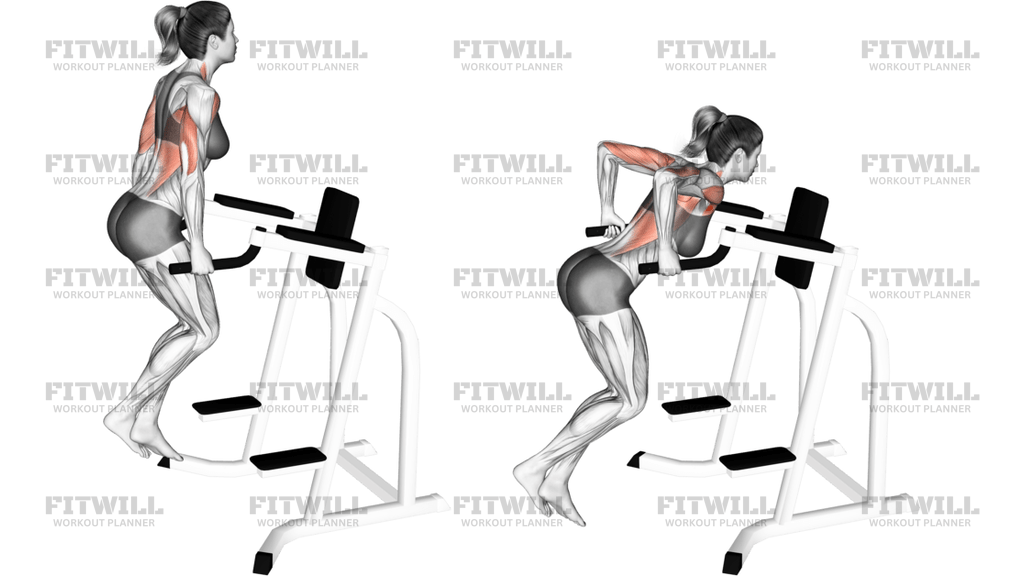
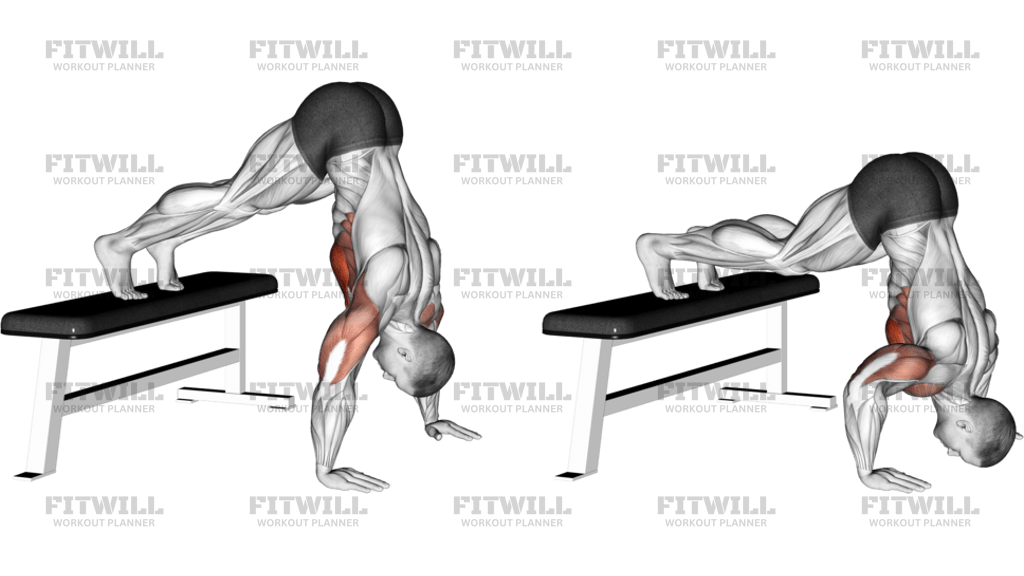
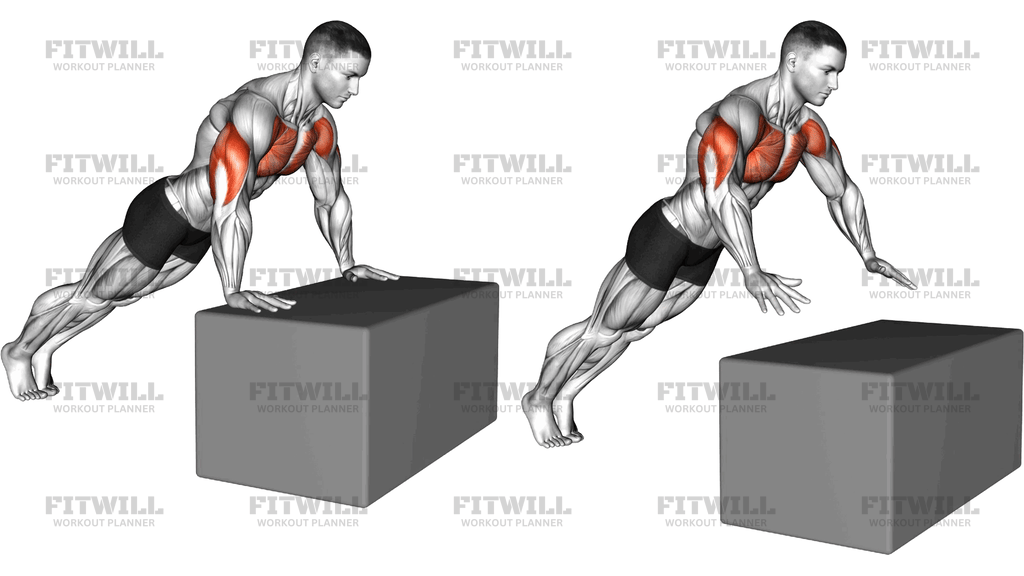
Elevated Pike Push-Up
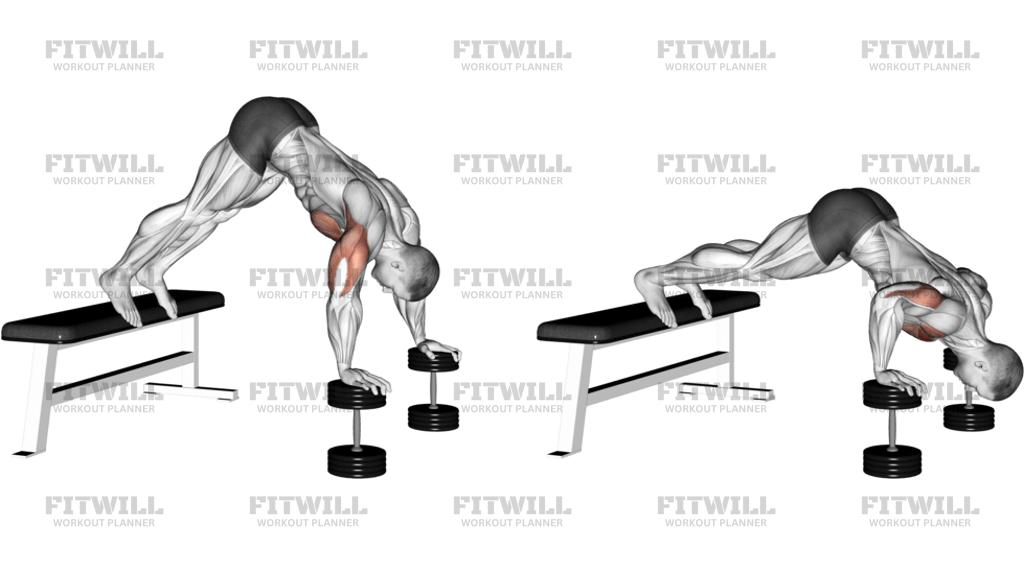
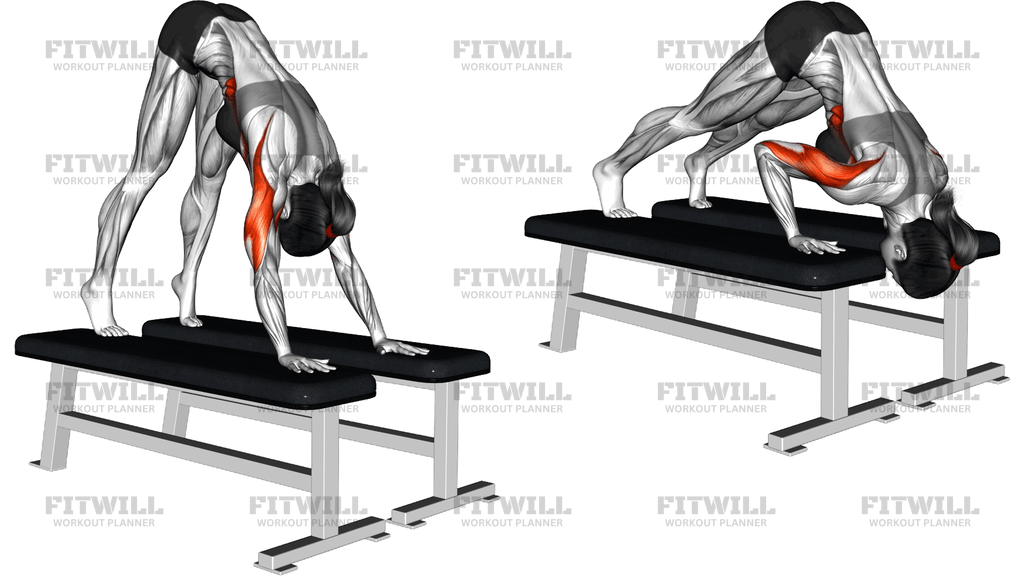
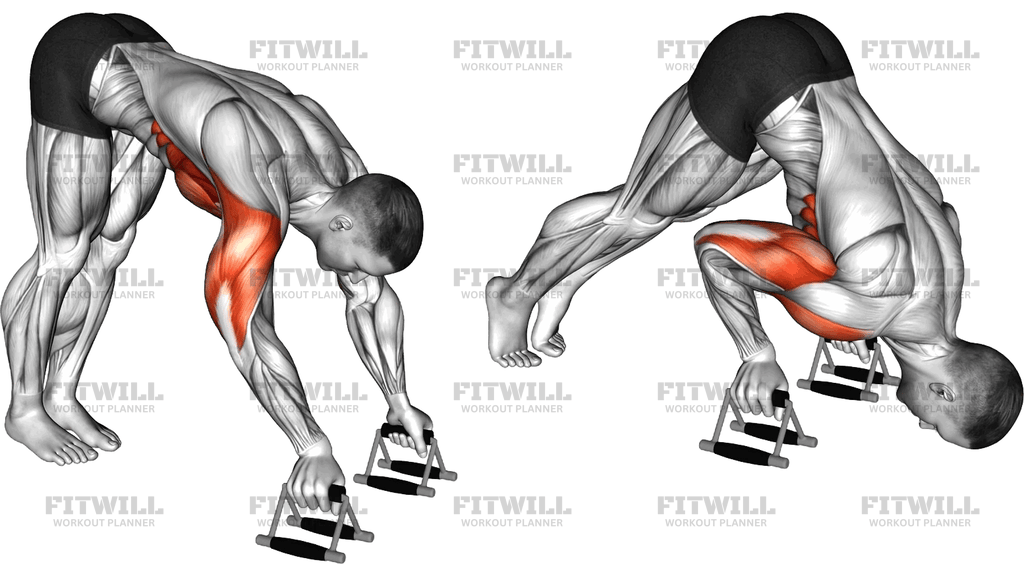
Elevated Pike Push-Up is a bodyweight shoulder press variation that loads the deltoids through a steep pressing angle. With the feet raised on a bench and the hands supported on dumbbells or push-up handles, the torso stays folded into an inverted V so the shoulders have to lower and press the body through space.
This setup shifts a lot of demand onto the shoulders and triceps while the upper back, core, and serratus help keep the shoulder blades controlled. The neutral hand position from the dumbbells reduces wrist strain, and the height of the bench changes how much bodyweight you place over the hands. Higher feet make the press harder and usually increase the range you need to control.
A clean rep starts with the hands planted shoulder-width apart, feet secure on the bench, hips high, and the head tucked between the arms. From there, bend the elbows and lower the head toward the floor between the hands in a smooth arc. The elbows should track under control, the ribs should stay tucked, and the neck should stay long so the movement looks like a steep overhead press instead of a sloppy push-up.
Press the floor away until the elbows are straight and the shoulders are active at the top, then reset the pike before the next rep. This exercise is useful for home shoulder work, press progressions, and bodyweight strength blocks when a full handstand push-up is still too advanced. If the lower back arches, the elbows flare hard, or the head crashes toward the floor, lower the bench, shorten the range, or stop the set.
Fitwill
Log Workouts, Track Progress & Build Strength.
Achieve more with Fitwill: explore over 9600 exercises with images and videos, access built-in and custom workouts, perfect for both gym and home sessions, and see real results.
Start your journey. Download today!




Instructions
- Set two dumbbells or push-up handles on the floor about shoulder-width apart, then place your feet on a bench behind you.
- Walk your hands in until your hips are high and your body forms a strong inverted V with straight legs.
- Press firmly through the handles, spread your fingers, and let your shoulders travel slightly forward over your hands.
- Brace your midsection, tuck your ribs, and keep your head in line with your arms before you start the rep.
- Bend your elbows and lower your head toward the floor between the handles in a controlled arc.
- Keep your forearms near vertical and let the elbows track under control instead of collapsing outward.
- Lower until your head nearly reaches the floor or you reach your comfortable depth without losing the pike shape.
- Exhale as you drive the handles away, then finish with straight arms, active shoulders, and hips still high.
- Reset the pike position before the next repetition so each rep starts from the same shoulder angle.
Tips & Tricks
- Choose a bench height that keeps you in a clear pike position; if the hips drop, the exercise turns into a decline push-up.
- The dumbbells are there to save the wrists, so if they wobble, switch to push-up handles or a firmer surface.
- Let your head travel between the hands rather than forward, which keeps the press angle steep and shoulder-dominant.
- Keep the ribs tucked as you lower; if they flare, the lower back usually takes over and the rep loses tension.
- A controlled lowering phase makes the shoulders work harder than bouncing into the bottom.
- Stop a little short of the deepest range if the front of the shoulder pinches or the neck starts to tense up.
- If your elbows blow wide on the way down, reduce the range and re-stack the shoulders over the hands.
- End the set as soon as you can no longer keep the hips high and the head path clean.
Frequently Asked Questions
What muscle does Elevated Pike Push-Up target most?
The shoulders are the main target, especially the deltoids. The triceps assist strongly, and the upper back and core help keep the inverted-V position stable.
Why are the feet elevated on a bench?
Raising the feet shifts more bodyweight over the hands and makes the press more demanding. A lower bench or box makes the exercise easier to control.
Why use dumbbells under the hands?
They work like neutral-grip handles and reduce wrist extension. If they roll or feel unstable, use push-up handles or the floor.
How low should I go on each rep?
Lower until the head nearly reaches the floor between the hands without losing the pike shape. Stop earlier if the shoulders pinch or the lower back starts to arch.
Is this the same as a handstand push-up?
No, but it is a useful step toward one. The elevated pike gives you a steep pressing angle without needing full inversion.
Should my elbows stay tucked or flare out?
A small amount of flare is normal, but the elbows should stay controlled and not swing wide. If they flare hard, the shoulders usually lose position.
What is the biggest form mistake?
Letting the hips drop and turning the movement into a decline push-up is the most common issue. Keep the hips high and the head moving between the hands.
Can beginners use this exercise?
Yes, if they keep the bench low, shorten the range, and stop the set before the shoulders or neck lose control.