Cable Standing Rear Delt Row With Rope
Cable Standing Rear Delt Row With Rope is a standing high-cable rear-delt and upper-back exercise that uses a rope attachment to let you pull the hands apart as the elbows travel back. It is most useful when you want to train the back of the shoulders, mid-back, and scapular control without lying on a bench or needing heavy loading. The cable keeps tension on the rep from the first inch of the pull to the controlled return, so setup and body position matter more than brute force.
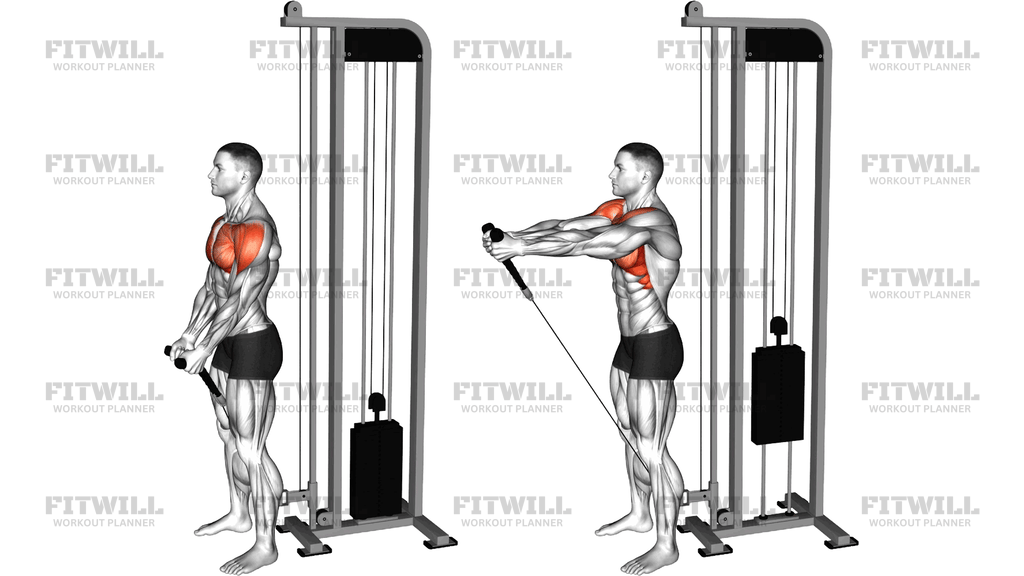
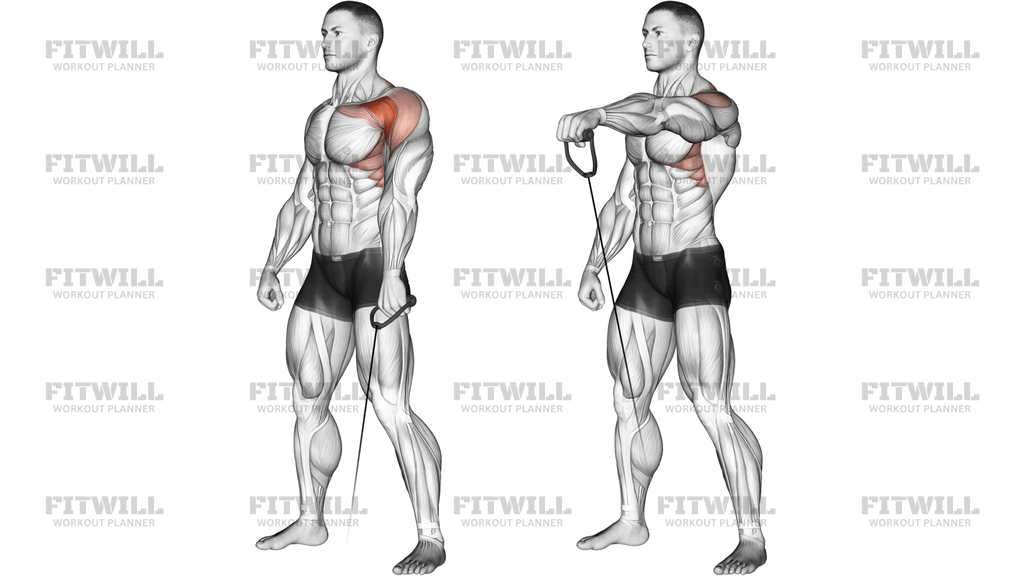
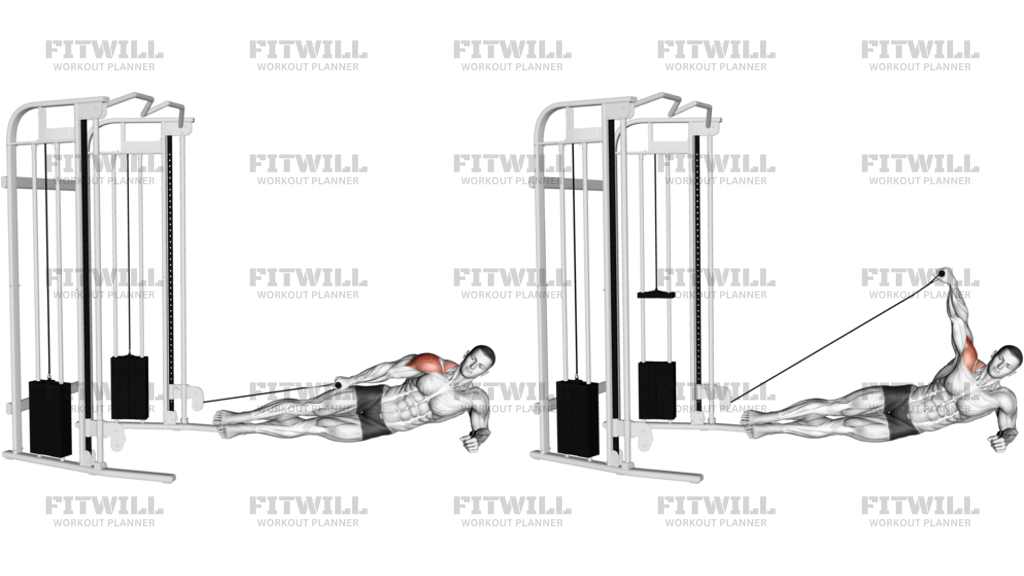
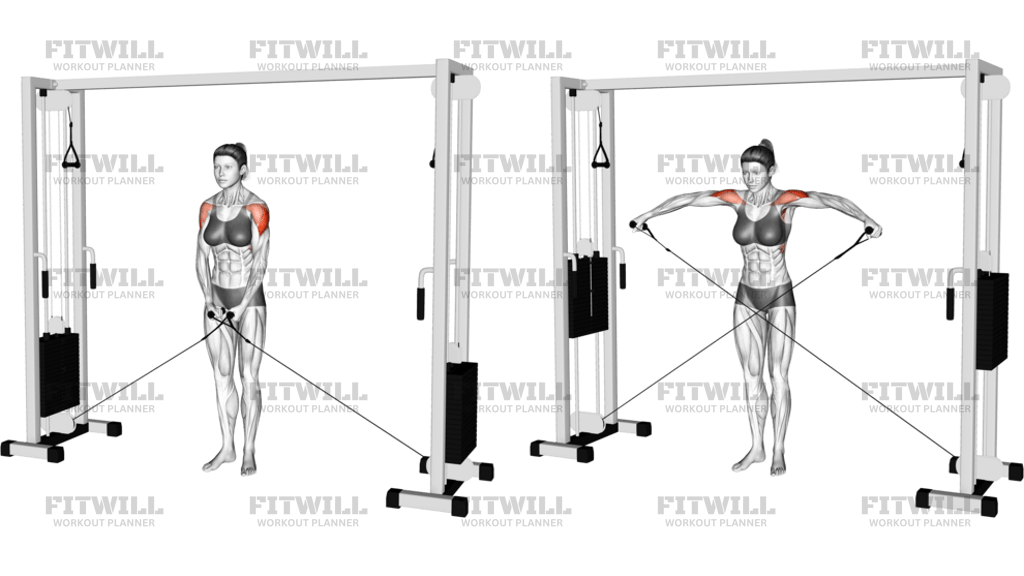
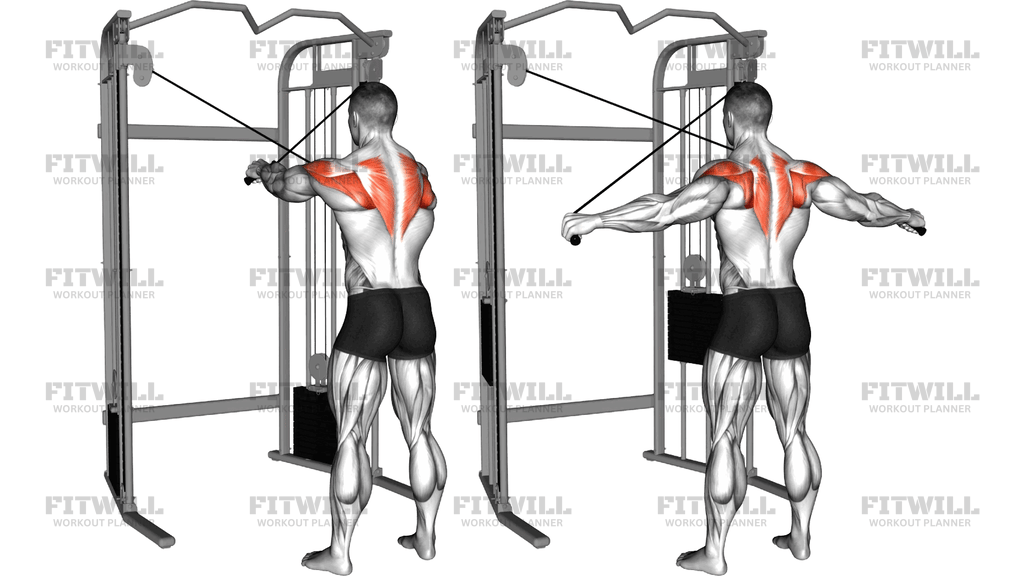
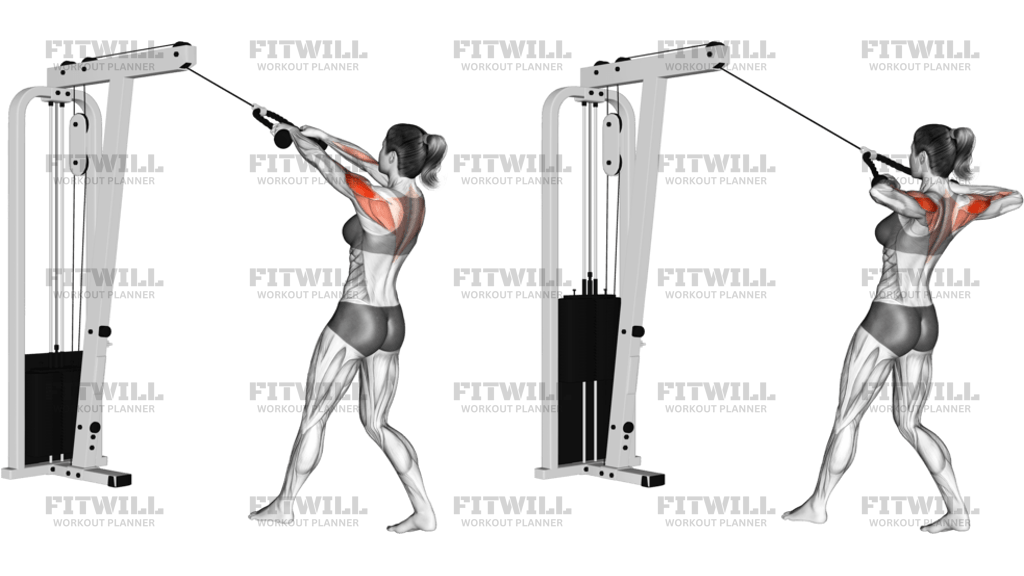
The image shows the cable set high and the lifter standing a step or two back with a slight stagger, arms reaching forward and upward before the pull begins. That angle matters because it changes the line of pull: instead of rowing low toward the waist, the elbows flare out and back while the hands finish near the face or upper chest. That path shifts the emphasis toward the rear delts, rhomboids, and mid traps, with the upper arms and forearms only helping to hold the rope and control the cable.
Treat the torso as a stable platform. Keep the ribs down, chest long, and neck neutral while the shoulders move. The best reps come from drawing the elbows back without shrugging hard or turning the row into a full-body heave. If the weight is too heavy, the upper traps and lower back take over quickly, the hands drift downward, and the rear delts lose tension. A cleaner set uses moderate resistance, a brief squeeze, and a return that stays smooth instead of snapping the stack.
Use this exercise when you want a rear-delt accessory that also reinforces shoulder-blade mechanics. It fits well after pressing, pulling, or overhead work, and it can also serve as a lighter shoulder-health drill when loaded conservatively. Beginners can use it if they keep the range short enough to stay organized and avoid yanking the rope toward the waist. More advanced lifters can use it to build volume for the back of the shoulders while keeping joint stress lower than many free-weight options.
The main coaching priority is accuracy: high pulley, firm stance, elbows high, rope pulled apart, and a slow return under control. That combination keeps the exercise honest and makes each rep repeatable. When the path, posture, and tension stay consistent, the movement becomes a reliable way to build rear delt size, upper-back strength, and better shoulder positioning without turning the set into a momentum exercise.
[ Workout Log & Planner ]
Put your next workout in Fitwill
Keep your plan and training log ready when you are.


Instructions
- Set the cable pulley high and clip on the rope attachment, then step back until the stack has tension with your arms reaching forward and slightly upward.
- Take a staggered stance with a soft bend in both knees and square your hips and shoulders to the machine.
- Hold the rope with both palms facing each other, then let the hands start close together in front of your face or upper chest.
- Brace your ribs down and keep your neck long before each rep so the pull starts from the shoulders, not from a lean or shrug.
- Pull the rope back by driving your elbows out and back, and separate the ends of the rope as they move toward your temples or upper chest.
- Finish with your upper arms roughly in line with or slightly above your shoulders, squeezing the rear delts and upper back without cranking the lower back.
- Pause briefly at the top, then return the rope forward under control until the arms are long again and the stack is still under tension.
- Exhale as you pull, inhale on the return, and repeat for the planned reps without letting the torso swing.
Tips & Tricks
- Keep the cable high enough that the pull stays on the rear delts and upper back instead of turning into a low row.
- Think about pulling the rope apart as it moves back; that small external-rotation cue helps the back of the shoulders do more work.
- A slight backward lean is fine, but if your chest drifts toward the stack or your ribs flare, the weight is too heavy.
- Stop the rep when the elbows are back and high, not when the hands are jammed behind the body.
- Keep the shoulders away from the ears so the upper traps do not take over the whole set.
- Use a tempo that makes the return obvious; the lowering phase should feel controlled, not like the stack is yanking you forward.
- If your forearms or grip fail before your rear delts, reduce load and let the rope sit deeper in the hands.
- A controlled pause at the squeezed position makes the exercise much better than adding momentum or extra body sway.
Frequently Asked Questions
What muscles do Cable Standing Rear Delt Row With Rope work most?
The main target is the rear delts, with the rhomboids, mid traps, and upper back helping to finish the pull.
Why is the pulley set high in this exercise?
A high pulley keeps the rope path angled toward the face and upper chest, which matches the rear-delt row pattern shown in the image.
Should the rope finish near my chest, neck, or face?
Finish with the hands near the upper chest, lower face, or temples, depending on your shoulder comfort, while keeping the elbows high.
Is this the same as a face pull?
It is very close. This version emphasizes the rear delts and upper back, with the rope pulled apart as the elbows travel back.
How do I keep the lower back out of it?
Use a small staggered stance, keep the ribs stacked over the pelvis, and stop the set if you need a big lean to move the handle.
What is the most common mistake with the rope?
Most people either pull too low like a row or shrug the shoulders up, which shifts tension away from the rear delts.
Can beginners use this cable setup safely?
Yes, beginners can do it well with light weight and a shorter range, as long as they keep the elbows high and the return controlled.
How should I progress this movement?
Add reps or a small amount of load only after you can keep the same rope path, torso position, and pause at the top on every rep.