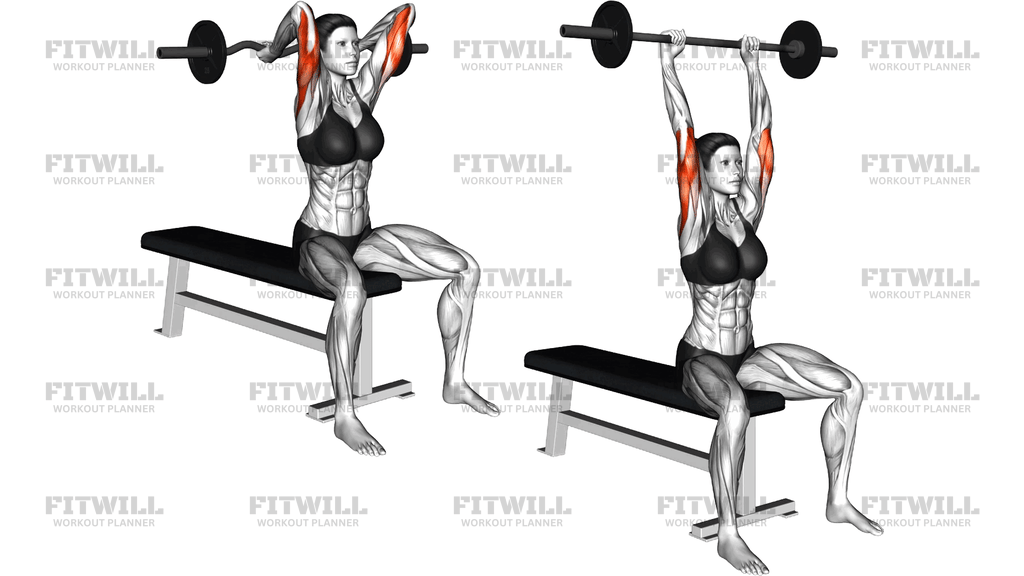
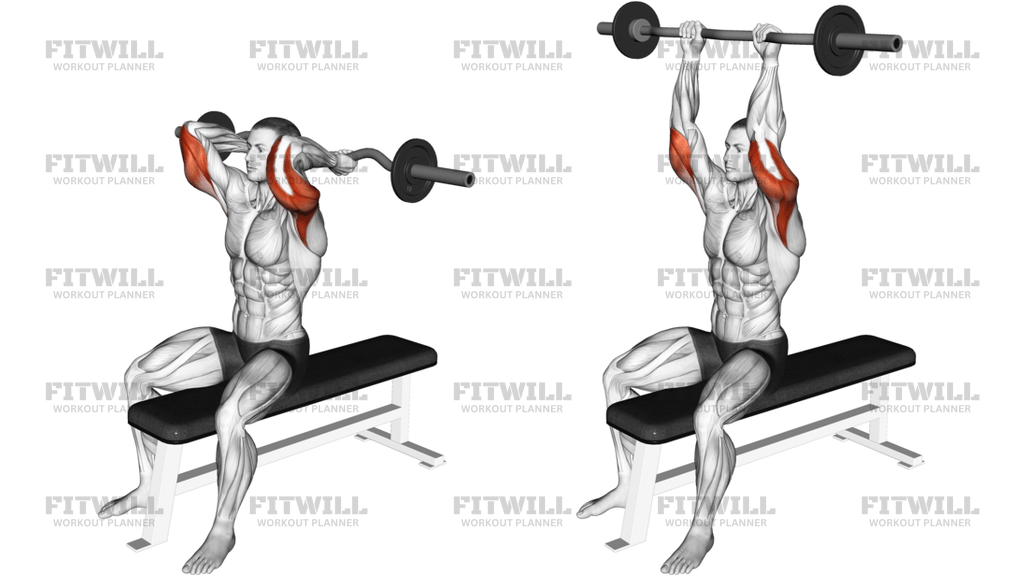
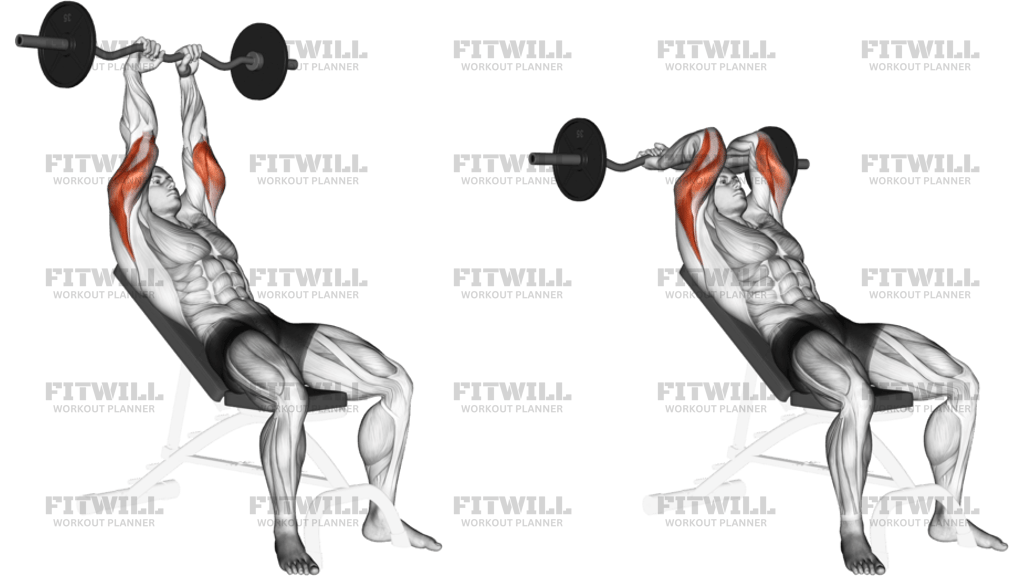
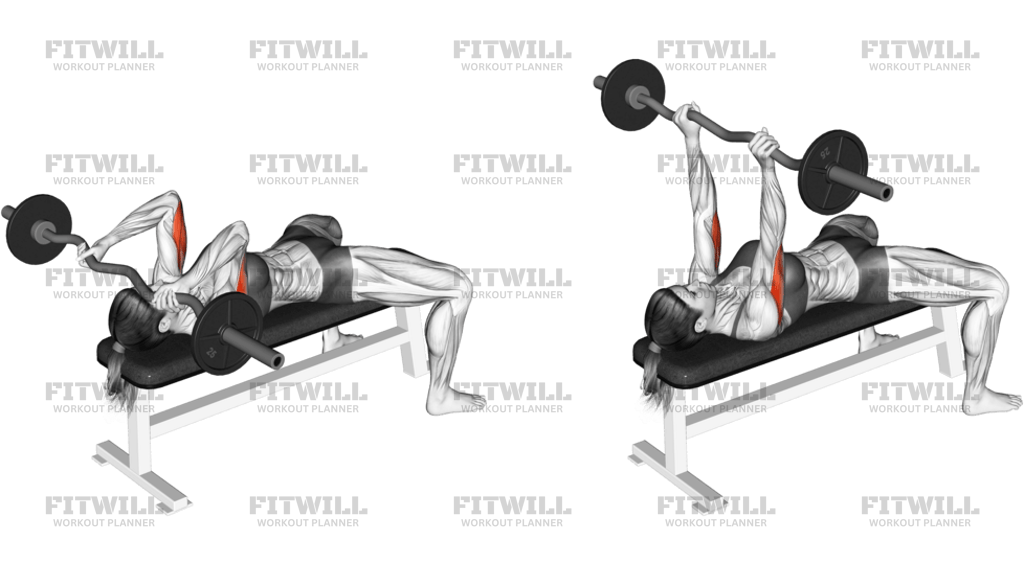
EZ Barbell Decline Close-Grip Face Press
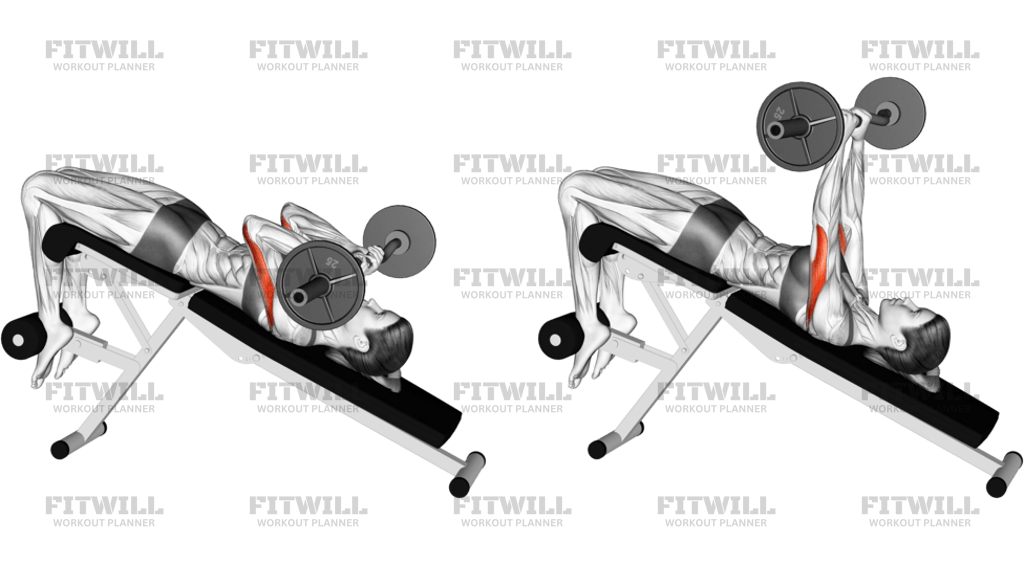
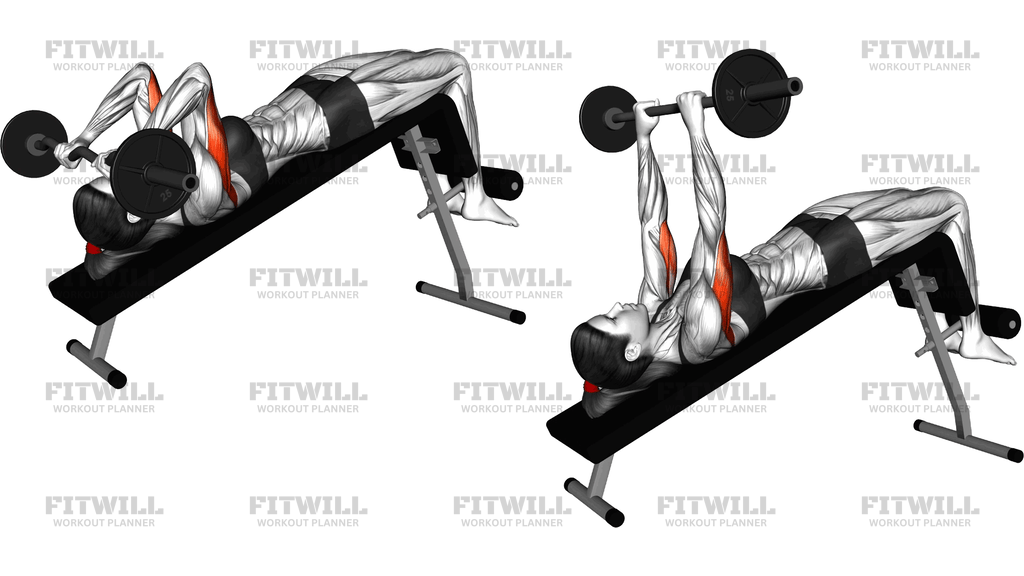
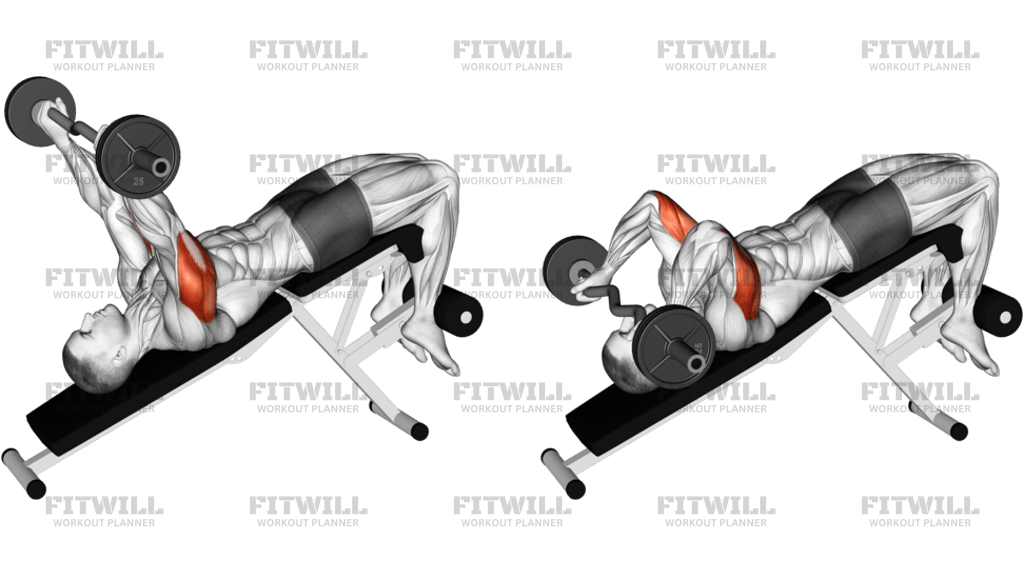
EZ Barbell Decline Close-Grip Face Press is a decline pressing variation built around a narrow grip and a controlled bar path. With the back supported on a decline bench, the exercise shifts more of the work toward the triceps while the chest, front shoulders, forearms, and core help keep the rep clean and stable. The EZ bar gives the wrists a friendlier angle than a straight bar, which can make the pressing path feel smoother for lifters who want close-grip work without forcing an awkward hand position.
The decline setup matters because it changes the line of force and the amount of shoulder travel. Compared with a flat close-grip press, the decline angle usually shortens the bottom position and keeps the upper arms in a more tucked position, which can make the movement feel more triceps-dominant. That also means the bench, foot lock, and upper-back position have to be organized before the first rep, or the bar will drift and the set will turn into a shoulder-and-wrist fight.
Press the bar with a deliberate path from the start position to the upper chest or lower face line, depending on your arm length and bench angle. The elbows should stay close enough to the torso that the triceps stay loaded, but not so pinned that the shoulders feel jammed. A brief pause at the bottom can clean up the rep and remove bounce, while a steady press back to straight arms reinforces lockout strength without turning the set into a heave.
EZ Barbell Decline Close-Grip Face Press is useful when you want triceps-focused pressing volume with a setup that feels a little different from a standard bench press. It fits well as accessory work after a main press, as part of an upper-body strength block, or in programs that need a close-grip option for elbow extension strength. Because the bench is decline and the grip is narrow, the exercise rewards control more than load chasing, and the best results usually come from consistent reps rather than maximal weight.
Keep the movement comfortable and repeatable. If the shoulders roll forward, the wrists bend back, or the bar path drifts toward the neck, reduce the load and reset the bench position. A spotter or safeties are smart choices, especially when the bench is steep enough that reracking feels awkward. The goal is crisp triceps-driven pressing with a stable upper back, planted feet, and a bar path you can repeat from the first set to the last.
Fitwill
Log Workouts, Track Progress & Build Strength.
Achieve more with Fitwill: explore over 9600 exercises with images and videos, access built-in and custom workouts, perfect for both gym and home sessions, and see real results.
Start your journey. Download today!




Instructions
- Set a decline bench in a rack, lock your feet under the rollers, and lie back so your eyes are just behind the bar.
- Grip the EZ bar on the inner bends with hands just inside shoulder width, then wrap your thumbs and keep your wrists stacked over your forearms.
- Pin your upper back into the pad, squeeze your shoulder blades together, and keep your chest lifted without flaring your ribs.
- Unrack the bar to straight arms above your lower chest, keeping the bar centered over your shoulders.
- Lower the bar slowly toward the upper chest or lower-face line, letting the elbows bend and stay tucked about 30 to 45 degrees from your torso.
- Pause for a moment just above the bottom, where the forearms stay close to vertical and the shoulders still feel packed.
- Press the bar back up in the same line until the elbows are straight again, finishing over the shoulder line without bouncing.
- Exhale as you press, inhale on the way down, and keep the torso braced so the bench position does not shift.
- Rack the bar carefully with locked elbows, then reset your shoulders and feet before the next rep or set.
Tips & Tricks
- The inner bends of the EZ bar should let your wrists stay neutral; if they are cocked back, move your hands slightly until the forearms line up.
- Keep the bar path in front of the face and neck; if it drifts backward, the shoulders usually take over and the elbows flare.
- A small pause near the bottom removes bounce and makes the triceps do more of the work.
- Keep your feet pinned under the decline bench pads so your body does not slide as the bar gets heavier.
- If your shoulders feel crowded at the bottom, shorten the range a little and lower the bar to the upper chest instead of forcing it lower.
- Do not let the elbows open wide like a chest press; the close grip is what keeps this movement triceps-focused.
- Use a spotter or safeties before you chase heavy sets, because reracking a decline bar can be awkward if you miss the groove.
- Stop the set when the bar slows dramatically or the wrists start to collapse, because those are the first signs the triceps are done.
Frequently Asked Questions
What muscles does EZ Barbell Decline Close-Grip Face Press train?
The triceps are the main driver, with the chest, front shoulders, forearms, and core helping stabilize the press.
Why use a decline bench for EZ Barbell Decline Close-Grip Face Press?
The decline angle shortens the shoulder range and usually makes the press feel more triceps-dominant than a flat close-grip press.
Where should the bar travel on EZ Barbell Decline Close-Grip Face Press?
Lower it toward the upper chest or lower-face line and press it back up over the shoulder line without letting it drift behind the head.
Is EZ Barbell Decline Close-Grip Face Press beginner-friendly?
Yes, if you start light and can keep your shoulders pinned to the bench, but a spotter is still a good idea on a decline setup.
What is the biggest mistake on EZ Barbell Decline Close-Grip Face Press?
Most people flare the elbows and turn it into a loose press. Keep the grip narrow and the elbows tucked so the triceps stay loaded.
Should the EZ bar touch my chest?
Only if you can keep the shoulders packed and the wrists stacked. Many lifters do better stopping just short of the chest or lower-face line to keep tension cleaner.
Can I replace EZ Barbell Decline Close-Grip Face Press with a straight bar?
Yes, but the straight bar usually feels harsher on the wrists. An EZ bar is often the better choice for close-grip decline pressing.
How heavy should I go on EZ Barbell Decline Close-Grip Face Press?
Use a load that lets you control the lowering phase and press without bouncing, arching, or losing the tucked elbow position.