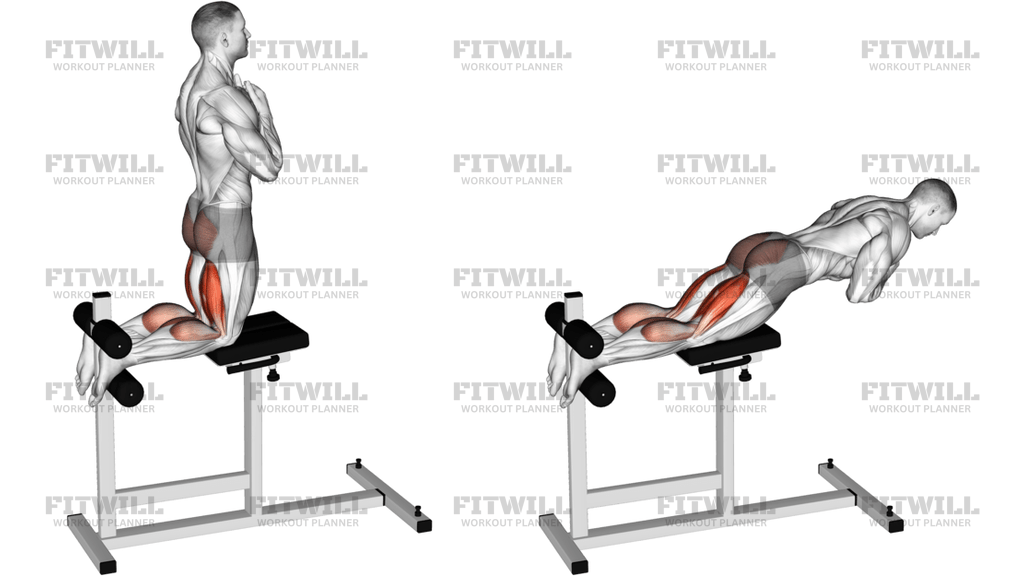
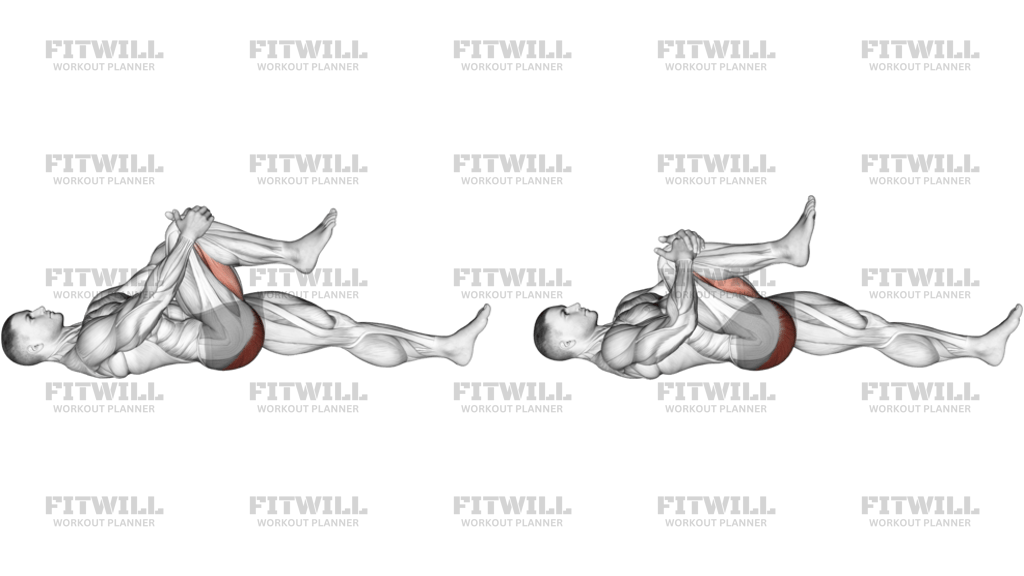
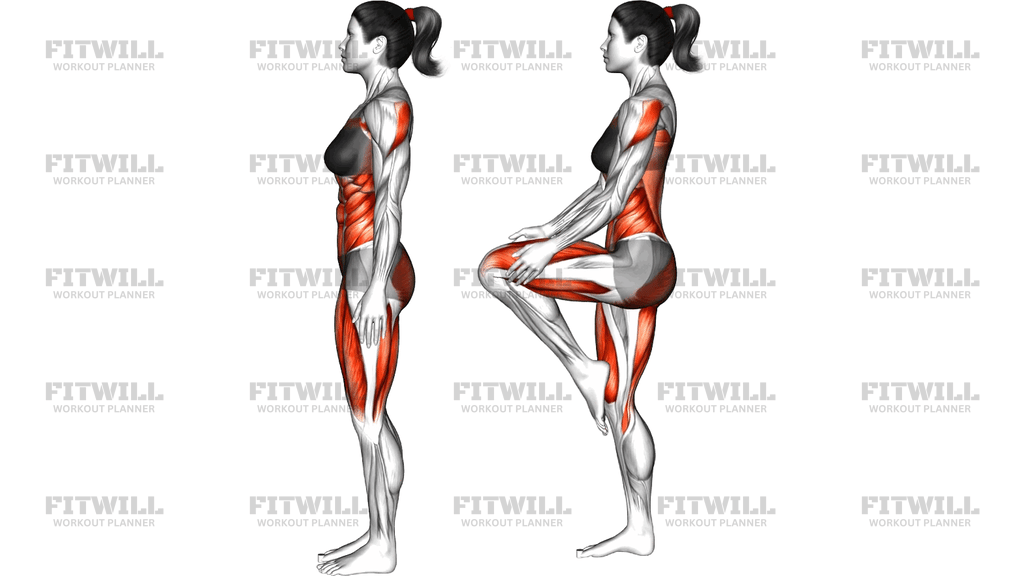
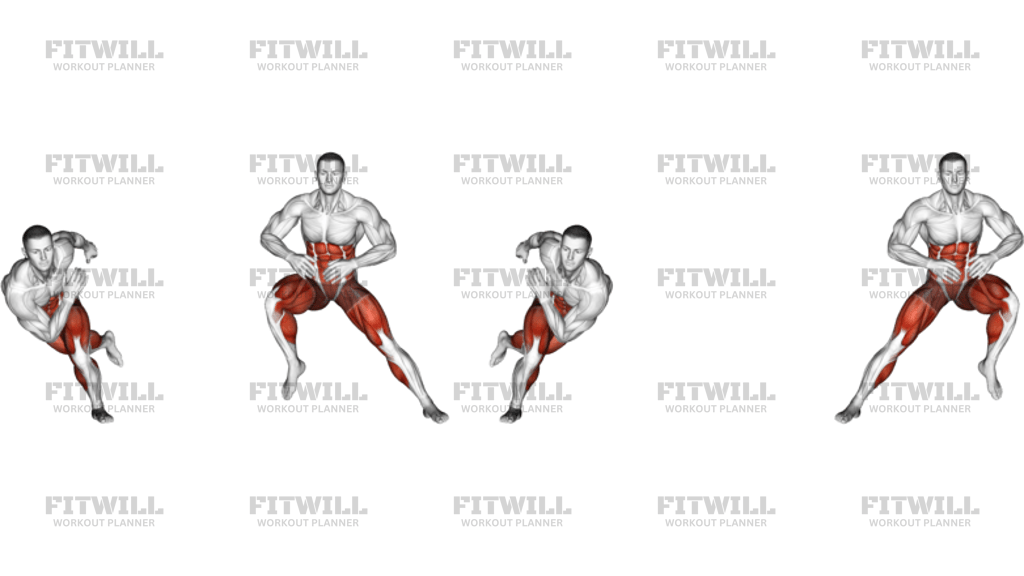
Single Leg Bodyweight Deadlift With Arm And Leg Extended
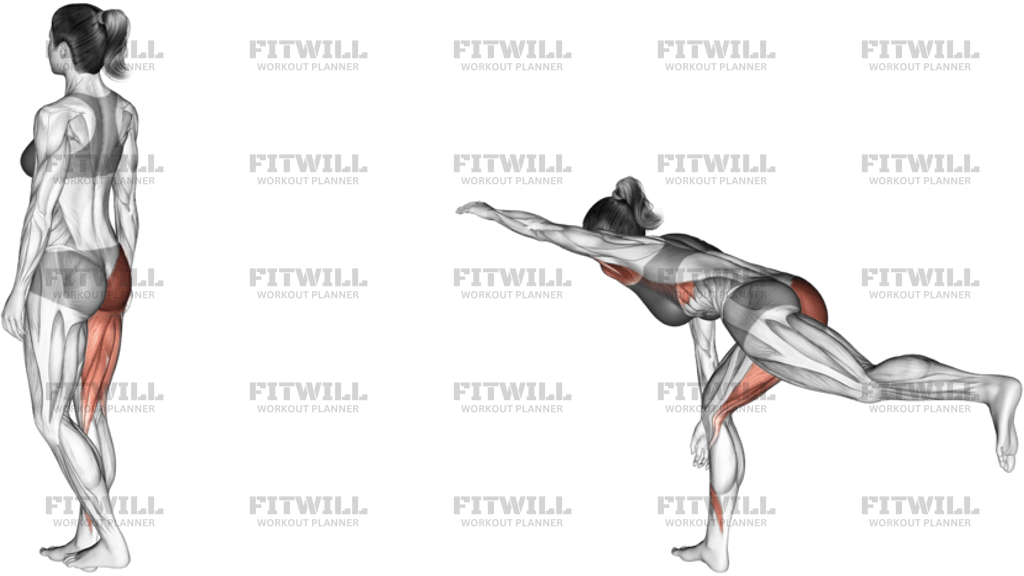
Single Leg Bodyweight Deadlift With Arm And Leg Extended is a bodyweight hip hinge built around balance, control, and clean alignment. It trains the glutes, hamstrings, and core while also challenging the small stabilizers around the ankle, hip, and trunk. Because you are standing on one leg, the exercise quickly shows whether you can keep the pelvis level and the torso organized without twisting or swaying.
The extended arm and back leg act like a counterbalance. That reach lets you tip forward without collapsing through the lower back, and it makes the movement feel more like a long hinge than a squat. The goal is not to chase depth at all costs; it is to keep the standing leg, hips, and spine working together through a smooth line from fingertips to heel.
A good repetition starts tall on one leg, with the standing knee softly bent and the free leg already ready to travel straight back. From there, hinge at the hip and let the torso lean forward as the back leg reaches behind you. The standing foot should stay planted and active, with pressure spread through the heel and forefoot so the body stays steady instead of rolling to the outside edge.
At the bottom, the torso and lifted leg should create a long, controlled line rather than a rounded or twisted shape. Most people will feel the hamstrings lengthen first, then the glutes work hard to bring the body back to standing. If you lose balance before the hamstrings are loaded, shorten the range and slow the descent instead of forcing a bigger reach.
This movement fits well in warmups, accessory work, balance training, and unilateral lower-body sessions. It is especially useful when you want single-leg hip strength without external loading, or when you want to teach a cleaner deadlift pattern before adding weight. Keep the motion deliberate, reset your balance between reps, and stop the set if the standing hip opens, the low back takes over, or the lifted leg starts to bend and swing.
[ Workout Log & Planner ]
Put your next workout in Fitwill
Keep your plan and training log ready when you are.


Instructions
- Stand tall on one leg with your planted foot flat, toes pointed forward, and a soft bend in the standing knee.
- Reach the opposite arm straight forward at shoulder height and let the free leg hover behind you before you start the hinge.
- Set your hips level and brace your midsection so your torso stays long instead of collapsing through the lower back.
- Hinge at the hip and tip your torso forward as the back leg reaches straight behind you like one long lever.
- Keep the standing foot heavy and balanced through the heel, big toe, and little toe as you lower.
- Stop when your torso is close to parallel with the floor or when the hamstrings limit the range without twisting the pelvis.
- Drive through the standing heel and squeeze the glute to bring your torso back up while the back leg comes through behind you.
- Finish tall, reset your balance, and repeat on the same side for the planned reps before switching legs.
Tips & Tricks
- Think about sending the hips straight back instead of folding the chest down toward the floor.
- Keep the lifted leg long and level with your torso; bending that knee usually turns the move into a wobble.
- If the standing hip opens toward the side, shorten the range and keep the pelvis pointed at the floor.
- A slight knee bend in the standing leg helps you find the hamstrings without locking out the joint.
- Use the reaching arm as a counterweight, not a swing; it should stay active and controlled the whole rep.
- Keep pressure on the standing foot centered, rather than drifting onto the outside edge or the toes.
- Pause for a beat in the lowered position if you tend to rush through the hinge and lose balance.
- If your low back feels more loaded than your hamstrings, reduce depth and keep the ribs stacked over the pelvis.
- A fingertip on a wall or rack is a good regression when balance, not strength, is the limiting factor.
- Exhale as you drive back to standing so the trunk stays firm through the hardest part of the rep.
Frequently Asked Questions
What does Single Leg Bodyweight Deadlift With Arm And Leg Extended work?
It mainly trains the glutes and hamstrings of the standing leg, with the core, hip stabilizers, and ankle working hard to keep you balanced.
How should my arm and back leg move in Single Leg Bodyweight Deadlift With Arm And Leg Extended?
Reach one arm forward and send the opposite leg straight back so the torso and lifted leg create one long hinge line.
Do I need to touch the floor on this exercise?
No. Lower only as far as you can keep the hips square and the spine long; floor contact is optional and not the goal.
Why do I keep losing balance on this movement?
Most balance loss comes from rushing the hinge or letting the standing foot roll. Slow the descent and keep even pressure through the heel, big toe, and little toe.
Can beginners do Single Leg Bodyweight Deadlift With Arm And Leg Extended?
Yes. Beginners should keep the range small, move near a wall if needed, and focus on staying square before trying to go deeper.
Should the standing knee stay straight?
No. A soft bend helps load the hamstrings and keeps the hinge smoother, but the knee should not turn into a squat.
What is a common mistake with the extended arm and leg?
Letting the lifted leg bend or swing usually breaks the line of the movement. Keep both the reach and the back leg long and controlled.
How can I make Single Leg Bodyweight Deadlift With Arm And Leg Extended harder?
Slow the lowering phase, add a brief pause near the bottom, or reduce balance support once you can keep the pelvis steady.