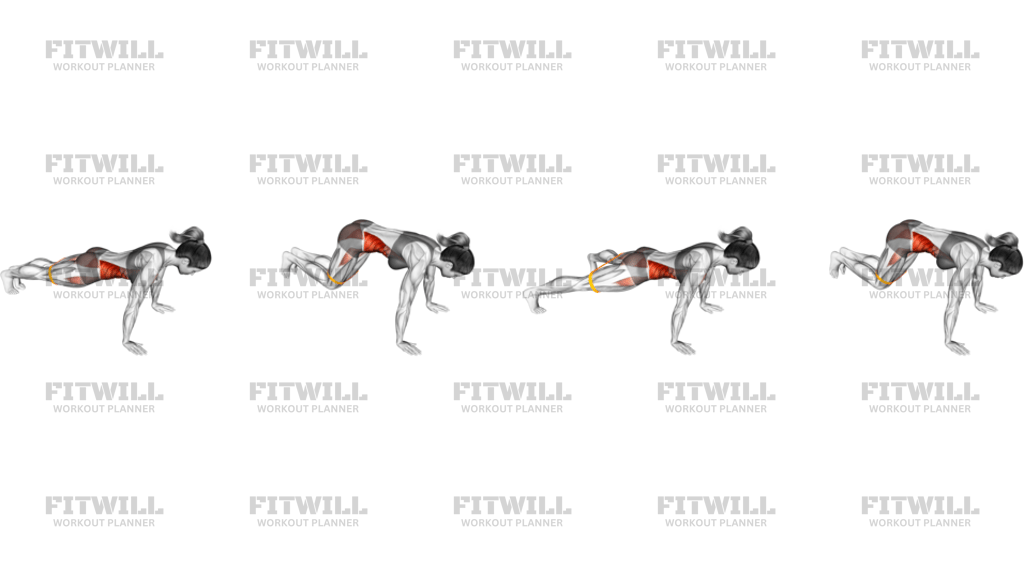
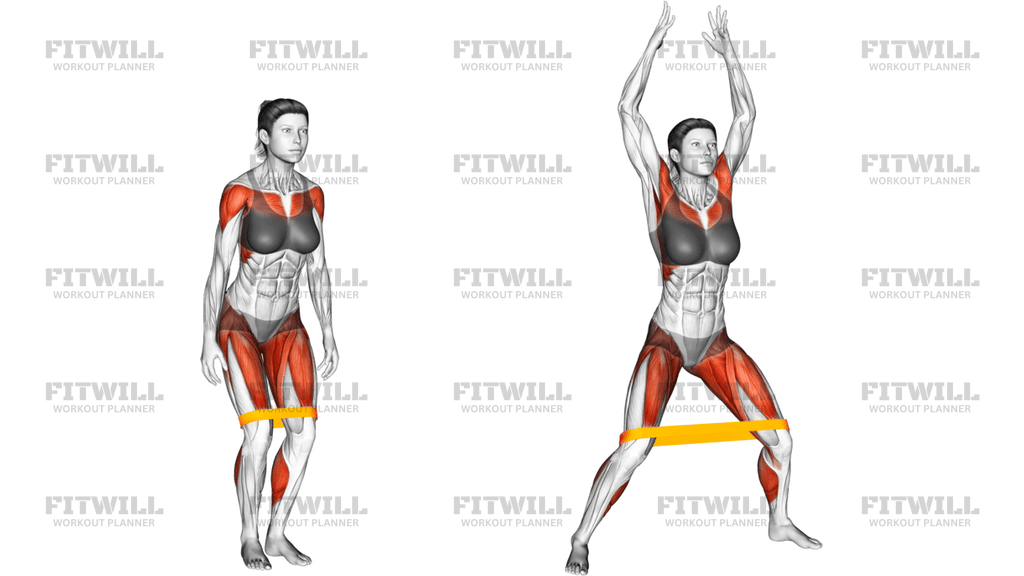
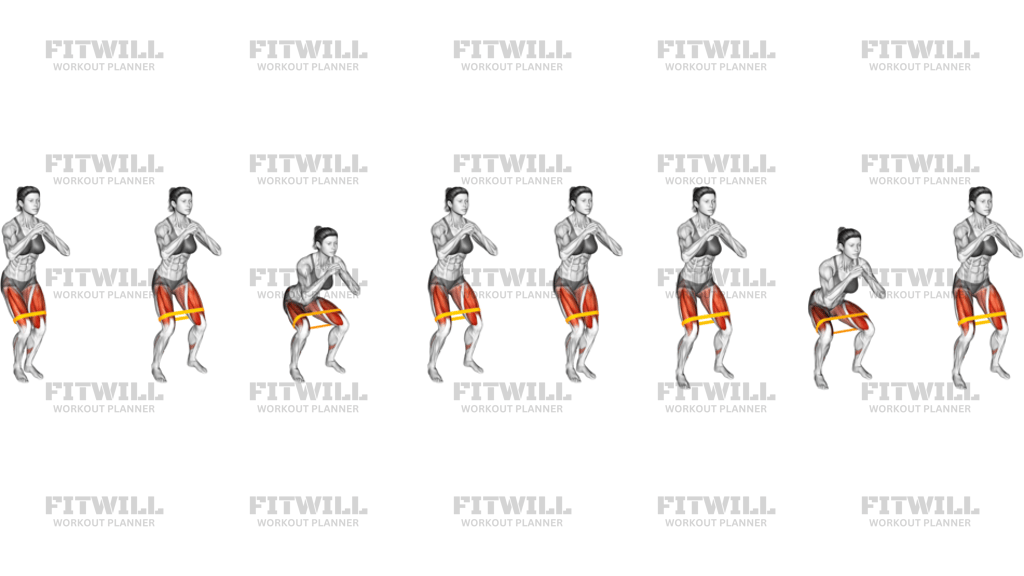
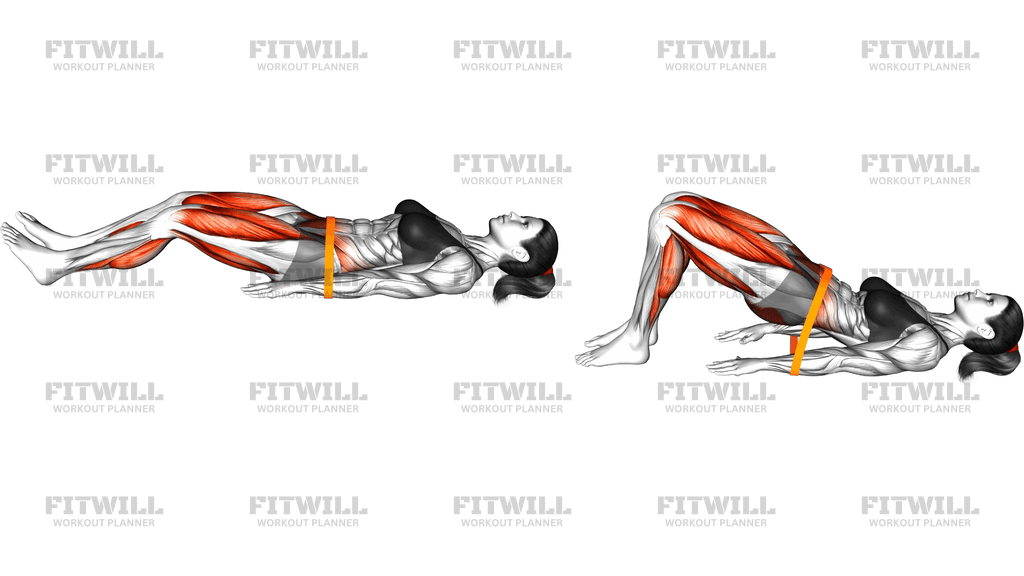
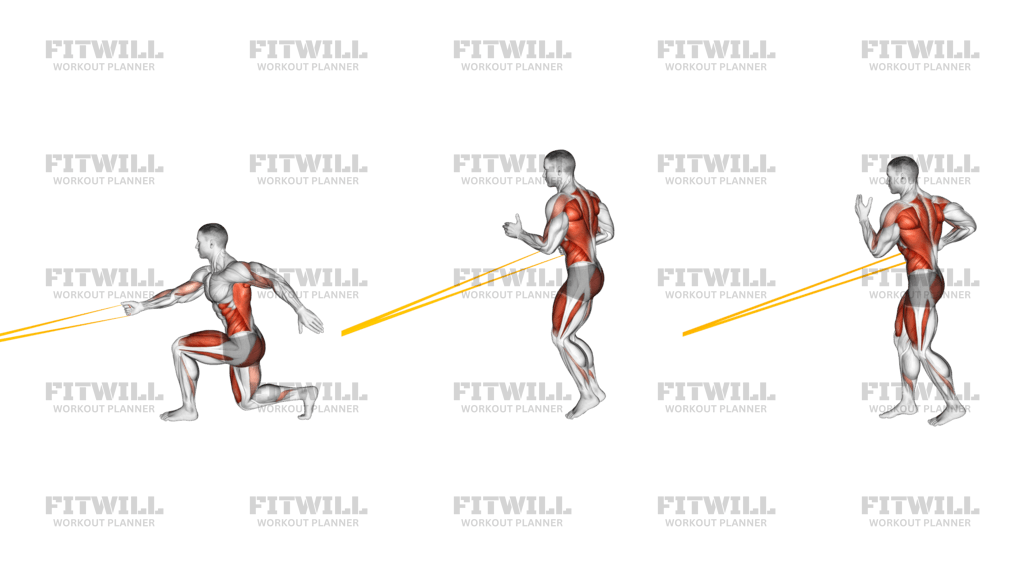
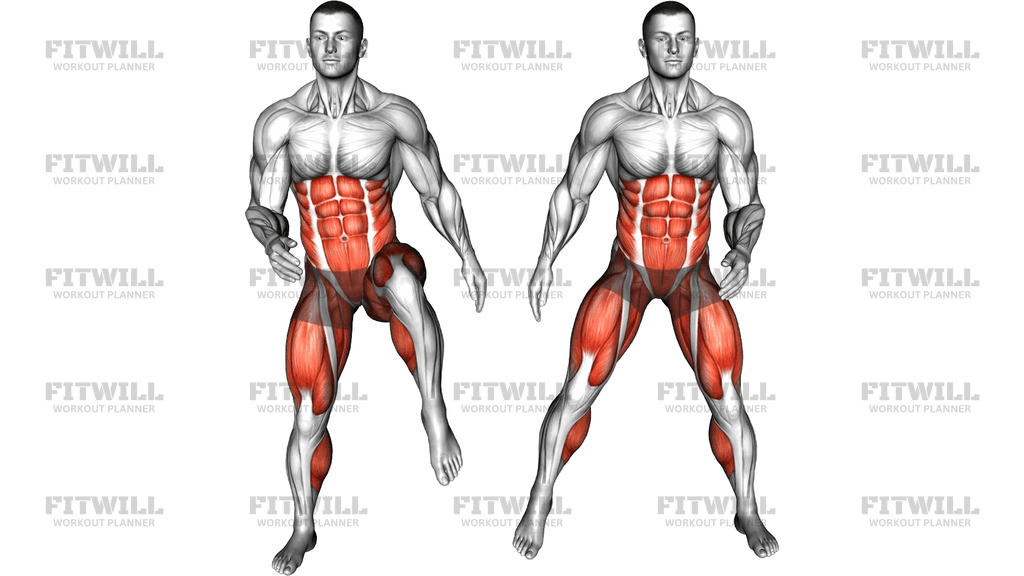
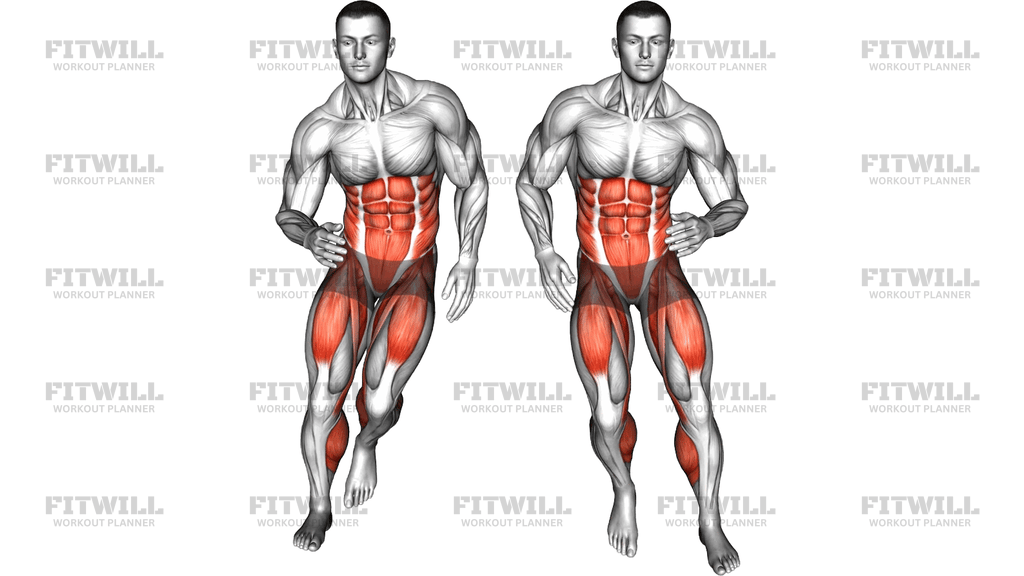
X Band Side Walk
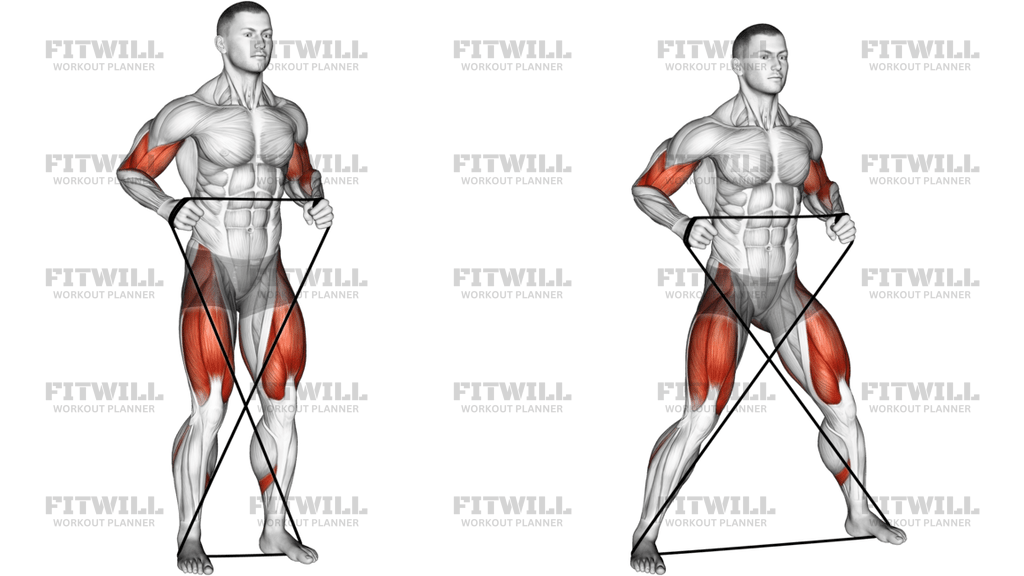
X Band Side Walk is a band-resisted lateral walking drill that keeps tension on the hips while you step side to side. The crossed band shape in front of the body is not just a visual detail: it changes how the load pulls on your legs and makes you control the outward pressure of each step instead of simply marching in place. That makes X Band Side Walk especially useful for glute activation, hip stability, and warm-up work before lower-body lifting or running.
The exercise mainly challenges the hip abductors, especially the side glutes that keep the pelvis steady when you move laterally. It also asks the quads, calves, and trunk to stay organized so the torso does not rock from side to side. If the band is too light, the step can turn into a casual shuffle; if it is too heavy, the knees cave in and the hips start to sway. The right setup keeps the work where it belongs, around the hips.
Set the band under both feet and hold the handles or ends in front of your hips so the band crosses into an X. From there, take a small athletic stance with soft knees, toes mostly forward, and enough tension that the band is already loaded before you take the first step. That starting tension matters because the first step should feel like a controlled push into the floor, not a sudden lunge or drag.
Each rep should feel like a deliberate side step followed by a reset step that preserves tension. Keep your chest tall, hips level, and feet spaced just wide enough to stay under control. The goal is not to travel far; the goal is to keep the knees tracking over the toes while the band tries to pull them inward and across the body. Breathing should stay calm and rhythmic so the set does not turn into a rushed, bouncing pattern.
X Band Side Walk works well as part of a warm-up, prehab block, or accessory circuit when you want cleaner hip mechanics and better lateral control. It is also a useful option when squat, hinge, or running mechanics need a little extra hip work without loading the spine. Done well, it teaches the body to resist collapse through the knees and pelvis, which carries over to many lower-body movements.
Fitwill
Log Workouts, Track Progress & Build Strength.
Achieve more with Fitwill: explore over 9600 exercises with images and videos, access built-in and custom workouts, perfect for both gym and home sessions, and see real results.
Start your journey. Download today!




Instructions
- Stand on the band with both feet about hip-width apart and hold the handles or ends in front of your hips so the band crosses into an X.
- Lower into a soft-knee athletic stance with your chest tall, feet pointing mostly forward, and the band already lightly stretched before you start walking.
- Set your ribs down over your pelvis and keep your hips level so the band tension does not twist your torso.
- Step one foot sideways a short distance, then let the other foot follow without letting the band go slack.
- Keep both knees tracking over the toes as you step, resisting the band pulling your legs inward.
- Take the next side step with the same controlled width, staying low and steady instead of bouncing up and down.
- Keep breathing steadily through the walk and avoid holding your breath when the band gets tight.
- Finish the set by bringing your feet back under control, then relax the band tension before standing upright.
Tips & Tricks
- Choose a band that lets you keep the knees out without turning the walk into a hip sway.
- Shorter steps usually keep more tension on the glutes than big side lunges.
- If the band rides up into your hands, reset the grip so the X stays centered in front of the hips.
- Keep the feet parallel enough that the outer hip has to work, rather than letting the toes flare and cheat the step.
- Stay low through the knees, but do not squat so deep that the band pulls your torso forward.
- Feel pressure through the whole foot, especially the heel and outer forefoot, instead of rocking onto the toes.
- If your lower back takes over, lighten the band or reduce the step width until the hips stay in charge.
- Stop the set when the knees start collapsing inward on the follow step.
Frequently Asked Questions
What muscles does X Band Side Walk work?
It mainly targets the side glutes and hip abductors, with the quads, calves, and trunk helping you stay upright and stable.
How do I hold the band for X Band Side Walk?
Stand on the band, cross it into an X in front of your body, and hold the ends or handles in front of your hips so the band stays under tension as you step.
Should the steps be big or small?
Small to medium steps are usually better. If you step too far, you will lose hip control and start leaning or twisting instead of working the outer hips.
What is the biggest mistake with X Band Side Walk?
The most common mistake is letting the knees cave inward or the torso rock side to side. Keep the hips level and step with steady outward pressure.
Is X Band Side Walk a warm-up or a strength exercise?
It can be both, but it is most often used as a warm-up or accessory drill to wake up the hips before squats, deadlifts, lunges, or running.
Can beginners do this exercise safely?
Yes, beginners can use a light band and shorter steps. The key is keeping the knees tracked and the pelvis steady rather than chasing speed.
Why is the band crossed into an X instead of looped around the legs?
The crossed setup changes the direction of pull and keeps tension in front of the body, which makes the lateral step feel more deliberate and controlled.
What should I feel working during X Band Side Walk?
You should feel the side of the hips working hard, with the outer glutes doing most of the correction each time you step and bring the trailing foot in.