Barbell Overhead Shrug
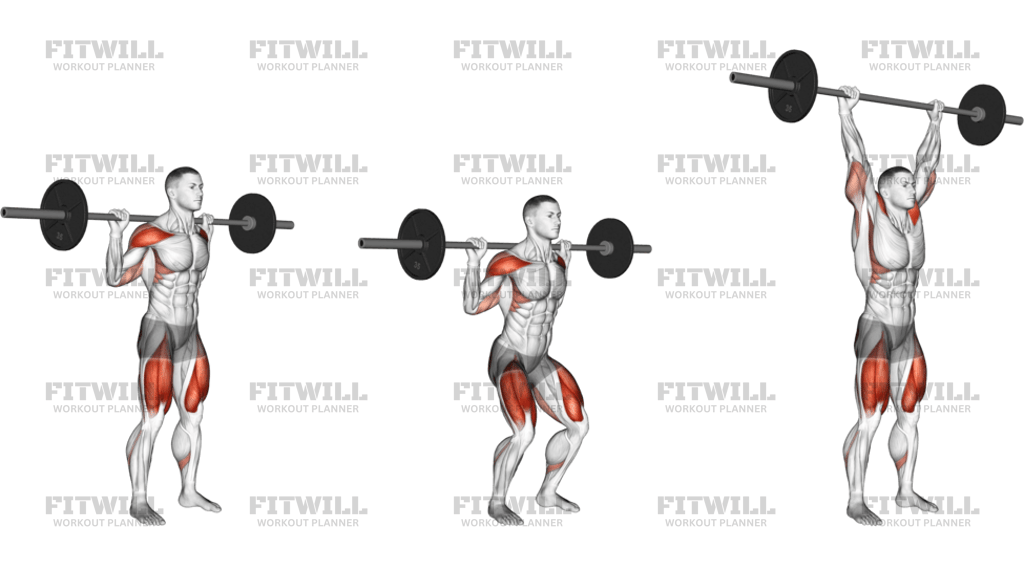
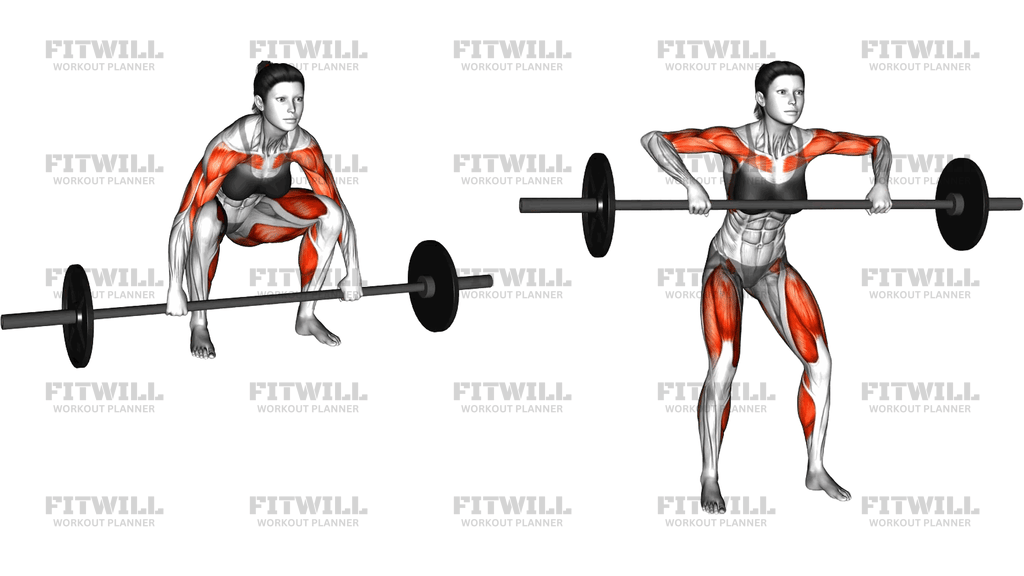
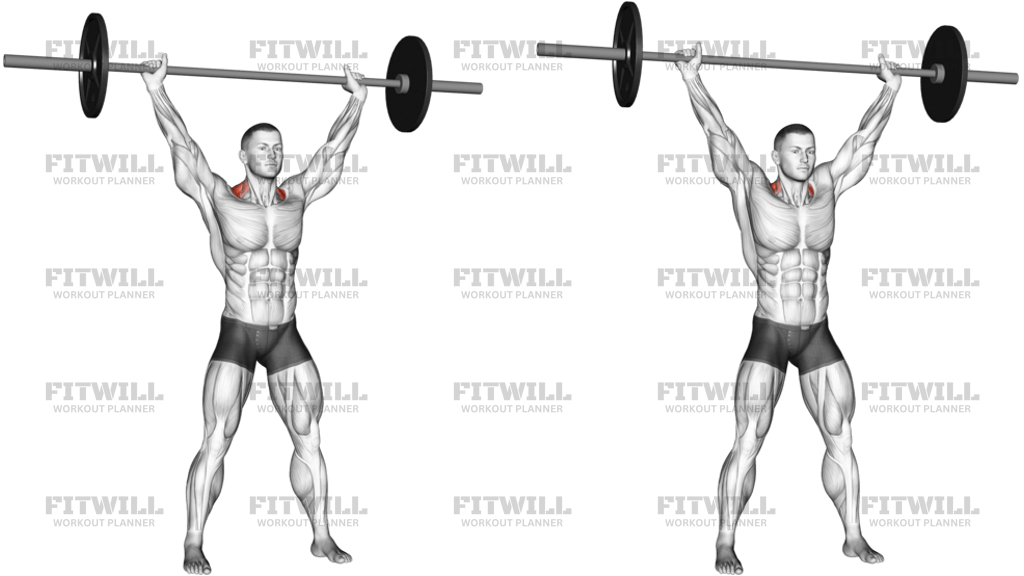
Barbell Overhead Shrug is a standing overhead trap exercise built around one very specific action: keep the bar locked out overhead and raise the shoulder girdle straight up without bending the elbows or turning it into a press. In the image, the lifter is holding the bar wide and overhead with the arms fully extended, which makes the upper trapezius and surrounding stabilizers work hard to keep the bar stacked over the body.
This movement is less about moving the bar through space and more about controlling the shoulder blades under load. The bar should stay high and stable while the shoulders elevate, then lower in a controlled way. That makes it a useful accessory for lifters who want to strengthen overhead stability, improve scapular control, and train the traps in a fixed overhead position.
Setup matters because any drift into rib flare, elbow bend, or forward bar path quickly turns the shrug into a compensation exercise. Stand tall with the feet planted, grip the bar a little wider than shoulder width, and bring it to a stable overhead lockout before the first rep. The torso should stay stacked, the neck neutral, and the bar roughly over the midfoot so the shoulders can shrug without the lower back taking over.
Each repetition should feel like a straight-up shoulder raise with the arms frozen in place. Shrug the shoulders toward the ears, pause briefly at the top, then lower them under control until the traps are stretched but the bar still feels balanced overhead. Smooth breathing and a steady tempo matter more here than heavy loading, because the smallest loss of position can change the stress from the traps to the shoulders, elbows, or spine.
Use this exercise as an accessory when you want to build overhead trap strength, reinforce stable pressing mechanics, or add a focused upper-back finisher. It works best with moderate-to-light loads that let you keep the bar fixed, the elbows extended, and the torso quiet. If your shoulders do not tolerate strong overhead positions, or if the bar drifts forward when you shrug, reduce the load or choose a simpler trap movement first.
[ Workout Log & Planner ]
Put your next workout in Fitwill
Keep your plan and training log ready when you are.


Instructions
- Stand with your feet about hip-width apart and hold the bar overhead with a wide grip, elbows fully straight and wrists stacked under the bar.
- Set the bar over your midfoot, squeeze your glutes, and keep your ribs down so the torso stays stacked instead of leaning back.
- Look forward, keep the neck long, and make sure both shoulders are set evenly before the first rep.
- Without bending the elbows, shrug both shoulders straight up toward your ears as if you are trying to make your neck shorter.
- Pause for a brief moment at the top while keeping the bar steady overhead.
- Lower the shoulders slowly until the traps lengthen, but do not let the bar drift forward or behind your head.
- Keep the breathing smooth, exhaling as you shrug and inhaling as you lower.
- Reset your shoulder position between reps if the bar starts to wobble or your elbows soften.
Tips & Tricks
- Treat the elbows like rigid supports; any arm bend turns the shrug into a partial overhead press.
- Keep the bar in line with the shoulders and hips instead of letting it drift forward as you fatigue.
- A slight pause at the top is more useful than chasing a bigger shrug with body sway.
- Use a grip width that lets you keep the wrists stacked and the shoulders in a comfortable overhead line.
- If your lower back arches to keep the bar up, the load is too heavy or the ribs are flaring too much.
- Lower the bar under control; dropping the shoulders fast can irritate the neck and reduce trap tension.
- Choose a weight that lets you stay tall for every rep, not one that forces a lean or a dip in the knees.
- If one shoulder rises first, slow the set down and match the shrug on both sides evenly.
Frequently Asked Questions
What does the barbell overhead shrug train most?
It primarily challenges the upper trapezius, with the shoulders, upper back, and trunk working hard to keep the bar fixed overhead.
Do I need to lock my elbows for this shrug?
Yes. Keep the arms straight the whole time so the movement comes from the shoulders, not from pressing or re-bending the elbows.
Why is the grip so wide in the image?
A wider grip helps many lifters keep the bar balanced overhead while leaving room to shrug without colliding with the head or bending the elbows.
Should I feel this in my neck?
You should feel the upper traps working, but not a sharp pinch or strain in the neck. If the neck feels jammed, lower the load and shorten the range.
Can I do this if my overhead mobility is limited?
Only if you can hold the bar overhead with a stable, pain-free lockout. If you cannot stack the bar comfortably, use a simpler shrug variation first.
What is the biggest form mistake with this exercise?
Letting the ribs flare and the bar drift forward is the most common mistake. That usually means the torso is helping too much.
How heavy should the bar be?
Use a load that keeps the bar motionless overhead and lets you shrug cleanly for every rep. If the bar shakes, it is too heavy.
Is this a good accessory for pressing work?
Yes. It can reinforce overhead stability and trap strength, which may carry over to presses and snatches when programmed well.