Band Upper Body Resistance Dead Bug
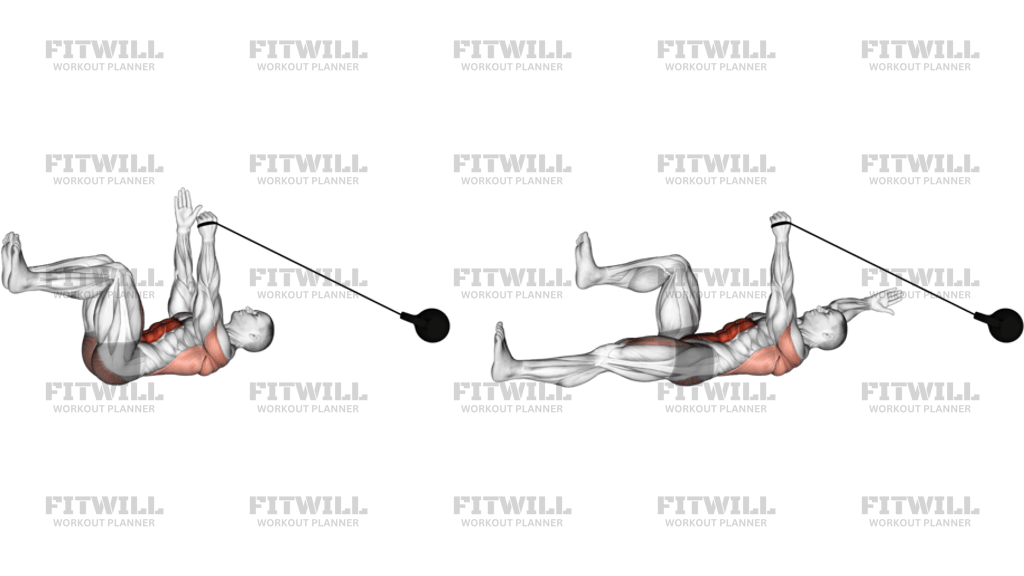
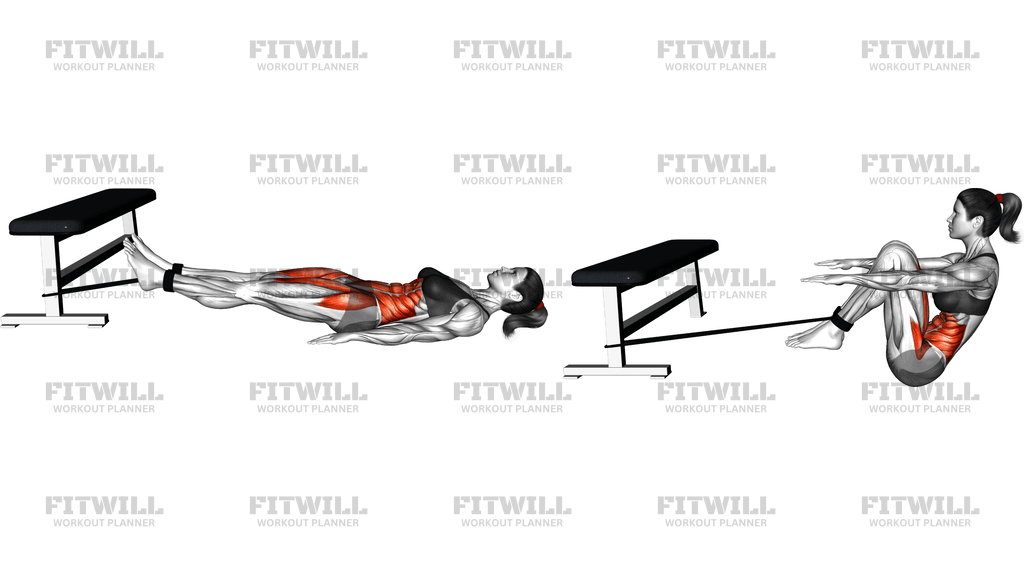
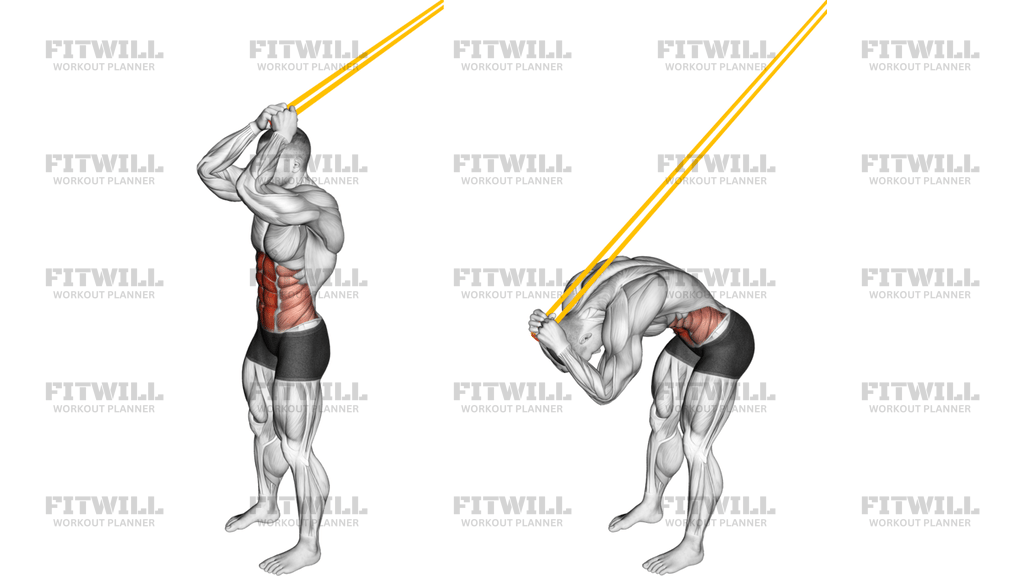
Band Upper Body Resistance Dead Bug is a floor-based core drill that pairs the classic dead bug leg pattern with a band load through the arms. The image shows the exerciser lying on the back with the knees lifted in tabletop, the arms reaching toward the anchor point, and the band pulling the upper body off center. That extra pull makes the trunk work harder to keep the ribs stacked, the pelvis quiet, and the low back from arching as the legs move.
This variation mainly trains the rectus abdominis, with the obliques and deep abdominal wall doing a lot of the stabilizing work. Because the band is trying to rotate or shift the torso, the shoulders and lats also have to stay organized while the hips move independently. The result is a useful anti-extension, anti-rotation core exercise rather than a momentum-based crunch.
Setup matters here. Lie close enough to the anchor that you can hold the band with straight or nearly straight arms without shrugging, then bend the hips and knees to about 90 degrees. Press the lower back gently into the floor, keep the ribs down, and find a position where the band creates tension before the first rep. If you start too far from the anchor, the shoulders will get dragged forward and the torso will lose position before the core does its job.
Each repetition should feel like a slow, controlled reach of one leg away from the torso while the arms stay steady against the band. The lower body should move without letting the pelvis rock or the low back pop up. Exhale as the leg extends, return to tabletop with control, and reset before switching sides. The goal is a repeatable pattern with clean trunk position, not a large kicking motion.
This exercise fits well in warmups, core circuits, rehab-style accessory work, or any session where you want trunk stiffness under a light external pull. It is usually appropriate for beginners if the band tension is modest and the leg range stays short. Use it when you want to teach rib control, pelvic control, and coordinated arm-leg stability in a position that makes cheating obvious and easy to correct.
Fitwill
Log Workouts, Track Progress & Build Strength.
Achieve more with Fitwill: explore over 9600 exercises with images and videos, access built-in and custom workouts, perfect for both gym and home sessions, and see real results.
Start your journey. Download today!




Instructions
- Lie on your back close to the anchor, with hips and knees bent to about 90 degrees and both feet lifted off the floor.
- Hold the band with both hands above your chest so the line of pull reaches across your body and your shoulders stay stacked over the ribs.
- Press your lower back gently into the floor, keep your ribs down, and brace before the first rep.
- Keep the arms steady against the band while you slowly extend one leg away from your torso.
- Lower the leg only as far as you can without letting the pelvis tilt, rotate, or the low back arch.
- Exhale as the leg reaches out, then bring it back to tabletop under control.
- Reset the ribs and pelvis before alternating to the other leg.
- Repeat for the planned reps with smooth tension and no bouncing.
Tips & Tricks
- Choose a band tension that lets you keep the hands steady without having to fight the anchor with your shoulders.
- If the low back lifts, shorten the leg reach immediately instead of trying to force a bigger range.
- Keep the band line smooth and quiet; if the torso twists toward the anchor, the resistance is too strong or the setup is too far away.
- Think about locking the ribs over the pelvis before every leg extension.
- Move the working leg slower than you think you need to so the core has time to resist the pull.
- Keep the neck long and the chin lightly tucked instead of craning to watch the feet.
- A short heel tap is better than a full straight-leg reach if you cannot keep the pelvis level.
- Stop each set as soon as the arms start drifting or the band pulls your chest out of position.
Frequently Asked Questions
What muscle does Band Upper Body Resistance Dead Bug target most?
The rectus abdominis is the main mover, while the obliques and deep abdominal wall keep the torso from arching or rotating.
Where should I feel the band-resisted dead bug?
You should feel the front of the core working hard, with some shoulder and lat tension from keeping the arms steady against the band.
Can beginners do this version of the dead bug?
Yes. Use a light band, keep the knees bent, and limit the leg reach until the low back stays flat the whole time.
How should my arms be positioned?
Keep the arms long and steady above the chest so the band creates a pull the trunk has to resist rather than a pressing motion.
What is the most common mistake with this exercise?
Letting the ribs flare and the lower back arch when the leg extends is the biggest form error.
How do I make the band harder or easier?
Step closer to the anchor or use a lighter band to make it easier; step farther away or use a stronger band only if you can keep the torso steady.
Should the low back stay flat on the floor?
Yes. A gently pressed low back is the goal for the entire set, and the range of motion should stop before that contact is lost.
What is a good way to progress this movement?
Progress by slowing the leg reach, increasing band tension slightly, or extending the leg a little farther while keeping the torso perfectly still.