Forearm Wall Slide
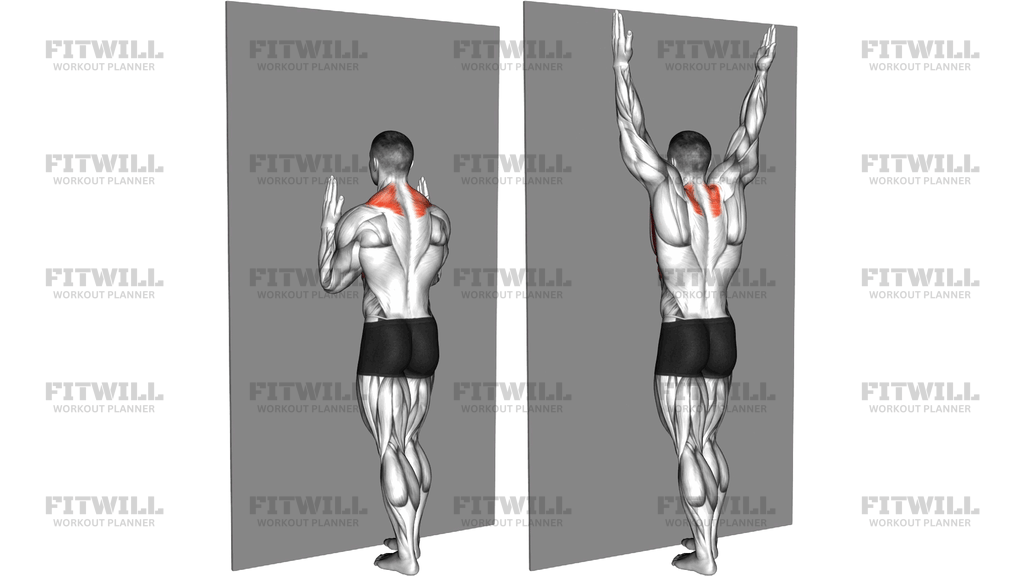
Forearm Wall Slide is a wall-based shoulder control drill that asks you to keep your forearms in contact with the wall while you reach upward through the shoulders. It is usually used as a warm-up or accessory movement, but it also has value any time you want cleaner overhead mechanics, better scapular control, and more awareness of how the ribcage and shoulders move together. Because the load is just body weight, the quality of each repetition matters more than the number of reps.
The movement mainly trains the shoulders and upper back, with the arms, serratus, lower traps, and core helping to keep the body organized. That support work is the point: you are practicing a smooth upward reach without shrugging, arching, or losing contact with the wall. When done well, Forearm Wall Slide teaches the shoulder blades to rotate and glide instead of pinching or flaring, which makes it useful before pressing, overhead work, or any session that needs better shoulder positioning.
The setup is the part most people rush, but it determines whether the drill feels clean or sloppy. Stand facing the wall with your feet far enough back to keep your body stacked, then place your forearms on the wall around shoulder height with elbows under the shoulders. Keep the chest from collapsing, set the ribs down, and lightly tuck the chin so the neck stays long. From there, maintain gentle pressure into the wall while keeping the forearms parallel and the wrists relaxed.
As you slide upward, let the shoulders reach and the shoulder blades rotate upward without letting the elbows flare away from the wall. The goal is a controlled climb rather than a hard shrug, so stop the slide the moment your forearms start to peel off, your ribs pop forward, or the motion turns into a low-back arch. Lower under control to the start position, keep breathing steady, and repeat with the same range every rep. A smaller, cleaner range is better than forcing extra height and losing the line of the movement.
Forearm Wall Slide is especially useful for people who sit a lot, feel stiff overhead, or want a low-fatigue drill that reinforces better shoulder mechanics before training. It is also a good choice for beginners because the body weight setup makes it easy to scale the range without adding load. Keep the motion smooth, use the wall as feedback, and treat each repetition like a check on shoulder position, rib control, and overhead reach rather than a race for height.
Fitwill
Log Workouts, Track Progress & Build Strength.
Achieve more with Fitwill: explore over 9600 exercises with images and videos, access built-in and custom workouts, perfect for both gym and home sessions, and see real results.
Start your journey. Download today!




Instructions
- Stand facing a wall with your feet about 6 to 12 inches back, then place both forearms on the wall at shoulder height with your elbows under your shoulders.
- Set your feet hip-width apart, soften your knees, and keep your ribs stacked over your pelvis instead of leaning into the wall.
- Press your forearms lightly into the wall and keep your wrists relaxed, chin slightly tucked, and neck long before you start the slide.
- Exhale as you slide your forearms upward, reaching through the shoulders while keeping the forearms and hands in contact with the wall.
- Let the shoulder blades rotate upward as the arms rise, but do not let your elbows flare wide or your shoulders shrug toward your ears.
- Pause briefly at the highest position you can hold without losing wall contact or arching your lower back.
- Inhale as you lower the forearms back to shoulder height with the same control you used on the way up.
- Reset your ribs, forearm pressure, and foot position after each rep, then repeat for the planned number of repetitions.
Tips & Tricks
- If your forearms peel off the wall, shorten the range and stop just below the point where contact breaks.
- Keep the ribs down; a big chest flare usually means the shoulders are reaching by arching the lower back instead of moving cleanly.
- Turn the thumbs slightly up if the shoulders feel pinched at the top, since that often keeps the humerus in a friendlier path.
- Use gentle pressure into the wall, not a hard push, so the serratus and upper back do the work instead of the triceps and chest.
- Stop the slide before your shoulders shrug toward your ears; the reach should feel long, not compressed.
- A small bend in the knees is fine if it helps you keep your torso stacked and your neck relaxed.
- Lower more slowly than you lift if you want better control through the shoulder blades.
- Choose the rep height first and the rep count second; clean wall contact is the priority for this drill.
Frequently Asked Questions
What does Forearm Wall Slide train?
It mainly trains shoulder reach and scapular control, with the upper back, serratus, lower traps, arms, and core helping keep the position organized.
Should my forearms stay on the wall the whole time?
Yes. Keeping the forearms in contact is the main feedback for the drill, so reduce the range if they start to peel away.
Is Forearm Wall Slide good before pressing?
Yes, it is a solid warm-up before overhead or pressing work because it helps you find smoother shoulder motion and better ribcage control.
Why do my shoulders shrug during Forearm Wall Slide?
Usually the reach is too high or the ribs are flaring forward. Keep the slide smaller and think about reaching long instead of lifting the shoulders toward your ears.
Can I do Forearm Wall Slide if I am new to training?
Yes. It is beginner-friendly because the wall gives you feedback and the movement can be scaled simply by lowering the range.
What if my lower back arches on Forearm Wall Slide?
Step farther from the wall only if needed, keep the ribs stacked, and stop the slide lower so the motion comes from the shoulders instead of the spine.
Should my hands be flat or thumbs up?
Either can work, but a slight thumbs-up position often feels better for the shoulders if the top range is tight or pinchy.
How many reps should I use for Forearm Wall Slide?
Use controlled sets of 6 to 12 reps, or a short time-based set, and stop when the wall contact or rib position starts to slip.