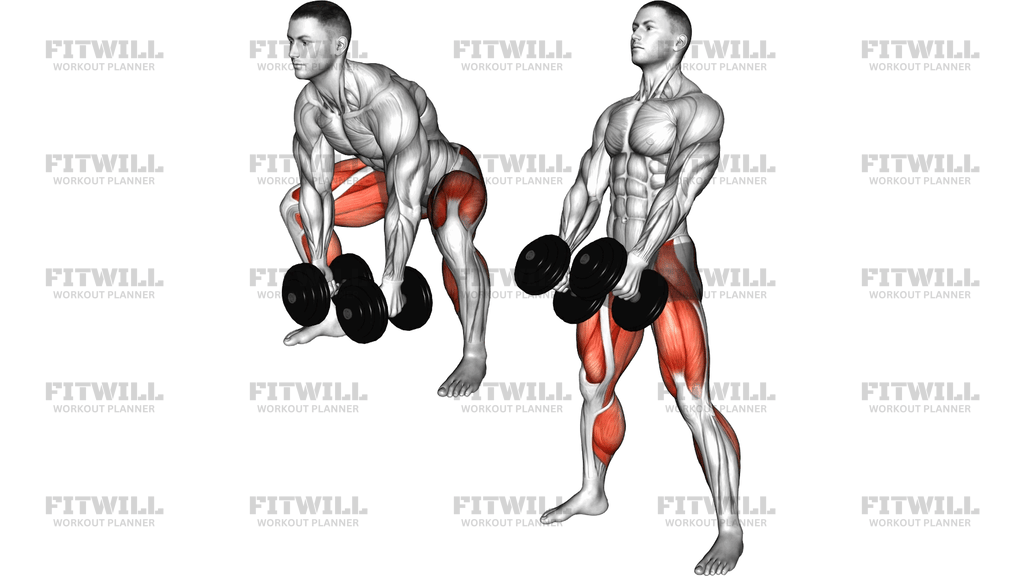
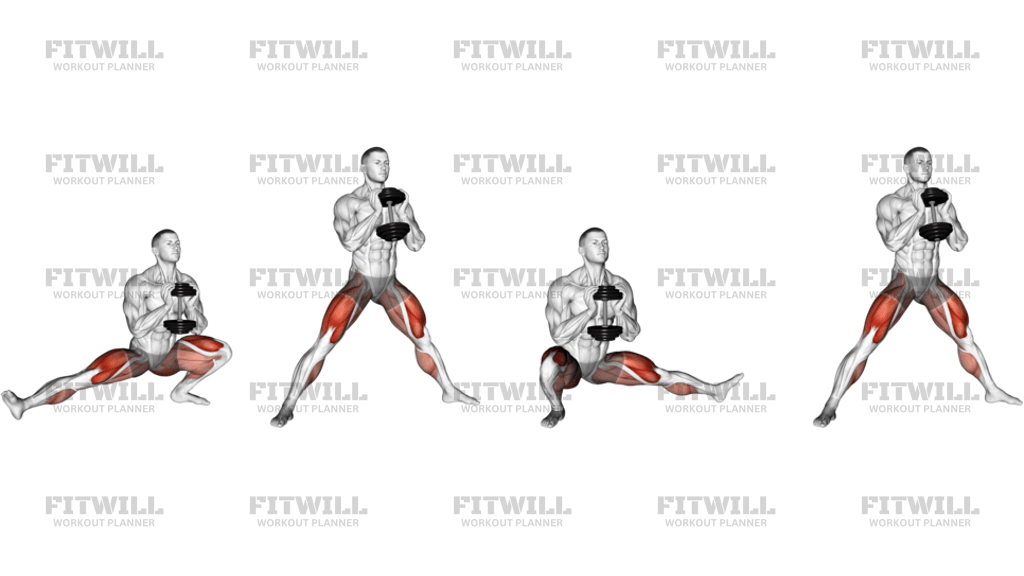
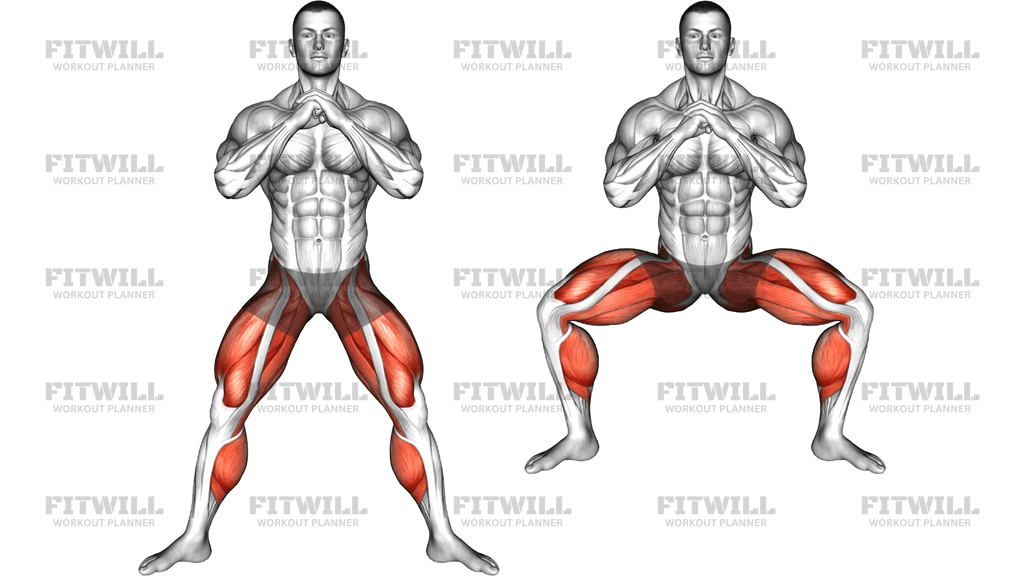
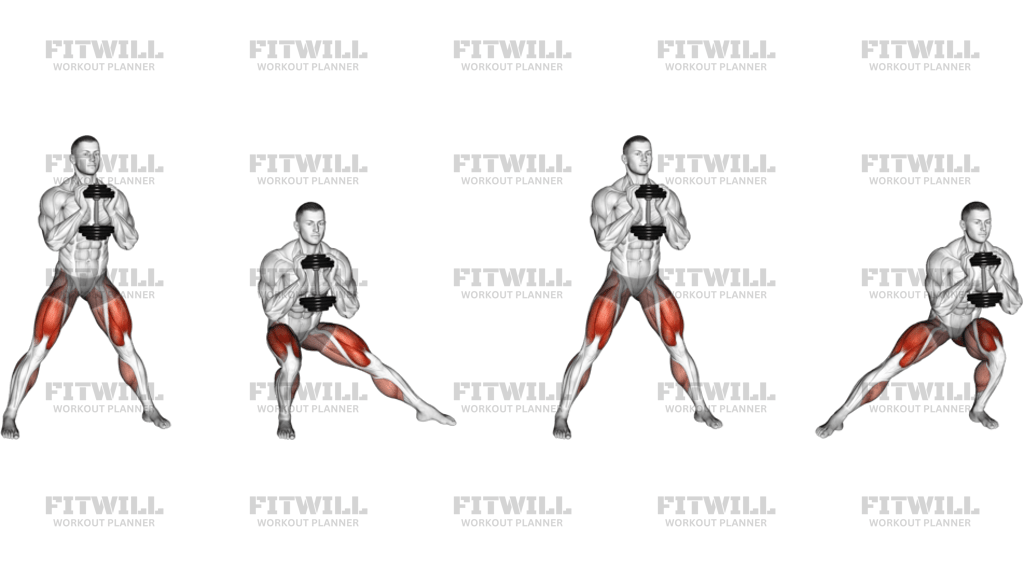
Dumbbell Split Squat
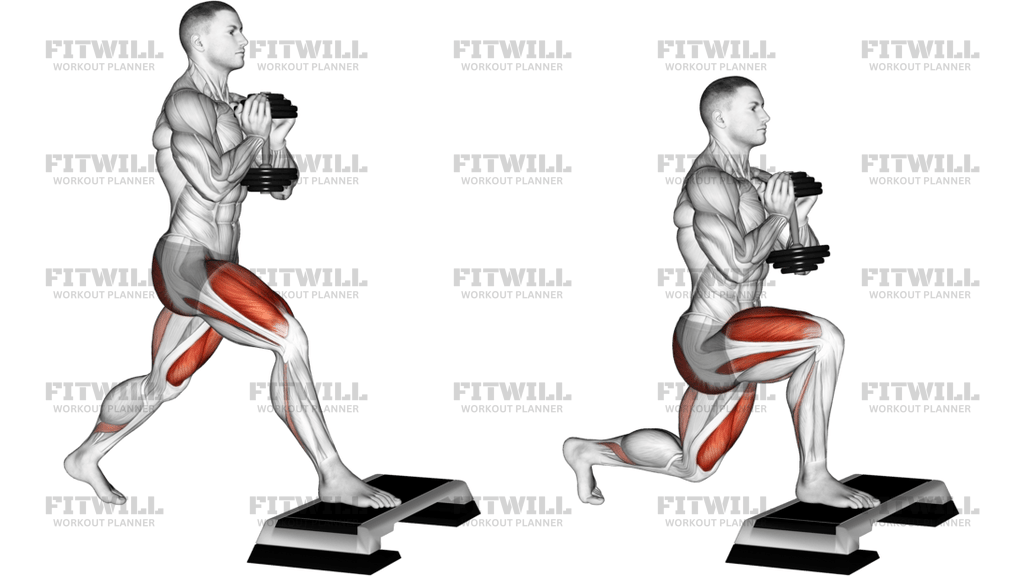
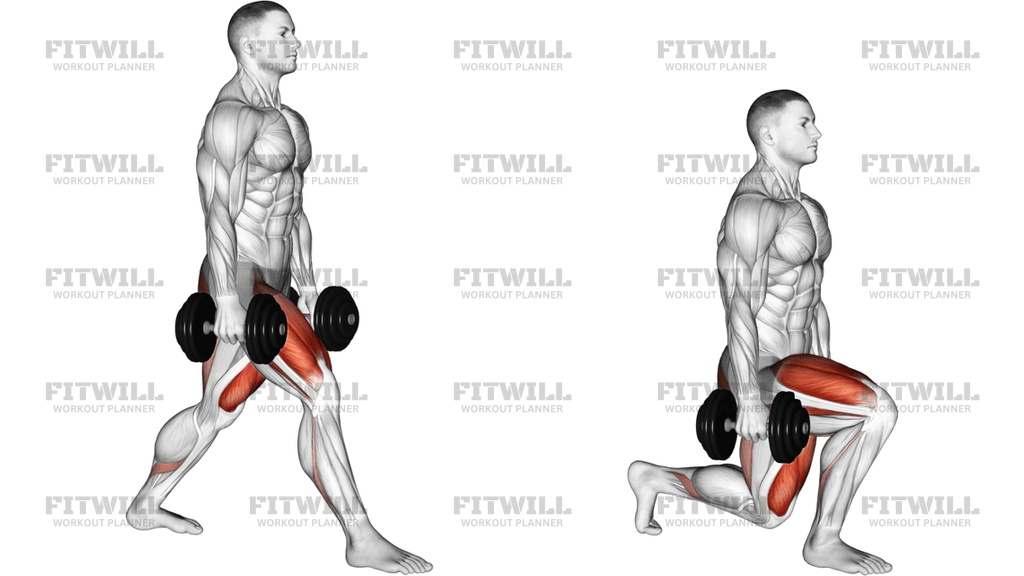
Dumbbell Split Squat is a lower-body unilateral strength exercise that loads the front leg while you stay in a split stance with the dumbbells hanging at your sides. It is especially useful when you want to build the quadriceps, glute, and adductor strength of one leg at a time without needing a machine or a lot of setup. Because your body must stay organized over a narrow base of support, the exercise also challenges hip stability, balance, and trunk control.
The front leg does most of the work. As you descend, the front knee travels forward and bends while the rear leg bends behind you to help with balance. The front foot should stay planted, the heel down, and the knee should track in line with the toes rather than collapsing inward. A smooth split squat is not about bouncing between positions; it is about owning the bottom position and driving back up with steady pressure through the whole front foot.
The dumbbells should stay quiet at your sides so the legs can work without extra swing. Keep your torso tall enough to stay balanced, but allow a small natural forward lean if that helps you keep the front foot grounded and the spine neutral. The rear heel stays lifted, with the back leg acting mostly as a support leg. If the stride is too short, the knee may crowd the toes and the hip may feel pinched; if it is too long, the set may turn into a balance drill instead of a leg-strength movement.
Use this exercise when you want a direct quad-focused split stance pattern for hypertrophy, unilateral strength, or accessory work in a lower-body session. It is a practical choice for lifters who want to improve side-to-side imbalances, single-leg control, and carryover to lunges, step-ups, and sport positions. Start light, keep each rep smooth, and stop the set if you have to twist, bounce, or shift hard to stand up. The best reps feel clean, even, and repeatable from the first rep to the last.
[ Workout Log & Planner ]
Put your next workout in Fitwill
Keep your plan and training log ready when you are.


Instructions
- Stand tall with a dumbbell in each hand, feet split front-to-back, front foot flat, and rear heel lifted.
- Take a stance long enough that you can lower straight down without the front heel popping up or the rear knee crowding the front leg.
- Square your hips and ribs forward, then brace your midsection before the first rep.
- Lower under control by bending both knees until the rear knee is close to the floor.
- Keep the front knee tracking over the toes and the front foot pressing evenly through heel, big toe, and little toe.
- Pause briefly at the bottom without bouncing or shifting your weight onto the back leg.
- Drive up through the front leg to return to the start, keeping the dumbbells quiet at your sides.
- Exhale as you stand, reset your split stance if needed, and repeat for the planned reps before switching legs.
Tips & Tricks
- Choose a stance length that lets the front shin travel forward while the front heel stays rooted.
- Let the torso lean slightly if needed, but do not fold at the hips or arch the lower back to reach depth.
- Keep the rear foot light and use it only for balance; the front leg should still control the rep.
- If the front knee caves inward, reduce load and think about pushing it gently in line with the second toe.
- Pause for a beat at the bottom to remove bounce and make the front leg do the work.
- Hold the dumbbells still instead of letting them swing forward as you descend.
- Use a controlled lowering phase so the front quad and glute stay under tension through the whole rep.
- Stop the set if you start pushing off the back leg harder than the front leg.
Frequently Asked Questions
What muscle does Dumbbell Split Squat target most?
The front leg’s quadriceps are the primary target, with the glutes and adductors contributing strongly.
Can beginners perform this exercise?
Yes. Beginners can start with body weight or very light dumbbells and use a shorter range until the split stance feels stable.
Where should the dumbbells stay during the split squat?
Keep them hanging at your sides with quiet hands. The weights should not drift forward or swing as you lower and stand.
How do I know if my stance length is correct?
At the bottom, the front heel should stay down and the front knee should travel naturally forward without pinching the hip or collapsing inward.
Should my back leg do any real lifting?
No. The rear leg mainly helps you balance. Most of the force should come from the front leg pressing into the floor.
Why does my front knee move forward so much?
That is normal in a split squat. The knee can travel forward as long as it stays aligned with the toes and the foot remains flat.
How can I make this movement easier?
Use body weight only, shorten the range slightly, or hold onto a rack for light support while you learn the pattern.
What is a common mistake with Dumbbell Split Squat?
Shifting onto the back leg or bouncing out of the bottom usually means the front leg is not controlling the rep.