Band Assisted Pull-Up
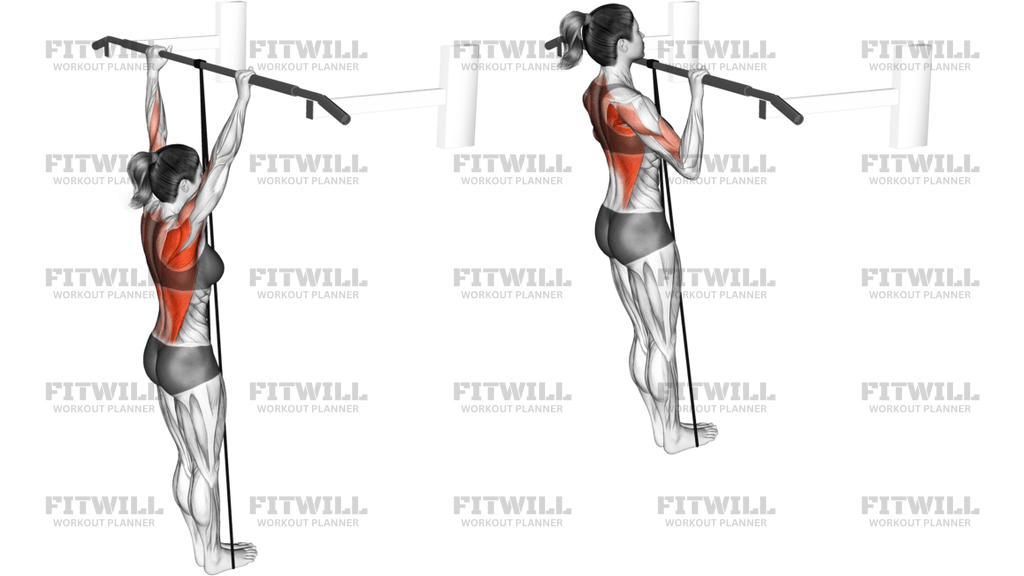
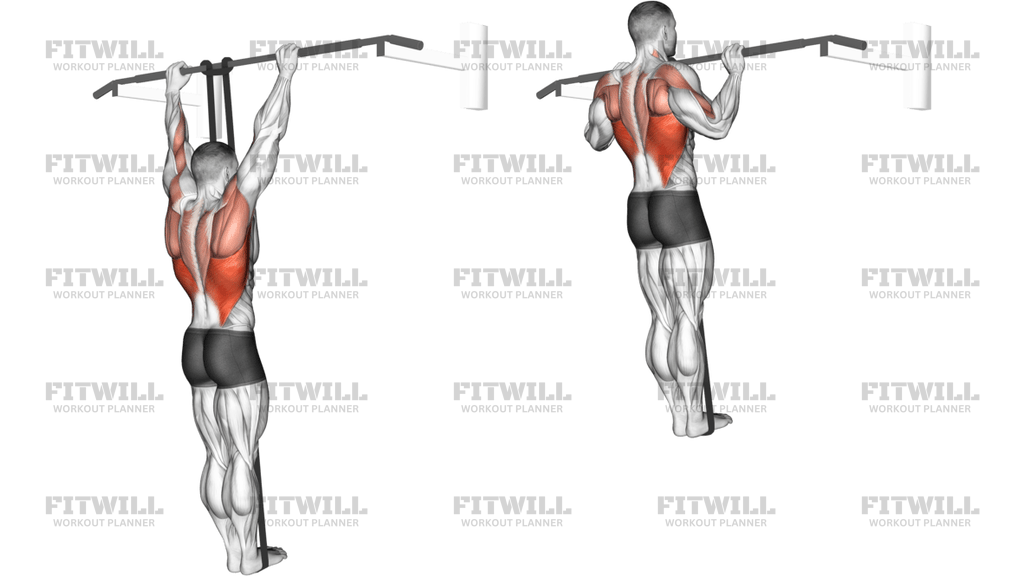
Band Assisted Pull-Up is a vertical pulling exercise that uses a resistance band to reduce the load of a strict pull-up while still training the full climbing path from a dead hang to the top of the bar. The band shown in the image is looped over the pull-up bar and stepped into with one foot, which gives you support at the bottom of the rep and lets you practice the same overhand pulling pattern you will eventually use without assistance.
The main training emphasis is the latissimus dorsi, with the upper back, biceps, forearms, and rear shoulder muscles helping to stabilize the shoulder blades and finish the pull. Because the band helps most where the lift is hardest, this variation is useful for building strength through the full range while keeping the rep smooth enough to repeat with good body control.
Set the bar and band first, then organize your body before you start pulling. A clean pull-up begins with a quiet lower body, a stacked ribcage and pelvis, and shoulders that are set down rather than shrugged up around the ears. From there, the elbows should drive down and back as the chest rises toward the bar, instead of the hands simply curling the body upward.
At the top, aim for a chin-over-bar or upper-chest-to-bar finish that you can reach without kicking, twisting, or craning the neck. Lower under control until the arms are straight again so the lats can lengthen and the next rep starts from a stable bottom position. This movement is especially useful for beginners building toward their first unassisted pull-up, but it also works well for experienced lifters who want more high-quality pulling volume without grinding reps.
Use a band that gives enough help to keep the set strict. If the band is too light, the body will swing and the shoulders will dominate; if it is too heavy, the pull-up turns into a partial range bounce. The best rep is the one that looks the same from the first pull to the last, with steady breathing, a controlled descent, and no loss of position at the bottom.
[ Workout Log & Planner ]
Put your next workout in Fitwill
Keep your plan and training log ready when you are.


Instructions
- Loop a band over a secure pull-up bar and step one foot, or both feet if the band size allows, into the hanging loop so it supports part of your bodyweight.
- Grip the bar with an overhand hold that is shoulder-width or slightly wider, then let your arms straighten into a dead hang with the band under your foot.
- Set your shoulders down away from your ears, brace your midsection, and keep your legs still before the first pull.
- Begin the rep by driving your elbows down and slightly back while keeping your chest lifted toward the bar.
- Pull until your chin clears the bar or your upper chest reaches it without leaning back excessively.
- Hold the top position briefly while keeping the band steady and your neck relaxed.
- Lower yourself slowly until your elbows are straight again and the shoulders are controlled at the bottom.
- Reset the body tension before the next rep and repeat for the planned number of repetitions.
Tips & Tricks
- Choose a band thick enough to keep the first few reps strict; if you have to kick to reach the top, the assistance is too small.
- Keep the ribs stacked over the pelvis instead of flaring the chest hard, or the pull turns into a lower-back arch instead of a vertical pull.
- Think about driving the elbows toward your back pockets; that cue usually keeps the lats working better than pulling with the hands.
- Let the shoulders move down before the elbows bend so the first inch of the rep does not become a shrug.
- Keep one foot or both feet centered in the band loop so the body does not twist to one side on the way up.
- Use a full, controlled lowering phase; the descent is where you reinforce scapular control and grip strength.
- If the chin clears the bar only by craning the neck, lower the rep standard slightly and keep the head neutral.
- Stop the set when the swing starts, not when your hands fail, because repeated kipping changes the exercise.
Frequently Asked Questions
What muscle does Band Assisted Pull-Up target most?
The lats are the main target, with the upper back, biceps, forearms, and rear shoulders helping through the pull.
Can beginners perform this exercise?
Yes. It is one of the best ways to practice pull-up mechanics before you can do a strict bodyweight rep.
How do I choose the right band for the bar and foot loop?
Pick a band that lets you reach the top with a smooth pull and no kicking; if the rep turns into a swing, the band is too light.
Should I use a wide grip or a shoulder-width grip?
A shoulder-width to slightly wider overhand grip is the safest starting point for most people and keeps the pull path cleaner.
Why do my shoulders feel this more than my back?
You are probably shrugging at the start or losing shoulder position. Set the shoulders down first and drive the elbows instead of pulling with the hands.
Can I place one foot in the band or do I need both feet?
Either can work if the setup stays centered under the bar. The goal is stable support without twisting or bouncing.
What is the most common mistake on band assisted pull-ups?
Kipping or using leg drive to fake the rep is the biggest issue. The body should rise as one controlled unit.
How do I progress from this variation to a strict pull-up?
Use thinner bands over time, pause longer at the top, slow the lowering phase, and keep shortening the amount of assistance until you can pull your own bodyweight.