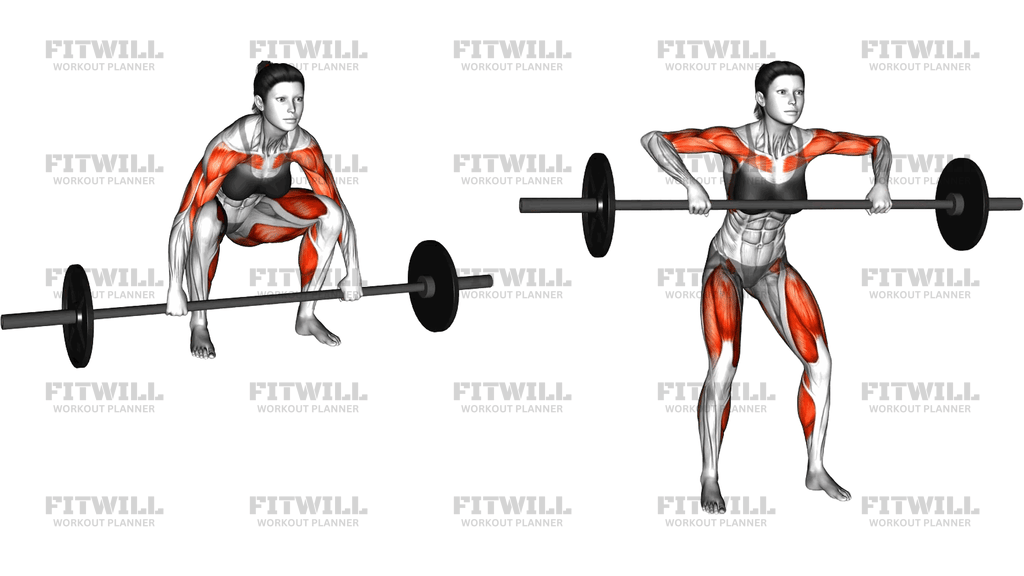
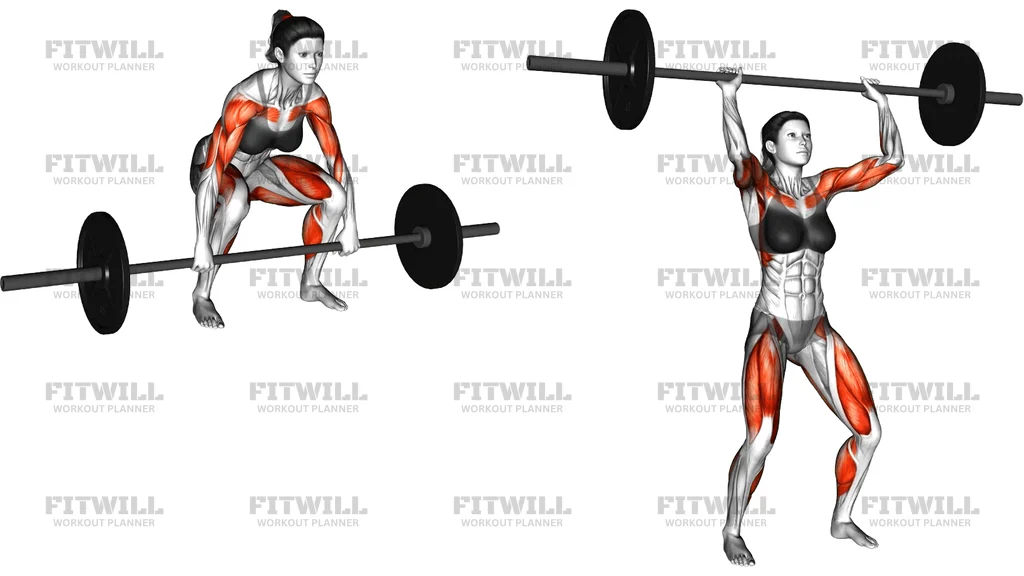
Barbell Standing Wide Military Press
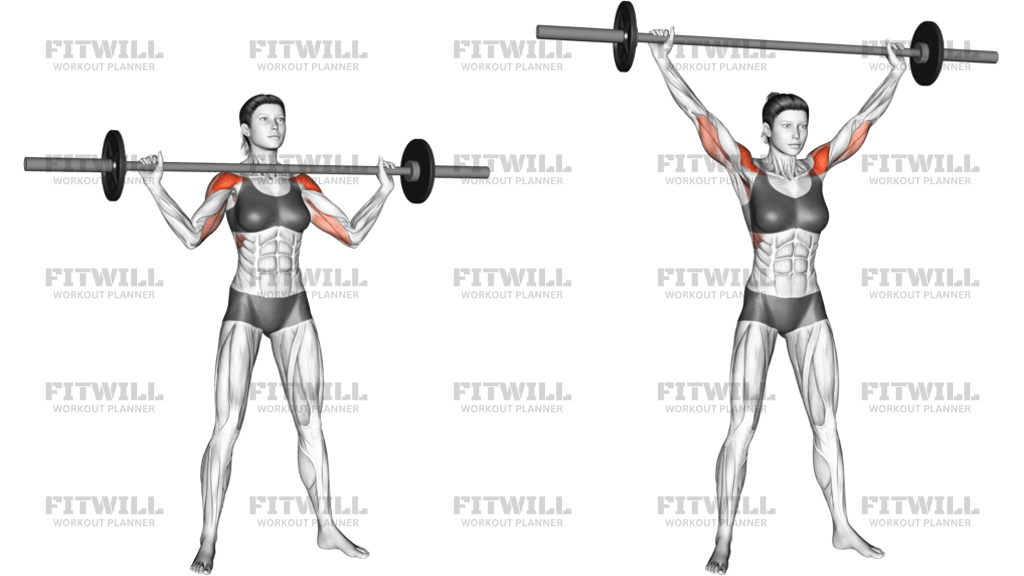
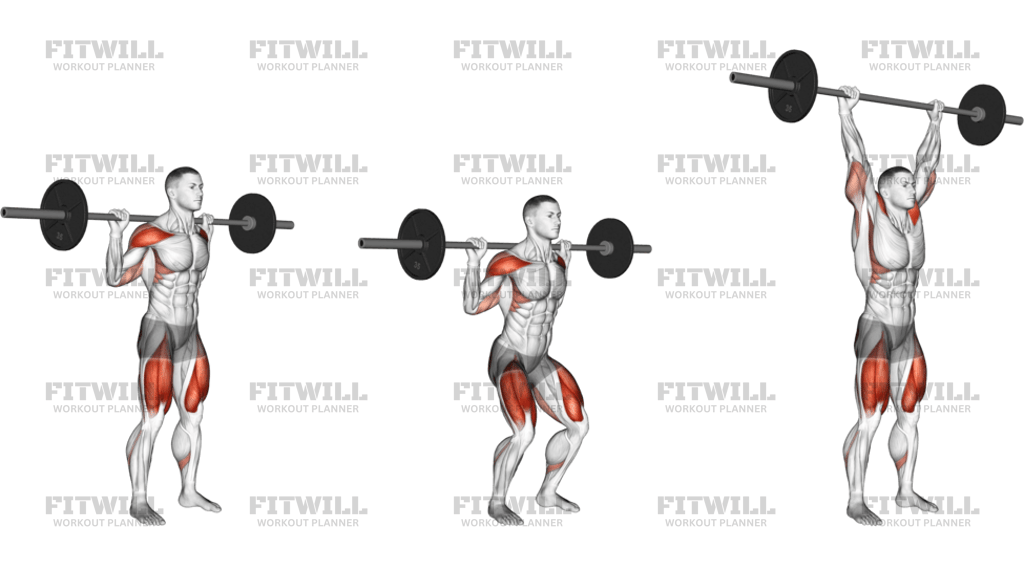
Barbell Standing Wide Military Press is a standing overhead press performed with a wide overhand grip and a barbell starting around shoulder height. It is a direct shoulder-focused pressing exercise that also asks the triceps, upper back, and trunk to keep the bar path clean while you move the load overhead.
The wide grip changes the mechanics compared with a narrow press. Your elbows stay a little farther out, the shoulders take a larger share of the work, and the bar has less room to drift forward if your torso loses position. That makes the setup important: feet should be planted, ribs stacked, glutes lightly engaged, and the bar held close to the upper chest or collarbone before the first press.
Each repetition should travel on a smooth path from the shoulders to a stable overhead lockout. Press the bar up and slightly back so it finishes over the midfoot instead of in front of your face. On the way down, lower it under control to the same shoulder-height position, keeping the wrists over the elbows and the neck relaxed so the movement stays strict rather than turning into a lean-back lift.
This version is useful when you want shoulder strength with a clearer emphasis on the press itself, rather than a leg-driven push press. It fits well in strength blocks, accessory work, or shoulder-focused sessions, especially when you want to train overhead mechanics without excessive momentum. Clean reps matter more than load here, because the bar path exposes compensations quickly.
Use a load that lets you keep the torso quiet, the bar close, and the finish position controlled. If your lower back arches hard, the bar drifts forward, or the elbows collapse behind the hands, the set is too heavy or the grip is too wide for your current control level. Beginners can use it with light weight, but only if they can keep the bar path vertical and the midline braced throughout the rep.
[ Workout Log & Planner ]
Put your next workout in Fitwill
Keep your plan and training log ready when you are.


Instructions
- Stand with your feet about hip-width apart and take a wide overhand grip on the bar, wider than shoulder width.
- Unrack the bar to the top of your chest or collarbone, with the elbows slightly forward of the bar and the wrists stacked over the forearms.
- Set your ribs down, squeeze your glutes lightly, and brace your midsection before the first press.
- Press the bar upward and slightly back so it travels past your face and finishes over the middle of your foot.
- Lock out overhead with straight elbows and the bar in line with your shoulders, hips, and ankles.
- Lower the bar slowly along the same path until it returns to shoulder height.
- Keep your neck relaxed and move your head slightly back on the way up, then bring it back under the bar at lockout.
- Breathe in before the press, exhale as you drive the bar overhead, and reset your brace at the bottom of each rep.
- Repeat for the planned number of reps without turning the set into a leg drive or lean-back press.
Tips & Tricks
- If the bar drifts forward, reduce the load and make the finish line directly over the midfoot, not in front of the toes.
- Keep the grip wide enough to feel natural at the shoulders, but not so wide that the wrists collapse backward or the elbows lose control.
- A small head movement around the bar is normal; do not jut the chin forward or keep the neck stiff throughout the press.
- If your lower back arches hard at lockout, the ribs are flaring and the load is too heavy for strict standing control.
- Lower the bar under control to the same shoulder-height start position instead of letting it drop onto the upper chest.
- The wide grip should still allow the forearms to stay close to vertical under the bar in the bottom position.
- Use the glutes and abs to keep the torso stacked so the shoulders do not have to save a drifting bar path.
- Stop the set when the bar starts bouncing off position, because this press depends on repeatable mechanics more than speed.
Frequently Asked Questions
What muscles do standing wide military presses train most?
They primarily train the shoulders, with the triceps, upper back, and trunk helping you keep the bar path stable.
Why use a wide grip on this barbell press?
A wider grip shifts more of the work toward the shoulders and changes the elbow angle so the press feels more like a pure overhead shoulder movement.
Where should the bar start on each rep?
The bar should start at shoulder height, usually around the upper chest or collarbone, with the elbows slightly in front of the bar.
Should the bar move straight up?
It should move mostly up and slightly back so it finishes over the midfoot instead of drifting in front of you.
Is this a push press or a strict press?
This is a strict standing press. If your legs are driving the load, you are no longer doing the same movement pattern.
What is the most common mistake with the wide grip?
The most common problem is going too wide and losing wrist, elbow, and shoulder control at the bottom of the press.
Can beginners use this exercise?
Yes, but only with a very light load and a stable torso. Beginners should earn the overhead path before adding weight.
How do I know if the weight is too heavy?
If you have to lean back, flare the ribs, or send the bar forward to finish the rep, the load is too heavy for strict form.