Cable Alternate Shoulder Press
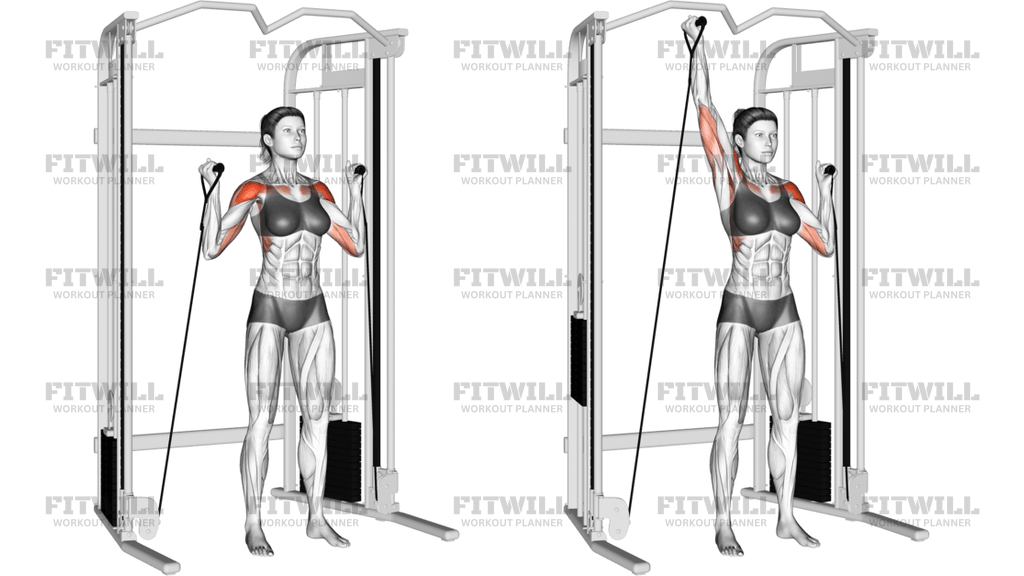
Cable Alternate Shoulder Press is a standing overhead press done one arm at a time with a low cable and handle attachment. It keeps constant tension on the working arm while the other arm stays in the rack position, so the set becomes part shoulder press, part anti-rotation drill. The alternating pattern makes the exercise useful when you want direct shoulder work without relying on a heavy barbell or dumbbell load.
This movement emphasizes the front and middle shoulders while the triceps finish each press and the upper back, core, and glutes keep the torso from tipping or twisting. Because the cable pulls from below and slightly behind you, your setup matters more than it would in a free-weight press. If your stance is too narrow, your ribs flare, or your body leans away from the cable, the press turns into a compensation exercise instead of a clean shoulder pattern.
A good repetition starts with both handles set low and your feet planted between the stacks. Each hand should begin near shoulder height with the elbow bent, wrist stacked over the forearm, and the cable line angled cleanly to the working side. From there, press one handle overhead until the arm is almost straight without shrugging the shoulder, then lower it under control while the opposite arm stays quiet in the front rack.
The alternating rhythm makes this a strong choice for accessory shoulder training, warm-ups, higher-rep hypertrophy work, or athletic conditioning blocks where you want control more than maximal load. It also exposes side-to-side differences, because one arm has to keep pressing while the other side resists rotation. That makes Cable Alternate Shoulder Press especially useful when you want to train the shoulders and trunk together instead of isolating one joint in a fixed machine path.
Use a smooth tempo and stop the set if the torso starts swaying, the lower back arches, or the cable forces you to shrug into the press. Beginners can learn the pattern with light resistance and a tall stance, while experienced lifters can increase the challenge by pausing overhead or working for longer alternating sets. The goal is not to hurry through reps; it is to keep the shoulder moving cleanly while the body stays organized from start to finish.
[ Workout Log & Planner ]
Put your next workout in Fitwill
Keep your plan and training log ready when you are.


Instructions
- Set both cable pulleys low and stand between them with a handle in each hand.
- Bring your hands to shoulder height with your elbows bent, forearms vertical, and palms facing forward or slightly inward.
- Place your feet about hip-width apart, stack your ribs over your pelvis, and keep your weight centered.
- Press one handle straight overhead until the elbow is nearly locked without shrugging the shoulder.
- Keep the opposite hand parked at shoulder height while the working arm reaches overhead.
- Lower the press arm slowly back to shoulder level, letting the cable keep tension on the shoulder the whole way down.
- Switch sides and press the other handle overhead with the same path and tempo.
- Exhale as you press up, inhale as you lower, and keep alternating for the planned reps before returning both handles to the start.
Tips & Tricks
- Keep the cable line slightly in front of your shoulder instead of drifting wide to the side.
- If your lower back arches, shorten the overhead range and keep your ribs down.
- Let the non-working hand stay quiet at shoulder height instead of drifting across your body.
- Stop just short of a hard lockout if your shoulder shrugs upward at the top.
- Use a staggered stance if the stack pulls you off balance during the switch between arms.
- A lighter load with a slower lowering phase usually gives better shoulder tension than a heavy, jerky press.
- Keep your wrist stacked over the elbow at the start so the handle does not fold your wrist backward.
- If the cable bangs the stack on every rep, pause briefly at shoulder height before pressing the other side.
Frequently Asked Questions
What does Cable Alternate Shoulder Press work most?
It mainly trains the front shoulders, with help from the triceps and side shoulders. Your core and upper back work hard to keep the torso from rotating.
How is Cable Alternate Shoulder Press different from a dumbbell shoulder press?
The cable keeps tension on the working arm through the whole rep and pulls from below, which makes anti-rotation control more important. It usually feels smoother at the top and harder to cheat with momentum.
Should both handles move together or one at a time?
One at a time. Keep one hand parked at shoulder height while the other presses, then switch sides after the lowering phase.
Where should my elbows be at the start?
Start with each elbow bent and roughly under the hand, near shoulder height. That keeps the press stacked and prevents the handle from drifting behind your head.
Why does my torso twist during Cable Alternate Shoulder Press?
Usually the load is too heavy or your stance is too narrow. Widen your base slightly, reduce the weight, and keep your ribs stacked over your pelvis while you switch arms.
Can beginners do this exercise safely?
Yes, if they use light resistance and a slow rhythm. The alternating pattern is actually useful for learning shoulder control before moving to heavier overhead pressing.
How low should the handles start?
Set them low enough that you can bring the handles to shoulder height without hunching or leaning forward. If the start position already feels crowded, move the pulleys or step farther away.
What should I do if I feel the press mostly in my neck?
Lower the weight and keep the shoulder blade moving up only as much as the press needs. If you are shrugging to finish reps, the load is too heavy or the range is too high.