Cable Rear Delt Row Stirrups
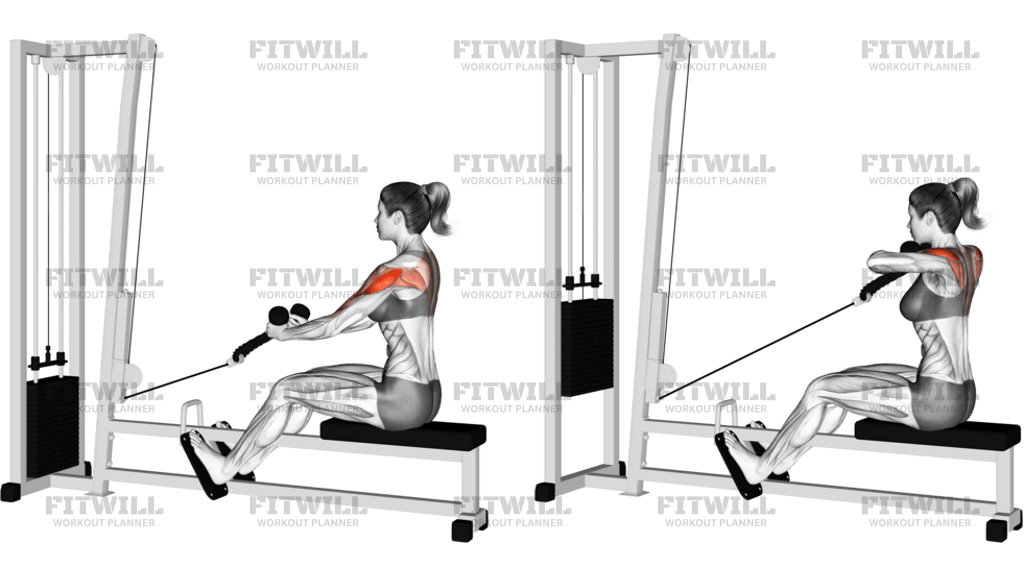
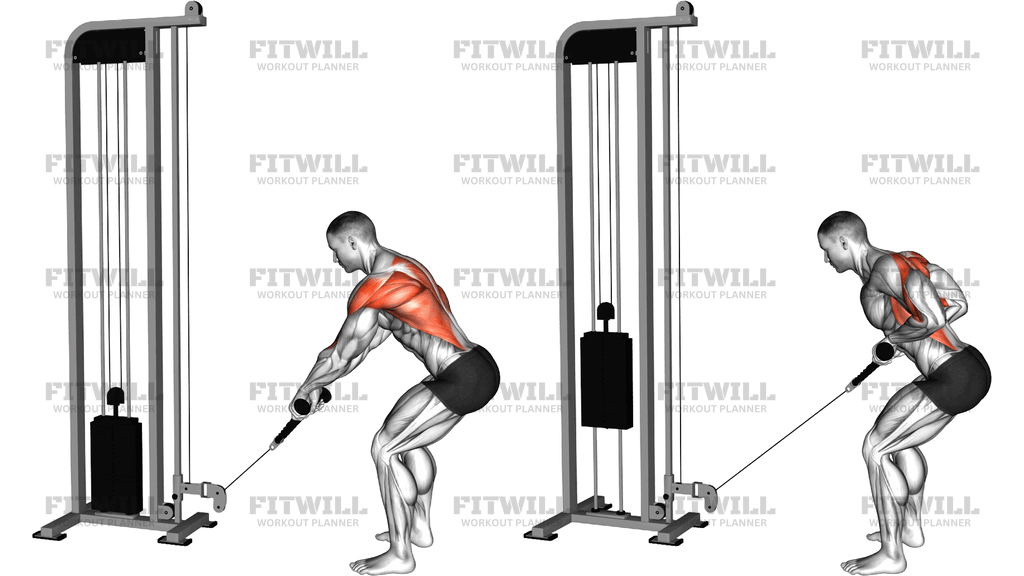
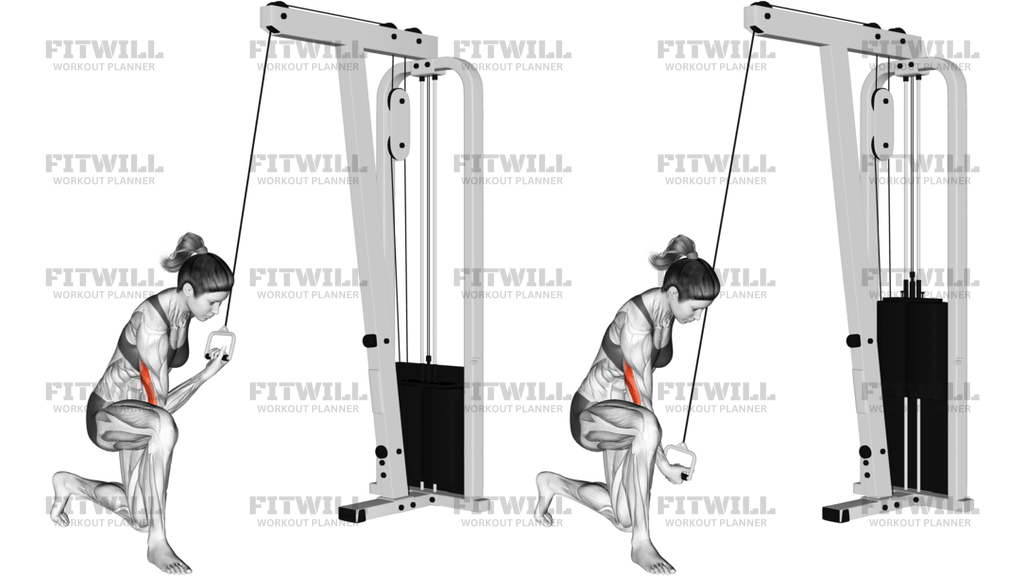
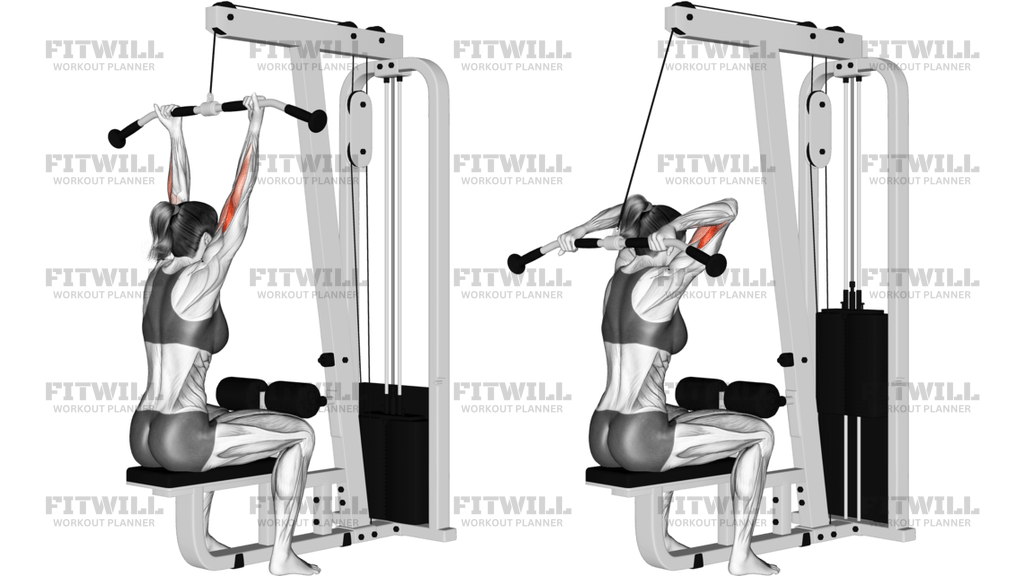
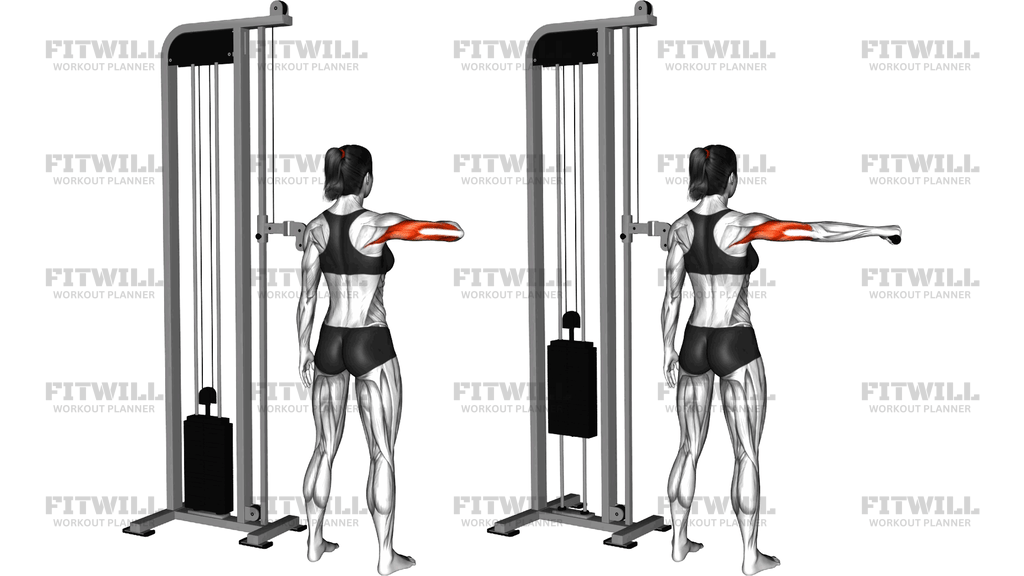
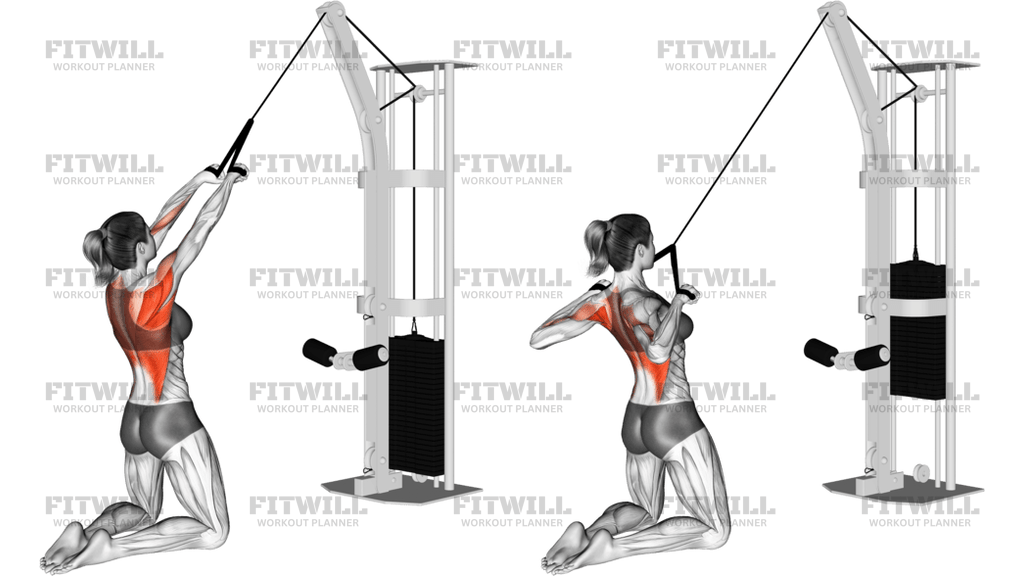
Cable Rear Delt Row (stirrups) is a seated cable pulling exercise that biases the rear shoulders while also challenging the upper back and arm flexors. In the image, the lifter sits facing a low pulley with the feet braced forward, arms reaching to the cable stirrups, and the torso held tall so the pull starts from the shoulders instead of from body swing. That setup matters because this row is meant to keep constant tension on the rear delts and upper-back muscles through a controlled, horizontal pulling path.
The exercise is useful when you want more shoulder balance, better posture strength, and cleaner scapular control. Because the elbows travel out and back rather than tucked tightly to the sides, the movement shifts emphasis away from a classic lat-dominant row and toward the rear delts, rhomboids, and mid traps. The biceps still help, but they should not take over the rep. A good set feels deliberate and compact, with the cable line staying smooth from the first pull to the last return.
The setup is simple but important: sit far enough from the stack that the cable stays under tension with your arms extended, plant the feet so your body does not slide, and keep the chest lifted without over-arching the low back. From there, pull the elbows wide and back until the handles come toward the upper ribs or lower chest, depending on your limb lengths and cable angle. The shoulders should stay down, the neck relaxed, and the wrists neutral so the rear delts can do the work.
Use a load that lets you pause briefly at peak contraction and lower the handles slowly without losing your torso position. This is a better choice for controlled hypertrophy work, upper-back accessory work, and shoulder-friendly pulling volume than for maximal loading. If the weight is heavy enough to turn the rep into a shrug, lean, or jerk, it is too heavy. Keep the motion smooth, repeatable, and pain-free, and stop the set if the cable path or shoulder position starts to break down.
[ Workout Log & Planner ]
Put your next workout in Fitwill
Keep your plan and training log ready when you are.


Instructions
- Sit on the bench facing the low pulley and attach the stirrups to the cable. Plant your feet forward so you can stay anchored without sliding.
- Hold the handles with straight wrists and a neutral grip, then scoot back until the cable is already under light tension with your arms extended in front of you.
- Set your chest tall, keep a small bend in the knees, and brace your midsection so your torso stays still for the whole set.
- Start the rep by pulling your shoulder blades slightly back and down, not by leaning or shrugging.
- Drive your elbows out and back in a wide arc, leading with the elbows so the handles travel toward your upper ribs or lower chest.
- Finish with the upper arms close to shoulder height, rear delts squeezed, and the neck relaxed instead of jammed forward.
- Pause briefly at the top, then lower the handles slowly until the arms are long again and the shoulder blades can reach forward under control.
- Keep breathing steady, exhaling as you pull and inhaling as you return, and reset your posture before the next repetition.
Tips & Tricks
- If the stack is too heavy, the movement turns into a shrug or torso swing long before the rear delts are fully challenged.
- Let the elbows travel wider than in a standard row; a tucked elbow path shifts too much work to the lats.
- Stop the pull when the shoulders begin to roll forward or the wrists start to bend back to finish the rep.
- Keep the handles moving on the same line each repetition so the cable tension stays smooth and predictable.
- A brief squeeze at the top is useful here, but hard pinching the shoulder blades together can steal tension from the rear delts.
- Use a controlled lowering phase so the rear delts stay loaded instead of letting the weight drop back to the stack.
- If your lower back wants to help, sit a little closer to the stack and reduce the load before forcing more range.
- The exercise should feel like a rear-shoulder and upper-back pull, not a biceps curl with the elbows flaring out.
Frequently Asked Questions
What muscles do Cable Rear Delt Row (stirrups) mainly work?
The rear delts do the main work, with the rhomboids, mid traps, and biceps assisting through the pull.
How is this different from a regular seated cable row?
The elbows travel wider and a little higher, which shifts the emphasis away from the lats and toward the rear shoulders and upper back.
Where should the handles finish on each rep?
Most lifters should finish with the handles near the upper ribs or lower chest, with the elbows out and slightly behind the torso.
Should I keep my elbows tucked or flared?
Keep them flared in a controlled arc; tucked elbows change the exercise into more of a lat row.
Can beginners use this exercise?
Yes. Start light enough to keep the torso still and the shoulder position clean from the first rep to the last.
Why are the feet extended forward in the image?
The forward foot position helps anchor the body so you can pull without sliding or leaning back to cheat the weight.
What is the biggest mistake with this movement?
The most common error is turning the row into a shrug or a whole-body heave instead of a rear-delt-driven pull.
Is it okay if I feel this in my upper back too?
Yes. The upper back should assist strongly, but the rear delts should still be the area doing the most focused work.
What if the stirrups feel awkward on my wrists?
Use a lighter load and keep the wrists neutral; if needed, a similar handle setup with a different grip can be easier on the joints.