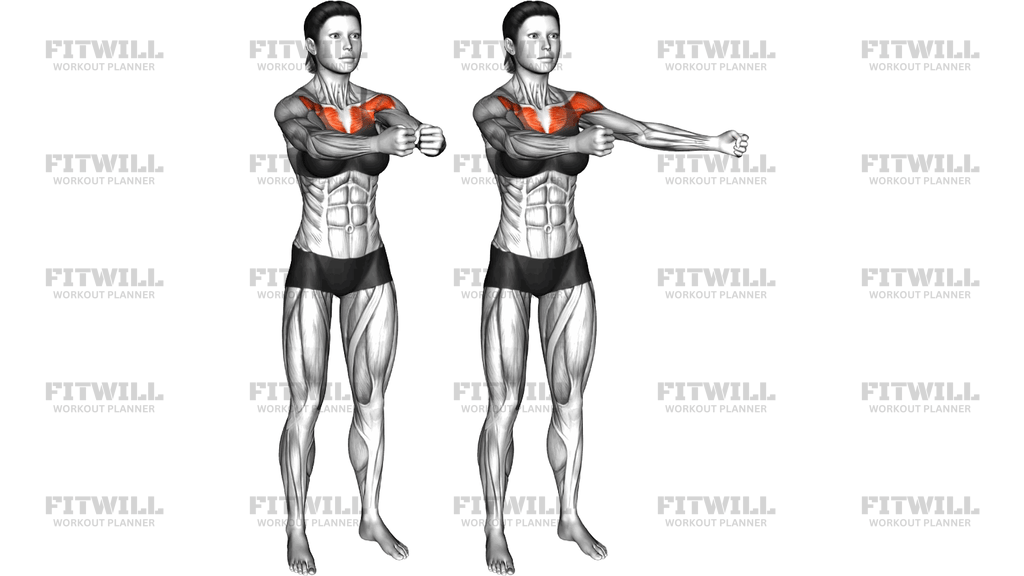
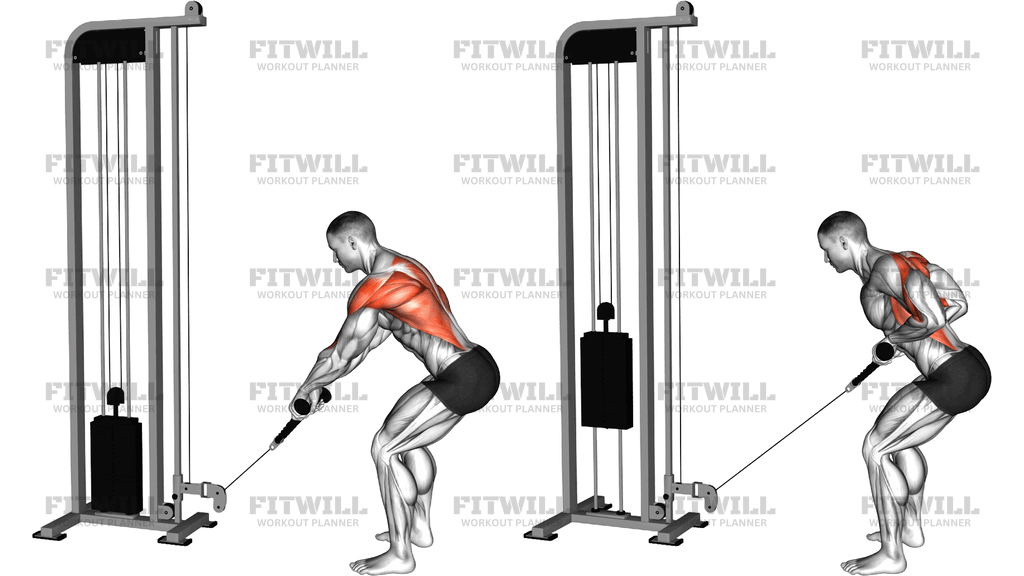
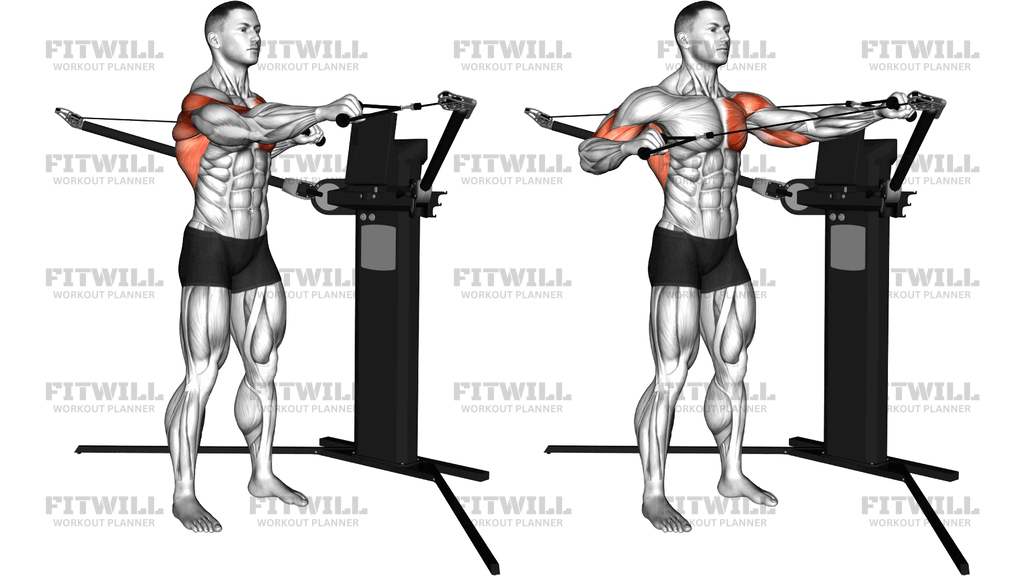
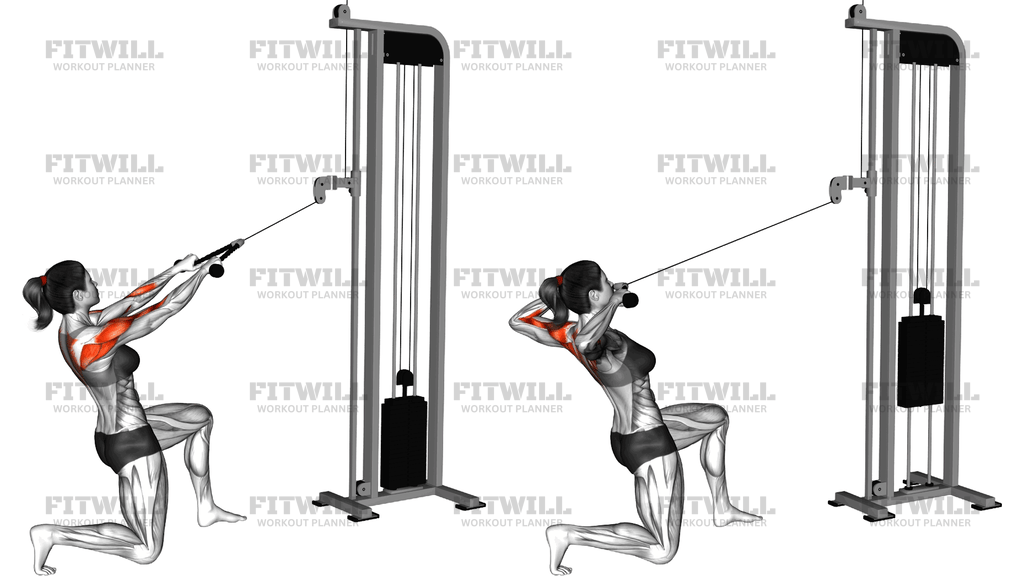
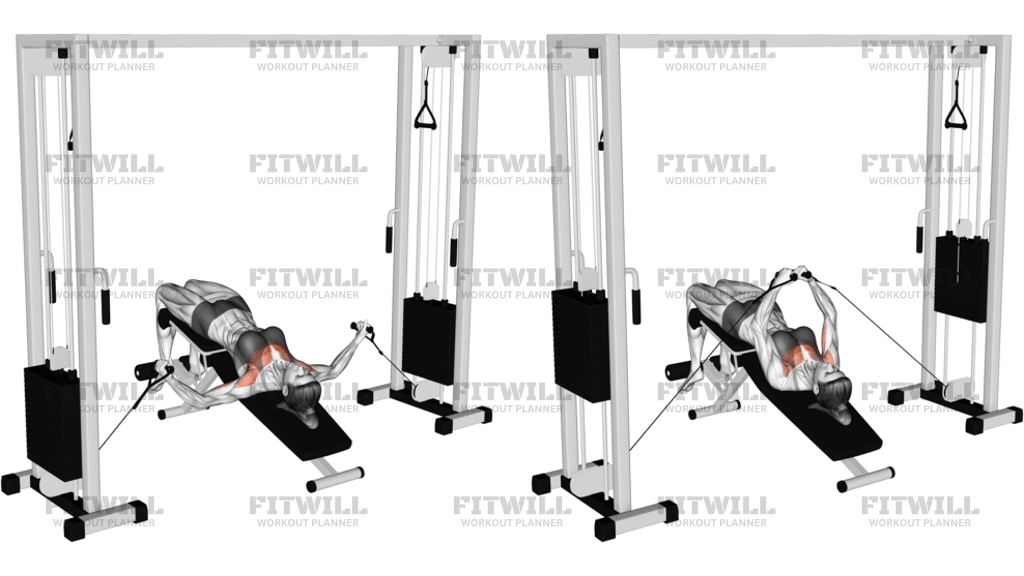
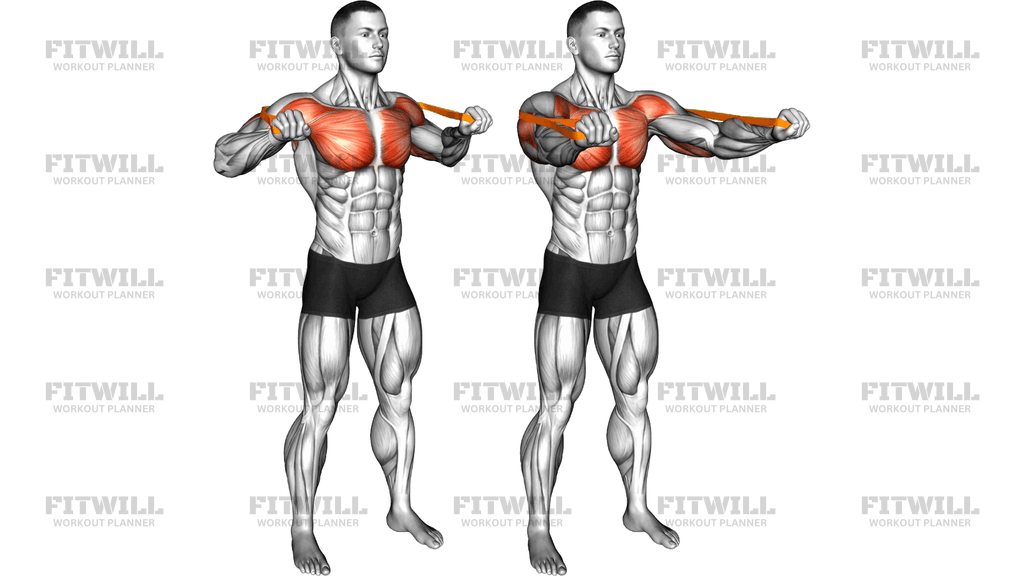
Cable Seated Chest Press
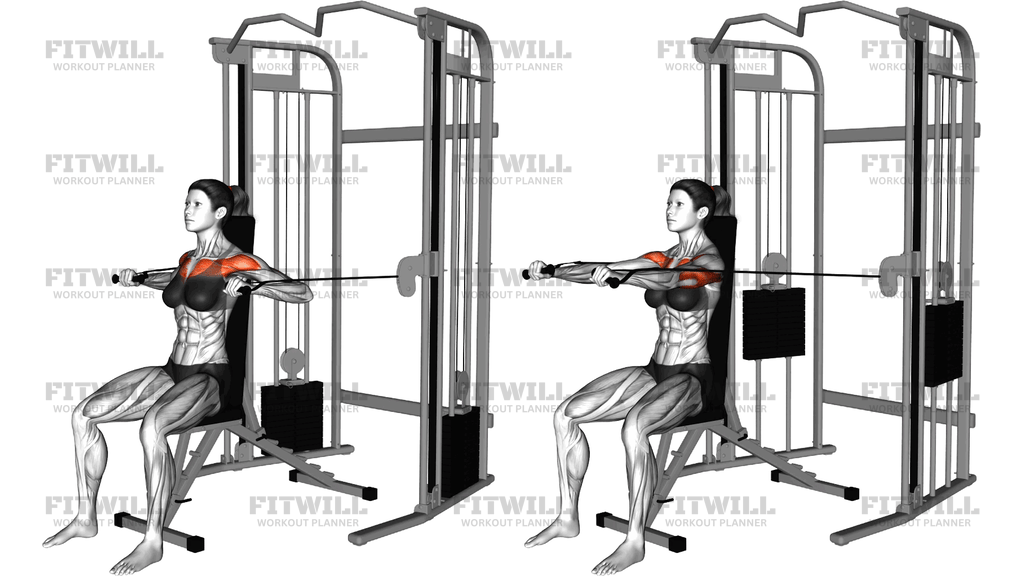
Cable Seated Chest Press is a seated pressing variation that keeps constant tension on the chest while still asking the shoulders, triceps, and trunk to stabilize the torso. It is useful when you want a chest-focused press that feels smoother than a barbell and gives you a very clear path to control. The cable setup also makes it easier to match the load to your exact range, which is helpful if you are building pressing mechanics or training around a cranky shoulder.
The exercise works best when the handles start around mid-chest height and the seat is set so your forearms stay roughly vertical at the bottom. That alignment lets you press straight ahead without dumping stress into the front of the shoulder. A good Cable Seated Chest Press feels like the chest is driving the handles forward while the upper back, abs, and hips keep the body from sliding, twisting, or overextending.
Because the resistance comes from cables, the tension stays on the chest throughout the rep instead of disappearing at the top. That makes control more important than load. Pressing too heavy usually turns the movement into a shrug, a half-rep, or a bounce off the front shoulder, so the setup should let you keep your ribcage stacked, wrists straight, and elbows traveling in a smooth path just below shoulder level.
For most lifters, Cable Seated Chest Press fits well as a main chest accessory after a heavier press or as a lower-stress primary press when you want cleaner joint mechanics. It can also be a solid option for beginners because the line of pull is easy to feel and the machine or pulley setup gives clear feedback on asymmetry. The tradeoff is that you must stay honest with the setup: if the seat is too low, the handles drift toward an incline pattern; if it is too high, the shoulders take over.
Use the exercise to build repeatable pressing strength, chest size, and better control at the end of the press. Keep the movement deliberate, let the chest open slightly on the way back, and stop each rep before the shoulders roll forward or the handles lose their line. Clean reps with steady tension will do more for this movement than chasing the heaviest stack you can move.
[ Workout Log & Planner ]
Put your next workout in Fitwill
Keep your plan and training log ready when you are.


Instructions
- Set the seat or bench so the cable handles line up with mid-chest, then sit tall with both feet flat and your hips planted squarely.
- Grasp the handles with straight wrists and elbows slightly below shoulder height, and bring the handles to the sides of your chest without shrugging.
- Stack your ribs over your pelvis, brace lightly through the trunk, and keep your shoulder blades set without forcing them hard together.
- Press the handles forward and slightly inward until your arms are almost straight and your chest is fully contracted.
- Keep the handles moving on the same line instead of letting one side drift ahead of the other.
- Pause briefly at the front with your elbows soft, not locked out aggressively.
- Inhale as you return the handles under control until you feel a chest stretch and the elbows come back just behind the torso if your shoulder allows it.
- Repeat for the planned reps, then bring the handles back to the start and let the stack settle before you release your grip.
Tips & Tricks
- If the handles start below mid-chest, the press turns into a lower-to-high angle and the shoulders take more of the work.
- A slight forward lean from the hips is fine, but do not turn the movement into a crunch or let your lower back overarch.
- Keep the elbows about 30 to 60 degrees from your torso; flaring them straight out usually makes the front of the shoulder take over.
- Stop the set if the handles stop traveling evenly and one side starts to rotate or twist forward first.
- Use a lighter load than you would on a machine chest press, because the cable path asks you to stabilize the handles yourself.
- Let the chest open on the way back, but do not let the shoulders roll far forward or you will lose tension and irritate the front of the joint.
- A 2- to 3-second return usually keeps the chest loaded better than letting the handles snap back.
- If your wrists bend back, switch to a handle that lets you press with a more neutral grip.
Frequently Asked Questions
What muscles does Cable Seated Chest Press work most?
It mainly targets the chest, with the front shoulders and triceps helping through the press. Your core and upper back also work to keep the torso from shifting on the seat.
Is Cable Seated Chest Press good for beginners?
Yes. The cable path is easy to follow and the resistance feels smooth, which makes it a useful way to learn pressing mechanics before moving to heavier free weights.
Where should the handles start on Cable Seated Chest Press?
Set the handles around mid-chest height so your forearms stay close to vertical at the bottom. If the handles start too low, the movement shifts toward an incline press and the shoulders usually work harder.
Should my back stay flat during Cable Seated Chest Press?
Keep your ribs stacked and your torso steady rather than forcing a big arch. If the machine has a back support, stay planted against it; if not, keep your seat tall and avoid leaning so far back that the press turns into a shrug.
How low should I let the handles come back?
Return until you feel a controlled stretch across the chest and your elbows are just behind the torso if your shoulders tolerate it. Do not chase extra range if the shoulders roll forward or the front of the joint starts to pinch.
Can I use Cable Seated Chest Press instead of bench press?
Yes, especially as a chest accessory or when you want continuous tension with less barbell loading. You usually will not move as much weight, but the cable setup can be easier on the joints and easier to keep strict.
Why do I feel this more in my shoulders than my chest?
The handles are probably too high, your elbows are flaring too wide, or your shoulders are shrugging toward your ears. Lower the seat if needed, keep the elbows slightly tucked, and press from the chest instead of the front of the shoulder.
Do I need to lock out my elbows at the top?
No. Finish with the arms almost straight and the chest squeezed, but keep a soft bend in the elbows so the load stays on the chest instead of disappearing into the joints.
What should I do if one handle feels harder to control?
Reduce the load and make both handles travel at the same speed. A big side-to-side difference usually means the seat is uneven, the grip is inconsistent, or one side is being pressed out of sync.