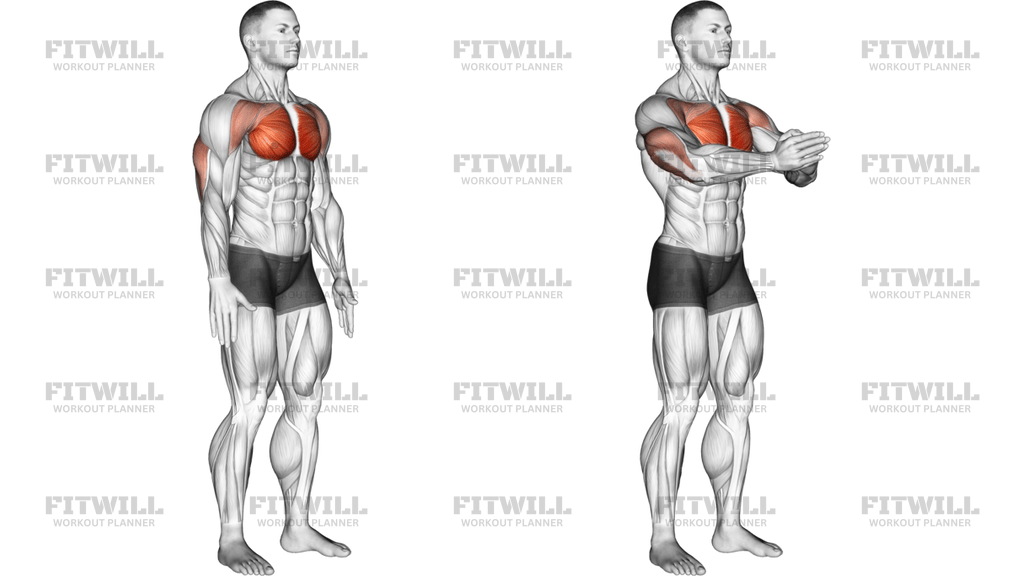
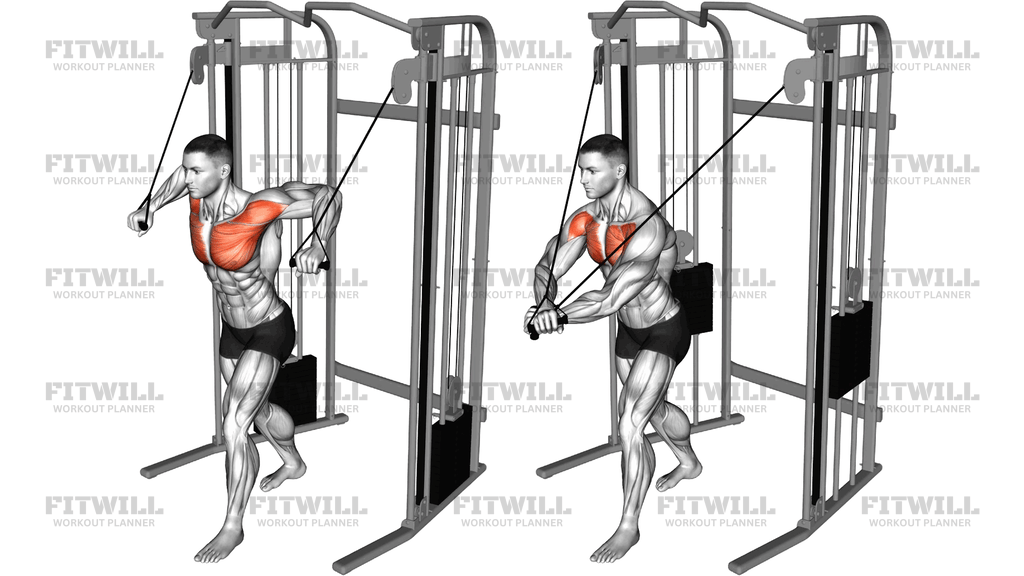
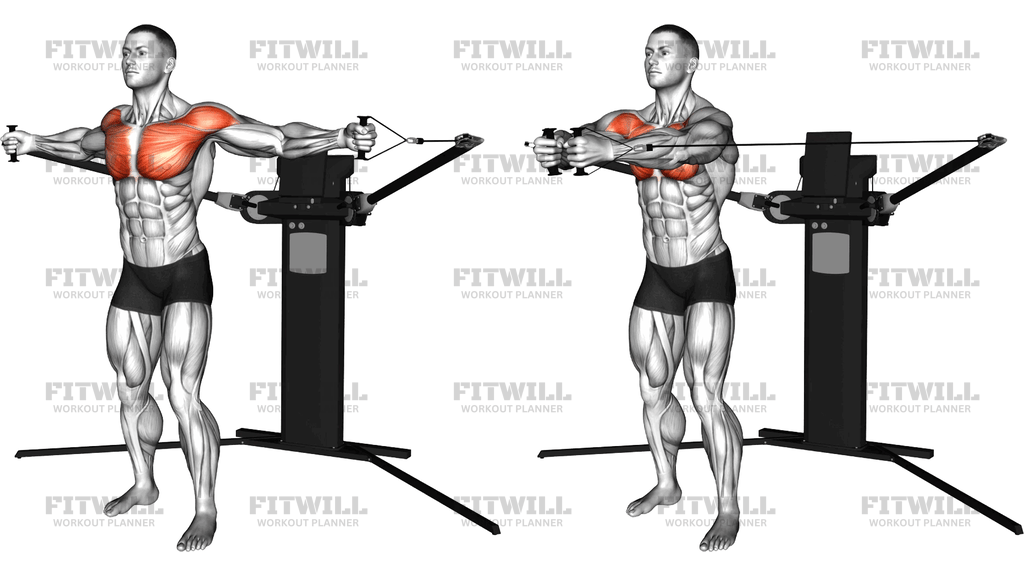
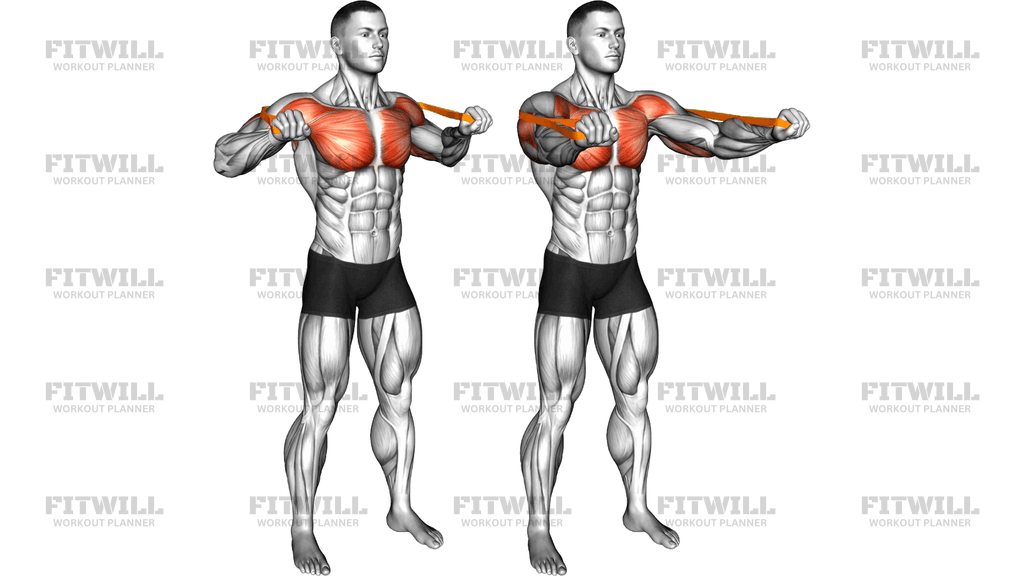
Cable Seated Chest Press
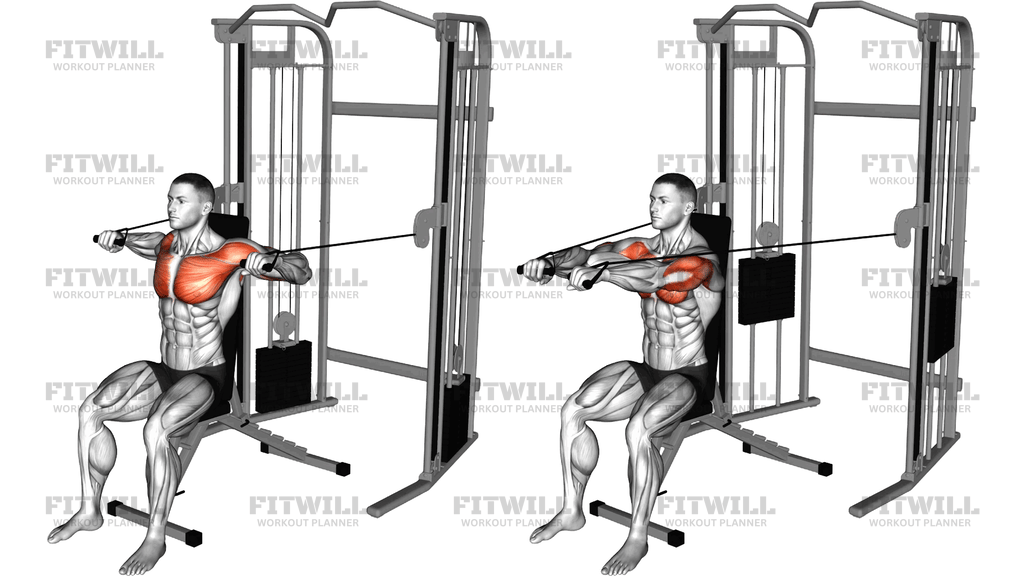
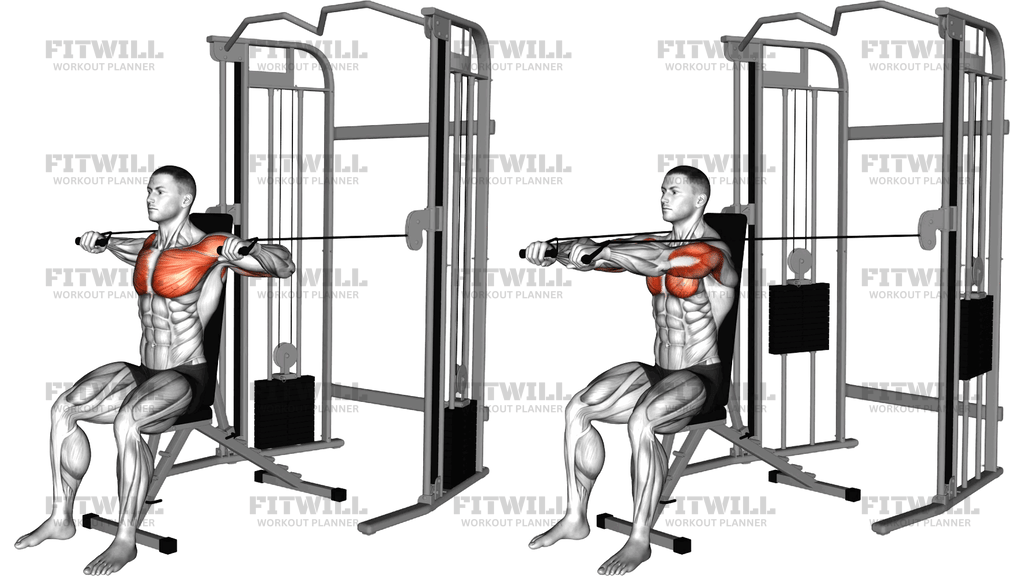
Cable Seated Chest Press is a supported horizontal pressing exercise that uses a cable machine and handle attachment to train the chest with steady tension. The seated position helps reduce lower-body cheating and makes it easier to keep the press path consistent, so the work stays centered on the pecs instead of turning into a full-body heave.
The main training emphasis is the pectoralis major, with the anterior deltoids and triceps brachii helping finish the press and stabilize the joints. The cable line of pull keeps resistance present through both the drive and the return, which makes this movement useful for hypertrophy work, controlled strength sets, and accessory volume when you want chest work without a heavy barbell setup.
The setup matters. Adjust the seat so the handles start around mid-chest, plant both feet firmly, and sit tall with your ribs stacked over your pelvis. Keep your shoulders down and back enough to avoid shrugging, but do not over-arch just to fake a bigger press. A good starting position lets you press forward from the chest and upper arms instead of losing position before the first rep even starts.
Each repetition should travel forward in a smooth arc or straight press depending on the machine, with the elbows tracking slightly below shoulder height and the wrists staying lined up with the handles. Press until the arms are nearly straight without snapping into the lockout, then return under control until the chest and front shoulder feel loaded again. Exhale as you press, inhale as you come back, and keep the torso quiet so the cable stack, not momentum, sets the tempo.
This exercise fits well in chest-focused sessions, upper-body accessory work, or machine-based programming when you want repeatable tension and easy load adjustments. It is usually beginner-friendly if the seat height, starting distance, and resistance are kept conservative. The most common problems are flaring the elbows too high, letting the shoulders roll forward at the finish, and using too much weight to control the return. Keep the rep clean and the range pain-free, and the movement will stay on the chest instead of turning into a shoulder-dominant press.
[ Workout Log & Planner ]
Put your next workout in Fitwill
Keep your plan and training log ready when you are.


Instructions
- Set the seat so the handles start around mid-chest, then sit back with both feet flat and your hips fully supported.
- Grip the handles firmly, keep your wrists stacked over your forearms, and draw your shoulders down without collapsing your chest.
- Set your torso tall with a slight natural arch through the upper back and keep your head resting in a neutral line.
- Let the handles come back until you feel a controlled stretch across the chest without the shoulders drifting forward.
- Press the handles forward and slightly inward in a smooth path until your arms are nearly straight.
- Stop short of locking the elbows hard or letting the weight crash into the end range.
- Return the handles slowly until the chest and front shoulders are loaded again, keeping the torso still.
- Breathe out through the press and breathe in as the handles come back.
- Repeat for the planned reps, then guide the handles back to the start before standing up.
Tips & Tricks
- Set the seat height first; if the handles start too low, the press turns into a front-shoulder movement.
- Keep the elbows slightly below shoulder height so the press stays on the chest instead of flaring the shoulders.
- Think about squeezing the handles toward each other as you press, even if the machine path is mostly straight ahead.
- Do not let your ribcage pop up to cheat the range; keep the chest tall without turning the set into a back arch.
- Use a load that lets you control the return for at least two to three seconds.
- Keep the wrists neutral; bent wrists usually mean the handles are too deep in the palm or the load is too heavy.
- Let the chest stretch at the back end of the rep, but stop before the shoulders roll forward.
- If the stack slams at the top, shorten the finish slightly and keep tension on the cables.
- Choose a lighter setting for higher-rep chest work before increasing load on this machine.
Frequently Asked Questions
What muscles work most during Cable Seated Chest Press?
The pectoralis major does most of the work, with the front delts and triceps helping finish the press.
How should the handles line up at the start?
Set the seat so the handles start around mid-chest height, not up at the shoulders or down near the ribs.
Is it better to press straight out or slightly inward?
Use the machine’s natural path and let the handles finish slightly inward if the arms and cables allow it without shoulder strain.
What is the most common form mistake on this machine?
People usually flare the elbows too high, shrug the shoulders, or let the weight slam back into the stack.
Can beginners use the seated cable chest press?
Yes. It is beginner-friendly when the seat height is set correctly and the load is light enough to control the return.
How close should my elbows get to lockout?
Finish with the arms almost straight, but do not snap into a hard lockout or lose tension at the top.
Why use cables instead of a barbell or dumbbells?
Cables keep tension on the chest through the whole rep and make it easier to control the press path in a seated position.
What should I do if I feel this mostly in my shoulders?
Lower the seat, reduce the load, and keep the elbows a little lower so the press angle stays closer to the chest.
Where does this fit best in a workout?
It works well in chest sessions, upper-body accessories, or as a controlled machine press when you want repeatable volume.