Lever High Row Plate Loaded
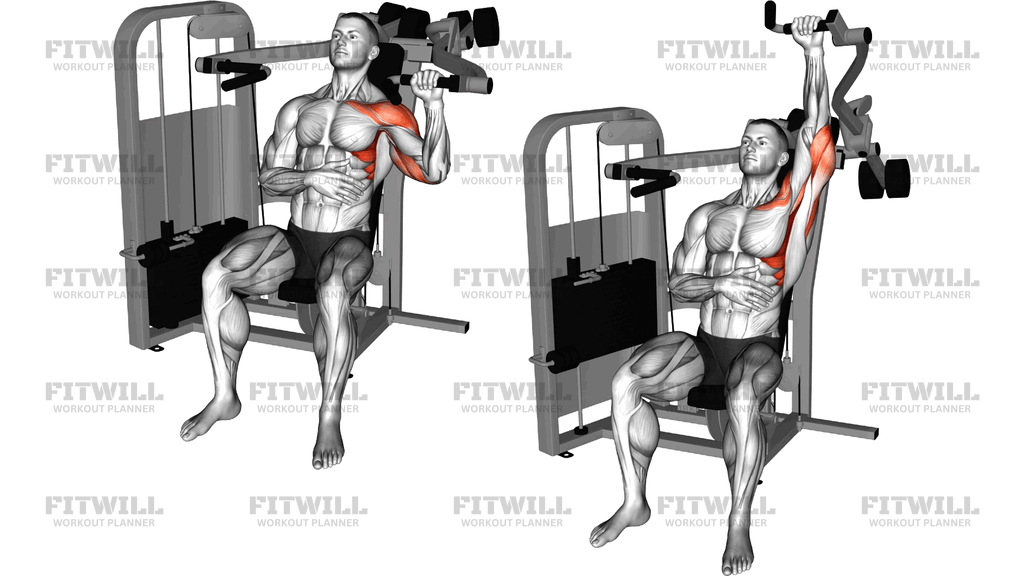
The Lever High Row (plate loaded) is a seated machine row that loads the upper back through a high pulling path. In the image, the handles start out in front and above shoulder level, then travel down and back toward the upper chest as the elbows track beside the torso. That path makes the movement feel different from a low row: it asks the lats, rhomboids, rear delts, and biceps to work together while the torso stays braced against the machine.
This exercise is useful when you want a strong back movement without needing to balance a free weight or control a loose cable path. The leverage arm guides the arc, so the main job is to set your seat correctly, keep the chest anchored, and pull with the elbows instead of shrugging the shoulders. A good setup should let you start with the arms long, shoulders relaxed, and the handles high enough that the first part of the pull does not feel cramped.
The best reps finish with the elbows moving down and back, the shoulder blades squeezed gently together, and the chest staying proud against the pad. Do not turn it into a half-rep shrug or a body swing. If you lean back hard or use your lower back to finish the pull, the machine usually becomes a momentum exercise instead of a back exercise. Controlled return matters just as much as the pull, because the row builds useful tension on the way back to the start.
Because the handle path is fixed, this movement is a good choice for teaching rowing mechanics, adding back volume after heavier pulls, or giving the upper back more focused work with less setup than a barbell row. Use a load that lets you keep the chest planted and the wrists quiet through every rep. Beginners can usually learn it quickly if they keep the motion smooth and avoid yanking the handles into place.
Treat the Lever High Row (plate loaded) as a deliberate strength and hypertrophy tool for the upper back rather than a speed drill. Clean repetitions with consistent shoulder control will give you more from the machine than chasing extra weight or range. When the handles finish near the upper chest and the elbows stay under control, the movement delivers the kind of tension that helps build posture, pulling strength, and back density.
[ Workout Log & Planner ]
Put your next workout in Fitwill
Keep your plan and training log ready when you are.


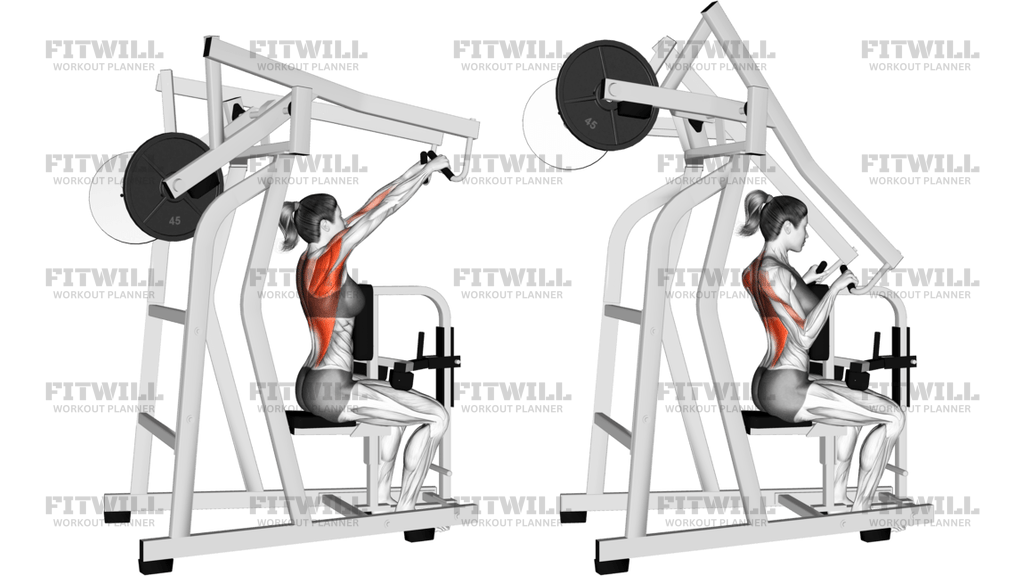
Instructions
- Adjust the seat so your chest sits firmly against the pad and the handles start high in front of your shoulders.
- Plant both feet flat, take a neutral grip on the handles, and let your arms extend without locking out the elbows.
- Set your ribcage down, brace your midsection, and keep your neck long before the first pull.
- Begin by driving your elbows down and back in a smooth arc toward your upper chest.
- Keep your shoulders from creeping toward your ears as the handles move.
- Squeeze your shoulder blades together lightly at the finish without jerking your torso backward.
- Pause for a brief squeeze, then lower the handles forward under control until your arms are long again.
- Inhale on the return and exhale as you pull each rep.
- Stop the set if you lose chest contact or need to swing to finish the repetition.
Tips & Tricks
- Set the seat height first. If the handles start too low, the first pull turns into a shrug instead of a row.
- Think about pulling your elbows to your back pockets rather than curling the handles with your hands.
- Keep the chest pad doing the work of stabilizing your torso; do not turn the row into a seated lean-back.
- A neutral grip usually feels strongest on this machine, but use the handle angle that lets your wrists stay straight.
- Do not slam the plates or let the arm snap forward on the way back. The eccentric should stay smooth and quiet.
- If your rear delts and upper back are strong but your lower back is getting tired first, you are probably leaning too much.
- Use a load that lets you pause for one second near the squeezed position without shortening the range.
- Keep the elbows below shoulder height through most of the pull so the movement stays on the upper back instead of becoming a shrug.
Frequently Asked Questions
What does the Lever High Row (plate loaded) work most?
It mainly trains the lats, rhomboids, mid traps, rear delts, and biceps through a high seated rowing path.
How should my chest sit on the pad?
Your chest should stay anchored against the support pad or braced firmly against the seat so the torso does not rock as you pull.
Where should the handles finish?
A strong rep usually ends with the handles near the upper chest and the elbows pulled down and back, not flared high.
Is this better with a neutral grip or an overhand grip?
Most people feel the neutral grip best on a high row machine because it keeps the wrists and shoulders in a stronger line.
What is the most common mistake on this machine?
Leaning back and turning the pull into momentum is the biggest problem; the torso should stay quiet while the arms and upper back do the work.
Can beginners use the Lever High Row?
Yes. It is beginner-friendly when the seat is set correctly and the load is light enough to control the return.
Should I feel this in my biceps too?
Some biceps involvement is normal, but the pull should still feel centered in the upper back and around the shoulder blades.
What can I substitute if this machine is not available?
A chest-supported row, a high cable row, or a machine row with a similar elbow path are the closest alternatives.