Dumbbell Standing One-Arm Curl Over Incline Bench
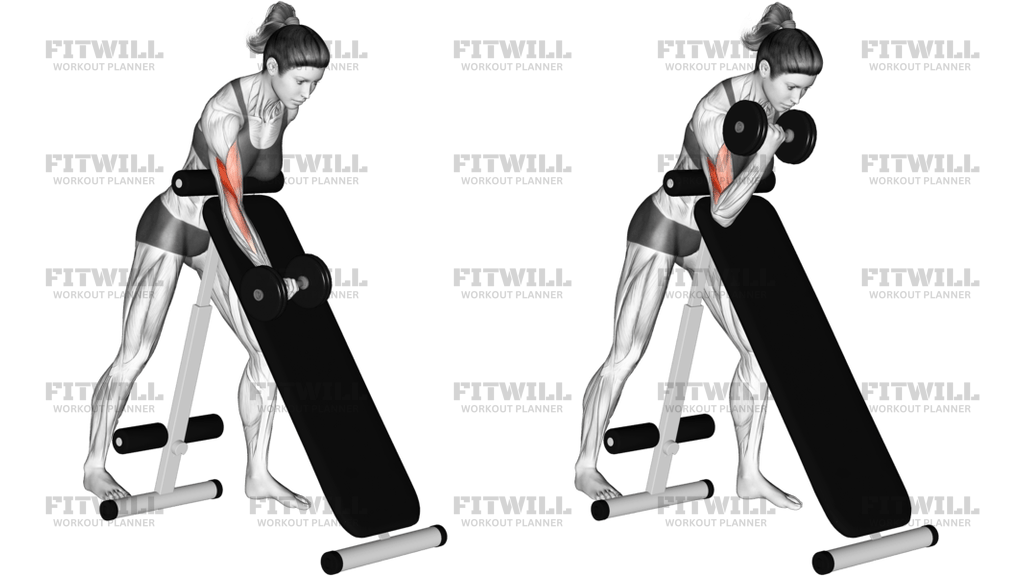
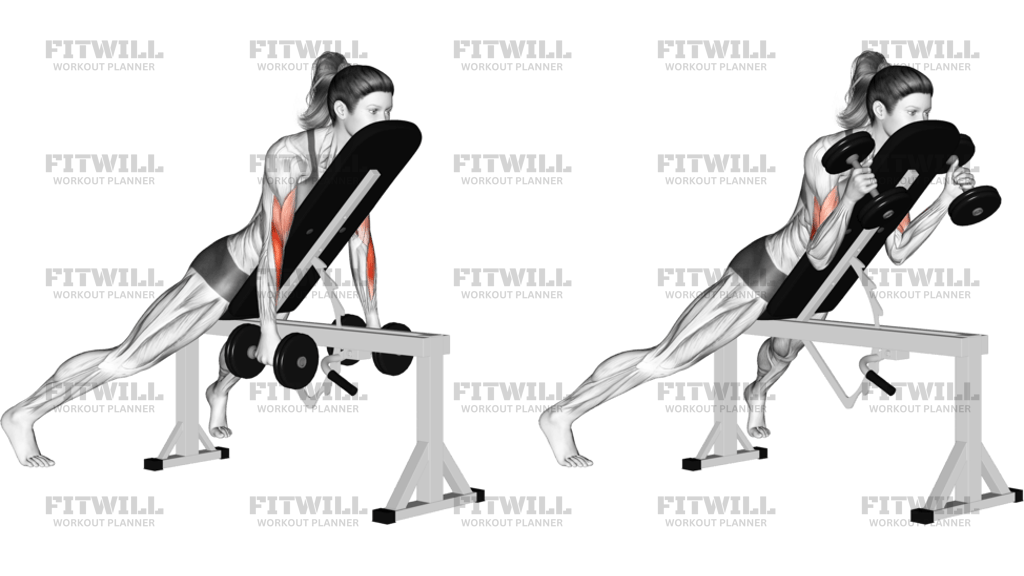
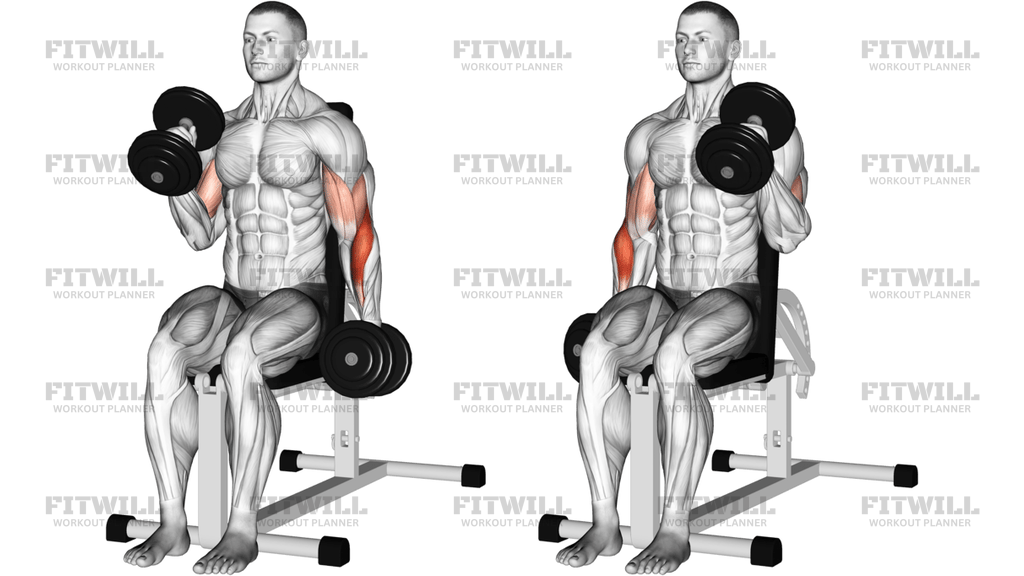
Dumbbell Standing One-Arm Curl Over Incline Bench is a strict single-arm curling exercise that uses the incline bench as a brace so the rep stays honest. By pinning the torso and upper arm against the pad, the movement removes most of the swing and shoulder help that often sneaks into a free standing curl. That makes it a useful choice when you want cleaner biceps work, better side-to-side balance, and a stronger feel through the elbow flexors.
The incline bench changes the job of the curl. Instead of letting the torso drift or the elbow travel forward, the bench gives you a fixed surface to lean into so the forearm has to do the work in a more controlled arc. That support is especially helpful if you tend to cheat with body English, if one arm lags behind the other, or if you want a slower, more deliberate arm day accessory without having to load the dumbbell heavily.
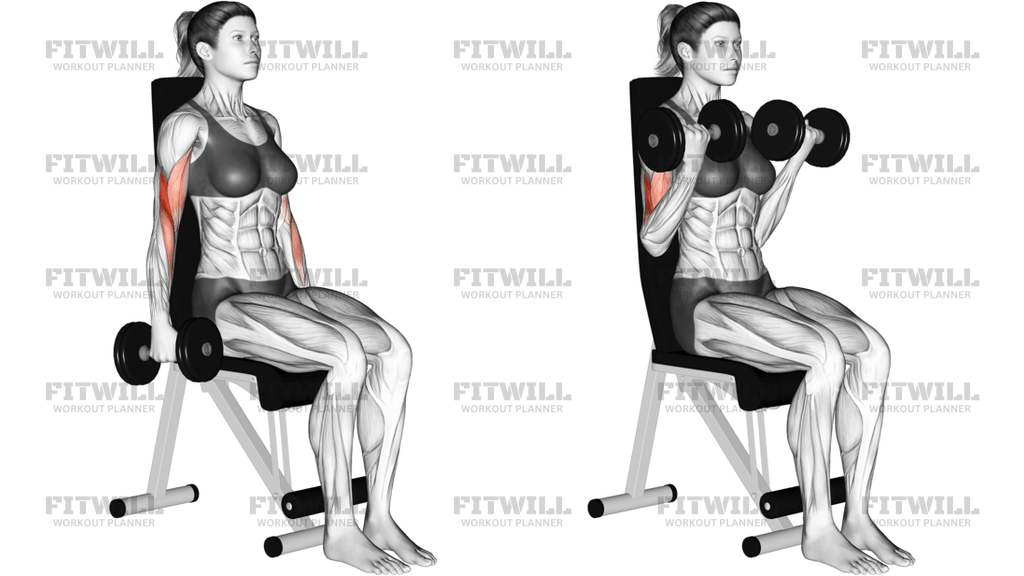
Set the bench to a moderate incline and position your chest and working upper arm firmly against the pad. The dumbbell should hang straight down with the wrist stacked over the handle and the shoulder relaxed away from the ear. That starting position matters because the curl should begin from a dead, stable arm rather than from a half-repped swing or a shrugged shoulder.
From there, bend the elbow and curl the dumbbell toward the front of the shoulder while keeping the upper arm in contact with the bench. The forearm should travel in a smooth arc, and the wrist should stay steady instead of folding backward as the weight rises. At the top, squeeze the biceps briefly, then lower the dumbbell under control until the elbow is nearly straight again and the arm settles back into the same supported position.
This is a good option for lifters who want strict hypertrophy work, beginners who need more external support to stay honest, or experienced trainees who want to finish an arm session with precise tension rather than momentum. It also works well when one arm is weaker or less coordinated, because each side has to earn the rep on its own. Keep the load moderate, the tempo controlled, and the bench stable so the movement stays focused on the elbow flexors instead of turning into a whole-body lift.
The exercise is safest and most effective when the bench setup lets you move without cranking the shoulder forward or twisting your torso to finish the curl. If the top position feels cramped, adjust your stance or the bench angle until your elbow can flex fully without losing contact. Used this way, Dumbbell Standing One-Arm Curl Over Incline Bench becomes a clean, repeatable way to train arm strength and size with less cheating than a free standing curl.
Fitwill
Log Workouts, Track Progress & Build Strength.
Achieve more with Fitwill: explore over 9600 exercises with images and videos, access built-in and custom workouts, perfect for both gym and home sessions, and see real results.
Start your journey. Download today!




Instructions
- Set an incline bench to a moderate angle and lean your chest and working upper arm against the pad.
- Plant your feet in a staggered stance so the bench feels stable and your torso stays pinned in place.
- Hold one dumbbell in the working hand with your palm facing forward and your wrist stacked over the handle.
- Let the arm hang straight down so the elbow starts fully extended without locking out hard.
- Brace your abs and glutes, then keep your shoulder down away from your ear before you curl.
- Curl the dumbbell by bending only at the elbow, keeping the upper arm pressed into the bench pad.
- Squeeze the biceps at the top for a brief pause without letting the shoulder roll forward.
- Lower the dumbbell slowly until the arm is nearly straight again and the same supported start position is restored.
- Finish the set by lowering the dumbbell to the floor or rack before stepping away from the bench.
Tips & Tricks
- If your elbow drifts off the pad, lighten the dumbbell and reset your chest position before the next rep.
- Keep the wrist in line with the forearm; letting it fold back turns the rep into a forearm-heavy cheat curl.
- Use a bench angle that lets your shoulder stay down and your upper arm stay supported without pinching at the front of the joint.
- A one-second squeeze at the top works better here than bouncing the dumbbell through the peak contraction.
- Lower the weight more slowly than you lift it to keep tension on the biceps and reduce momentum.
- Do not twist your torso to finish the rep; if you need to rotate, the load is too heavy or your stance is too loose.
- Keep the free hand relaxed on the bench or thigh so the working side does not get help from extra trunk movement.
- Stop the set when you can no longer keep the upper arm glued to the pad through the lowering phase.
Frequently Asked Questions
What does Dumbbell Standing One-Arm Curl Over Incline Bench train most?
It mainly trains the biceps through a strict elbow curl, with help from the brachialis and forearm flexors.
Why use an incline bench instead of a free standing curl?
The bench removes a lot of body swing and shoulder cheating, so the arm has to do more of the work on its own.
Where should my upper arm be during Dumbbell Standing One-Arm Curl Over Incline Bench?
Keep the upper arm pressed into the bench pad for the whole rep so the elbow can flex without the shoulder drifting forward.
Should my palm stay facing forward the whole time?
Yes, a palm-up grip keeps the curl focused on the elbow flexors and keeps the rep consistent from top to bottom.
What if the dumbbell bumps the bench on the way up?
Move your feet a little farther from the pad or adjust the bench angle so the dumbbell can travel without hitting the upholstery.
Can beginners do Dumbbell Standing One-Arm Curl Over Incline Bench?
Yes, and the bench support often makes it easier to learn strict curling mechanics with a lighter dumbbell.
How low should I lower the dumbbell?
Lower it until the elbow is nearly straight and the shoulder still feels packed against the bench, not until you lose position.
What is the most common mistake with this exercise?
The most common mistake is turning it into a torso-driven cheat curl by shrugging, twisting, or pulling the elbow off the pad.