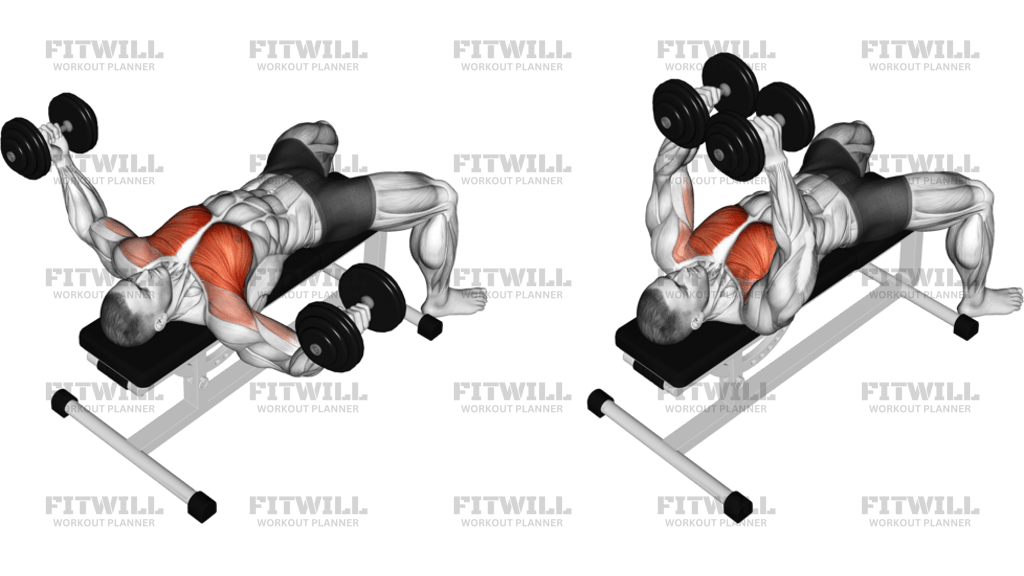
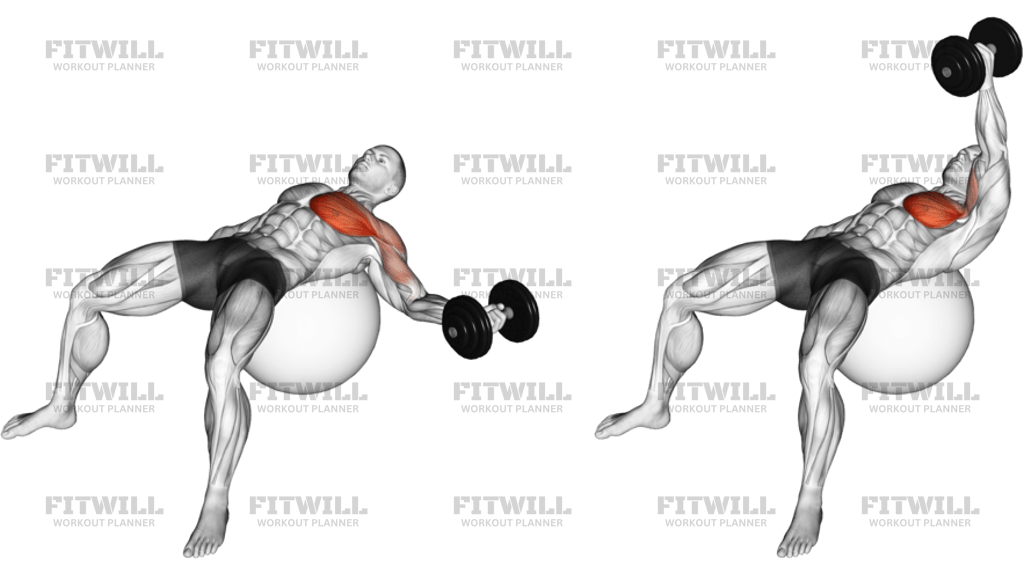
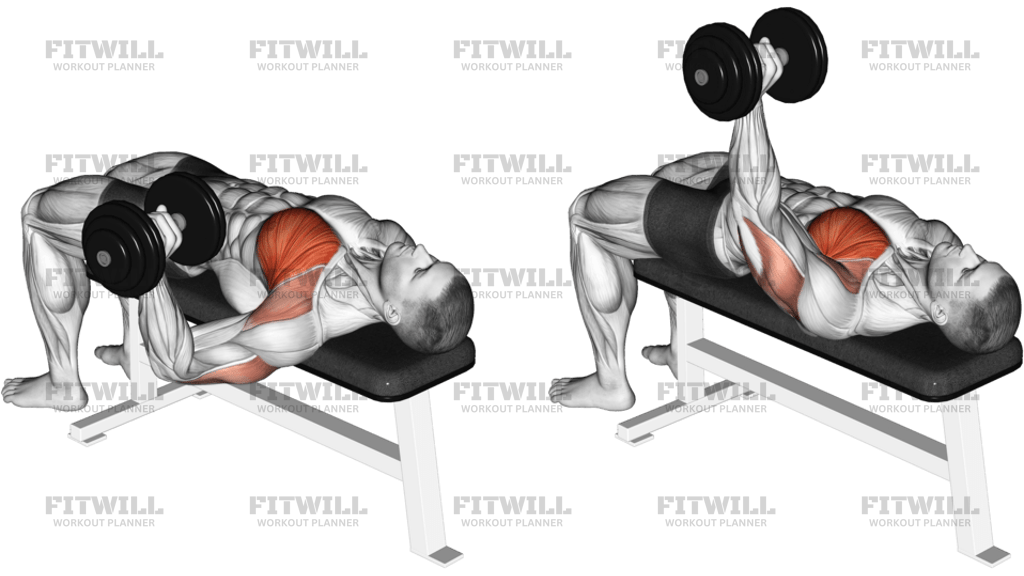
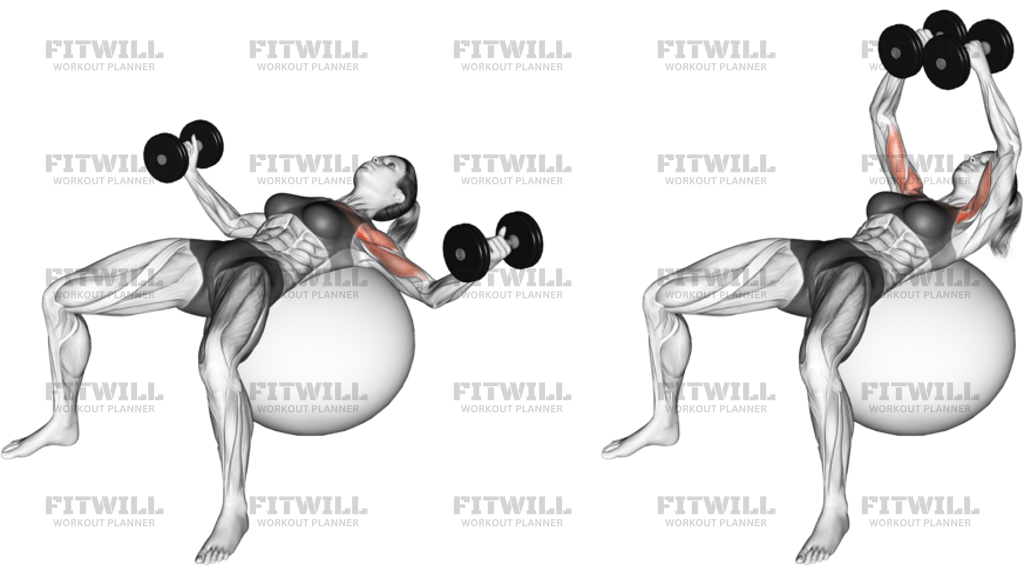
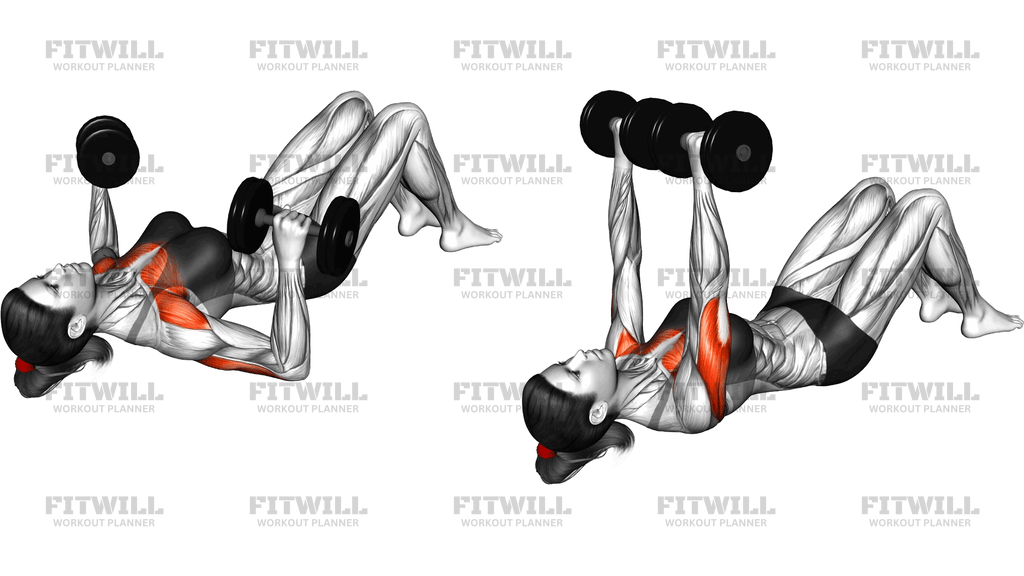
Dumbbell Fly Knees At 90 Degrees
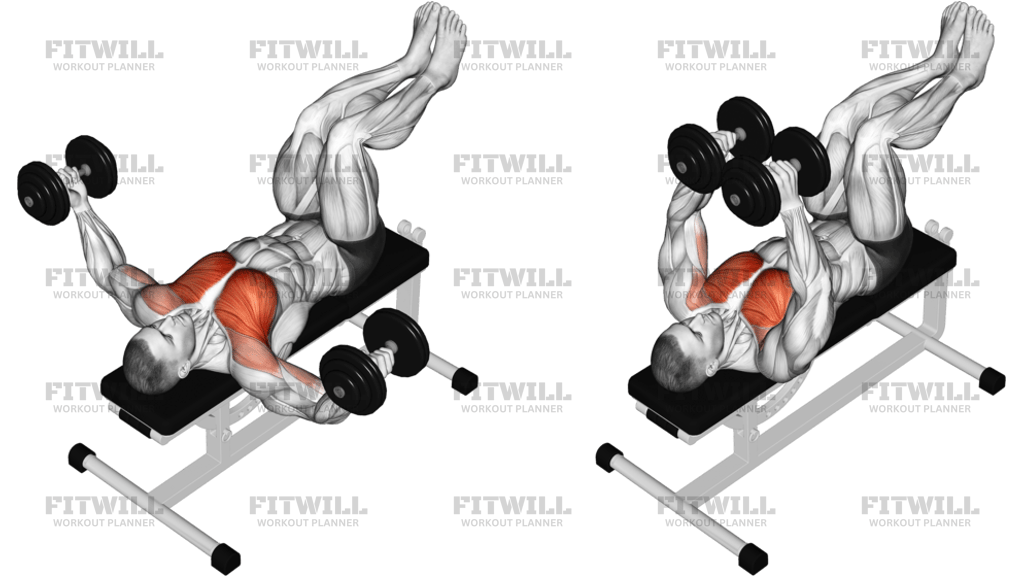
Dumbbell Fly Knees At 90 Degrees is a flat-bench chest isolation exercise built around a wide arm arc, a fixed elbow angle, and a stable torso. Lying back with the hips and knees held at about 90 degrees removes a lot of leg drive and makes it easier to keep the ribcage quiet while the chest does the work. That makes this variation useful when you want direct pec tension without turning the set into a press.
The main training effect is on the chest, especially the pectoralis major, with the front delts and triceps helping to stabilize the shoulders and elbows. The elevated-leg position also asks more from the core than a relaxed bench setup, because the pelvis has to stay still while the dumbbells travel outward and back together. Done well, the rep should feel smooth and deliberate rather than forceful.
The setup matters. Lie centered on the bench, keep the shoulder blades gently retracted, and hold the dumbbells over the chest with palms facing in. With the knees bent and feet lifted, the lower back should stay controlled instead of arching to chase a bigger range. A small bend in the elbows is normal, but that bend should stay almost unchanged for the whole set.
Lower the weights in a wide semicircle until you feel a strong chest stretch without the shoulders rolling forward. Then bring the dumbbells back together over the middle of the chest by squeezing the upper arms toward each other, not by turning it into a pressing motion. Breathing should stay steady and predictable: inhale on the way down, exhale as the weights return to the top.
This variation fits best as accessory chest work, hypertrophy work, or technique-focused upper-body training. It is not a power lift, and it should not be loaded like one. Use it when you want to train the pecs through a long, controlled stretch while keeping the torso and legs quiet. If the shoulders take over or the low back starts to arch, the load is too heavy or the range is too deep.
[ Workout Log & Planner ]
Put your next workout in Fitwill
Keep your plan and training log ready when you are.


Instructions
- Lie on a flat bench with your head, upper back, and glutes supported, and raise your hips and knees to about 90 degrees so your feet stay off the floor.
- Hold a dumbbell in each hand above the middle of your chest with your palms facing each other and a soft bend in both elbows.
- Set your shoulder blades gently back and down so your chest stays open before the first rep starts.
- Lower the dumbbells in a wide arc out to the sides until you feel a strong chest stretch without your shoulders losing position.
- Keep the elbow angle nearly fixed as the arms travel; do not turn the lowering phase into a press or a row.
- Bring the dumbbells back together over the chest by squeezing the upper arms inward and stopping when the weights meet or nearly meet.
- Keep your ribs stacked and your hips quiet while your legs stay lifted at 90 degrees through the whole set.
- Inhale on the way down and exhale as you return the dumbbells to the top.
- Reset the shoulders before each new rep and stop the set if the range starts to pull the shoulders forward.
Tips & Tricks
- A slight elbow bend should stay the same from start to finish; changing it turns the fly into a press.
- Stop the lowering phase when the upper arm is level with the bench or just below it if your shoulders stay comfortable.
- Keep the dumbbells aligned over the chest, not drifting toward the face or stomach.
- With the legs up, avoid flaring the ribs to create extra range; the torso should stay quiet.
- If you feel the front of the shoulder more than the chest, shorten the range and lighten the load.
- Use a slow, even lowering phase so the chest stays loaded instead of the dumbbells dropping.
- Keep the wrists stacked over the elbows so the dumbbells do not wobble at the bottom.
- Choose a weight that lets you close the arc smoothly without banging the dumbbells together.
- Do not let the hips swing or the knees move to help the weights travel; the legs are there for stability, not momentum.
Frequently Asked Questions
What muscle does Dumbbell Fly (knees at 90 degrees) target most?
The chest, especially the pectoralis major, is the main target.
Why are the knees held at 90 degrees?
Keeping the hips and knees lifted reduces leg drive and makes it easier to keep the torso still.
Should my elbows stay bent during the fly?
Yes. Keep a small, fixed bend in the elbows so the movement stays a fly instead of becoming a dumbbell press.
How low should I lower the dumbbells?
Lower only until you feel a strong chest stretch and your shoulders stay set; depth should not force the shoulders to roll forward.
Is this exercise a pressing movement?
No. The arms travel in a wide arc with a fixed elbow angle, and the chest brings the dumbbells back together.
Can beginners do this version safely?
Yes, if the load is light and the range stays controlled. The shoulder position matters more than the number on the dumbbells.
What should I feel if the form is right?
You should feel a stretch across the chest on the way down and a strong squeeze through the pecs as the dumbbells come back together.
What is the most common mistake with this fly?
Letting the shoulders roll forward or using too much weight, which shortens the chest stretch and shifts stress to the front of the shoulder.