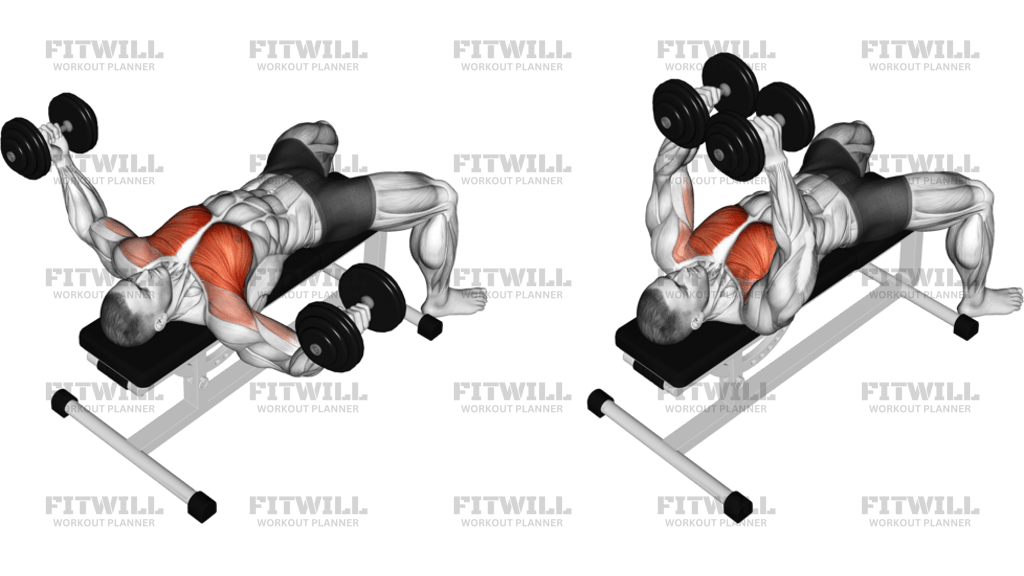
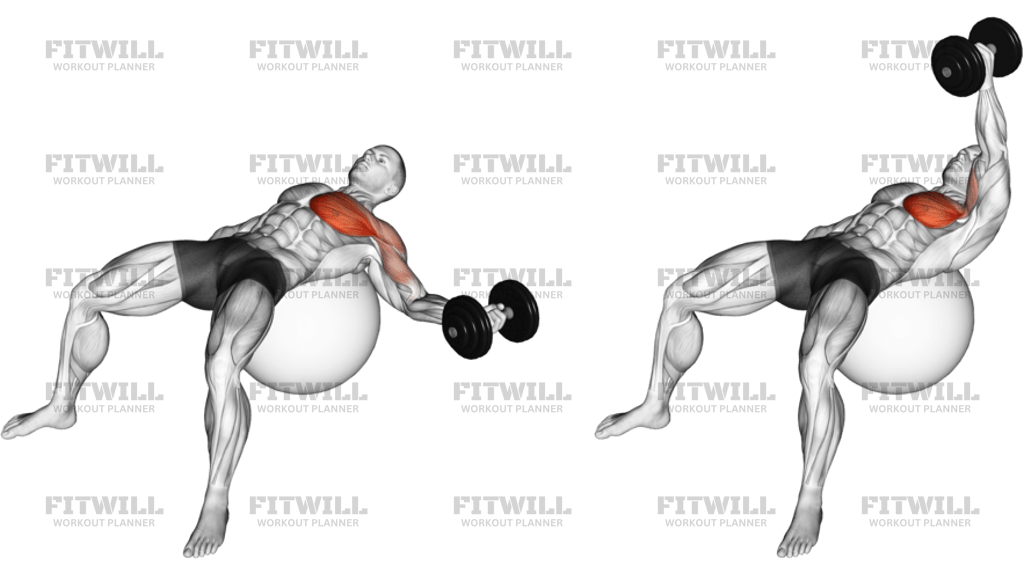
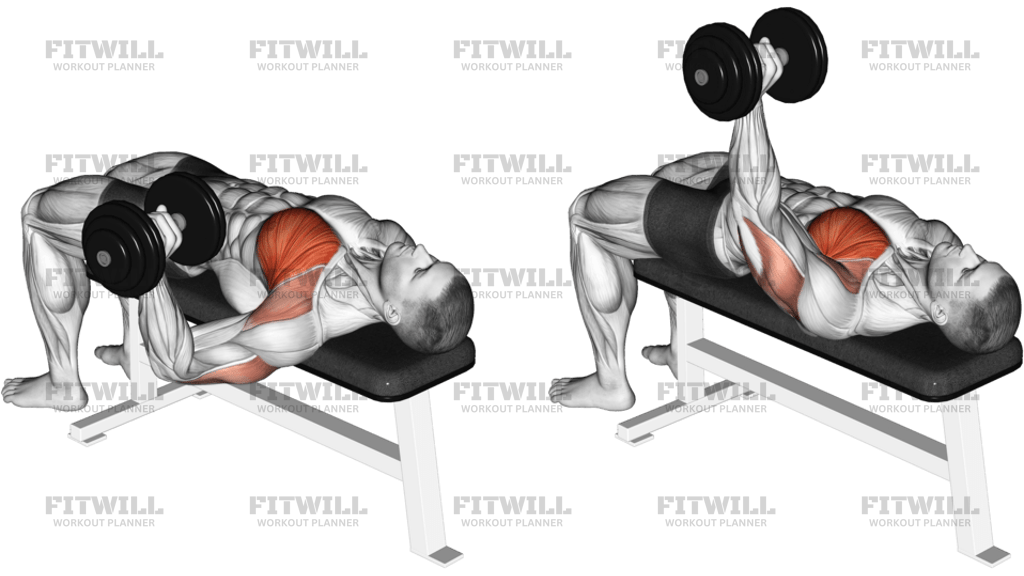
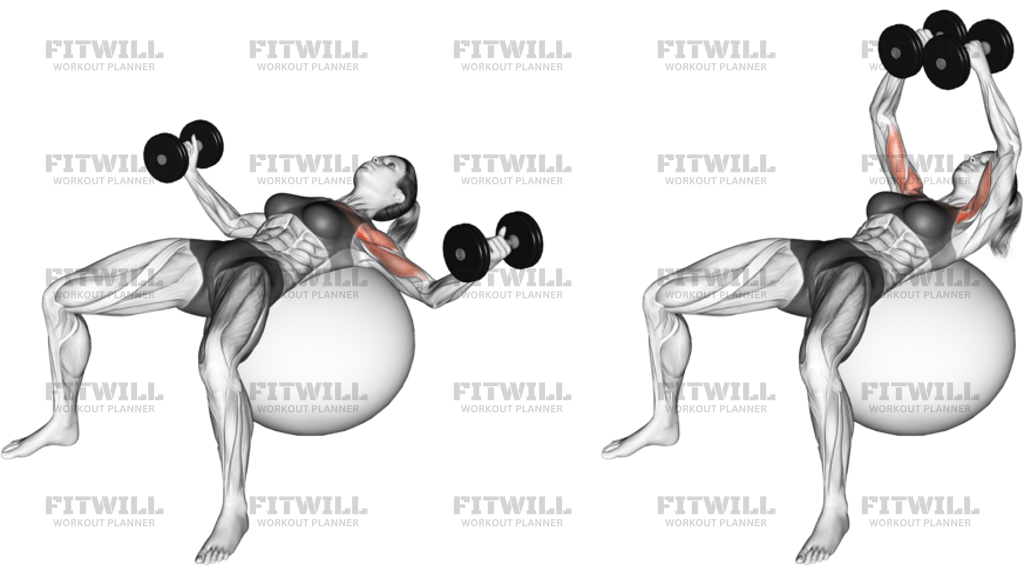
Dumbbell Lying On Floor Hammer Press
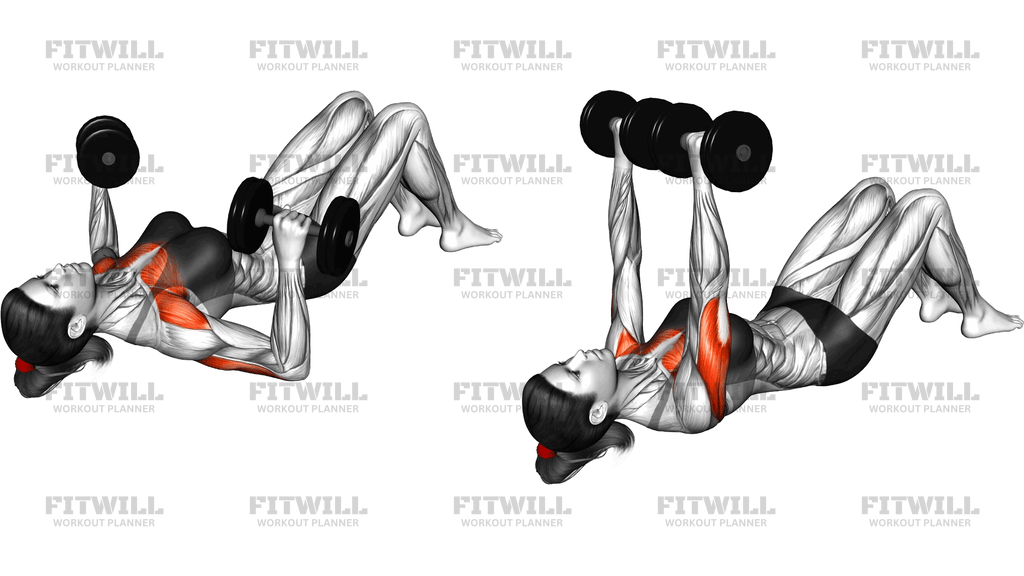
Dumbbell Lying On Floor Hammer Press is a neutral-grip dumbbell press performed on the floor instead of a bench. The floor limits how far the elbows can travel below the torso, so the exercise keeps the pressing path compact, reduces shoulder extension at the bottom, and makes the rep feel more stable than a full-range bench press. That makes it useful when you want to train chest and triceps with a shoulder-friendlier setup or when you want a strict pressing variation that does not rely on a deep stretch.
The main muscular emphasis is on the pecs, with the triceps and front delts helping to drive the press and keep the dumbbells steady. In technical terms, the pectoralis major produces most of the horizontal pressing force, while the triceps brachii and anterior deltoids assist through the lockout and the controlled lowering phase. The core also matters because the torso stays braced on the floor and the ribs should not flare as the weights move.
The neutral grip is the defining feature of the hammer press. Palms face each other, wrists stay stacked over the elbows, and the upper arms usually travel at a comfortable angle rather than flaring straight out to the sides. That grip often feels easier on the shoulders and wrists than a pronated grip, especially when the load is moderate and the goal is clean, repeatable pressing rather than chasing maximum range.
This exercise works best when the setup is deliberate. Lie on the floor with your knees bent and feet planted, then position the dumbbells so your forearms are vertical at the start and your upper arms can touch the floor at the bottom without bouncing. Press the weights up until the elbows are extended but not aggressively locked out, then lower them under control until the upper arms make light contact with the floor. The floor should stop the descent, not turn into a rebound point.
Use it as a main accessory press, a chest-focused finishing movement, or a low-risk option when bench pressing is uncomfortable. It is beginner-friendly if the load stays manageable and the lifter can control the neutral path without twisting the wrists or shrugging the shoulders. Keep the rep smooth, keep the upper back stable, and let the floor define the bottom position so every repetition starts from the same safe range.
[ Workout Log & Planner ]
Put your next workout in Fitwill
Keep your plan and training log ready when you are.


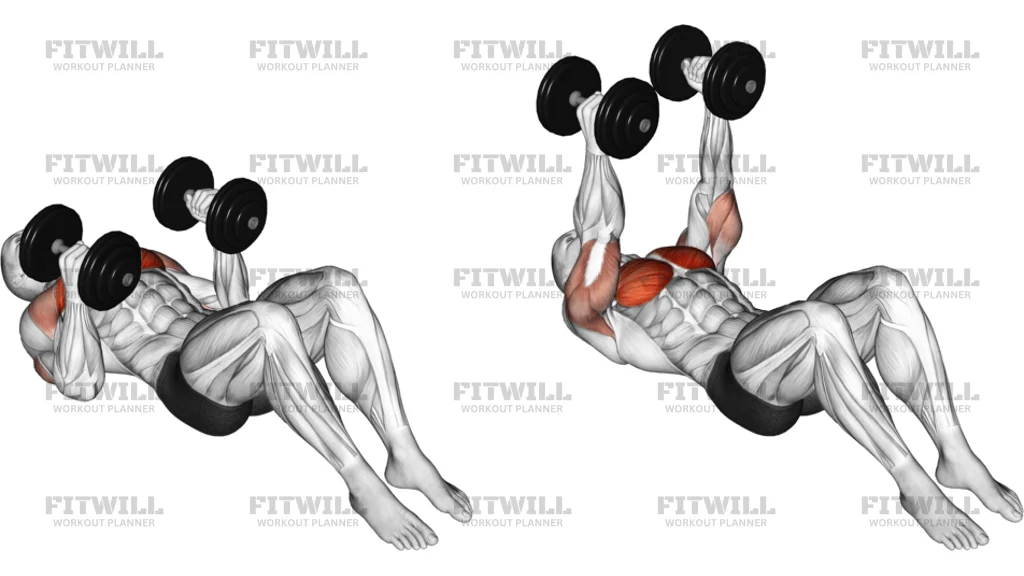
Instructions
- Lie on the floor with your knees bent and your feet flat so your lower body stays stable.
- Hold a dumbbell in each hand with a neutral grip, palms facing each other, and stack your wrists over your elbows.
- Lower your upper arms to the floor so the dumbbells stay just outside the chest and the elbows angle comfortably rather than flaring wide.
- Brace your ribs down and keep your shoulder blades lightly set against the floor before the first rep.
- Press both dumbbells upward in a straight, controlled path until your arms are extended above the chest.
- Stop short of an aggressive lockout and keep the dumbbells aligned over the shoulders at the top.
- Lower the weights slowly until the upper arms touch the floor again without bouncing.
- Exhale as you press and inhale as you lower, keeping each repetition smooth and even.
Tips & Tricks
- Keep your forearms vertical at the bottom so the dumbbells are stacked over the elbows instead of drifting toward the face or stomach.
- Let the floor set the bottom position; do not relax and bounce the upper arms off it.
- Use a neutral grip with knuckles pointing up and palms facing each other to keep the shoulders and wrists in a comfortable line.
- Tuck the elbows slightly so the upper arms track around 30 to 45 degrees from the torso instead of flaring hard outward.
- Keep your ribs down as you press; an arched lower back usually means the load is too heavy or the brace has faded.
- Choose a weight you can lower slowly for a full set, because the shortened range can make the movement feel easier than it looks.
- Pause briefly when the upper arms touch the floor if you want stricter reps and less momentum.
- If one dumbbell drifts faster than the other, reduce the load and match both sides before adding weight.
Frequently Asked Questions
What muscle does Dumbbell Lying On Floor Hammer Press target most?
The chest is the primary target, with the triceps and front shoulders helping to finish each press.
Why do I do this on the floor instead of a bench?
The floor shortens the range of motion and stops the elbows before they travel deeply below the torso, which can feel easier on the shoulders.
What does the hammer grip change here?
A neutral grip keeps the palms facing each other, which usually makes the press feel more natural at the wrists and shoulders.
How far should my elbows go on the lowering phase?
Lower until the upper arms touch the floor lightly; that floor contact is the bottom of the rep.
Can beginners use Dumbbell Lying On Floor Hammer Press?
Yes. The floor makes it easier to control the bottom position, so light to moderate dumbbells are a good place to start.
What is the most common form mistake?
Flaring the elbows too wide or bouncing the upper arms off the floor usually turns the rep into a sloppier press.
Should my shoulder blades stay pinned back the whole time?
Keep them lightly set and stable, but do not force an exaggerated pinch that lifts the chest or strains the neck.
What should I do if one dumbbell rises faster than the other?
Reduce the load and focus on pressing both hands evenly so the weights travel together.