Resistance Band Foot Eversion
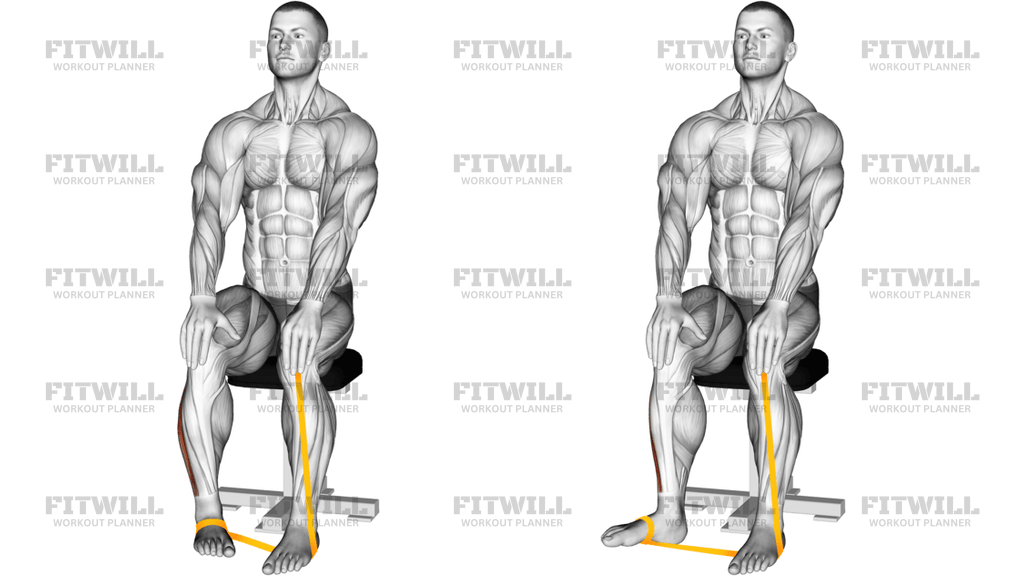
Resistance Band Foot Eversion is a small, ankle-focused drill that trains the muscles that turn the sole outward against band tension. In practice, it is used to build better control around the foot and ankle, especially when you want cleaner lower-leg mechanics for balance, gait, and rehab-style accessory work. The movement is subtle, but that is exactly why the setup matters: if the band, knee position, or trunk posture drift, the effort quickly shifts away from the ankle and into compensation.
This exercise is usually done seated so the lower leg can stay quiet while the foot works. The working knee stays bent, the heel remains supported, and the forefoot moves through eversion without the hip rolling, the knee twisting, or the torso leaning to help. That makes it useful when you need isolated ankle work that does not steal energy from larger lifts or conditioning work.
The best repetitions start from a relaxed but organized ankle position and finish with the sole turned outward against the band. Think about rotating from the subtalar joint rather than pointing the toes or swinging the whole leg. Because the range is small, slow control and a brief squeeze at the end matter more than load. A light band is usually enough to feel the outside lower-leg muscles working hard without losing the line of the movement.
Use this drill in warm-ups, accessory blocks, rehab sessions, or as part of lower-leg strengthening when you want to improve ankle stability and foot control. It pairs well with inversion, dorsiflexion, calf raises, and balance work. If the knee, arch, or shin starts to take over, the band is probably too heavy or the setup is off.
Done well, Resistance Band Foot Eversion should feel precise, not dramatic. The rep is clean when the heel stays planted or anchored, the knee stays still, and the foot turns outward smoothly under tension before returning under control. That makes it a practical choice for beginners and experienced lifters alike when the goal is better ankle mechanics rather than maximal force.
[ Workout Log & Planner ]
Put your next workout in Fitwill
Keep your plan and training log ready when you are.


Instructions
- Sit on a bench or sturdy seat with the working knee bent and the heel supported on the floor.
- Loop a light resistance band around the forefoot and secure the other end so it pulls the foot inward at the start position.
- Keep the shin tall, the knee quiet, and the toes relaxed before you begin the rep.
- Brace lightly through the trunk so the lower leg can move without your torso shifting.
- Turn the sole outward against the band until you feel the outside of the lower leg working.
- Pause for a moment at the end of the eversion without letting the knee or hip rotate.
- Return the foot slowly to the start and keep tension on the band instead of letting it snap back.
- Repeat for the planned reps, then reset the band and foot position before the next set.
Tips & Tricks
- Use the lightest band that still makes the last third of the outward roll feel deliberate.
- Keep the heel down so the motion stays at the ankle instead of turning into a whole-foot twist.
- If your knee starts drifting inward or outward, reduce the band tension before adding reps.
- Think about moving the outer edge of the forefoot away from the anchor, not forcing the toes to point sideways.
- The return should be slower than the outward phase so the ankle has to control the band, not just resist it once.
- A small range done cleanly is better than chasing a large rotation by rolling the shin or hip.
- Exhale as the foot moves outward if you need help keeping the lower leg relaxed and steady.
- Stop if you feel sharp pain along the ankle bone or if the arch collapses and you lose foot control.
Frequently Asked Questions
What does Resistance Band Foot Eversion train?
It mainly trains the muscles that evert the foot and help stabilize the ankle when the sole turns outward.
Can beginners perform this exercise?
Yes. It is beginner-friendly when you use a light band and keep the knee and hip quiet.
Where should the band sit on my foot?
Place it around the forefoot so the band loads the ankle without slipping toward the toes or the midfoot.
Should my heel stay on the floor?
Yes, in this seated version the heel should stay supported so the ankle does the work instead of the whole leg.
What is the most common mistake on this movement?
People usually twist the knee or hip to fake more range instead of turning the sole outward from the ankle.
Can I do this standing instead of seated?
You can, but the seated setup makes it easier to isolate the ankle and keep the leg from cheating.
How heavy should the resistance band be?
Light enough that you can pause at the end of the rotation and lower the foot back under control.
What should I feel working?
You should feel the outside of the lower leg and ankle working more than the calf belly or the thigh.
Is this useful for ankle rehab or warm-ups?
Yes. It is often used for low-load ankle activation, control work, and lower-leg accessory training.