Bird Dog
Bird Dog is a floor-based bodyweight exercise that builds control through the hips, trunk, and shoulders by asking opposite limbs to move while the spine stays quiet. The pattern looks simple, but it is really a test of balance, coordination, and anti-rotation strength. When it is done well, the working side reaches long without twisting the pelvis or dumping the low back.
This exercise is especially useful when you want to train the core without crunching or bracing against heavy load. The glutes help keep the lifted leg aligned, the upper back and shoulder stabilize the reaching arm, and the deep abdominals keep the ribcage and pelvis stacked. That makes Bird Dog a smart choice for warm-ups, rehab-style sessions, trunk control work, and beginners learning how to hold a neutral spine while moving limbs.
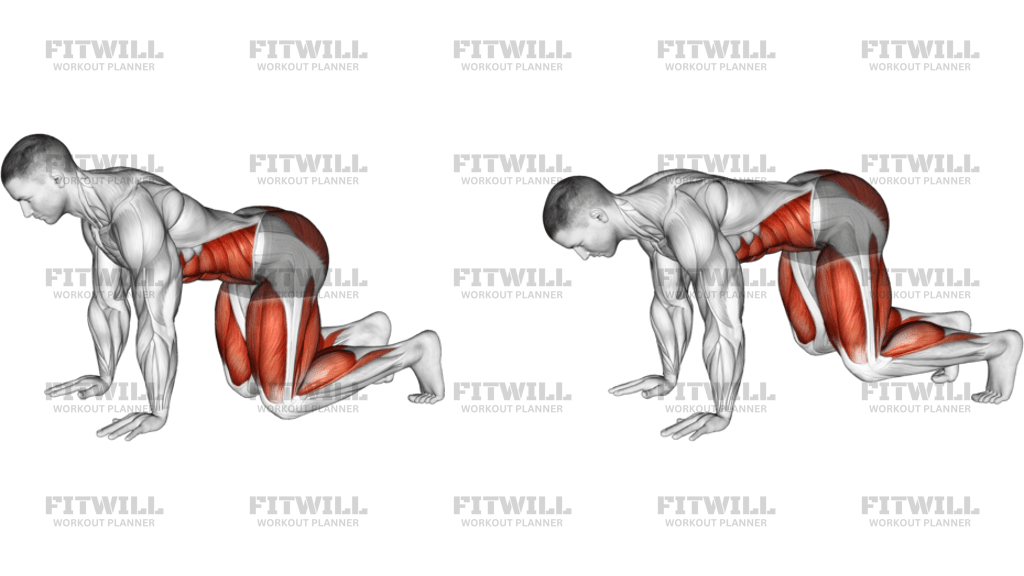
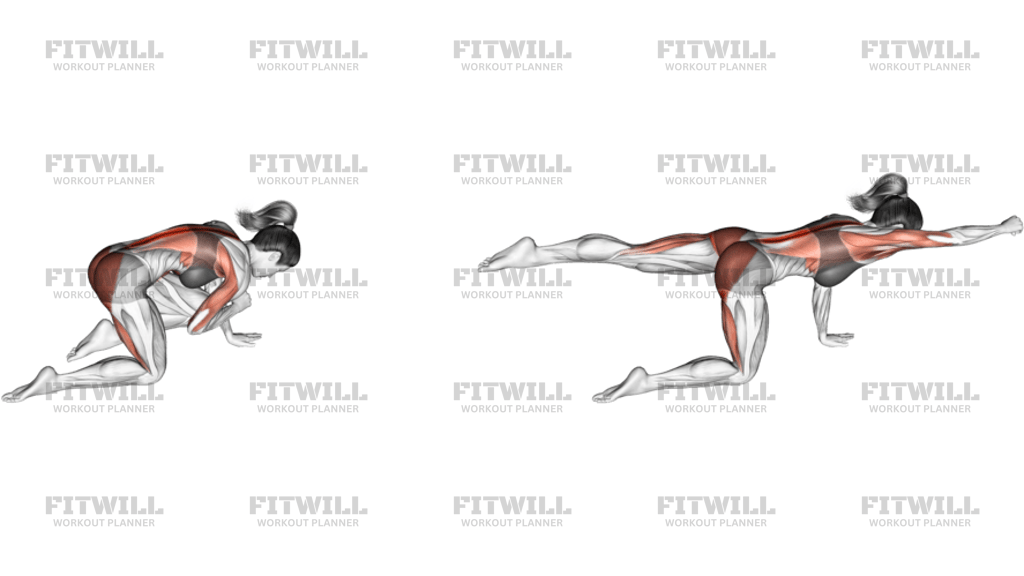
The setup matters more than the range. Start on hands and knees with your palms under your shoulders and your knees under your hips, then spread your fingers and press the floor away so the upper body feels active. Before each rep, brace lightly as if you are preparing for a gentle tap to the stomach, then extend one arm and the opposite leg until both limbs are long and level with the torso. The goal is a straight line from fingertips to heel, not a high kick or an oversized reach.
During the repetition, keep the hips square to the floor and avoid shifting all of your bodyweight onto one side. Reach away from the center, pause for a second in the fully extended position, and return under control without letting the knee slam down or the ribs flare. Smooth breathing helps the trunk stay organized: exhale as you extend, then inhale as you come back to the starting position.
Bird Dog works best when the rep quality stays high from the first side to the last. If you start arching the low back, rocking the torso, or rotating the pelvis, the set has moved past the point of useful control. Keep the movement crisp, deliberate, and symmetrical, and use it as a skill exercise that teaches the body to resist unwanted motion while the arms and legs do their job.
[ Workout Log & Planner ]
Put your next workout in Fitwill
Keep your plan and training log ready when you are.


Instructions
- Start on your hands and knees with your hands under your shoulders and your knees under your hips.
- Spread your fingers, press the floor away, and set your back in a neutral position with your neck long.
- Brace lightly so your ribcage and pelvis stay stacked before you begin the rep.
- Reach one arm straight forward and extend the opposite leg straight back until both limbs are long.
- Keep the lifted foot in line with your hip and stop before your low back arches or your pelvis turns.
- Pause for a second at full extension while keeping your torso steady.
- Lower the hand and knee back to the floor with control, without shifting side to side.
- Reset your brace, switch sides, and repeat for the planned number of reps.
Tips & Tricks
- Think long, not high. A reaching heel that stays in line with the hips is better than lifting the leg too far and arching the low back.
- Keep the supporting hand active by pushing the floor away; that helps the shoulder stay stable when the opposite arm leaves the ground.
- If your ribs flare, shorten the reach and exhale before you extend again.
- Move slowly enough that the pelvis does not wobble when the arm and leg leave the floor.
- Keep the knee of the support leg planted under the hip instead of sliding it backward as you reach.
- A brief pause at full reach makes the glutes and deep core do the work instead of momentum.
- If the opposite shoulder creeps toward the ear, keep the reaching arm lower and lengthen through the fingertips instead.
- Stop the set once you can no longer keep both sides of the body square to the floor.
Frequently Asked Questions
What muscles does Bird Dog work?
Bird Dog mainly trains the core, glutes, and the stabilizers around the shoulders and hips. It is more about control and anti-rotation than about heavy force production.
Can beginners perform this exercise?
Yes. Bird Dog is one of the better beginner core drills because it teaches balance and spinal control without loading the back heavily.
How do I know if my Bird Dog setup is right?
Your hands should be under your shoulders and your knees under your hips, with your back staying level before you lift either limb. If you already feel twisted at the start, reset the base position.
Should I lift my arm and leg as high as possible?
No. Reach them long and level instead of throwing them high. The best rep is usually the one that keeps your pelvis quiet and your low back neutral.
Why do people lose balance on Bird Dog?
Usually the torso is rotating or the lifted leg is going too high. Shorten the reach, slow the tempo, and keep pressure through the supporting hand and knee.
Do I need to hold the end position?
A short pause is useful because it exposes any wobble in the trunk. One second is enough for most people; longer holds are only useful if the body stays completely still.
What should I feel working during Bird Dog?
You should feel the core staying braced, the glute of the extended leg working, and the shoulder of the reaching arm staying controlled. It should not feel like a low-back crank.
Can Bird Dog help my lower back training?
It can be a useful support exercise because it teaches you to hold a neutral trunk while the arms and legs move. Keep it pain-free and prioritize control over range.